
International Journal of Epidemiology And Public Health Research
OPEN ACCESS | Volume 10 - Issue 5 - 2026
ISSN No: 2836-2810 | Journal DOI: 10.61148/2836-2810/IJEPHR


Aaron Ayeta Mulyanyuma
Department of Political Science and Public Administration, Makerere University, Uganda.
Corresponding author: Aaron Ayeta Mulyanyuma, Department of Political Science and Public Administration, Makerere University, Uganda.
Received: November 01, 2026 | Accepted: November 16, 2026 | Published: November 19, 2026
Citation: Aaron A Mulyanyuma. (2026) “Governance, Institutional Capacity and Public Health Inequality in Uganda: A Systematic Review OF Decentralization, Accountability And Equitable Health-Service Delivery”. International Journal of Epidemiology and Public Health Research, 10(5); DOI: 10.61148/28362810/IJEPHR/234.
Copyright: © 2026. Aaron Ayeta Mulyanyuma, This is an open access article distributed under the Creative Commons Attribution License, which permits unrestricted use, distribution, and reproduction in any medium, provided the original work is properly cited.
Health inequalities are shaped not only by which treatments exist, but also by the institutions responsible for funding, staffing, coordinating and delivering care. Uganda’s decentralised health system offers a way to explore how these factors interact. The objective was to review evidence on the influence of governance, institutional capacity, decentralisation and accountability on health-service delivery and inequality in Uganda. The manuscript follows a systematic-review framework informed by PRISMA 2020. Its initial evidence base draws on identifiable peer-reviewed studies and authoritative reports, including research on decision-making autonomy in Ugandan health facilities and the 2022 Uganda Demographic and Health Survey. However, a reproducible database search, deduplication process and formal screening record are still required before the work can be described as a completed PRISMA review. No unverified screening figures are presented. The evidence reviewed so far suggests that transferring authority to local levels does not necessarily give facilities meaningful decision-making power. Autonomy may also have different effects on medicine availability, staff performance management and quality improvement. National survey results show gains in some maternal and child health measures from 2016 to 2022, but continuing high mortality highlights the importance of service quality and fair access. Governance changes are more likely to advance equity when local duties are supported by adequate funding, skilled staff, useful information and accountability processes that lead to corrective action. A full systematic review should assess these themes using a broader evidence base identified through a transparent search and screening process.
1. Introduction
Health-system performance is driven by more than the existence of health facilities, medicines and trained personnel. It also relies on the public institutions who manage resources, organize service delivery, regulate professional practice and respond to the needs of communities. Policies may codify minimum national services standards, but whether individuals benefit from them depends on the ability of local organisations to put them into practice over long periods through continuous, accessible and safe care. Consequently, governance and institutional capacity play key roles in public health inequality.
According to the World Health Organization (World Health Organization, 2010), health systems comprise six interdependent components of service delivery, health workforce, information, medical products, financing, and leadership. A lack of one component can undermine other components in the system: a facility may be uncluttered but unable to provide high-quality care, for example, if it is understaffed, lacks critical supplies, or has an ineffective referral process (Holder, 2009). Health inequalities are often a reflection of environmental conditions, including a number of vast social determinants such as income, education, housing, transport conditions and environmental conditions (Commission on Social Determinants of Health, 2008; Marmot, 2005).
Recent survey findings show improvement in some maternal and child health measures in Uganda. The Uganda Bureau of Statistics and ICF (2023) recorded a fall in deaths among children under five, from 64 per 1,000 live births in 2016 to 52 in 2022. Over the same period, the maternal mortality ratio dropped from 336 to 189 deaths per 100,000 live births. While these figures point to progress, they do not explain what drove the changes or show whether all districts and communities benefited equally.
This study examines how governance, institutional capacity, decentralisation and equity interact in Uganda. It addresses the questions: (1) Do governance and accountability arrangements matter for implementation of public health services? (2) What does existing evidence on decentralisation highlight about the possible connection between formal authority and real decision-making? (3) How could institution differences create unequal access and outcomes? The paper draws on an evidence-synthesis approach to create an integrated explanatory framework, with the limits of the preliminary evidence base made explicit.
2. Methods
2.1 Review design and reporting standard
This is a systematic review, and the manuscript follows the transparency principles of PRISMA 2020 (Page et al., 2021). PRISMA is a reporting guideline but should not be treated as a substitute for systematic reviews. Retaining all search strings, search dates, database exports, deduplication procedure, screening decisions, reasons for full-text exclusion and the final study list is essential for being considered as a completed systematic review. Nevertheless, this is just a first draft of the completed systematic review since the authors have not been able to complete: a complete database-level search and screening log during this drafting process.
2.2 Information sources and search strategy
For the final review, search PubMed/MEDLINE, Scopus, Web of Science, Google Scholar and African Journals Online, in addition to grey literature from the Uganda Ministry of Health, Uganda Bureau of Statistics, WHO and development agencies. Search concepts: (Uganda) AND (health governance OR decentralisation OR decentralization OR accountability OR institutional capacity OR health financing OR health workforce OR service delivery OR health equity). Each database should be searched from its inception to the final search date, with the exact syntax modified to its indexing rules.
2.3 Eligibility criteria
|
Criterion |
Include |
Exclude |
|
Geography |
Studies conducted in Uganda; multi-country studies with extractable Uganda findings |
Studies with no Uganda-relevant findings |
|
Topic |
Governance, decentralisation, accountability, institutional capacity, financing, staffing, service delivery or equity |
Clinical efficacy studies with no system/governance relevance |
|
Evidence type |
Peer-reviewed empirical studies, systematic reviews, official national surveys, policy and performance reports |
Opinion pieces without an evidence base; unverifiable sources |
|
Period |
1990 to final search date, with foundational theoretical works retained where relevant |
Records outside scope or lacking sufficient bibliographic information |
|
Language |
English-language full text |
Records where relevant methods/findings cannot be assessed from available text |
2.4 Screening, extraction and synthesis
Two reviewers should independently screen titles and abstracts, then assess full texts against the eligibility criteria. Disagreements should be resolved by discussion or by a third reviewer. Fields to be extracted include citation, study design, setting, sample, governance exposure, outcomes, main findings, limitations, and relevance to equity. The final review should provide PRISMA 2020 flow details (records identified, duplicates removed, records screened, full texts assessed, exclusions with reasons, studies included). If studies provide sufficient measures, then a meta-analysis; if not, the synthesis is by theme.
2.5 Quality appraisal
Reviewers should use an appraisal tool matched to study design (e.g. cross-sectional studies, qualitative or mixed-methods studies). Official statistical reports should be subjected to appraisal for indicator definitions, sampling, uncertainty, reporting completeness and quality through time. Risk-of-bias judgements should not come from the conclusion of a study alone, but be reported as transparently as possible.
3. Results: Preliminary Evidence Synthesis
The sources that can be verified at this point give us a preliminary synthesis, not a master list of all literature that meets the eligibility criteria. The empirical study said to be most relevant is Chen et al. (2021) who investigated decision-making autonomy and managerial performance among Ugandan health facilities. National health statistics were compiled from the Uganda Demographic and Health Survey, 2023 (Uganda Bureau of Statistics & ICF, 2022). The broader conceptual example relies on previous research into health systems, social determinants, and accountability (Brinkerhoff, 2004; Commission on Social Determinants of Health, 2008; Marmot, 2005; WHO, 2010).
3.1 Evidence on decentralisation and managerial autonomy
Chen et al. (2021) examined 250 health facilities across Uganda and found that managers’ authority differed depending on the task and type of facility. Facilities with more freedom to make decisions were more likely to have essential medicines in stock. However, this pattern did not hold consistently for performance management or quality improvement. The authors therefore caution that greater managerial independence, by itself, may not be enough to improve a facility’s overall performance.
This result is crucial from a governance standpoint: Rather than approaching decentralisation as a condition, it can be considered as the distribution of powers over specific decisions. Authority over ordering medicines may differ from authority over recruitment, promotion, expenditure, or quality-improvement activities. Some activities demand resources and logistical assistance that are beyond the reach of the managers of facilities. Local responsibility without related control can reduce accountability as managers may be held responsible for outcomes over which they have no absolute control.
3.2 National indicators and continuing health challenges
The 2022 Uganda Demographic and Health Survey shows some improvements in maternal and child health, the country reported a decline in under-five mortality (in 2016, it was 64 per 1,000 live births, falling to 52 in 2022). The maternal mortality ratio (MMR) fell from 336 to 189 per 100,000 live births within the periods of these surveys (Uganda Bureau of Statistics & ICF, 2023). As indicators, these should be considered as estimates of expectations from surveys; the analysis of comparisons rates is not sufficient evidence of causality, and there is uncertainty around maternal mortality estimates.
Table 1: Selected national maternal and child health indicators reported in the Uganda Demographic and Health Survey
|
Indicator |
2016 survey |
2022 survey |
Change |
Interpretation |
|
Under-five mortality (deaths per 1,000 live births) |
64 |
52 |
−12 |
Improvement in child survival; national average may conceal subnational differences. |
|
Maternal mortality ratio (deaths per 100,000 live births) |
336 |
189 |
−147 |
Reported decline; estimates require cautious interpretation and do not establish causal drivers. |
Note: Values are from the Uganda Demographic and Health Survey 2016 and 2022 as summarized in Ugandan Bureau for Statistics & ICF (2023). Changes are simple differences between reported point estimates, not effect estimates from a causal model.
Figure 1: Under-five mortality rate in Uganda, 2016 and 2022
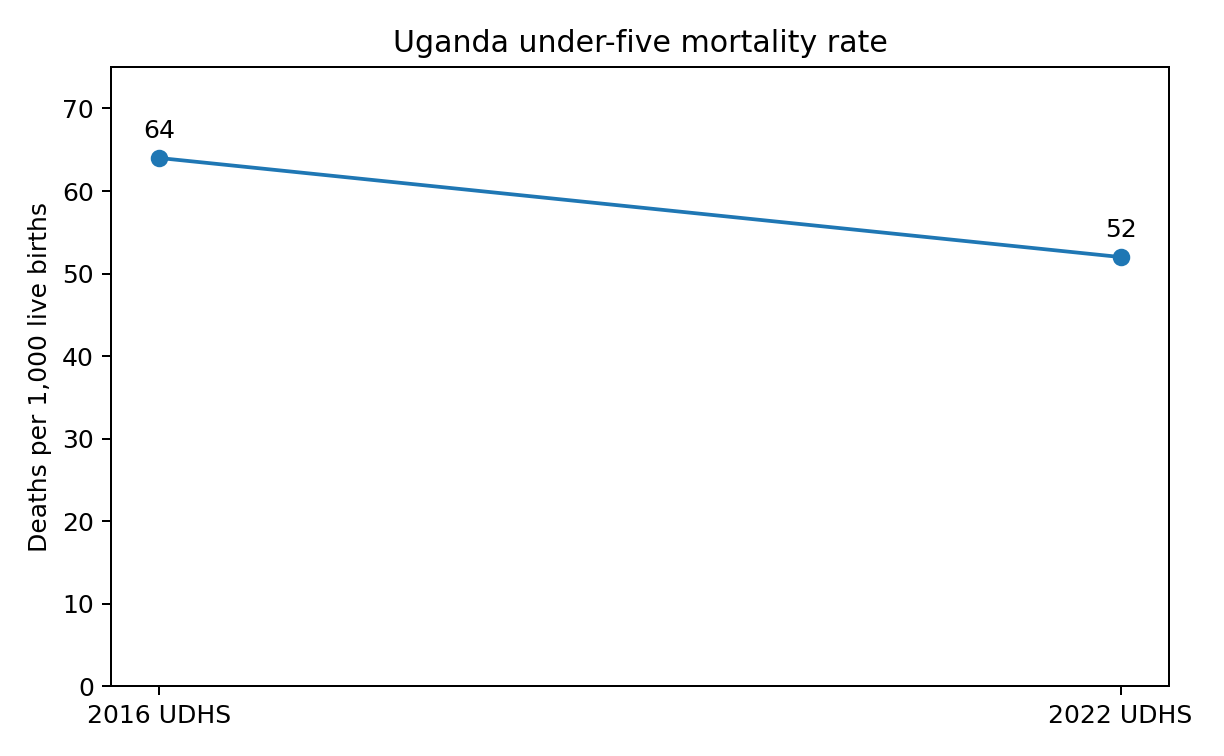
Note. Deaths per 1,000 live births. Source: Uganda Bureau of Statistics and ICF (2023).
Figure 2: Maternal mortality ratio in Uganda, 2016 and 2022
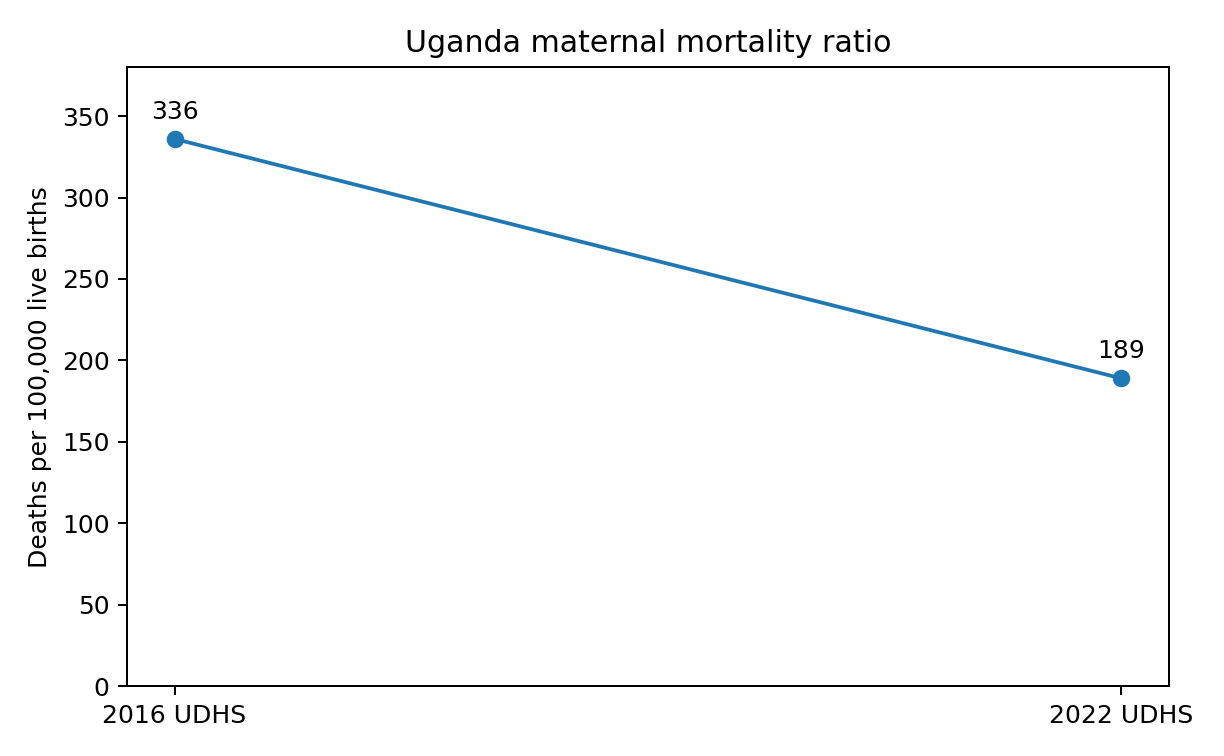
Note. Deaths per 100,000 live births. Source: Uganda Bureau of Statistics and ICF (2023). These are survey estimates and should not be interpreted as precise annual counts.
3.3 Thematic synthesis
|
Theme |
Evidence signal |
Governance interpretation |
Implication for equity |
|
Decision space |
Facility autonomy varies by function and facility type (Chen et al., 2021). |
Formal decentralisation may not equal practical authority. |
Local managers need authority aligned with resources and responsibilities. |
|
Institutional capacity |
Health-system functions are interdependent (WHO, 2010). |
Staffing, supplies, information and management interact. |
Weakness in one function can disproportionately affect remote or under-resourced facilities. |
|
Accountability |
Accountability requires clear obligations and consequences/corrective action (Brinkerhoff, 2004). |
Reports and audits matter when they trigger a response. |
Community concerns and audit findings need follow-up, not only documentation. |
|
Social determinants |
Health inequities reflect wider social and economic conditions (Commission on Social Determinants of Health, 2008; Marmot, 2005). |
Service supply alone cannot remove all barriers to effective access. |
Transport, poverty, education and geography should inform planning and allocation. |
|
National health trends |
Survey indicators show improvement between 2016 and 2022 (UBOS & ICF, 2023). |
Progress is real but cannot reveal its institutional causes by itself. |
Disaggregate outcomes and examine service quality and geographical distribution. |
3.4 PRISMA-style selection flow
Figure 3 — Selection stages to ensure reproducible reporting. Prefer counts towards completion, rather than make them up. Once you run the search and review your exports, enter the count next to each field and state exclusions from full texts recorded, in line with PRISMA 2020.
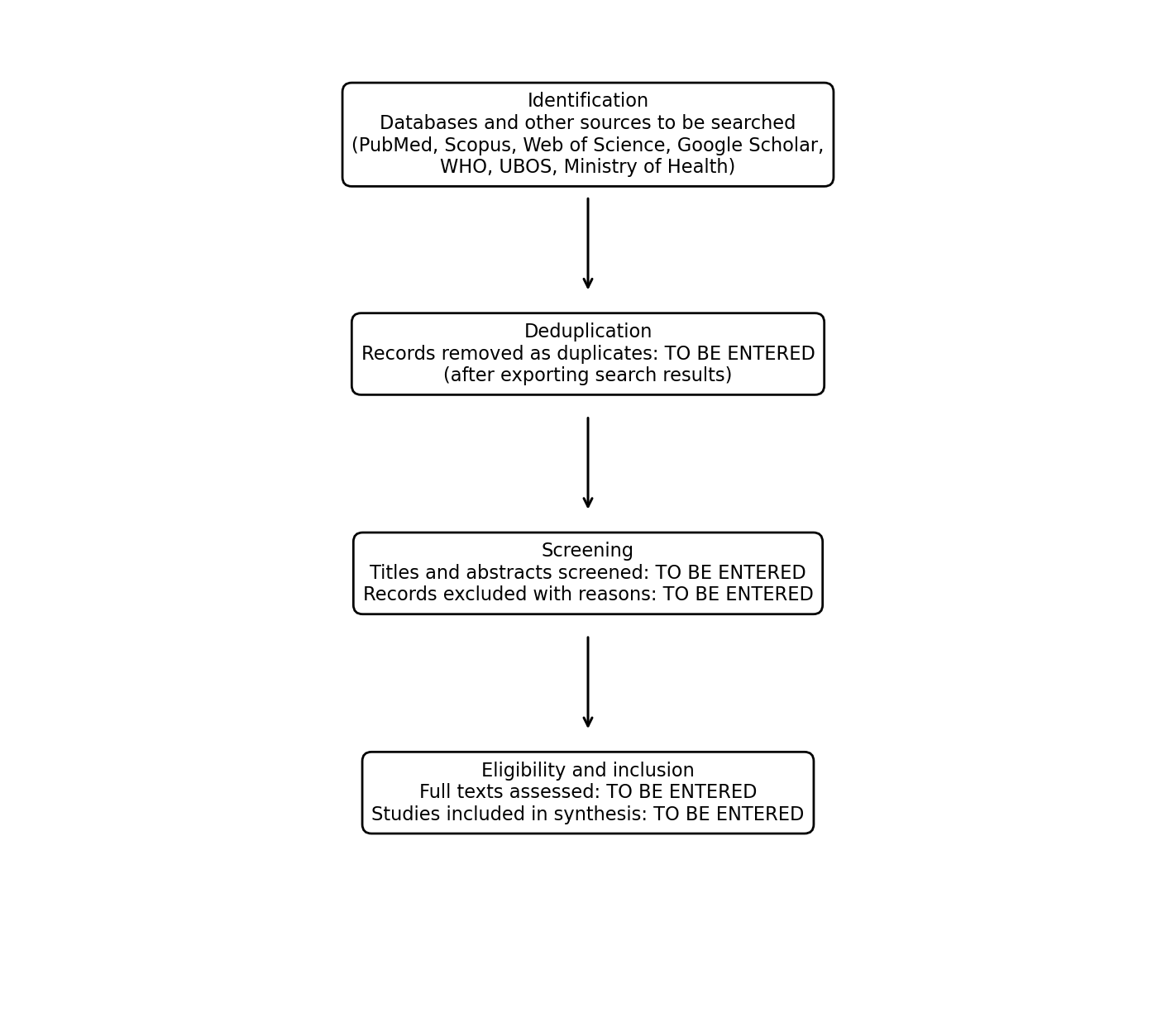
Figure 3. PRISMA-style review selection workflow (draft; counts to be populated from the documented search). Source: Adapted from Page et al. (2021).
4. Discussion
The early synthesis draws a key distinction between evidence of governance arrangements and the capacity to execute. While Devolution can make decisions more tailored to the absence of big corporations, the advantages of Devolution remain in which responsibilities are transferred, whether local managers are empowered to make decisions, and if resources exist to do so. Chen et al. (2021) present authentic evidence from Uganda that decision space is heterogeneous and its connection to leadership performance is dependent on results. The conclusion is not that Decentralisation has failed but that its performance should be assessed function by function.
Institutional capacity is the bridge linking governance to services. All the parts of staffing, financing, medicine supply, information systems and referral arrangements need to work in concert. A district may spot a service gap unreachable because of centralized recruitment authority, delayed funding or unreliable logistics. It thus follows that accountability not only needs to measure whether an institution achieved a target but also if it had an opportunity and resources to do so.
The national health indicators indicate some progress though they do not provide evidence that governance alone has played a role in this progress. Their achievement is influenced by service access and quality, but also household income, education, nutrition, sanitation, transport, among other social determinants of health (Social Determinants of Health Commission 2008; Marmot, 2005). An evidence review with a more solid empirical foundation in this kind of study would try comparing district level capacity and service metrics with disaggregated outcomes and would endeavour to rule out other explanations.
The national health indicators indicate some progress though they do not provide evidence that governance alone has played a role in this progress. Their achievement is influenced by service access and quality, but also household income, education, nutrition, sanitation, transport, among other social determinants of health (Social Determinants of Health Commission 2008; Marmot, 2005). An evidence review with a more solid empirical foundation in this kind of study would try comparing district level capacity and service metrics with disaggregated outcomes and would endeavour to rule out other explanations.
5. Integrated Analytical Framework
|
Analytical level |
Key constructs |
Potential indicators |
Expected pathway |
|
Governance |
Authority, financing, coordination, transparency, accountability |
Budget-release timeliness; clarity of roles; audit follow-up; participation mechanisms |
Shapes what decisions institutions can make and what resources they can mobilise. |
|
Institutional capacity |
Workforce, managerial competence, supplies, information systems, infrastructure |
Staff vacancy rates; stock-out days; reporting completeness; referral readiness |
Determines whether resources can be converted into reliable services. |
|
Implementation |
Availability, continuity, quality, responsiveness |
Service readiness; missed outreach sessions; waiting times; completed referrals |
Mediates the relationship between governance and health outcomes. |
|
Health and equity outcomes |
Mortality, morbidity, service coverage, distribution of access |
Disaggregated mortality and coverage indicators; wealth/geographic gaps |
Reflects implementation alongside social, environmental and demographic conditions. |
|
Context |
Poverty, remoteness, population density, disease burden |
Travel time; deprivation measures; population distribution; local disease profile |
May strengthen or weaken the effects of governance and capacity. |
The framework proposed is a synthesis model, not a causal result. This model should be subject to testing with longitudinal or multi-level data where they are available, plus also be complemented with qualitative inquiry into the mechanisms that connect formal to frontline practice.
6. Research Propositions
Proposition 1: More consistent implementation of essential services is expected to be accompanied by stronger institutional capacity, controlling for variations in population need and available resources.
Proposition 2: Accountability mechanisms are expected to be even more strongly associated with better implementation when monitoring findings result in documented corrective action.
Proposition 3: Differences in local fiscal and administrative capacity may drive geographical differences in service availability and continuity if the responsibilities of the local side are not balanced with resources and decision rights.
Proposition 4: It is likely that the association between implementation performance and health outcomes changes with deprivation, geographical accessibility and population needs; improvements in overall coverage do not necessarily close the gaps between levels of inequality.
7. Policy Implications
7.1 Align responsibilities, authority and resources
National and local responsibilities should be clear for personnel headhunting, contract award, spending, maintenance, referral coordination and performance monitoring. Authority is devolved only where resources to allow discretion to exercise it are also devolved. National standards should continue in effect to protect quality and minimum entitlements.
7.2 Strengthen district and facility capacity
Capacity-building should focus on day-to-day challenges, including staff planning, budgeting, supply chains, reliable data, supervision and referrals. Training by itself will not make much difference if managers don’t have the staff, funding or decision-making power to put what they learn into practice. 7.3 Allocate resources according to need
Equity-oriented allocation should consider population size together with measures of socioeconomic deprivation, remoteness, disease burden, and the cost of reaching underserved communities. Per-capita allocations cannot guarantee equal access when the cost of service delivery is highly variable. 7.4 Make accountability actionable
Performance reports and audits must determine responsible actors, required corrective action, resources, deadlines and follow-up actions. Community feedback should be tied into a documented response process so that participation can have an impact on service delivery.
7.5 Monitor inequality as well as averages
National indicators need to be complemented by sub group data as long as it is reliable and ethical. If differences are seen by district, living place, family wealth, and other key demographics, the specific changes of the most vulnerable populations may be better understood.
8. Limitations
This version of a systematic-review manuscript is a pre-PRISMA compliant one. The search strategy has not yet resulted in either a full database export, duplicate log, independent screening record, or full-text exclusion table and final count of included studies at this time. Accordingly, the thematic synthesis is which rest on a limited, limited pool of evidence and is therefore not exhaustive in nature. The two health indicators displayed are national survey estimates and governance or decentralisation does not have a causal influence. A final submission will need to include all planned databases, formal quality assessment, expanded evidence tables and completed PRISMA flow diagram.
9. Conclusion
Evidence suggests one important possible conclusion: decentralised governance is associated with improvements in health services, though mere formal devolution is insufficient. Successful implementation depends on the decision-making power, finances, personnel, supply chains, and information surveillance and gatekeeping between actors. Uganda increasingly good national mother and child health metrics show there is progress but equity-relevant study is needed due to the ongoing burden and possible subnational disparities. An up-to-date systematic review should determine how consistently these relationships have been demonstrated throughout the wider literature and in what areas is the evidence weak. Policy actions should include reliable local institutions, clear process of resource allocation, accountability to translate actions into effects, and monitoring that indicates who has benefited from health-system improvements.



Open Access By Aditum Open Access Journals id licensed under Creative Commons Attribution 4.0 International License. Based On a Work at aditum.org


