
International Journal of Epidemiology And Public Health Research
OPEN ACCESS | Volume 10 - Issue 2 - 2026
ISSN No: 2836-2810 | Journal DOI: 10.61148/2836-2810/IJEPHR


Malick Ngom1*, Abdoulaye Diallo1,2, Serigne Souhaibou Ba3, Elhadj Daouda Diop4, Bachir Mansour Diallo4, Kamadore Touré1
1Laboratory of Epidemiology and Public Health, University of Thiès, Senegal.
2Directorate of Planning, Research and Statistics, Ministry of Health and Public Hygiene (MSHP), Senegal.
3Department of Psychiatry, Marne Hospital, France.
4Department of Internal Medicine, Faculty of Health Sciences, University of Thiès, Senegal.
*Corresponding author: Malick Ngom, Laboratory of Epidemiology and Public Health, University of Thiès, Senegal.
Received: August 20, 2026 | Accepted: August 28, 2026 | Published: September 11, 2026
Citation: Ngom M, Diallo A, Souhaibou Ba S, Elhadj D Diop, Bachir M Diallo, Touré K. (2026) “Profile of Dengue Cases in a Private Clinic in a Senegalese Tourist Area: A Case Series Study”. International Journal of Epidemiology and Public Health Research, 10(2); DOI: 10.61148/28362810/IJEPHR/217.
Copyright: © 2026. Malick Ngom, This is an open access article distributed under the Creative Commons Attribution License, which permits unrestricted use, distribution, and reproduction in any medium, provided the original work is properly cited.
Background: Dengue has become an emerging public health concern in Senegal, with recurrent outbreaks reported since 2017. In tourist areas such as Saly, the coexistence of intense population mobility, favorable environmental conditions for Aedes mosquitoes, and the endemicity of malaria complicate the diagnosis and management of acute febrile illnesses. However, data describing the epidemiological, clinical, and serological characteristics of dengue cases managed in private healthcare facilities remain scarce. This study aimed to describe the epidemiological, clinical, and serological profile of laboratory-confirmed dengue cases managed in a private emergency clinic in Saly, Senegal. Methods: We conducted a retrospective descriptive case series at the Urgences 24 Clinic in Saly, Senegal, between 17 May and 17 October 2025. All consecutive patients presenting with suspected dengue during the study period were included. Dengue diagnosis was established using rapid diagnostic tests detecting NS1 antigen and dengue-specific IgM and IgG antibodies. Sociodemographic, clinical, biological, environmental, and therapeutic data were extracted from medical records. Descriptive statistics and bivariate analyses were performed using Chi-square or Fisher's exact tests, with statistical significance set at p < 0.05. Results: A total of 121 patients with suspected dengue were investigated, of whom 43 (35.5%) had laboratory-confirmed dengue infection. The mean age was 29.4 ± 11.7 years, and males predominated (sex ratio: 1.69). Headache (74.4%), myalgia (51.2%), arthralgia (46.5%), and asthenia (34.9%) were significantly associated with confirmed dengue (p < 0.05). The epidemic peaked in September, coinciding with the rainy season. Only 25.6% of patients reported using insecticide-treated bed nets, while 34.9% lived near stagnant water. Serological profiles showed heterogeneous patterns, with isolated IgG positivity (41.9%) and combined NS1/IgM/IgG positivity (32.6%) being the most frequent. No severe dengue or deaths were recorded. Despite the absence of severe disease, antibiotics and corticosteroids were prescribed to 81% and 74% of patients, respectively. Conclusions: Dengue in this tourist area primarily affected young, economically active adults and presented predominantly with classical clinical manifestations. The diversity of serological profiles supports the combined use of NS1 antigen and antibody-based rapid diagnostic tests for case identification. The frequent prescription of antibiotics and corticosteroids despite uncomplicated disease highlights the need for standardized case management protocols and strengthened antimicrobial stewardship. Enhanced epidemiological surveillance, vector control, and clinician awareness are essential to improve dengue management in tourist settings in Senegal.
Dengue; Senegal; Saly; Case series; Public health
Dengue is a major arboviral disease transmitted by mosquitoes of the Aedes genus, specifically Aedes aegypti and Aedes albopictus. It is a public health problem. According to the World Health Organization, nearly half of the world's population lives in at-risk areas, with a continuous increase in incidence over the past decades [1].
This expansion is linked to rapid urbanization, the globalization of trade, the intensification of human movement, and climate change, which are altering the geographical distribution of vectors [2, 3].
In Africa, dengue has long been underdiagnosed and underreported due to the high endemicity of malaria and the clinical overlap between these two acute febrile illnesses. However, recent data indicate a resurgence of epidemic outbreaks in several West African countries. They confirm active and sustained circulation of the virus in the region [4].
In Senegal, recurrent epidemics reported since 2017 indicate the gradual establishment of dengue in the national epidemiological landscape [5].
Tourist areas represent a particularly favorable context for the transmission of dengue. High human density, seasonal migratory flows, as well as environmental conditions conducive to the proliferation of larval habitats increase the risk of transmission. In Saly, these factors put both residents and visitors at risk.
In this context, the management of dengue in healthcare facilities, particularly private ones, presents diagnostic and therapeutic challenges. Despite the contribution of rapid diagnostic tests, the variability in clinical presentations can lead to practices that do not comply with international recommendations, particularly the inappropriate use of antibiotics and corticosteroids [1].
This study aims to describe the epidemiological, clinical, and serological profile of dengue cases diagnosed at the Urgences 24 clinic in Saly, in order to contribute to the improvement of management practices in a tourist area.
Patients And Methods
Study design
A retrospective descriptive case series was conducted at the Urgences 24 clinic in Saly, in the Mbour department of Senegal. The study was carried out over a six-month period, from May 17 to October 17, 2025. This clinic serves a diverse population, consisting of both local residents and seasonal visitors.
Population and sampling
The sampling was exhaustive and consecutive. The study population consisted of all patients suspected of having dengue who visited the clinic during the study period. A suspected case was defined as any patient presenting with an acute fever (>38 °C) accompanied by at least one clinical sign compatible with dengue (headache, myalgia, arthralgia, or chills). Patients were informed about the objectives of the study. Informed consent was obtained in accordance with national and international ethical guidelines. Confirmed cases were those whose diagnosis was validated by rapid diagnostic tests (RDTs) including the NS1 antigen and IgM and IgG antibodies.
Data collection
The information was collected using a standardized form with:
Additional investigations: malaria rapid diagnostic test, thick smear, COVID-19 tests.
Statistical analysis
The data were entered into Excel and analyzed using RStudio version 4.4.0. Quantitative variables were described by mean ± standard deviation or median (range), and qualitative variables by counts and percentages. Univariate and bivariate analyses (Chi-squared and Fisher's tests) were performed. The significance level was set at p < 0.05. 95% confidence intervals were calculated.
Ethical considérations
The study was approved by the local ethics committee, and all data were handled anonymously and confidentially, in accordance with good ethical practices in biomedical research.
Results
General characteristics of study population
The population was mostly young and male. The average age was 29.4 years with a standard deviation of 11.7, and the sex ratio was 1.38. Subjects aged 15 to 30 were the most affected group (n=16; 37.2%). More than half of the patients lived in urban areas (Table I).
Table I: Characteristics sociodemographics of patients (N = 43)
|
Variables |
Counts (n) |
Percentage (%) |
|
Sex |
||
|
Male |
27 |
62,7 |
|
Female |
16 |
37,2 |
|
Age (years) |
||
|
Mean |
29,4 ± 11,7 |
(3–51) |
|
Age groups |
||
|
0–15 |
4 |
9,3 |
|
15–30 |
16 |
37,2 |
|
30–45 |
14 |
32,6 |
|
>45 years |
9 |
20,9 |
|
Place of residence |
||
|
Urban area |
23 |
53,5 |
|
Peri-urban area |
12 |
27,9 |
|
Rural area |
8 |
18,6 |
Temporal distribution of cases
A marked increase in the number of cases was observed starting in September, with an epidemic peak in September (Table II).
Table II: Monthly distribution of suspected and confirmed dengue cases
|
Months 2025 |
Number of cases |
Percentage (%) |
|
May |
1 |
2,3 |
|
June |
10 |
23,3 |
|
July |
3 |
7,0 |
|
August |
0 |
0 |
|
September |
21 |
48,8 |
|
October |
8 |
18,6 |
|
Total |
43 |
100 |
Consultation period and clinical presentation
The average time between the appearance of the first sign and seeking medical consultation was about 2 days. Fever was the main symptom, followed by headaches and muscle and joint pain.
Medical history
Of the 43 confirmed cases, seven were smokers, one was an alcoholic, two had high blood pressure, two had type 2 diabetes, and one was asthmatic. 31 of the patients had no medical history or particular condition. Seventeen (17) had been vaccinated against COVID-19, representing 39.5%.
Environmental and behavioral factors
The environmental characteristics of the patients, detailed in table III, highlight a lack of personal protection (MILDA) in the context of a high presence of stagnant water around homes. Among the 43 patients included, 11 (25.6%) used MILDA. The presence of stagnant water around homes was reported in 15 patients (34.9%).
Table III: Environnemental Factors
|
Factor |
Yes n (%) |
No n (%) |
Not provided |
|
Using MILDA |
11 (25,6) |
18 (41,9) |
14 (32,5) |
|
Presence of standing water |
15 (34,9) |
6 (13,9) |
|
Clinical signs :
The clinical manifestations were dominated by fever and headaches, each observed in 69.8% of patients.
Table IV shows the distribution according to symptoms.
|
Table IV: Distribution by symptoms Clinical signs |
Counts (n) |
Percentage (%) |
|
Headache |
33 |
76,7 |
|
Fever |
30 |
69,8 |
|
Myalgia, muscles aches |
7 |
16,3 |
|
Cough |
6 |
14,0 |
|
Rhinorrhoea |
6 |
14,0 |
|
Chills |
4 |
9,3 |
|
Others |
3 |
7,0 |
Comparison of suspected and confirmed cases
The clinical profile of the patients was compared according to serological status. Table 5 presents the comparison of demographic and clinical characteristics between suspected cases (negative) and confirmed cases (positive). Headaches, myalgia, and arthralgia were significantly more common in confirmed cases. Table V compares suspected and confirmed cases.
Table V: Comparison of characteristics between suspected and confirmed cases
|
Variable |
Suspected cases n=78 (%) |
Confirmed cases n=43(%) |
p-value |
|
Male |
38 (48,7) |
25 (58,1) |
0,32 |
|
Median age |
27 (17–39) |
31 (22–44) |
0,09 |
|
Headaches |
36 (46,2) |
32 (74,4) |
0,002 |
|
Myalgia |
19 (24,4) |
22 (51,2) |
0,003 |
|
Arthralgia |
17 (21,8) |
20 (46,5) |
0,005 |
|
Asthénia |
14 (17,9) |
15 (34,9) |
0,04 |
Epidemic curve
The epidemic curve shows a gradual increase in cases from June, with a clear peak in September, followed by a decline in October.
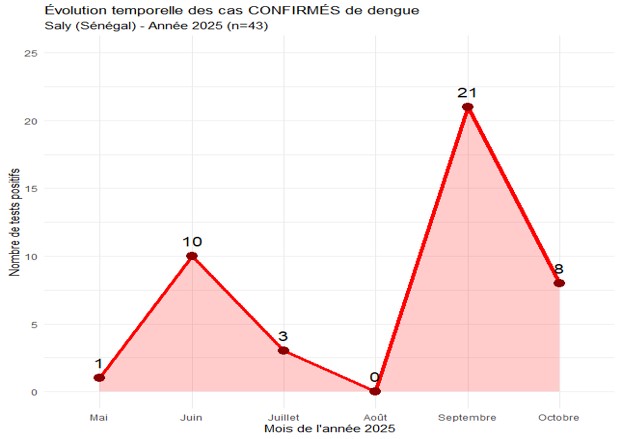
Figure 1 : Epidemiological curve of dengue cases, May–October 2025
Biology
Biological confirmation was primarily based on the presence of IgM antibodies. Among the 43 patients included, several dengue serological profiles were identified. The most common profile was isolated IgG positivity (41.9%), followed by simultaneous positivity for NS1 antigen, IgM, and IgG (32.6%). Isolated detection of the NS1 antigen, indicating a very recent infection, accounted for 14.0% of cases. Profiles compatible with a recent infection in the seroconversion phase (isolated IgM positive) represented 9.3% of cases (Table VI).
Table VI : Distribution of dengue serological profiles according to NS1, IgM, and IgG markers
|
Serological profile |
Meaning |
Counts |
Percentage % |
|
Ag + / IgM + / IgG + |
Acute or secondary infection in the active phase |
14 |
32,6 % |
|
Ag + / IgM − / IgG − |
Very recent infection (early viremic phase) |
6 |
14,0 % |
|
Ag + / IgM − / IgG + |
Acute infection on prior immunity |
1 |
2,3 % |
|
Ag − / IgM + / IgG − |
Recent infection (post-viremic phase) |
4 |
9,3 % |
|
Ag − / IgM − / IgG + |
Old or late secondary infection |
18 |
41,9 % |
|
Total |
43 |
100 % |
Serological profile of patients
More than a third of the patients had laboratory-confirmed dengue (table VII).
Table VII: Positivity of dengue serological markers and case classification
|
Serological result |
Counts (n) |
Percentage % |
|
NS1 positive |
38 |
88,4 |
|
IgM positive |
43 |
100 |
|
IgG positive |
41 |
95,3 |
|
Confirmed cases |
43 |
35,5 |
|
Suspected cases, tested négative |
78 |
64,5 |
Other Data
Hematologically, lymphopenia and an elevated CRP were the most frequent abnormalities in confirmed cases. Patients (suspected and confirmed cases) underwent rapid diagnostic tests (RDT) for malaria/thick smear and COVID-19 tests. All of these investigations were negative in confirmed dengue cases, thus ruling out any biological co-infection in this group. The malaria RDT was performed on twenty (20) patients, the thick smear on nineteen (19). In three (3) patients who had a negative malaria RDT, a thick smear was carried out to formally rule out associated malaria. The COVID test was performed on 13 patients. Concurrent screening for both malaria and COVID-19 was performed on 3 patients. Prothrombin time (PT) was measured in 7 of our patients and ranged from 46 to 75%, with an average of 61.6% ± 10.4. Serum creatinine, also measured in seven (7) patients, ranged from 6.1 to 15.3 mg/dL, with an average of 10.4 ± 3.1 mg/dL.
Table VIII shows the distribution of patients according to the results of their paraclinical examinations.
Table VIII: Distribution by results of biologic exam
|
Biological parameter |
Abnormal n (%) |
|
Hyperleukocytosis |
22 (41,9) |
|
Lymphopenia |
21 (23,3) |
|
High CRP |
15 (34,8) |
|
Hepatic cytolysis |
7 (16,3) |
|
Impaired kidney function |
4 (4,4) |
The care of patients at the Urgences 24 clinic in Saly was marked by a complete absence of severe cases and complications. The diagnosis benefited from systematic screening that ruled out malaria and COVID-19. The treatment was mainly symptomatic, with notable use of antibiotics and corticosteroids without any negative impact on the favorable progression of the patients. Painkillers were prescribed to all patients with dengue. Antibiotic therapy was administered to 81% of patients, and corticosteroids to 74%.
Bivariate and multivariate analysis
The bivariate analysis identified several clinical signs strongly associated with the biological confirmation of dengue. Logistic regression then helped adjust these results.
The analysis shows that the clinical triad of headaches, muscle pain, and joint pain is the strongest predictor of dengue in this tourist area. In a bivariate analysis, patients with headaches were 3.4 times more likely to have confirmed dengue compared to other febrile suspects (p=0.005). Although multivariate adjustment shows a reduction in statistical significance (due to the strong collinearity between these clinical symptoms), the overall effect remains clinically substantial. Age also seems to be a marginal risk factor, with a 5% increase in risk per year of age (p=0.095 in multivariate analysis).
Table IX: Biavariate et multivariate analysis
|
Variable |
Confirmed cases (n=43) |
Negatives cases (n=78) |
OR Brut [IC95%] |
p-value (Biv) |
OR Ajusted [IC95%] |
p-value (Multi) |
|
Sex (Male) |
25 (58,1%) |
38 (48,7%) |
1,46 [0,69-3,10] |
0,422 |
- |
- |
|
Age (year) |
31 |
27 |
1,05 [1,00-1,11] |
0,070 |
1,05 [0,99-1,11] |
0,095 |
|
Headaches |
32 (74,4%) |
36 (46,2%) |
3,39 [1,50-7,68] |
0,005 |
2,15 [0,76-6,07] |
0,149 |
|
Myalgia |
22 (51,2%) |
19 (24,4%) |
3,25 [1,48-7,17] |
0,005 |
1,60 [0,19-13,66] |
0,666 |
|
Arthralgia |
20 (46,5%) |
17 (21,8%) |
3,12 [1,39-6,98] |
0,009 |
1,29 [0,16-10,54] |
0,810 |
|
Asthénia |
15 (34,9%) |
14 (17,9%) |
2,45 [1,04-5,75] |
0,062 |
- |
- |
Discussion
This study provides a comprehensive understanding of the epidemiological, clinical, and serological profile of dengue cases in a private clinic within the tourist area of Saly. The average age of 29.4 years and the male predominance (sex ratio 1.69) observed in our series reflect a young and active population, frequently exposed to mosquito bites due to their mobility and professional or touristic activities. These findings are consistent with established literature from West Africa and other tropical regions, where young adults are identified as the demographic group most affected by dengue [4, 5].
This vulnerability is likely due to increased mobility and outdoor activities, which heighten exposure to Aedes bites. The epidemic peak in September aligns with the end of Senegal's rainy season, a period characterized by the proliferation of larval breeding sites in stagnant water, as previously documented in Louga and Touba [5] [6]. The low usage of ITNs (25.6%) is concerning, reflecting a limited perception of vector-borne risks in this tourist area. Clinically, the classic triad of headache, myalgia, and arthralgia was significantly associated with laboratory confirmation, reinforcing its predictive value in line with WHO standards [1]. However, clinical overlap with malaria remains a significant challenge. In Senegal, "malaria-centrism" in febrile diagnosis can lead to delayed dengue management or unnecessary antimalarial overtreatment [7]. Since all confirmed dengue cases in our study tested negative for malaria, these findings emphasize the necessity of systematic and combined screening (Dengue/Malaria) for all acute febrile illnesses [1].
The statistical significance of the association between these symptoms and biological confirmation underscores the importance of rigorous clinical vigilance in the differential diagnosis with malaria, which remains endemic in Senegal. The low use of ITNs (25.6%) highlights a notable gap in individual protection, despite the presence of stagnant water conducive to the proliferation of Aedes aegypti and Aedes albopictus [2, 3].
This confirms that vector control interventions need to be intensified, especially in areas with high tourist traffic.
From a biological perspective, the diversity of serological profiles, with a predominance of isolated IgG and the presence of NS1 in some cases, illustrates the coexistence of past, recent, and secondary infections. This variability highlights the importance of using combined tests (NS1, IgM, and IgG) to improve diagnostic accuracy, as recommended by the WHO [1].
The variety of serological profiles observed shows a complex transmission dynamic. The predominance of isolated IgG positivity (41.9%) suggests significant previous exposure or a secondary infection, which aligns with Senegal's emerging hyperendemic pattern [8]. The presence of the NS1 antigen (88.4% of confirmed cases) confirms the usefulness of this marker for early diagnosis during the viremic phase. Using NS1 together with IgM/IgG remains the most reliable strategy to maximize diagnostic sensitivity in primary care settings [9].
From a therapeutic standpoint, the frequent use of antibiotics and corticosteroids, despite the absence of severe cases, suggests that clinical practice is still largely empirical. The adoption of standardized protocols and clinician education are therefore essential to limit the unjustified use of these medications, reduce costs, and prevent bacterial resistance.
A striking result of our study is the massive use of antibiotics (81%) and corticosteroids (74%) despite the absence of severe symptoms or documented bacterial superinfection. This practice, often seen in private settings, reflects an empirical approach driven by patients' worries or a lack of knowledge about specific dengue protocols, which mainly rely on symptomatic treatment (paracetamol) and rehydration [1] [10]. The use of corticosteroids in dengue is not recommended and can even be harmful. Similarly, unjustified antibiotic use contributes to the rise of bacterial resistance, a major public health issue in Senegal [11].
Finally, the timing of the cases, with a peak in September, corresponds to the rainy season favorable for the development of larval habitats, confirming the key role of environmental factors in transmission [4].
These results highlight the importance of epidemiological surveillance, vector prevention, and community awareness in controlling dengue in tourist areas.
The predominance of cases among young active adults (15-45 years) in Saly suggests exposure related to mobility and outdoor work activities, typical of tourist areas. The significant link between painful symptoms (muscle and joint aches) and biological confirmation helps guide the differential diagnosis, which is especially crucial in a country where malaria is still the leading cause of fever.
The low use of LLINs (25.6%) among confirmed cases, combined with the presence of stagnant water, highlights the urgent need to strengthen vector control and raise awareness about personal protection measures. Finally, the high prevalence of positive IgG serological profiles (95.3%) indicates long-standing or recurrent dengue virus circulation in Saly, turning this tourist spot into a growing endemic area that needs close monitoring to prevent severe forms during reinfections.
A striking result of our study is the massive use of antibiotics (81%) and corticosteroids (74%) despite the absence of severe symptoms or documented bacterial superinfection. This practice, often seen in private settings, reflects an empirical approach driven by patients' worries or a lack of knowledge about specific dengue protocols, which mainly rely on symptomatic treatment (paracetamol) and rehydration [1] [10]. The use of corticosteroids in dengue is not recommended and can even be harmful. Similarly, unjustified antibiotic use contributes to the rise of bacterial resistance, a major public health issue in Senegal [11].
Limitations
This study has some limitations, especially being single-center and having a relatively small sample size, which makes it hard to generalize the results to all tourist areas in the country. Also, the diagnosis was based only on rapid tests without PCR confirmation or viral isolation, so it doesn’t tell us which serotypes are circulating (DENV-1, DENV-2, or DENV-3).
Conclusion
Dengue in Saly mainly affects young, active adults. It presents a clinical picture characterized by fever, headaches, muscle pain, and joint pain. The low use of treated mosquito nets and the presence of stagnant water indicate that environmental exposure remains a key factor. The varied serological profiles confirm the importance of combined NS1, IgM, and IgG tests for accurate diagnosis. The frequent use of antibiotics and corticosteroids, despite the absence of severe cases, highlights the need for clear and standardized treatment protocols. These findings underscore the urgency of strengthening epidemiological surveillance, increasing vector prevention, and raising public awareness to better control dengue.
Declarations
Funding : this study received no external funding.
Ethics approval and consent to participate
Ethical approval for this study was obtained from Ethical Committee. Written informed consent was obtained from all participants (or their legal guardians).
Consent for publication : written informed consent for publication was obtained from the participants.
Availability of data and materials
The datasets used and/or analyzed during the current study are available from the corresponding author on reasonable request.
Competing interests : the authors declare that they have no competing interests.



Open Access By Aditum Open Access Journals id licensed under Creative Commons Attribution 4.0 International License. Based On a Work at aditum.org


