
International Journal of Epidemiology And Public Health Research
OPEN ACCESS | Volume 10 - Issue 2 - 2026
ISSN No: 2836-2810 | Journal DOI: 10.61148/2836-2810/IJEPHR


Malick Ngom1*, Abdoulaye Diallo1,2, Serigne Souhaibou Ba3, Elhadj Daouda Diop4, Bachir Mansour Diallo4, Kamadore Touré1
1Laboratory of Epidemiology and Public Health, University of Thiès, Senegal.
2Directorate of Planning, Research and Statistics, Ministry of Health and Public Hygiene (MSHP), Senegal.
3Department of Psychiatry, Marne Hospital, France.
4Department of Internal Medicine, Faculty of Health Sciences, University of Thiès, Senegal.
*Corresponding author: Malick Ngom, Laboratory of Epidemiology and Public Health, University of Thiès, Senegal.
Received: August 20, 2026 | Accepted: August 28, 2026 | Published: September 11, 2026
Citation: Ngom M, Diallo A, Souhaibou Ba S, Elhadj D Diop, Bachir M Diallo, Touré K. (2026) “Impact of a Community-Based Hypertension Awareness Campaign on Knowledge, Attitudes and Perceptions in Malicounda, Senegal : A Pre-Post Study”. International Journal of Epidemiology and Public Health Research, 10(2); DOI: 10.61148/28362810/IJEPHR/216.
Copyright: © 2026. Malick Ngom, This is an open access article distributed under the Creative Commons Attribution License, which permits unrestricted use, distribution, and reproduction in any medium, provided the original work is properly cited.
Introduction: Faced with the growing burden of hypertension (HTN) and cardiovascular risk factors (CVRF) in West Africa, screening and awareness campaigns are essential community interventions. This study aimed to assess changes in participants' knowledge, attitudes and perceptions (KAP) before and immediately after a community awareness campaign on hypertension conducted in Malicounda (Mbour, Senegal), while also describing participants' clinical profile and determinants of hypertension. Methods: A quasi-experimental pre-post study without a control group was conducted among 291 adult participants recruited through convenience sampling. Sociodemographic and clinical data, cardiovascular risk factors and KAP indicators were collected before (pre-test) and immediately after (post-test) the educational intervention. Hypertension was defined as a systolic blood pressure greater than or equal to 140 mmHg and/or diastolic blood pressure greater than or equal to 90 mmHg. Descriptive analyses, bivariate analyses (McNemar's test and paired Student's t-test), and multiple logistic regression were used to identify independent determinants of hypertension. Results: The mean age was 48.2 ± 10.1 years and 57.0% of participants were women. The prevalence of hypertension was 89.0%. The overall knowledge score increased significantly from 3.18/7 before the intervention to 5.84/7 after the intervention (p < 0.001). Significant improvements were observed for recognition of hypertension risk factors including salt intake (41.9% vs 82.1%), smoking (48.8% vs 84.9%), diabetes (47.8% vs 81.4%), stress (39.5% vs 83.5%), and physical inactivity (41.9% vs 84.5%) (all p < 0.001). The intention to monitor blood pressure regularly increased from 53.6% to 86.3% (p < 0.001). Discussion: The campaign significantly improved immediate knowledge and preventive intentions among participants. It highlights the operational usefulness for reassessment and awareness-raising. Age and diabetic comorbidity are the primary targets for enhanced screening. The gap between improved knowledge and the intention to change behavior should encourage the integration of support strategies for change (coaching, follow-up) in future interventions. Conclusion: This pre-post study demonstrates the immediate effectiveness of community awareness campaigns in improving knowledge, attitudes and perceptions regarding hypertension. To measure the real and lasting impact of health practices, it is essential to carry out a pre- and post-campaign evaluation study with longitudinal follow-up of participants.
High blood pressure, quasi-experimental study, community-based intervention, knowledge-attitudes-perceptions (KAP), health promotion, Senegal
High blood pressure (hypertension) remains one of the major public health problems worldwide, constituting the most important risk factor for cardiovascular morbidity and mortality, particularly for coronary heart disease, stroke, and chronic kidney disease. It is estimated that about 1.3 billion people suffer from hypertension, two-thirds of whom live in low- and middle-income countries (LMICs). Despite the availability of effective treatments, the proportion of diagnosed, treated, and properly controlled hypertensive patients remains low, especially in sub-Saharan Africa, where less than a quarter of hypertensive individuals are aware of their blood pressure status [1, 2, 3, 4].
In Senegal, the prevalence of hypertension has been estimated to be between 25% and 30% among adults, according to data from STEPS surveys and local studies. However, most cases remain undiagnosed or poorly controlled due to limited access to screening, the cost of care, lack of regular follow-up, and poor treatment adherence [5].
In the face of these challenges, community interventions such as screening campaigns, education, and awareness-raising play a crucial role in early detection, promoting health-friendly behaviors, and improving treatment adherence. These initiatives, often carried out in collaboration between healthcare facilities, local communities, and community organizations, help reach populations that are distant from the formal healthcare system. However, most community interventions are evaluated using post-intervention cross-sectional assessments, limiting the ability to quantify changes attributable to educational activities [6].
In this context, the GHPL Laboratory conducted a screening and awareness campaign on hypertension and cardiovascular risk factors in the municipality of Malicounda (Mbour health district, Senegal). This study aims to fill the gap in local data on the immediate effectiveness of this type of intervention.
The main objective of this work was to :
Methodology
Study design and setting
This was a quasi-experimental pre-post study without a control group. Participants were recruited among adults attending the campaign and were not sampled from the general population of Malicounda.
Population and sampling
The study included 291 adult participants (volunteers over 18 years old) who underwent screening and awareness activities. The sampling was based on convenience, including anyone who agreed to respond to the questionnaire. No formal sample size calculation was performed because the study included all eligible adults attending the campaign who consented to participate during the study period. Data were collected at two time points: before the educational session (pre-test) and immediately after the intervention (post-test).
Data collection and operational definitions of variables :
The data were collected using a structured questionnaire with :
The questionnaire was specifically developed for this study by the research team in collaboration with members of the Department of Public Health and experienced professionals in public health and epidemiology. The content was developed according to the study objectives and covered sociodemographic characteristics, clinical characteristics and cardiovascular risk factors, as well as knowledge, attitudes, preventive intentions and perceptions related to hypertension. The questionnaire was reviewed by the research team and public health experts to assess the relevance, clarity and comprehensiveness of the items and their appropriateness to the local context. Any necessary modifications were made before field administration.
Assessment of knowledge, attitudes and perceptions
Knowledge, attitudes and perceptions related to hypertension and cardiovascular risk prevention were assessed using a structured questionnaire administered immediately before and immediately after the educational session. The questionnaire included several domains covering participants' knowledge of hypertension and its cardiovascular risk factors, attitudes and intentions toward preventive behaviours, and perceptions of the educational intervention.
Knowledge was assessed using a seven-item score. Each correct response was assigned one point, resulting in a total score ranging from 0 to 7, with higher scores indicating greater knowledge. Individual knowledge items addressed major hypertension risk factors, including salt intake, smoking, diabetes, stress and physical inactivity.
Attitudes and preventive intentions were assessed using Likert-scale questions addressing participants' willingness to adopt preventive behaviours, including regular blood pressure monitoring and adoption of a healthier diet.
Perceptions of the intervention were assessed using questions addressing participants' perceived improvement in their understanding of cardiovascular risk factors and preventive measures, as well as their intention to maintain preventive monitoring after the campaign.
The same questionnaire was administered before and immediately after the educational session, allowing comparison of paired responses. The assessment focused on immediate changes in knowledge, attitudes and perceptions and did not measure sustained behavioural change or long-term clinical outcomes.
Definition of hypertension: Systolic blood pressure of 140 mmHg or higher and/or diastolic blood pressure of 90 mmHg or higher, and/or a declared status of taking antihypertensive treatment. So we distingue three situations :
measured hypertension : SBP ≥140 and/or DBP ≥90 mmHg ;
known hypertension : self-reported previous diagnosis or current antihypertensive treatment ;
hypertension status : measured hypertension and/or known hypertension.
BMI (body mass index) calculated by dividing weight by the square of height. Its normal value is between 18.5 and 24.9. Globally : underweight <18.5 ; normal 18.5–24.9 ; overweight 25.0–29.9 ; obesity ≥30 kg/m² [1].
Statistical analysis
The data were analyzed using descriptive statistics (means with standard deviation, frequencies, and percentages).
Ethical Considerations
The study got approval from the health research ethics committee at Iba Der Thiam University of Thiès. Informed consent was obtained from all participants. Anonymity and data confidentiality were respected.
Results
Demographic and clinical characteristics
The sex ratio was 0.75 with a female predominance (57.0%).
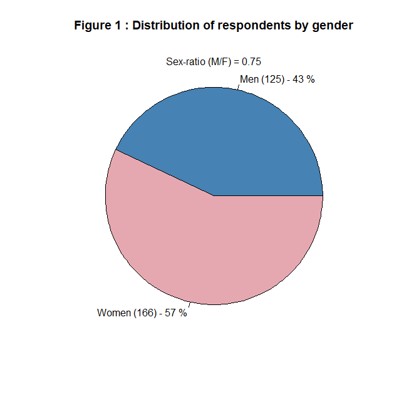
Figure 1: Distribution of Respondents by Gender
291 participants included out of the 339 targeted by the campaign, average age 48,2 ± 10,1 years (table I).
Table I: Socio-demographic data of participants
|
variables/ indicators |
Counts (n = 291) |
|
Average age |
48,2 ± 10,1 years |
|
BMI Normal |
194 (66,6%) |
|
Overweight/ Obesity |
97 (33,3%) |
Distribution by age group The most represented age group was 40-49 (n=82, 28,2%) (figure 2).
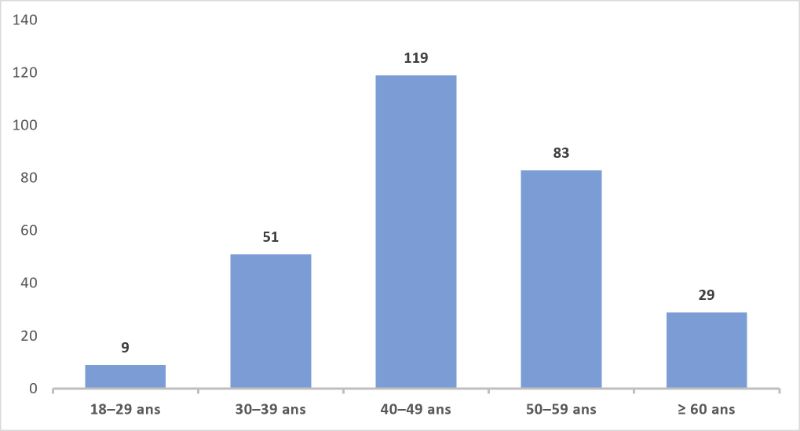
Figure 2: Distribution by age group
Determinants of Hypertension: bivariate and multivariate analysis
Bivariate analysis revealed significant associations between hypertension and age over 50, diabetes, and smoking. After adjustment in multiple logistic regression, only two determinants retained an independent association.
The main risk factors identified by the participants were dominated by unhealthy eating and excessive salt intake (170 mentions). Age was cited by 155 people. Stress was frequently reported (149 mentions), followed by diabetes (147) and smoking (146), two major recognized risk factors. A family history of hypertension was mentioned by 144 respondents, indicating an awareness of the role of heredity. And the lack of regular physical activity appeared in 131 participants, reflecting notable sedentary behavior in the population studied (table II).
Table II: Participants' recognition of hypertension risk factors before and immediately after the awareness intervention
|
Indicator |
Pre-test |
Post-test |
p-value |
|
Salt |
41.9% |
82.1% |
<0.001 |
|
Smoking |
48.8% |
84.9% |
<0.001 |
|
Diabetes |
47.8% |
81.4% |
<0.001 |
|
Stress |
39.5% |
83.5% |
<0.001 |
|
Physical inactivity |
41.9% |
84.5% |
<0.001 |
|
Blood pressure monitoring intention |
53.6% |
86.3% |
<0.001 |
|
Healthy diet intention |
44.7% |
81.4% |
<0.001 |
Advanced age and known diabetes are the strongest determinants of hypertension in this population. The effect of smoking loses its independence after adjustment for age and diabetes.
Table III: Independent determinants of hypertension
|
Characteristic / variable |
Hypertension |
Non hypertension |
Ajusted OR (IC 95%) |
p-value |
|
Age < 50 years |
110 |
94 |
1 |
|
|
≥ 50 years |
78 |
10 |
5,12 (2,40 - 10,92) |
< 0,001 |
|
Known diabetes No |
149 |
99 |
1 |
|
|
Yes |
39 |
5 |
2,11 (0,75 - 5,91) |
0,157 |
|
Current smoking No |
187 |
104 |
1 |
|
|
Yes |
1 |
0 |
> 0,05 |
|
|
Sex Female |
104 |
63 |
1 |
|
|
Male |
84 |
41 |
0,88 (0,51 - 1,51) |
0,637 |
Treatment
158 were on amlodipine alone, 39 were on furosemide, and 21 were on amlodipine + perindopril.
Impact and perception of awareness campaigns (KAP)
The overall knowledge score increased significantly after the educational intervention, from 3.18 ± 1.5 before the session to 5.84 ± 1.1 after the session (p < 0.001).
Recognition of major hypertension risk factors also improved significantly. The proportion of participants identifying salt intake as a risk factor increased from 41.9% at pre-test to 82.1% at post-test. Recognition of smoking increased from 48.8% to 84.9%, diabetes from 47.8% to 81.4%, stress from 39.5% to 83.5%, and physical inactivity from 41.9% to 84.5% (all p < 0.001).
Regarding preventive intentions, the proportion of participants reporting an intention to monitor their blood pressure regularly increased from 53.6% to 86.3% (p < 0.001). Similarly, the intention to adopt a healthier diet increased from 44.7% to 81.4% (p < 0.001).
The assessment of intervention-related perceptions also indicated an improvement in participants' understanding of cardiovascular risk factors and preventive measures. However, these findings reflect immediate changes in knowledge and reported intentions and should not be interpreted as evidence of sustained behavioural change.
Discussion
This study assessed changes in hypertension-related knowledge, attitudes and perceptions before and immediately after a community awareness intervention in Malicounda, Senegal, while also describing participants' clinical characteristics and factors associated with hypertension. Among 291 adults attending the campaign, knowledge scores increased significantly after the intervention, as did recognition of several hypertension risk factors and intention to monitor blood pressure. Older age was independently associated with hypertension, whereas the association with diabetes was not statistically significant after adjustment.
The evaluation results show that advanced age and diabetes are major determinants associated with arterial hypertension (HTN). This is consistent with international data. Indeed, several studies confirm the strong interdependence between HTN and diabetes. These are two metabolic conditions that share pathophysiological mechanisms (chronic inflammation and endothelial dysfunction). This association is highly atherogenic. It justifies a systematic reinforcement of HTN screening in all diabetic individuals, especially in our African regions where prevalence is rapidly increasing [7].
The prevalence of hypertension observed in this study (89.0%) was substantially higher than national estimates reported in Senegal (25–30%). This difference is likely explained by selection bias, as screening campaigns often attract individuals already diagnosed with hypertension or concerned about cardiovascular symptoms.
Cardiovascular risk factors (CVRF) such as high salt intake, an unbalanced diet, and stress. They indicate that awareness interventions should prioritize these modifiable determinants. The frequent use of amlodipine as a reported antihypertensive treatment reflects common practice in the region and highlights the need for structured therapeutic support, including adherence, appropriate titration, and education on dietary habits [2].
The assessment of knowledge, attitudes, and practices (KAP) reveals that the campaign effectively improved immediate knowledge and risk perception. The lower intention to change eating habits illustrates the persistent challenge of translating knowledge into behavioral changes. This gap is regularly observed in cardiovascular prevention programs in sub-Saharan Africa. The data suggest that information-based interventions are insufficient. It is essential to integrate post-campaign support strategies, such as individualized coaching, phone reminders, community support groups, or approaches based on strengthening self-efficacy. The goal is to help participants overcome perceived barriers and sustain changes [8].
This study has several limitations. First, the convenience sampling approach may have introduced selection bias and limits the generalizability of the findings to the broader population of Malicounda. Second, the absence of a control group and the immediate post-intervention assessment limit the ability to establish a causal relationship between the awareness campaign and the observed changes in knowledge, attitudes and perceptions. Because the post-intervention assessment was conducted immediately after the educational session, the observed improvements cannot be attributed exclusively to the intervention, and no inference can be made regarding changes in blood pressure or antihypertensive treatment effectiveness. Third, the study assessed short-term changes and therefore cannot determine whether improvements in knowledge or preventive intentions were retained or translated into sustained behavioral changes. Finally, some information was self-reported and may therefore have been affected by recall or social desirability bias.
Conclusion
The Malicounda awareness campaign significantly improved participants' knowledge, attitudes and perceptions regarding hypertension. The pre-post design provided robust evidence of the immediate educational effectiveness of the intervention. Future studies should incorporate longitudinal follow-up at 3 to 6 months to assess retention of knowledge, behavioural changes and long-term blood pressure control.
Declarations
Funding : this study received no external funding.
Ethics approval and consent to participate
Ethical approval for this study was obtained from Ethical Committee. Written informed consent was obtained from all participants (or their legal guardians).
Consent for publication : written informed consent for publication was obtained from the participants.
Availability of data and materials
The datasets used and/or analyzed during the current study are available from the corresponding author on reasonable request.
Competing interests : the authors declare that they have no competing interests.



Open Access By Aditum Open Access Journals id licensed under Creative Commons Attribution 4.0 International License. Based On a Work at aditum.org


