
International Journal of Epidemiology And Public Health Research
OPEN ACCESS | Volume 9 - Issue 1 - 2026
ISSN No: 2836-2810 | Journal DOI: 10.61148/2836-2810/IJEPHR


Brigitte Godard
MEDES, Institute for Space Medicine and Physiology.
Corresponding author: Brigitte Godard, MEDES, Institute for Space Medicine and Physiology.
Received: August 12, 2026 | Accepted: August 19, 2026 | Published: August 21, 2026
Citation: Godard B. (2026) “Pollution and Spaceflight are Sharing Ageing Acceleration. Review on their Common Change on the Human Body. How Spaceflight Experimentation can be Beneficial for Human on Earth?”. International Journal of Epidemiology and Public Health Research, 10(1); DOI: 10.61148/28362810/IJEPHR/213.
Copyright: © 2026. Brigitte Godard, This is an open access article distributed under the Creative Commons Attribution License, which permits unrestricted use, distribution, and reproduction in any medium, provided the original work is properly cited.
Pollution is a new potential risk factor for human bodies. It is nowadays recognized as a real cause of diseases and premature death worldwide.
WHO (World Health Organization) data show that almost all of the global population (99%) breathe air that exceeds WHO guideline limits and contains high levels of pollutants, with low- and middle-income countries suffering from the highest exposures. Air pollution is the leading environmental health risk factor causing about 6.6 million deaths globally every year (1) (WHO Technical note).
Among all factors involved in pollution, the most frequent one is the air exposure particularly the Particle Matter PM2.5. PM consists of a complex mixture of solid particles and liquid droplets of varying size, shape and composition. Short-term exposure to air pollution can cause mild symptoms in healthy people such as runny nose and eyes, cough, headaches or trigger even more severe exacerbations of diseases in chronic lung and heart patients. Long-term exposure to air pollution is correlated with daily number of deaths. All organs of the body can be impacted by pollution. Among the most frequent diseases are cardiovascular, respiratory, and neurodegenerative disease and type 2 diabete.
Furthermore, recent studies show that pollution would be an important facilitator of aging, also it might increase epigenetic aging. With this big socio-economic impact in the world, it is necessary to improve our knowledge and find new tools/treatment to decrease the impact on human health. Faradu et al studied new biomarkers, as the DNA-methylation-based biomarkers. These new biomarkers might improve our knowledge in epidemiology and improve how to fight these factors and decrease such impact on the human body. (2) (Fadadu et al. 2025).
Beside pollution, spaceflight is another complex environment which impact the human body too.
After the era of first space missions in the sixties, we learned that the human body was able to adjust and survive. Nowadays ISS (International Space Station) is an incredible spacelab to do physics, chemistry, physiology experiment in microgravity environment. Spaceflight brought a lot of discoveries and new tools very useful for the Earth. It is Today well known that spaceflight is a good model to simulate aging.
We are on our way to go a step further out of the view of the Earth: the interplanetary missions. The new challenges are the high level of ionized radiations, the psychological consequences and bone issues expected after a very long flight. We need to consider a new risk due to biological contaminants, from a mission on the lunar surface a new factor will be either dust/regolith, airborne contaminant or why not an unknown bacteria.
A comparison of these two populations: astronauts and people impacted by pollution will allow us to define the exposome and understand how the factors of the exposome even though different in both populations drive to the same consequences on the immune system.
On the other side, spaceflight is a new increasing activity with the commercial flight.
Scientists are always working on developing a new countermeasure and the combination of these new era commercial flight, interplanetary mission will certainly provide new tools via biology, genetic, multiomic studies to improve the knowledge of the human system. Because space and people impacted by pollution share lot of common consequences on the body, finding integrated and new countermeasure for spaceflight will be of help for human on the Earth. The space has always had the goal to be useful for the human on Earth.
aging, genetic; spaceflight; environment, pollution, microgravity, radiations, microbiota, immune system, exposome
1. Introduction
In 2015 pollution was responsible for 9 million pre-mature death all over the world which represented 16% of all deaths, it was also the first risk category for death worldwide and was followed by AIDS, tuberculosis and malaria (the three together), after comes alcohol and malnutrition. In September 2015 world leaders adopted a set of 17 Sustainable Development Goals (SDGs), with 169 associated targets, to be achieved by the year 2030. Among the SDGs, the Target 3.9 aimed to substantially reduce the number of deaths and illnesses from hazardous chemicals, pollution and contamination. (3) (Münzel T, et al, 2023).
Among the reasons for the pollution, six mechanisms/factors are well known today: macroplastic, deforestation, pesticides, microplastic, overfertilization and heavy metal toxins. (4) (Münzel T, et al, 2022).
More generally, environmental factors would be responsible for 24% death worldwide. Out of pollution environmental factors include physical factor, social factors (2) (Fadadu et al. 2025)
The impact of pollution is increasing, and certain environmental factors can substantially increase pace of ageing. They include sun exposure, pollution, unhealthy lifestyle and cytotoxic therapies (5) (Rackova et al. 2021). All systems of the body are impacted by the pollution.
Nowadays a huge number of studies have been presented out the consequences on each part of the body from air pollution, water pollution to environmental contaminants. Briefly we selected studies showing how pollution is responsible for disease and being considered as factor of pace ageing. The goal for physician and for WHO is to stop this process which has an impact on health, and socio economics consequences.
Among all science topics, space is still a fascinating field which is not yet very well known by terrestrial. But it is at least a very good model of aging acceleration. For spaceflight researchers, if the first goal is to allow humans to adapt to space environment and always going a step further, a secund very important goal is to be beneficial for human on Earth too.
After the era of first space missions in the sixties, we learned that the human body was able to adjust and survive. Nowadays, the ISS (International Space Station) is an incredible and unique laboratory to do physics, chemistry, physiology experiments in microgravity environment. Next step for human living on Earth is exploring other planets, also called interplanetary missions. The new challenges studied by researchers are the high level of ionized radiation, the psychological consequences and bone issues expected after a very long flight.
The goal of this review is to compare the consequences of pollution on the human bodies with the effect of spaceflight on human body. We compare the factors of pollution on human living on Earth leading to aging with the stressors of space environment in astronauts. In both populations, we use the exposome whose stressors are not the same in the two populations. However, the consequences, morbidity, mortality lead to common altered mechanism on the human body and furthermore this drive us to the key role of the immune system in the human body. Because there is a critical need to address pollution as a major public health issue (for older adults but not only) at both levels, individual and population level to make extended lifespan disease and disability-free, we expect space research could be a good opportunity to be beneficial not only for astronauts but for human being on Earth.
2. Materials and Methods
This article is a review based on publication extracts from web database articles. It is a summary of the two topics: first on the impact of pollution on the human bodies, and secondly all recent research knowledge acquired through beginning of spaceflight on astronauts. From all state of art in new interplanetary exploration, it is becoming obvious that the expected issues are similar not to say equivalent in the two populations (Pollution impacting human being and astronauts in long duration flight). From recent investigations in order to prepare for the interplanetary mission, we proposed solutions which might be beneficial and reduce impact of pollution on the Earth.
For research keywords included spaceflight, pollution, soils, pathology, immune system, microgravity, radiations, confinement, deep space exploration…
In the second line of article review on PubMed, the author discovered exposome was central in both areas, Earth and Space so new research was done with new keywords like exposome, oxidative stress, environmental risk factors, inflammation, cytoskeleton, stressors.
Also learning from space can always help to prevent disease on Earth.
3. Results
3.1 Impact of pollution on human body – facilitating the process of aging
3.1.1 Factors of pollution
Among factor increasing the level of pollution are all kinds of contaminants coming from the soil. Soil is important to keep humans healthy. Approximately 78% of the natural food comes from crops which grow directly in soil. Furthermore, soil is a major source of nutrients and removes contaminants from water (3) (Muenzel, 2023).
Air pollution is the most significant chemical environment health risk, with two specifics factors: ozone would be the most important one and secund the size of the PM2.5 (Particule Matter of 2.5 micrometers is the most important consequences in case size is below 2.5 um so designed PM2.5). A bigger particle will not enter the body, it will be stopped by the mucosae or ciliated cells in the nose and bronchus (6) (Haddad et al. 2025).
Among metal, lead toxicity primarily coming from water and soil pollution, is of concern due to its widely utilization either in car batteries or paints …
Climate conditions with high temperatures and humidity are another element of pollution. Eleven publications were reviewed from 2005 to 2023 on general population on all ages from China, USA, the UK, Cyprus and showed the effects of climate changes as impacting human health and reducing the air quality breath. It is mainly stated that PM2.5 is increasing. (7) (Karim M, 2023)
Other lifestyles are responsible for pollution too like smoking, quality of food, poor nutrition, and physical activity.
3.1.1.1Air pollution:
Mortality, specifically due to cardiovascular, respiratory, and neurodegenerative diseases, is significantly higher in older adults exposed to long-term pollution... (4) (Münzel 20223) (5) (Münzel, 2024) (8) (Sethi Y, et al, 2026).
More specifically, as already mentioned, Particulate matter 2.5 (PM2.5) are the most frequent reported air pollution and it is established they would accelerate aging, causing declines in tissue and organ function, and leading to diseases such as cardiovascular, neurodegenerative, and musculoskeletal disorders. (9) (Wang et al. 2024)
Brain would be impacted as well from air pollution, a recent publication showed the positive correlation in between high level of pollution and decline in cognitive performance, with most consistent evidence observed for language. Continued efforts to reduce air pollution, particularly where levels are the highest, might benefit cognitive performance. (10) (Di Gessa et al. 2025)
All sensory systems are impacted by pollution: on olfactory system, Ekström et al in 2022 showed how olfactory system declines due to cumulative effects of airborne pollutants on the olfactory system: may be one underlying cause of olfactory impairment in aging.
On hearing the result of a study in Korean adults’population, suggests that long-term exposures to environmental PM10, NO2, CO, and SO2 at the levels currently observed in the general population may be risk factors affecting hearing loss. Exposure to air pollutants contributes to oxidative stress and free radical formation in inner ear, which is linked to hearing impairment (11) (Yuan et al. 2022).
Cecile Delcourt suggests that exposure to a high concentration of pollutants over time could increase the risk of glaucoma (12) (Gayraud L et al. 2023). Her findings show again the impact of the PM2.5, those fine particulate matter exposure are associated with a faster RNFL (Retinal nerve fiber layer) thinning over time. The effect of air pollution on RNFL loss is similar to the effect of age. The effect of pollutants was observed below the current European regulatory limit.
Air pollution seems to have an impact on thyroid too. The impact on thyroid is either a hypothyroidism or a hyperthyroidism.
Air pollution components are involved in the processes of cellular senescence of the skin cells (13) (Martic et al. 2022). Sulfur dioxide SO2 (especially in the 1930s), PM2.5, and NO2 (from the 1980s) were strongly associated with accelerated biological aging (14) (Barani et al. 2022)
3.1.1.2 Water pollution
Water pollution exerts a negative impact on health. Moreover, certain water pollutants, including specific pesticides and industrial chemicals, have been associated with neurological and psychiatric disorders, such as mood swings, depression, cognitive decline, and anxiety, impacting both women and men. Water pollution is also associated with physical ailments, such as diarrhea, skin diseases, malnutrition, and cancer. Exposure to specific pollutants may promote premature menopause and vasomotor symptoms, elevate the risk of cardiovascular disease, and reduce bone density. (15) (Bochynska Set al. 2024).
3.1.1.3 Plastic pollution in environment
The global demand for plastics and more specifically nanoplastics (NPs) has increased in recent years, with annual production exceeding 400 million tons. A recent article highlights the mechanistic links between NPs exposure, cellular senescence, and biological aging, offering a novel and timely perspective on how NPs may contribute to age-related pathologies. (16) (Shiwakoti et al. 2025).
3.1.1.4 Chemical polluant
Among all chemical pollutant, DEHP (di-2-éthylhexyle phthalate), DiBP (diisobutyl phthalate), naphthalene, phenanthrene, DnBP (di-n-butyle phthalate), pyrene, anthracene, permethrin, fluoranthene, pesticide are the most active ones. Several studies show their contribution in breast cancer, fatty liver disease … (17) (Wang et al. 2024)
3.1.2 Consequences of pollution at the biological level
Telomere length (TL) shortening is a hallmark of biological aging. (18) (Herrera-Moreno et al. 2023)
The impact of environmental exposures on TL reinforces the need for policy efforts to reduce environmental pollution in order to improve health and quality of life and enable longer healthy lives. In most of the studies reviewed by Herrera-Moreno, it is suggested that prenatal exposure to environmental pollutants such as air pollutants, metals, and EDCs (Endocrine-disrupting chemicals) may be associated with lower Telomere length in newborns.
The influence of environmental exposures on epigenetic age acceleration (EAA)
Nex findings in the field of biology have led to development of new biomarkers: epigenic aging biomarkers. These markers evaluate the epigenetic age acceleration (EAA). Also, the process called epigenetic age acceleration, a type of molecular clock, examines chemical changes in DNA and indicates whether the body is aging faster or slower than expected for someone’s actual age. Fadadu et al in 2025 evaluated EAA in 189 206 subjects exposed to different environmental factors. From this study, exposure to air pollution (15/19 of studies; 79%), cigarette smoke (53/66; 80%), and synthetic and occupational chemicals (5/8; 63%) were notably associated with increased EAA. The most conclusive data was that air exposure, particularly PM2.5 (the most frequent one) and long-term exposure may increase epigenetic aging. Another important conclusion from this study was these type of biomarker. Another promising aging marker is the DNA-methylation-based biomarkers. The author showed how it might help in epidemiology to better understand and evaluate the impact of such factors on the human bodies. (2) (Fadadu et al. 2025).
A recent article published by Sanket in 2025 shows a huge number of studies which reveal how everyday exposures, from wildfire smoke to household pollution, speed up aging at the cellular level. The impact is worldwide (Australia, UK, Indian, Taiwan, USA, Europ…) (19) (Sanket, 2025).
3.2 Impact of spaceflight on human body
The factors responsible for alteration of the human body in space have been studied for decades even before first spaceflight. The impact on the human body is obvious despite all countermeasures used nowadays. A countermeasure is a mean of prevention to avoid such consequences. The most known one is the exercise. Each astronaut is doing 2h sport per day to stay healthy during a long duration mission. (20) (Hodkinson et al. 2017).
The major factors responsible for change in the human body in the very extreme environment are the following: microgravity, ionized radiation and confinement with other factors linked to live on board the space station.
ISS is an incredible and unique laboratory in space used by the astronaut to do science experiments from all kinds of science chemistry, physics, astronomy, education and physiology.
The space station is still used nowadays even though it is a new era with few travels around the moon and then next step to interplanetary mission are the new goal and challenges for space medicine.
We learn from short (10 to 14 days: shuttle era) and long duration mission (6 to 12 months: MIR and ISS stations) that the body is severely affected and it is like aging process. This has been first well demonstrated on musculoskeletal system but the more the experiment results are increasing the more the same consequences are seen in all systems of the body and all reaching same consequence: aging facilitation.
Of course, when the astronauts are back on earth, the rehabilitation process will make the body to recover more or less quickly to their baseline.
A short description of the space factor will be done here. The author and many others already published the impact of all spaceflight factors in details (20) (Hodkinson et al. 2017).
3.2.1 The impact of microgravity
Human body has developed on Earth where gravity is a force which attracts the body to the ground and to fight against it, the body is constantly adjusting. In the space environment, this vector is mostly removed, resulting in microgravity conditions. The first consequence of microgravity is the fluid shift: change in the repartition of the body fluids as an increase in the upper part of the body compare to the ground where the repartition of all body fluids is more homogeneous. Microgravity also has an impact on all the physiological systems of the human body.
The probably most studied system is the musculoskeletal system. Indeed, the most important effects are a muscle atrophy (21) (Juhl et al, 2021) and osteoporosis. The usual bone lost is explained by an increase in osteoclast activity with stable or reduced bone formation (22)(Vico el al. 2000), the lost in bone is severe, it affects mainly the bearing bone (spine and hip are the most affected) the lost is in between minus 0.5% to minus 1.5% of bone per months compared to post menopause (1% lost per year at menopause). These values of course change depending on the individual and the location.
Effects on the vascular system (23) (Han et al. 2024) show stiffness of the vascular wall, atrophy of the heart muscle with some degree of heart failure, and orthostatic intolerance to return to Earth
On the neurological system: sleep disorder is among the most known and studied (24) (Barger et al. 2014), but less reported are symptoms such changes in writing, concentration (25) (Clément, 2011). Regarding sleep disturbances, it is not only the result of microgravity, but also the many alarms that are often triggered at night, over abundant activity because of the mission, their wish to do personal activities after the day's work, the arrival of cargo ships or new astronauts: that will cause time differences ... Headaches is a very common disorder reported in space but not only consequence of the microgravity (inducing fluid shift) but can occur with congestion due to elevated CO2 levels (26) (Law et al, 2014).
The visual system is affected also in flight. It has been discovered more recently. It is called SANS: Space-Associated Neuro-ocular Syndrome. It is the subject of much current research. It consists, among other things, in a flattening of the eyeball and enlargement of the sheath of the optic nerve. Most of the time, astronauts do not suffer from any symptoms, except possibly a certain early presbyopia, which usually reversed on their return to Earth but not in all astronauts. For the moment the mechanisms invoked are multifactorial among those, modification of the fluid distribution with shift fluid towards the upper part of the skull as the main one (27) (Mader et al. 2011) (28) (Lee et al. 2017) (29) (Nguyen et al. 2025). A more recent study indicates the implication of potential dysfunction of mitochondria associated with an increase in oxidative stress (30) ( Waisberg E, et al. 2024).
On the ENT (Ear, Nose, and Throat) and vestibular system, space sickness is probably the most studied phenomenon, it has a neuro-sensory origin as a conflict in between all informations coming from the neuro sensory organs (interpreted as a discrepancy information) (31) (Lackner & Dizio, 2006). On ENT, infectious and baro-traumatic disorders are often reported (32) (Khan et al. 2025). Hearing is impacted by space, more by the high level of noise on board (33) (Kadem, 2018). Also sometimes it is not possible to distinguish what is the most reason in between, microgravity, radiations something else or all.
The digestive system is also affected in space, the most reported symptom is a feeling of fullness in the beginning of the flight with decrease of the appetite (difficult to extrapolate from the SMS) (34) (Yang et al. 2020). Constipation and gastroesophageal reflux disease are among the other symptoms reported. Now, the digestive flora is the subject of many projects by the scientists. This flora would change mainly because of life in a closed environment (35) (Gonzalez et al. 2024). To be complete we can mention the sense of smell and taste (36) (Taylor et al. 2020), genital (37) (Jennings & Baker, 2000), hormonal (38) (Strollo, 1999) and immune systems (39) (ElGindi, et al. 2021). They are all affected by microgravity but the impact on the human body is not so crucial.
3.2.2 The impact of radiation exposure in space
Exposure to space radiation is one of the main challenges for future long-term space and interplanetary space missions. Many uncertainties remain, especially to quantify the risk of radiation-induced cancer.
Space radiation includes energetic solar particles (emitted during solar flares and coronal mass ejections), GCR (Galactic Cosmic Rays) composed of electrons and positrons (2%), protons (85%), helium nuclei (12%), and heavier ions referred to as high-energy and high-charge particles (HZE 1%) (40) (Maalouf M et al. 2011).
Despite technical progress, the radiobiological effects and their impact on astronauts are not fully known.
Epidemiological studies on populations exposed to ionizing radiation (primary X-rays or gamma rays) have demonstrated an increase in the incidence of degenerative tissue damage, cataracts (41) (Chylack et al. 2009), and cardiovascular diseases (atherosclerosis) (21) (Elgart S et al. 2018). Although the underlying mechanisms remain unclear, it involves oxidative and inflammatory damage, as well as direct deleterious effects on tissues (43) (Restier-Verlet et al. 2021).
Astro – and cosmonauts are exposed to high levels of radiation far exceeding the levels of the normal public. Occupational workers are subject to cumulative effective dose limits of 100 mSv in 5 years not exceeding 50 mSv in one year. Considering that the average exposure per day inside the Space Station is approximately 500 µSv – depending on the shielding conditions and the solar cycle – astronauts would have to return to ground after ~ 100 days in space since the dose limits for occupational workers are reached. Also, the best compromised have been taken by the agencies to allow flying longer such 6- or 7-months mission without compromising the health of the astronauts.
The recommendation is to follow the ALARA for As Low as Reasonable Achievable. It means the less radiation possible. The radiation doses of each crew member is closely recorded (44) (Cucinotta F, & Pak 2025). The National Aeronautics and Space Administration (NASA) has identified four primary biomedical risks that may pose significant health concerns for astronaut crews exposed to the interplanetary radiation environment during exploration missions. These four space radiation risks are carcinogenesis, degenerative tissue effects, CNS (Central Nervous System) decrements and acute radiation syndrome (45) (Sishc et al. 2022).
3.2.3 Impact from Isolation confinement on the astronauts
One of the other effects of life aboard the ISS concerns the confinement. The main impact is psychological. Astronauts, if they can communicate with families through their iPhone when they ran of course outside of the experiments, have no contact outside the teammates and this for 6 months or more of their mission (46) (Kanas, 2015).
Psychological disturbances can come from many reasons, for the most frequent: crew changes, work overloaded, social retract, hazardous atmosphere on board with contaminants, technical deficiency « anxiety or anger » against the ground support, conflict among crew members, …
Consequences are psychological changes such irritability, depression and sleep disturbances and could impact the mission.
Psychology is among the main challenging topic with radiation and bone issues for next step behind LEO (Low Earth Orbit) such very long interplanetary mission.
Every 90 minutes the station alternates with day and light by flying over the globe. Of course, the station has specific light helping but, the human body and probably the most impacted system: hormonal system will be affected by all these chronobiological and biorhythms changes. Indeed, the hormones are secreted at specific times of the day (cortisol in the morning at 8 am and melatonin at dusk).
3.2.4 Effects due to living on board the station
Among others changes, some are very important because it affects the crew: CO2 level, dust noise and orbital debris.
The level of CO2 in space stations was at the beginning of spaceflight era roughly 10 times higher than on the ground (On the ground 500 ppm). Hopefully this level is much lower now. A NASA study showed that each elevation of 1 mmHg of CO2 level was responsible for headaches double of normal based. Headaches some years ago were mainly linked to this high level. Following this study which furthermore showed that to see a decrease in less than 1% of headaches, it was necessary to have a level of CO2 lower than 2 mmHg, a lot of effort was made to really decrease the level on board. (26) (Law et al. 2015). Nowadays there is a big improvement even though it is not possible to decrease much more.
The quantity of dust increased considerably on board the ISS, some years ago, even though each crew member was doing two hours per week of cleaning. Some new rules and changes in filters were implemented and were able to reduce the symptoms and improve the way of life on board. (47) (Be et al. 2017).
Noise is higher than on the normal environment on Earth as already mentioned. This noise comes from many factors, the main one is the noise generated by ECLSS the Environment Life Support System, which is a very fundamental system to maintain on the station, life in the same conditions as on the Earth. On top of that comes the quantity of computers on board as well the sport exerciser such Treadmill which increase the level of noise. Most of the time, the level of noise reaches the conversational level of 60 dB but can be higher in some part of the modules of the station, depending on the activity done (33) (Kadem). The alarms are another factor for noise, mentioned here because happen more often than we could expect and usually in the night. Hopefully they are false alarms but wake up the crew (48) (Li et al. 2026)
Orbitals Debris are becoming increasingly frequent with the high level of space vehicle, and satellites gravitating in the space environment. The impact of orbital debris could be important if it would hurt sometimes the station. This requests a high-level involvement from ground teams to follow and watch the debris carefully. A scale with a level of risk has been defined to monitor in case the risk increases. At the higher level, it would be requested that the crew members go in their Soyuz/Space X vehicle and be prepared for an evacuation of course they have to be fully prepared such wear as well their flight suit …. (49) (Hayashi et al. 2024) (50) (Galli & Losch, 2019).
Also to conclude the full body is impacted by the new environment and to allow human bodies to stay and work in this extreme environment for human, a multitude of actions have been taken and they are called countermeasures. This will be described in the last chapter.
3.3 Astronaut a good model of ageing
More studies from spaceflight showed how the full human body is impacted after 6 to 12 months’ missions and furthermore it is a real model of aging. It has been first experimented with the muscle skeletal system and the cardiac system. Nowadays recent studies on nutrition and microbiomes show the microbiota becoming like the one of an older people rather than young ones.
The other systems involved are the sensory system and the immune system. Also, all systems of the human body are really impacted by space.
Lucky enough, after one year more or less of rehabilitation on Earth it seems the astronaut recover her/his basic level. At least the body comes back to his previous state from a macroscopic view.
Only few systems will be summarized here to demonstrate the effect of aging on the astronauts induced by spaceflight. The bone and muscles, the cardiovascular, , digestive system, neurosensory system, vestibular and ear, and immune system, are among the most important results obtained up to now. See table 1 for a summary to compare both populations.
3.3.1 Bone
The bone as said earlier is impacted and this will be a no go for an astronaut to complete another mission in case his/her bone density reaches a define limit. We saw in the past astronauts been selected and not able to fly due to a fracture in pre-flight after previous missions completed.
As explained earlier, an astronaut will lose bone density either mainly on spine area or on hip. It is impossible to extrapolate before flight and even some studies showed how it can be unexpected even for the same subject at the individual level. Probably because if the microgravity is the main reason for bone loss, radiation and other factors are involved too. A loss of 1% bone density per month is a mean data, it can be less and go until 3 to 4 % of course not on the full skeleton but on some part. This is called osteoporosis and have the same impact as elderly people with at maximum fracture of the bone (21) (Juhl et al. 2021) (22) (Vico et al. 2000)
3.3.2 Muscles
The same phenomenon as for patients in bed, the astronauts are not using so much their muscles and legs, and it is quite fast in flight and common to see a decrease in size muscle for example for 6 to 12 months flight could go until 4 to 5 cms lost in quadriceps. Of course, these data are given considering that the astronauts are doing 2h sport per day.
We see the same consequences as for the older people, these last ones decrease their physical activity which leads to muscle atrophy with sometimes an increase in fat. This is well documented in bed rest studies which is a very good model of microgravity (51) (De Martino et al. 2022)
3.3.3 Cardiovascular system
Same as for muscles, in one part, the cardio vascular system works as a muscle so has the same consequences with enlargement of the cavity, but because of the fluid shift and the decrease in venous system function, heart is becoming more spherical, with his wall becoming thinner and as well, the vascular system become on the other side stiff which similar to the older people leads to coronaropathy and potential ischemia … (the reason are microgravity but radiations have the same impact too) (42) (Elgar et al. 2018).
3.3.4 Nutrition – Metabolism
Even after short duration mission (shuttle mission), astronauts tend to develop hyperglycemia and higher level of insulin resistance (unpublished data). Long term duration mission confirmed that tendency (52) (Tobin et al. 2002). The is the main consequence of lower activity and less impact of gravity on the body. Exactly same phenomenon impacts older people walking less and probably changing their quality food consumption.
Regarding nutrition itself, during the long duration mission the quantity of fresh food, fruit and vegetables is incredibly lower, which has few impact.
It has been shown that the microbiota of the astronauts is more similar to the microbiota of old people and this is mainly due to the decrease in food diversity, isolated space (lower contact, lower social life for adults). (53) (Godard, 2025). For the older people, they have a decrease in their tastes receptor directly reflected by the loss in other flavors than sweet. This is why older people tend to eat more sweet food and less.
The Space X mission from September 2021 called inspiration 4 mission, collected lot of sample on the crew members, 750 samples across 10 points using metagenome studies and metatranscriptomics. Collection samples came from oral, nasal and skin microbiomes on the crew (54) (Tierney et al. 2023). On that long mission the study shows a reduction in some potentially beneficial gut micro-organisms including Akkermansia. And some reduction in other beneficial like Lactobacillus and Bifidobacterium two genera which maintain good intestinal immune homeostasis. The same author showed the increase as well in pro-inflammatory cytokines reinforcing the importance of microorganism – immune crosstalk.
All changes in the digestive system are linked to a combination of radiation impact on the food, and the food intake changes. This direct impact on digestive systems drives the same changes in the immune system. A supplement in pre and/or probiotic would be another helping countermeasure (53) (Godard, 2025)
3.3.5 Neuro sensory system
Some IRM studies on the brain of astronauts show changes in the neurological structure which has until now never being linked to any type of disease but could be similar to a neurodegenerative process. As the other issues observed, it resolved rapidly after coming back to Earth (55) (Van Ombergen et al. 2017) (56) (Romanella et al. 2023)
Less obvious are the minor changes in illusion, change of perception of the body, change in the written. Until now, no publication has compared older population and astronauts but it might be that these changes could be similar too.
The sleep is a good example even, so the reason seems not to be the same. It is accepted that older people are sleeping less with age .. most of the time it is a very well-known issues and of course for astronauts they have many reason not to sleep well but in the long run this could impact the safety of the subject (more irritability less concentration) and safety of the mission at the end. For astronauts they often report poor sleep quality and shorter sleep time in flight (57) (Wu et al. 2018). We need studies to compare with older people whose sleep is as well reduced in time but with less deep sleep and more lighter phases. It might well be we see the same changes. Even if the factors are different in both populations the consequences would be the same danger for the body who needs good sleep quantity and quality to recover. If older people have decreased deep sleep phases it will impact on the daylight activities because this is during this phase that the body recovers from physical or probably psychology as well.
We mentioned changes in taste and may be smell (no studies on that on human per se) but this has been studied at the cellular level and some alteration on cells could explain the lost in taste on astronauts (58) (Taylor et al. 2020).
Proprioception is very well impacted mainly by the loss of gravity and need to be first reeducated after flight …example of such disturbances is seen with astronauts who experienced illusions and issues in walking. This is one of the reasons why driving just after coming back from space must be really evaluated. Some tests repeated post flight like equitest show how they are impacted sooner post flight. This comes back nominal after 8 to 15 days depending on each one. This phenomenon can be seen in older people too, moving less… like muscle atrophy, and .. loss of balance.
Proprioception is the sense of the movement and position of the body and limbs in space. Proprioception includes several receptors in muscles, joint, tendons. Proprioceptive feedback from cutaneous or joint receptors appears to serve a relevant supporting role in motor control and perception of movement. Tactile feedback appears to supersede proprioceptive information in the conscious perception of sensation. Proprioception involved complexes afferent and central response. The central pathways of the different types of proprioceptive afferents and spinal projection neurons, involved multiple center organ such cerebellum, and thalamus to the cortex (59) (Marasco & de Nooij, 2023)
The loss of balance in elderly people is responsible for fall so this problem is well known as well in older people with altered proprioception (60) (Wang et al. 2024) this is even more obvious when this is associated with stroke (61) (Lampert et al. 2025)
3.3.6 Vestibular: Inner ear and cochlea and vestibula
Of course, vestibular system is the one responsible for the equilibrium. But because the actual explanation hypothesis for SMS is a neurosensorial conflict we explain in the previous chapter the implication of these sensory neuro system part.
Regarding the vestibula itself, if we see an increasing number of vertigo, or equilibrium disturbances in older adults, we can say that one of the main reason could be the medication. For astronauts the reason mainly will be the gravity changes and consequence of course of the fluid shift on the baroreceptor which will affect the neuro-vegetative system and be responsible for fall.
As seen earlier the hearing loss might have a common factor in both populations. Researchers showed how the cells are impacted after a flight and this is the same hearing loss in the older population. Of course, the factors in space might be the combination of noise (as for on the ground) but this is at an increased speed due to the impact of radiation and microgravity probably (33) (Kadem, 2018).
3.3.7 Immune system
Already the first short flights showed the changes in the immune system. For the older people this is well known … it is one reason why they have been designed as risk category and must receive flu vaccine for example after 65 years old .
The reason for degradation of the immune system is probably not fully determined. But, in older people, the immune system is less efficient … It is affected on both side, the adaptative system and innate system.
On the adaptative system, there is an increased levels of circulating inflammatory mediators such as pro-inflammatory cytokines and acute phase proteins, e.g. interleukin-6 (IL-6) and C-reactive protein (CRP). These factors are commonly used as indicators of inflammaging (62) (Pinti et al. 2016). On the innate system the impact has been discovered lately because it is more subtle. Also, the number of white blood cells, PNN (PolyNuclearNeutrophile) and monocyte are quantitatively normal outside some diseases, it is more their quality which is altered. And the mitochondria will play a role as well in senescence by insufficient mitochondrial DNA repair (63) (Zheng et al. 2023).
These changes in immune cells are often associated with mitochondrial dysfunctions including increased ROS (Reactive Oxygen Species) production and reduced oxidative phosphorylation in non-immune cell. Such changes can ease apoptosis (64) (Capri el al. 2023).
The consequences are low-grade inflammation, elevated inflammatory immuno-mediators in age-associated with chronic autoimmune and neurodegenerative processes.
We can ask if the level of toxin, the impact of radiation, of pollution, and chemicals are playing a role in aging because studies show that the longer the person is living the more impact the pollution has on her (19) (Sanket, 2025).
On space level, microgravity seems responsible for the following changes on both immune systems, innate and adaptative. The changes seen in the innate immune system are a decrease in natural killer (NK) cell toxicity, disrupts macrophage oxidative burst, differentiation and polarisation of the phagocytosis by dendritic cells and neutrophils. The changes seen in the adaptative system are dysfunctions in T cell and dysregulation. A decrease expression of activation markers such a lower production of effector cytokines among others changes.
Gene expression linked to the cytoskeleton, proptosis temperature shock proteostasis … Changes in the cytoskeleton and increase immune cell production are all in favour of an inflammatory response. (65) (Winer D et al). The same consequences as those seen in aging.
Radiation is well known to significantly reduce leucocytes cells with increased cellular apoptosis and impaired lymphocyte proliferation. All lymphocytes will be sensitive to radiation, B, T cells and NK cells. Of course, after post-flight we see these changes with an increased DNA damage in lymphocytes. The mechanism of the impact on immune cells by radiation has two components: direct impact by interaction with DNA charges particles or indirect impact via the production of free radicals (66) (Cortese et al. 2018). These effects can be mitigated by strong antioxidants shown in some studies.
To conclude, we can extract from all studies that multiple spaceflight stressors combine altogether to increase dysregulation of the immune system. Of course, it is expected that this might be worse in deeper space where new unknown stressors apply like Planet dust and new atmospheric conditions and maybe new microorganism. Other key features are impacted like reduced phagocytosis, endosomal traffic, TCR (T-Cell Receptor) synapse formation and antigen presentation all of those are key in immune response.
This is similar with ageing, also to summarize spaceflight proves once more that not only bone and muscle but immune system and microbiome change in flight as it does in ageing. Fortunately, the astronautsrecover when the mission duration is not too long. We really need to avoid it for deeper mission because we already know that the longer the mission is, the longer it will take to recover.
Table 1: Comparison of both population the astronauts and older people.
|
|
Astronaut after long flight |
Main factor |
Older people |
Pollution factor involved |
|
Bone |
Osteoporosis Astronauts lose 1% bone density per month |
Microgravity Radiation |
Post menopausal women lose 1% of bone per year |
All kinds of pollution: air and water pollution |
|
Muscle |
Atrophy quantity and change in quality less capable of endurance |
microgravity |
Due as well to the decrease activity walk |
All pollution |
|
Cardiovascular |
Atheroma change in rhythms change in anatomy orthostatic intolerance |
Microgravity Radiations |
Risk increases well known around 45 to 50 years old and post menopause by women |
Air pollution |
|
Lung |
Minor changes |
microgravity |
Obvious in people with lung diseases such BPCO, Asthma |
Air pollution PM2.5um Metal and chemical pollution |
|
Nephrology |
Increase risk of gut |
Microgravity, fluid shift Lost of water intake |
|
Metal pollution |
|
Metabolism |
Obesity diabetes |
microgravity |
Increase number of type 2 diabete with aging and even need Insulin in previous DNID |
Air Pollution |
|
Nutrition |
Astronaut mainly lose weight and decrease level of calories intake despite recommendations |
Confinement Microgravity Impact of radiation on the food conservation |
Few physiological reason, water intake all pathology and medications |
Water pollution Air pollution |
|
Microbiota |
Decrease in type of bacteria |
Confinement Type of food |
Changes in the receptors change in the variety of food |
Mainly lifestyle |
|
Brain Neurology |
Neurological changes |
Microgravity Radiations |
Increase of memories diseases (Dementia not only) Parkinson |
Air Pollution |
|
Eyes |
SANS Cataract post flight |
Microgravity And linked to radiation and more frequent on astronauts or coming earlier |
Cataract |
Air pollution, sun and radiation |
|
Ears Audition |
Hearing loss |
Life on board of ISS with heavy noise But could be microgravity as well |
Hearing loss by physiology s |
Air Pollution |
|
Ears equilibrium |
SMS (Space motion sickness) |
Microgravity and gravity changes |
Elderly increase the equilibrium changes Either because of Blood pressure problem but as well vestibular |
If medication is the first one Air and chemical pollution |
|
Taste and smell |
Most of astronauts report taste different on board, lower palatality, but linked may be to the standardized food and no more fresh food |
Radiations? Food preparation |
Physiology well known process with lost in receptor, the one who are kept longer is receptors to detect sweet |
Water pollution |
|
Skin |
Not clear understanding yet with contradictory studies but still increase naevi post flight due to exposure to the cupola … |
radiations |
The skin is fragile on most of old people with increase sun lesions |
Air pollution Water pollution |
|
Immunology |
Altered in all space flight duration (short or long) in a way to induce inflammatory process with facilitation of the auto immune problem |
Microgravity Radiation Stress Life on board |
Processus of aging, the IS is more impacted less efficient against microbe as well all aggressive factors |
All kind of stressors, pollution |
|
Psychology |
On board ISS is not really depressive astronauts but what about long duration mission when astronaut cannot see the Earth anymore Still to be determined? |
Confinement |
Isolation makes older people sometimes depressive
|
Water pollution Metal pollution |
In each case we mention the factors or stressors involved but this is not exhaustive list.
If the stressors are not the same the impact is the same as described in the text.
We can even interpret the fact that if the duration on the factor is brief the human body will not be impacted and we see a restitution at the basic level.
3.4 Exposome: definition and its role in the immune system response in case of pollution
The global factors from environment are so wide that the term of “exposome” has been introduced in 2005 by CP. Wild to encompass the environmental factors from external and internal part (Wild 2005) (67). The exposome describes the full lifelong exposures to environmental risk factors. The ones which contribute the most to human health beings are from environmental part: the chemical factor (from air water and soil) and from lifestyle tobacco and unhealthy habits. Furthermore, the exposome can be categorized into temporal periods, spatial exposure and organ specific representation.
It can be analyzed using two main methods bottom up: this measures the external factor like water quality and the top-down approach which focuses on internal biological changes (these would be biomarkers of the exposition to the environmental factors (68) (Daiber 2025).
The impact of these environmental factors on the immune system could be explained by the following event cascade, the example of the PM2.5 will be used because it is the most important factor responsible for air pollution and because this cascade has been proved on animals.
1- inhalation of the particle: the size must not be higher than 2.5 microns because if not, it will be stopped.
2- the PM2.5 particles invade the respiratory tract
3- it will increase mucosal and alveolar permeability…
4- the barrier is damaged and allows /or increase passage of molecules
5- start of the inflammation process: cells secreting cytokines such as IL-6
6- inflammation cells reach the blood.
7- and the particle can also impair the pathway through surface cells and can through these changes cause modification in nuclear gene expression.
8- The body and immune system try to adjust and endocytose of the particles will start which will in complex way activate the Toll-like receptor (TLR)-mediated inflammatory signaling and lead to oxidative stress
9- At the end the process leads to inflaming, sometimes the immune system react too much and drives to auto-immune disease allergy
10- On the long run, the changes in immune system with less repair
more inflammatory production will induce chronicle diseases neuro-degenerative disease and cancer.
The same process applies to chemicals like pesticides and leading to diseases like cancer, chronicle diseases, auto-immunes diseases and neurodegenerative disorders.
On earth this has been seen in agricultural workers. 25 million such workers would be affected by the pesticides (69) (Cancino et al. 2023). It is estimated that 400.000 – 500.000 annual cardiopulmonary deaths would be attributed to these natural events which belong to the 18% of all premature death from air pollution.
Finally, the concept of the exposome refers to the totality of exposure to a variety of external and internal sources, including chemical agents, biological agents, or radiation, over a lifetime. To date, environmental epidemiology has focused primarily on difficult outcomes, such as mortality, disease exacerbation, and hospital admissions. However, new ways in biology should be systematically studied and lead to new biomarkers of exposure. (70) (Di Renzo et al., 2024).
3.5 The space exposome
As for on Earth, we can determine the exposome, but the stressors would be different from the one on Earth, even though the consequences of the human body would follow the same process.
Crucian et al. In their review of 2018 defined Space Exposome. Compared to the one defined by Wild (exposure to which an individual is subjected in his entire life and hence is a function of quality, intensity, and duration of the event) (Wild 2010), Crucian implements three categories in the space exposome. Especially for a space traveler, this exposome can “grow” in all three defined categories. In the first category, the exposome comprises processes internal to the body (including neurohumoral regulation, metabolic changes, immune changes, and aging processes). Second, external exposures include conditions much related to space flight such as radiation, infectious agents (e.g., increases in pathogen virulence), dietary restrictions, microgravity, overloads during launch and landing, constant noise, hypodynamia, and the influence of hypo magnetic fields in relation to the deep space flights; and third, the exposome includes the wider social and psychological influences on the crew (71) (Crucian et al. 2018)
For Bailey et al. “the emergent concept underlying the space exposome encompasses the totality of an astronaut’s cumulative exposure to the hazards and functional interaction with endogenous factors that modulate the risk “. This is very complex and all factors are considering (72) (Bailey et al. 2025).
We can assume from what we learn that the impact on the body must consider the three parts of the exposome. If from spaceflight parts 1 and 2 are expected and the best known (refer to what has been explained in chapter 3.2), the part 3 could be the most difficult to expect. Furthermore, other factors like genetic generic and specific factors have an effect as well on the body as the internal factor. It seems obvious if the person is already stressed the body needs to fight more. This is why we decided to give a potential explanation in this chapter as explained in table 3 about the level of reaction of the body.
The European Space Agency (ESA) team of researchers have been tasked to address the actual gap and proposed new countermeasures to prepare for the deep space exploration (72) (Bailey et al. 2025).
Following their work, the space exposome is very complex as stated before and the “integrome” (integrative human adaptation) can enhance risk stratification and help to develop new personalized countermeasure as developed in next chapter.
The same impact as seen on pollution can be extrapolated here for the space population.
All main stressors mentioned above and in various studies from spaceflight: radiations, microgravity, confinement, disrupt clock, noise, overload work, increase of CO2 level, will disrupt the immune balance and expose the human body to pathology (auto-immune, infections, allergy, and later on neurodegenerative disease or chronicle diseases).
See Table 2 Comparison of the stressors from Exposome in between Earth Pollution and Space area. It is an overview of all stressors with the impact on the population. Both radiation and microgravity emphasized each other’s their effects and conduct to inflammation, DNA dysfunction production of free radicals and promoting the Il-1 beta production linked to chronicle diseases and cancer (73) (Kidane, D. et al, 2014).
Among other stressors is the cortisol reflecting the acute or chronicle stress and leading to alteration on the immune system by increasing the inflammatory process too (high level of IL-10 and increase inflammatory cytokine (Il-6 and IL-1 beta). This process will be reinforced by the sympathetic nervous system which lead to inflammation process too (65) (Winer et al. 2025)
3.5 Generic countermeasure at all levels of spaceflight
3.5.1 Current countermeasures on board ISS
We will not review the current generic countermeasures which can be found elsewhere. Mainly preflight countermeasure will include selection process with regular follow-up.
In flight the main countermeasure is good nutrition with regular recommendations given by dieticians plus daily exercise. Three types of exercise are done: Treadmill, ARED (AeRobic Exercise Device), and cyclo-ergometer (20) (Hodkinson et al. 2019).
The level of fitness is checked in flight.
3.5.2 Current immune countermeasures
Because immune system looks like to be at the center of the new potential issues expected in long duration mission, we will review more in detail the current immune countermeasures:
3.5.2.1 the Flight Crew Health Stabilization Program (HSP)
The Flight Crew Health Stabilization Program (HSP) was implemented during the Apollo program to reduce the instances of infectious disease among astronaut flight crews in the immediate pre-flight/in-flight period (74)(Hawking & Zieglschmid 1975). The HSP defined certain controls to minimize crew exposure to pathogens by providing a quarantine situation for the crew that reduces contact with potential pathogens by limiting the number of individuals who come in immediate contact with the crew
3.5.2.2 Nutrition/Functional food
Protein intake during flight typically exceeds dietary recommendations, and it is generally assumed that all indispensable amino acids are also provided in sufficient amounts
Supplementing whey protein, which has a high leucine content, has been shown to enhance natural killer (NK) cell function and IL-12 concentration (75) (Kang et al 2017) and increase plasma glutathione concentrations in HIV-infected patients (76) (Micke et al 2001)
Diets rich in fruit and vegetables, which contain micronutrients such as carotenoids, flavonoids, vitamin C, and folate, have been shown to improve immune function in elderly subjects. In general, the ISS food system is rather dominated by meat and meat products and is low in fruits and vegetables.
3.5.2.3 Nutritional supplementation
Supplementation of micronutrients such as vitamins E, A, and C, which are cofactors in the immune response, has been examined as have naturally occurring polyphenols. Vitamin E is a strong antioxidant that can support monocyte or macrophage-mediated responses (77) (Park et al 2003)
Astronauts need to be adequately supplied with vitamins E, A, and C.
Omega-3 fatty acids are long-chain, polyunsaturated fatty acids, and there is literature documenting their beneficial effects on immune and other systems (78) (Molfina et al 2014). Omega-3 fatty acids can even protect from radiation-induced or other oxidative damage (79) (Laubertová et al. 2017). The effects of omega-3 fatty acids on inflammatory cytokines, specifically TNFα, are well documented on the ground (80) (Zaho et al. 2016), (81) (Zwart et al. 2010), but further study during spaceflight is warranted.
3.5.2.4 Microbiome and probiotics
The symbiotic relationship between humans and their microbiome is essential for immune homeostasis
If a relationship is determined in between immune regulation and microbiota then the implementation of probiotics and other alternative treatments, such as prebiotics or nutrient-rich diets seem to be a viable spaceflight countermeasure
Probiotic combinations most likely to benefit the spaceflight condition are likely to include strains of Lactobacillus acidophilus, Lactobacillus casei, and Bifidobacterium bifidum, as discussed by Douglas 2017 (82) (Douglas et al. 2022), but specific combinations would have to be validated under spaceflight conditions
3.5.2.5 Exercise on Immune system
An additional benefit of performing exercise in space:It has proved effects of facilitating the function of the immune system. Indeed, there is a plethora of evidence in the terrestrial setting showing that regular exercise of moderate intensity can improve/preserve the normal functioning of the immune system (83) (Simpson et al. 2015). For instance, regular exercise has been shown to reduce chronic low-grade inflammation by reducing the expression of toll-like receptors (especially TLR-4) on the surface of monocytes, promoting switching of the pro-inflammatory M1-type macrophages to the M2 anti-inflammatory type, as well as mitigating their downstream inflammatory signaling cascades (84) (Gleeson et al. 2011).
3.5.2.6 Vaccination
Countermeasures directed at minimizing the impact of viral pathogens, such as vaccinations, are being evaluated. There are no vaccines currently available for any of the eight human herpes viruses except for Zostavax that prevents zoster (shingles diseases in about 50% of the patients caused by VZV. (72) (Bailey et al. 2025)
Studies performed by Crucian et al in NASA lab indicate that reactivation of VZV, particularly during longer duration spaceflights, can potentially lead to clinical disease including zoster, chronic neuropathic pain, vision loss, and cognitive impairment. Furthermore, continued viral shedding post spaceflight may cause clinical disease in crew contacts including uninfected or immunocompromised individuals, as well as newborn infants. Thus, it is essential to develop spaceflight countermeasures to prevent VZV reactivation and ensure the health of the crew, as well as the health of their contacts upon return (85) (Crucian et al. 2020).
3.5.2.7 Behavioral countermeasures
The relationship between the immune system and psychological stress, circadian rhythms, and sleepy factors that fall within the purview of behavioral health management, is well established (86) (Tocci et al. 2024).
3.5.3 Other proposed countermeasures
3.5.3.1 Personalized medicine
Already in 2013, Schmidt and Goodwin mentioned the need for the personalized medicine which might help to develop countermeasures that are individualized to each astronaut. The goal of this new way is to improve all aspects of mission performance (87) (Schmidt and Goodwin. 2013).
In their review they highlighted four areas of biological variance that are fundamental to a personalized medicine in spaceflight.
It includes: (1) gene and small molecule variants associated with: metabolism of therapeutic drugs used in space; (2) one carbon metabolism and DNA stability; (3) iron metabolism, oxidative stress and damage, and DNA stability; and (4) essential input (Mg and Zn) effects on DNA repair. This would be done by using Omics. These OMIC technologies support assessment of genome, transcriptome, proteome and metabolism in all phases of the mission.
3.5.3.2 Selection campaign -genome wide
The selection process until now has been done by each country with common minimum regulations. Using the multi-omics analytical tools on transcriptomic and proyteomic data would be a probably very useful approach for the individual resistance. Nevertheless, according to current regulations, the results of such studies are not necessarily taken into consideration through the process of candidate’s selection for the spaceflight. There is strong evidence of a wide range of adaptive response among different individuals, suggesting that medical selection of the candidates based on the in vitro adaptive response studies is very promising (88) (Mortazavi 2017)
Application of comprehensive multi-omics analytical tools on transcriptomic and proteomic data may serve as another useful approach for the individual radio resistance assessment (89) (Durante & Kronenberg 2005).
All the approaches discussed in the next chapters, combined with the initial selection of radio-resistant individuals, should significantly empower our ability to protect space mission crew members against the HZE-irradiation. All details about each protection mechanism can be found in (66) (Cortes et al 2018).
3.5.3.3 Holistic countermeasures based on key genes and pathway involving immune cells
Miranda and his team explored the space factor through a simulated space gravity. Their findings indicate that simulated space conditions, including microgravity, exposure to IR, and elevated stress levels, have a significant impact on the production of cytokines by CD4+ T cells and the balance between Th profiles, particularly Th1 and Th2 subtypes. These results highlight the complex interactions between these factors and suggest that they play a crucial role in modulating cytokine levels. The findings of this research may have implications for the development of countermeasures to protect the health of astronauts during long-duration spaceflights. For example, the identification of key genes and pathways involved in T cell activation and immune responses could potentially lead to the development of immune boosters or targeted therapies to mitigate the negative effects of space stressors on immune function. Additionally, understanding how the individual stressors of microgravity, radiation, and psychological stress interact with each other to impact T cell functionality can guide the development of holistic countermeasures that address multiple stressors simultaneously. (90) (Miranda et al. 2024).
3.5.3.4 Artificial gravity
Artificial gravity has been proposed and tested in few bed rest studies. However, there is still the need to define efficient modalities of application.
Even though this could be a beneficial solution and even for bedridden people, it seems too expansive and the real benefit would be, allowing the station itself to rotate (91) (Goswami N et al. 2025).
The actual onboard countermeasures, even though not enough to avoid the secondary effect like osteoporosis, muscle atrophy … are already efficient to avoid further disorders and pathology.
This is why some new stronger countermeasures have to be developed to be able to involve astronauts in deeper missions. It is proposed to follow up with all actual biological tool available to monitor closely and … may be find or send the person the most adjust to the worst environment.
Biobanks and with multiomics analysis on Earth have identified key factors connected with immune dysfunctions DNA damage repairs and NF-KB signaling. All of those should help to improve the human body. We need to answer the gap (Artemis missions will be a good tool) to collect more sample, analyze and see effect of new molecule and better understanding of the interaction in between the immune system and the stressors (65) (Winer, 2025) (92) (Evans & Graham 2020).
3.6 Comparison in between exposome on Earth by Pollution and Exposome in Space.
Looking at both environments shows obvious common impact even though the stressors are different. But looking deeper the stressors are very similar as highlighted in Table 2.
Pathology, the one observed on Earth due to pollution is already affecting the human body. The same pathology is always expected in spaceflight. We have a lot of cells, NDA,. markers change after spaceflight which might drive to the same pathology. A good example is viral status. The level of anti-bodies when checked in flight is higher than on the ground. We can see some skin issues linked to it or not. But the pathology is not seen in respect to what the markers are showing. Why?
We might try to give hypothesis like because other psychological factors are more important. Usually, astronauts are in good physical and psychological health. Second, the duration of the flight is not long enough to overcome the immune system. Also, the immune system can come back to its nominal function.
Table 2: Comparison of the stressors from Exposome in between Earth Pollution and Space area
|
|
ON EARTH |
PHYSIOLOGICAL IMPACT (Common to Earth and ISS) |
PATHOLOGY (Common to Earth and ISS) |
BIOMARKERS (Common to Earth and ISS) |
ISS/MOON/MARS |
|
RADIATIONS
|
From radiotherapy From Xray From air travel
|
DNA direct and indirect impact |
Cancers Cardiovascular
|
DNA: chromosome changes Mutation Methylation Single and double strand breaks Oxidative stress |
Ionized radiation EVA Lunar and Mars mission
|
|
MICROGRAVITY
|
Disable people Bed rest Analogue space studies: bed rest and dry immersion
|
Osteoporosis, muscle atrophy Immune dysregulation Glucose metabolism dysregulation Lipid dysregulation |
Fractures Muscle atrophy SANS
|
Metabolome, Lipidome, Glucose metabolism Lipid dysregulation Cytokines Inflammatory markers |
One of the major changes in space, loss of gravity factor which drive to fluid shift To note higher level of gravity during launch/landing |
|
CONFIENMENT
|
From sedentary people Analogue studies: Mars 500, Concordia
|
Obesity Microbiota changes
|
Mental disorder Psychiatry Depression Personality disorder |
Short chain fatty acids (propionate, butyrate) Healthy versus harmful bacteria 16S sequencerRNA |
On ISS still manageable What to expect from interplanetary mission with the lost of Earth view and no quick way back |
|
SOIL POLLUTION
|
Plastic, Heavy metal, Chemical : pesticides |
Inflammation
|
Cardio vascular and neurodegenerescence
|
Measurement heavy metal, Metalloids, pesticides, Phtalates, Bisphenyl |
Not on ISS Expected for Lunar/Mars missions |
|
AIR POLLUTION
|
Gaz Smoking PM2.5 NO2 |
Lung inflammation
|
Pulmonary diseases Silicosis Fibrosis
|
Marker of lung Broncho alveolar markers |
Regolith on Moon Regolith on Mars
|
|
WATER POLLUTION |
Chemical and metal pollution
|
Kidney, blood inflammation |
Kidney disorders Heavy metal intoxication |
|
Chemical potential pollution Microbial pollution |
|
LIGHT POLLUTION Artificial light |
|
Break in ecosystem with death of birds |
Vision disorders |
|
|
|
NOISE
|
Traffic |
Destruction in cells by inflammatory |
Deafness or loss/decrease of hearing |
|
ECLSS, Computer Treadmill |
|
General environment |
Climate Traffic Lack of green space |
Break in the normal status of equilibrium
|
Cardiovascular diseases Neurology Dysregulation IS |
Metabolome Proteomic
|
|
|
SPECIFIC environmental factor |
Dietary habits, Tobacco water Physical activity |
Cells dysregulation and inflammation |
Cardiovascular diseases Neurology Dysregulation IS |
Microbiome (see above in confinement) |
|
|
CIRCADIAN RHYTHMS
|
Transatlantic travel |
Hormonol changes Metabolite changes by clock |
Inflammatory pathology |
Melatonin Circadian rhythm of gene, proteins |
On ISS every 90 minutes changes in dark/light |
|
STRESS internal factor |
Anxiety Social stressors Psychological stress
|
Cortisol and precursors Catecholamine
|
Allergy |
Stress responsive gene by reporter cell assay Autophagy Senescence, telomere length
|
Workload Anxiety before space mission to be select out Lot of travel Before and during the mission |
|
GENETIC |
Predisposition factors |
|
Cancers Auto-immune diseases Ageing
|
RNA seq to reveal pattern/changes DNA or genome level SNPs based arrays metabochip and immunochip) |
|
Comparison in between Earth Pollution and Space area in all external factors with Pathology. The goal of the table is to highlight the common stressors either external part of the exposome as define by Wild in 2005 and internal stressors.
In grey are the common features in both Earth and Space environment.
In this review some proposed markers like individual / personalized medicine or multi-omics which are not altogether currently done for space mission, but it would be probably a better way to check and potentially be able to avoid some secondary effect. Among these biomarkers some of the biological parameters are potentially checked in experimental study to see their benefit. They could be common to Earth and Space and if done regularly on the same subject would offer a very good overview of the tendency of the body. How the body behaves with time and what are the benefits of some countermeasure or benefit when extracted from potential toxic/external factors.
These markers could change our selection process but could announce possible changes in the body before the real impact on the body as well the genetic markers could be used at least for astronaut selection to avoid sending in space people with higher susceptibility to develop some pathology. But we are facing ethical issues.
4. Conclusion
We see that the pollution on Eath mainly explained by plastics, pesticides, toxics and heavy metals conducts to many diseases. Those externals factors all have an impact on the immune system. It will change the immune system of the body, and this will directly lead to diseases. These diseases are numerous from acute to mainly chronicle as metabolic, neurodegenerative, auto immune and allergies, and cancer.
From the spaceflight, we learnt that the immune system is not working adequately as it is on Earth, but it is reacting exactly as with the pollutions stressors. To end up until now with immune dysregulation not going until the next step: pathology, but going until DNA changes, Inflammatory process … Why? Probably because the duration of the flight is fortunately not long enough. Or maybe because body starts to adjust to its new environment, or because the astronauts are human chosen among the strongest?
We can expect same effect from pollution on Earth as the stressors seen in space. And the consequences could be divided into three levels. Level 1 combines stressors when we stop it plus good internal condition. So, on Earth if we find a way to reduce the exposition of the body to pollutants on a healthy body if unluckily a disease happen it should be light and recover. In case the body has already a bad internal composition as definedby level 2 in table 3 also consequence could be the impact on the cells leading to inflammatory disorder which cannot stopped in case the pollution is still on the body. The kind of diseases which might happen are chronicle disease, neurodegenerative diseases, auto-immune diseases, many others. In the case you keep the stressors you need treatment and the recovery might depend on the stressors. The best treatment, such on an internal affected body (By previous trauma genetic predisposition, bad habits.) would be to combine treatment and take off the stressors. And finally, we have the level 3: the worst with combination of long-time exposure to the stressors on a predisposed body. All factors in the worst case and sometime combined with new social/emotional factors might lead to cancer, chronicle disease (See Table 3 as a proposal of evolution and compare both populations).
If we look at the space level we could extrapolate and see that first with the process of the selection we should always have a good internal condition in that case only the stressor would make the difference. Of course it is more complicated, first because the internal condition can change. But normally if the astronaut is going for short or mission not over one year it has been shown that they are recovering (at least at a macroscopic level they come back to their own previous physiology). They are usually recovering very fast when they are back on Earth, it is why probably gravity has a lot of impact and as soon as they are back again, in case they are able to do rehabilitation every day, they adjusted to their own physiology/anatomy and past and, they will recover fast from what we explained earlier we can extrapolate they are in the level 1 or could be 2 but the expected disease could be more related to long term effect of radiation (example can be given for cataract or cancer). It has not been shown a higher level of cancer until now compare to the non-astronaut population… may be because the astronauts benefit from better preventive medicine and because they are among the strong body from the selection? From what we see comparing Earth pollution and spaceflight stressors, we propose that the immune system could be the main conductor of our body, after the first response of the neuro-vegetative system and the hormonal system.
Human body was born on Earth and adjusted to it for millions of years with our environment (gravity, atmosphere). We are part of our Earth and nature. If we go out of our Earth environment we need to adjust to our new environment, this is exactly what happens to our body during spaceflight.
Current known issues: radiations microgravity and confinement, plus all the new challenges compared to what we have on the Earth are responsible for immune system changes, DNA damage, all these factors will come back to normality as soon as we are coming back to our natural environment.
We saw in this review how the internal condition is crucial for the body. Indeed, stress is acting on hormonal level and will at the end bring the same immune system dysregulation.
How we should use this information. First, we should take measure on our Planet Eath to keep it as natural as possible, avoid to use unatural products. We should avoid destroying too much some nominal bacteria. Good example on the human body, if you take antibiotic again an infection in some cases, we will destroy our intestinal flora which will lead to diarrhea. The same extrapolation can be done for Earth, in Nature, like fores,t all the plants, microbes, birds … are playing a game together with good equilibrium . the same among animals there is a circle in between the predator and this equilibrium when it is disrupted, changes the rules of nature and leads to disharmony.
The option we chose most of the time for diseases are either taking medication to kill the symptoms instead of trying to find the primary reason. For example, in space of cause the best would be reproduce Earth gravity but we cannot change the radiation when we go in deep space, so we need to find better shielding …
The proposed solution here to improve both populations is to do a regular monitoring using all the new biomarkers. This would lead to personalized medicine. People are not reacting in the same manner, the only way to go further is to empower each one, monitoring closely.
Biobanks and multi-omics analysis on Earth have identified key factors connected with immune dysfunctions DNA damage repairs and NF-KB signaling. All of those should help to improve the human body. As proposed by Winer and Evans in spaceflight field if we want to travel longer and in even more aggressive conditions (radiations higher level, psychology very strong .. ), we need to answer the gap (Artemis missions will be a good tool) to collect more sample, analyze and see effect of new molecule and better understanding of the interaction in between the immune system and the stressors (65) (Winer, 2025) (92) (Evans & Graham 2020)
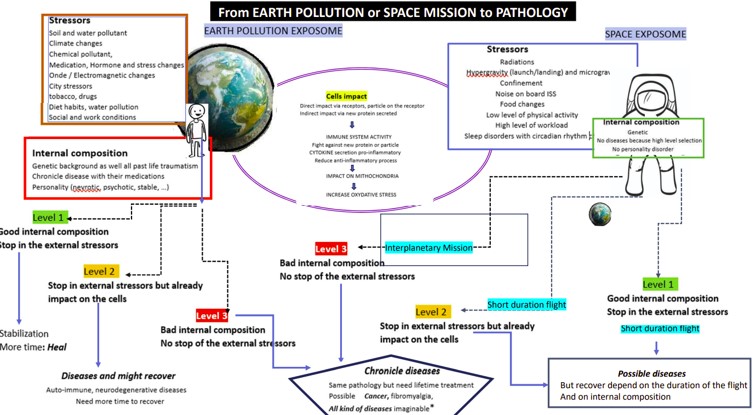
Table 3: Comparison between the two exposome, on the left the one on Earth pollution, on the right side in space and the answer expected with 3 levels depending on the health status of the human body.
Not only the exposome is important but the internal composition.
It is expected the better the internal body is, the better or earlier the subject can recover if we suppress the external stressors. If we suppress Earth pollution and the body has good internal resources we can expect to be in level one and have no future consequences. Like it is right now on short time lifetime for the astronaut. After ISS mission or a short flight, the astronaut might be on level one or 2. After being no longer exposed to the stressor, he finishes at level 1.
In case the stressors from Earth pollution cannot be removed it will depend on the internal factor, if those are quite good, the subject can have disease, but we can expect those to solve them with time or at least with treatment and of course try to improve the risk factor. In case the internal conditions are not so good with lot of secondary factors like stress we will be in level 3 which might drive to strong pathology with cancer, neurodegenerative diseases…
The same could be expected for the astronauts. In case very long duration mission and in case unexpected higher level of constraints on the human body as expected with the high level of radiation with the dust impact (have shown in this review may be having same potential effect in the lung), the level 3 may be reached and pathology could be seen and it would be difficult to predict how and if it could be easily resolved as it is nowadays from mission to LEO.
The cells’ impact tends to describe the effect the stressors, exposome have on the cells, as explained in the review by first impacting the way the cell is functioning via direct impact on the receptor or indirect effect. These might drive to reaction of the immune system which tries always to correct and help the body to recover. But in case stressors continue in case internal conditions are not favorable, this might lead to inflammation, vicious circle and disease. Of course, other factors can add to that bad circle like gene dysregulation, microbiota changes and of course circadian rhythm changes. All of those are impacting on some of the proteins and hormones who play an important game in the cells function and body healing.



Open Access By Aditum Open Access Journals id licensed under Creative Commons Attribution 4.0 International License. Based On a Work at aditum.org


