
International Journal of Business Research and Management
OPEN ACCESS | Volume 5 - Issue 2 - 2026
ISSN No: 3065-6753 | Journal DOI: 10.61148/3065-6753/IJBRM


Oluwaseyi Maryam SHITTU & Isiaka Olusesan SHITTU*
Department of Business Management, Adekunle Ajasin University, Akungba-Akoko, Ondo State, Nigeria.
*Corresponding Author: Isiaka Olusesan SHITTU, Department of Business Management, Adekunle Ajasin University, Akungba-Akoko, Ondo State, Nigeria.
Received: November 01, 2026 | Accepted: November 08, 2026 | Published: November 20, 2026
Citation: Oluwaseyi M SHITTU & Isiaka O SHITTU., (2026). “An Analytical Review of Workers Perspectives about Reward Management and Staff Productivity in University of Ibadan Oyo State Nigeria”. International Journal of Business Research and Management 5(3); DOI: 10.61148/3065-6753/IJBRM/112.
Copyright: © 2026. Isiaka Olusesan SHITTU. This is an open access article distributed under the Creative Commons Attribution License, which permits unrestricted use, distribution, and reproduction in any medium, provided the original work is properly cited.
The primary cause of low staff productivity in many higher institutions of learning in Nigeria is lack of efficient reward management. Therefore, this study focused on how best reward management can be used to get optimal performance and productivity from employees of the Nigeria higher institutions using University of Ibadan as a case study. The study employed mixed method through the administration of questionnaire on one hundred and seventy (170) randomly selected staff and validated the results by further conducting key informant interview with ten (10) purposively selected key informants. Chi-square analysis and binary logistic regression were employed to test and predict the relationship between reward management and employee productivity in the university. The findings of the study revealed that there is a positive link between reward management and staff productivity. Specifically, the selected reward staff reward elements in the university like salary, bonuses, allowances and other non-monetary rewards accounted for a modest 68.2% (O.R =0.682; p<0.05) change in the willingness of the employees to perform optimally. Based on the findings, the paper concluded that effective reward management is a factor and should be viewed as a major solution to low productivity and performance. The study recommended that the school management board and other stakeholders should prioritize effective reward management system in order to achieve better productivity and employee satisfaction in the institution.
Reward management, productivity, salary, efficiency, workers’ performance
In the global economic context, employee’s productivity and performance are largely determined by the monetary and non-monetary motivation. This is the predominant case across Europe, Asia, North and South America, Antarctica, Oceania and Africa (Snell & Bohlander, 2020; Dessler 2021). In the specific context of |Africa, particularly in the Nigerian tertiary institutions, the major determinant of staff performance and employees’ productivity is the effective reward management system (Fadugba, 2022: Odunlami & Asabi, 2022). It is of great necessity in the Nigerian tertiary institutions to identify, motivate and retain the efficient and experienced employees by developing and maintaining an effective compensation program for getting the best job output from the employees (Al-Ahmadi, 2019). Therefore, this paper’s main objective is to examine the effect of reward management on the employee’s performance and productivity while the specific objective is to investigate the effect of fringe benefits as well as wages and other allowances on staff outputs in University of Ibadan.
This paper also examines the relationship between reward management and high productivity and employee’s performance. The paper is timely and relevant as it will provide insights on how best workers can be motivated to drive performance and productivity, generally in the Nigerian tertiary institutions using University of Ibadan as a case study.
Review of Relevant Literature
This section reviews relevant literature to the study, compares and contracts this literature, establishes gaps in the literature and then makes a clear position for this paper.
According to Ibojo O & Asabi (2014), employees are the organizations’ key resource and the success or failure of institution or organization centers on the capability of the employers to attract, motivate, retain, and reward appropriately creative, outstanding and committed employees. Ivancevich (2018) argues that employee’s willingness to stay on the job mostly depends on compensation packages of the organization. Therefore, in an effort to encourage employee’s optimal performance, organizations need to consider a variety of appropriate ways to motivate and reward the employees to get the desired results (Falola, 2024). Further reviewing the existing literature on reward management and employee’s productivity and comparing and contracting these literature in order to establish gap and make a position for this paper, it is imperative to critically look at the work of other scholars. In his recently published work on reward management and staff productivity in the Nigerian formal sector, Adeniyi & Oyewumi (2023) posits that the elementary tasks in human resources management is reward management. Reward management requires integrating employees’ processes and information with business processes and strategies to achieve organizational objectives and goals (Ahiabor, 2023). This can be attributed to the fact that reward management is a crucial workforce to "integrate individual efforts with strategic business objectives by encouraging employees to do the right thing with improving efficiency (Adam, 2024: Ojokuku & Sajuyigbe, 2009: Sajuyigbe, Olaoye, &Adeyemi, 2013) In other words, compensation management is a powerful means of controlling and managing an organization. It serves as a communication means to all employees of the organization positively influencing their attitudes and behaviors (Milkovich & Newsman 2024) argued that among workers; reward management system can create and sustain a competitive advantage for organizations.
Reward packages comprises some basic features that aid employee performance on their job amongst which includes salaries, bonuses, incentives, allowances, promotion, awards (Werner 2021). All these have significant impact on employees’ performance. However, to avoid wrong insinuation and controversy by the employees, reward system must be clearly communicated to employees with job appropriation which will encourage input performance from the employees (Yamoah 2023). The literature of Hsin-His, (2021) reviewed reveals that reward is a significant force in human resources. An effective reward system design positively influences organizational development by revealing external competitiveness, internal equity and individual equity (Duncan B, 2023). External competitiveness attracts talent, and internal equity helps companies to retain skills by ensuring that employees making contributions obtains reciprocal of compensation. Individual equity allows employees to feel that their performance is fully rewarded; thus, they are encouraged (Hsin-His, 2021).
In the specific context of Nigeria, some related studies that have examined reward plan and employees’ performance include the work of Duru 2023, Ibojo & Asabi, 2014; Oladejo & Oluwaseun, 2020; Karim, S & Reddy S.K 2013 among others. Some of their work have equally examined reward management and employees’ performance from the private sector perspective while few on public sector. Their works were fraught with irregularities and controversies in findings. To bridge the lacuna in their work, this paper examines reward management as predictor of employees’ performance and takes the position that effective reward management enhances staff productivity in the Nigerian tertiary institutions. This paper posits that employees' willingness to stay on the job largely depends on the compensation packages of the organization. In other words, to ensure employees optimal performance and performance, organizations need to consider a variety of appropriate ways to reward the employees to get the desired results. It is further argued that the extent to which employees are satisfied with their job and their readiness to remain in an organization is a function of compensation packages and reward system of the organization. Succinctly, the fundamental tasks in human resources management is reward management.
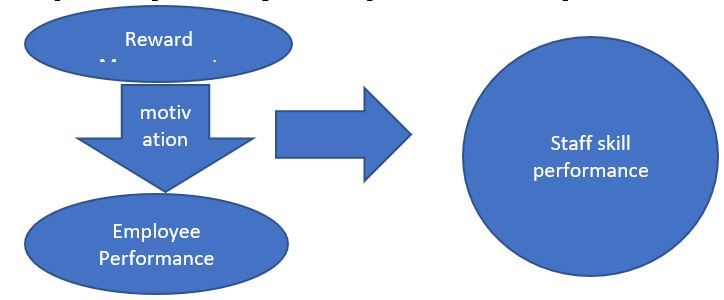
To further explain the position of this paper from a theoretical perspective, reinforcement theory of motivation as modernly developed by B.F. Skinner in 2022 would be examined.The basic tenet of this theory is that rewards are used to reinforce performance. Operationalizing this theory in the specific context of this paper, effective rewards management is critical to higher productivity and better performance by the staff of University of Ibadan as evident in the results from the research instruments administered on these staff to solicit information.
Diagram 1.1: Vertical Equation Diagram showing relationship between reward and performance
Methodology
This section provides details of the statistical test and analysis carried out to generate the results. The total number of employees in the university as at the time of study was seven hundred (700), including both academic and non-academic staff according to university register, (2024). For sampling selection from this population, purposive sampling method was employed based on its strength for efficiency and effectiveness in selecting participants. Simple random sampling based on its convenience was also adopted to identify the respondents for key informant interview. There are thirty-four (34) departments across the university. Five (5) respondents were selected from each department purposively making the total sample to be 170. The study further reconfirmed the accuracy of this sample by applying the Cochran (1977) method (published in 2009) for estimating sample size when margin of error and confidence interval for the true estimates of the population value are known and the proportion of attribute is unknown but can be estimated:
n = Z2P(1-P)
e2
Where:
z = the standard normal value corresponding to 95% confidence level for 2-tail test; z = 1.96.
p = the proportion of available population for the study
e = level of significance (acceptable degree of error) = 5% or 0.05
Therefore, the sample size for the margin of error of 0.05 with the 95% confidence level is determined as follows:
n= (1.962)(0.05)(0.95)
0.052
n = 0.1825
0.0025
n = 73
By making allowance for 15 per cent non-response rate, the estimated sample size n is divided by: (100-15)% = 85% = 0.85. Thus:
= 73 = 85 *2(Because the university was segmented to two clusters.main and mini campuses)
0.85
Therefore, the study covered one hundred and seventy (170) staff who were selected, and questionnaire were administered on them while a total of eight (8) participants in accordance with some inclusion criteria were further selected as key informants. Therefore, the total number of respondents for this study is one hundred and seventy-eight (178). This sample figure meets the requirement for adequacy and representativeness which are qualities of a good sample from a defined population.
On data collection, mixed method was adopted. These included both quantitative method and qualitative method. The quantitative method was through the use of questionnaire. The adoption of questionnaire as a data collection instrument is justified on the ground that survey through questionnaire has the advantages of time efficiency and cost-effectiveness. The questionnaire contained both open and close-ended questions. The second method which is qualitative was through the use of key informant. The adoption of key informant interview as a data collection procedure in this study is justified based on its merit in providing in-depth details about the subject of study.
On the method used for data analysis, both quantitative and qualitative methods were also adopted. The quantitative method was through the use of Chi-square and binary logistic regression while the qualitative method was through thematic analysis. These methods selection can be justified based on its advantages of effective and detailed analysis.
The study further generated three (3) levels of data analysis, which are univariate, bivariate, and multivariate. At univariate level, the responses of the sampled respondents were tabulated into frequency and percentage distribution. At bivariate level, the relationships between the selected independent factors and the Staff’ desire to perform optimally were examined by employed Chi-square test at 0.05 level of significance. The choice of Chi-square was informed by the nature of the dependent and independent variables which are categorical variables. The multivariate level employed binary logistic regression to test further the significance of the relationships between Staff’ desire to perform optimally and the independent variables that are found to be significant at the bivariate level. The choice of binary logistic regression can be justified because the model is used when the dependent variables are dichotomous, and the independent variables are of any type.
The general logistic regression model used for this study is according to Newman (2001): 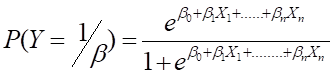
Which computes the probability that the response variable Y is equal to 1 subject to the covariate vector: X = (xi…xn) and parameter vector and parameter vector β = (βi.....βn). Logistic regression does not predict the value of the dependent variable; it rather gives the expected probability that the dependent variable is unity subject to the settings of the covariates and their estimated parameters.
The logistic regression model is also expressed in linear approximation as:
Log[p/1-p] = a + b1X1 + b2X2 + . . . + bnXn + e
The regression models were developed to predict the likelihood of Staff’ desire to perform optimally back in their communities. The main assumption of Binary Logistic Regression Model is obeyed by the nature of the dependent variable. That is, the desire to perform optimally is a categorical variable with dichotomous responses coded as “have desire=1” and “have no desire=0”. All analyses were conducted using the statistical software called STATA Version 15 for its benefits of ease in analyzing, managing and examining data patterns. STATA is also a reliable software in analyzing small data as it is the case in this study.
Results and Discussion
This section details the main findings and outcomes of the study using tables to show frequency and percentage distribution.
Table 3.1: Socio-demographic Characteristics of Respondents
The main objective and purpose of this sub-section is to illustrate and present the socio-demographic attributes of the respondents, such as age, sex, marital status, religion and nature of job in tabular format to show the frequency and percentage distribution.
|
Socio-demographic Characteristics |
Frequency n=170 |
Percentage % |
|
Age 26–45 46–65 |
94 76 |
55.3 44.7 |
|
Sex Male Female |
116 52 |
68.2 31.8 |
|
Marital status Married Separated/divorced/widowed |
102 52 |
65.4 34.6 |
|
Religion Muslim Christians/others |
102 56 |
64.6 34.4 |
|
Nature of Job Academic Non-academic
|
68 100
|
40.5 59.5 |
Source: Field survey 2026
Diagram 3.1: Cluster Column showing Socio-demographic Characteristics of Respondents
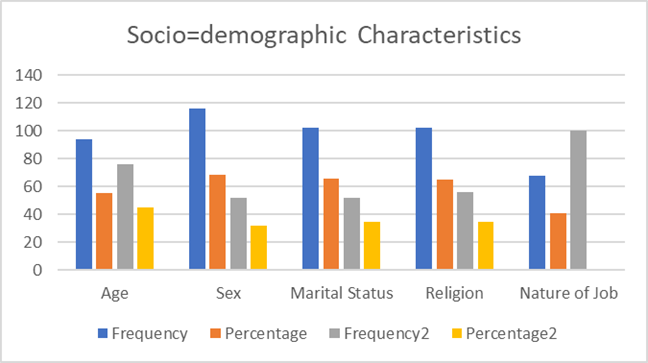
Table 3.2: Reward Management and effect on Staff productivity
In tandem with the general objective of the paper, this sub-section illustrates the general objective of this paper which is to examine the effect of reward management on staff productivity.
|
Feelings and perceptions about Reward Management |
Frequency |
Percentage |
|
Do you believe that effective reward management will increase staff productivity? Yes No |
156 12 |
92.9 7.1 |
|
Do you know if bad reward system has discouraged staff in the past? Yes No |
84 72 |
53.9 46.1 |
Source: Field survey 2024
Discussing the findings, 92.9% of respondents believed that effective reward management will increase staff productivity. This result is high compared to 7.1% of respondents who believed otherwise. From these results, it can be interpreted and concluded that effective reward management is the mechanism for stimulating and enhancing staff productivity.
Table 3.3: Chi-square test of relationship between effective reward management and high staff productivity.
|
Perception |
Desire for a better reward management system |
χ2 |
p-value |
|
||
|
Desired |
Not desired |
Total |
|
|||
|
Perception
Perfect Fair Poor |
40(65.2) 80(63.0) 88(62.9) |
3(23.1) 9(31.0) 13(30.1) |
52 116 140 |
0.682 |
P>0.05 |
|
Source: Field survey 2026
Diagram 3.3: A Pie-Chart showing perception about existing reward management
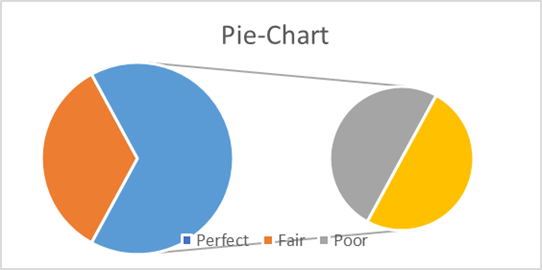
Discussing the paper’s objective 2, which is to examine the relationship between reward management and staff productivity, the result above shows that the relationship is statistically significant. At P<0.05, the test of the relationship resulted in 0.682 which is a positive relationship. The interpretation of this result is that the reward management is basic to high productivity and better employees’ performances.
Table 3.4: Binary Logistic Regression test of influence of Reward Management on Staff Productivity
This sub-section illustrates the test of influence of influence of Reward Management on Staff Productivity.
|
Staff Perception |
Odd ratio |
P-value |
95% confidence interval |
|
Length of stay in university 5 years or less More than 5 years |
(Referent) 0.6821 |
0.057 |
0.0681 – 1.0423 |
|
Is current reward system encouraging? Yes No |
(Referent) 2.6748 |
0.080 |
0.8879 – 8.0581 |
|
Does reward management positively impact productivity? Yes No |
(Referent) 0.3778 |
0.107 |
0.1158 – 1.2327 |
Source: Field survey 2026
Diagram 3.4: Converging Radial showing relationship between elements of reward management and staff productivity
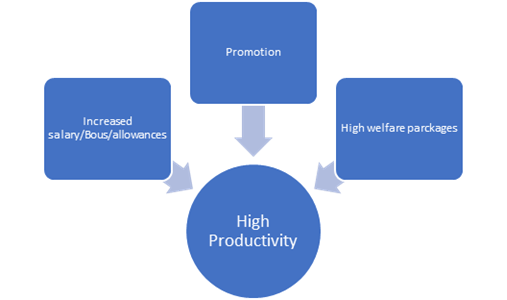
From the objective 3 analysis using binary logistic regression, the table above shows the prediction of the relationship between effective reward management and staff productivity. The result is statistically significance too.The key findings from the response, as shown in the diagram above, is that effective reward management system has influences on the Staff desire to increase the level of productivity and performance.Specifically,high welfare packages, increased salary,bonuses,allowances and staff promotion as at when due will increase staff performance and enhance productivity.
Analyzing qualitative data obtained during the key informant interview session,when the question what asked in tandem with study’s objective 1, “What is the effect of reward system on employee productivity”. A senior staff responded:
“An effective reward system is the basic thing for motivation for higher productivity and excellent performance at work. Staff mainly look at what they will get if they put in their best at work. The importance of an effective reward system cannot be over-emphasized”
The response above fully aligned with the data obtained through the administration of questionnaire. When triangulating the two results from the research instruments applied during the study, both data are in tandem and alignment with each other.
Furthermore, when another question in consonance with another study objective was asked during the interview session “what the relationship between reward management and staff productivity is, a female responded had this to say:
“High staff productivity and employee performance is a function of effective reward management. It is basically the output from an encouraging reward system put in place the the school management board “.
The interpretation of the response above is that efficient reward management through increased salary, bonuses, allowances, monetary and other non-monetary reward system enhance better performance and high productivity in the institution. The response also aligned fully from the responses derived on the same question through the survey system of questionnaire.
Conclusion and Recommendations
This study would like to conclude that staff at University of Ibadan, Oyo State, Nigeria will be more productive and perform optimally at work if a better and more robust reward management system is put in place. This conclusion fully aligns with the theoretical and methodological strengths as well as variables strength of this study. This study is significant, and any future related studies might concentrate on this specific issue of how other incentives different from the ones mentioned in this paper can stimulate and enhance productivity in the institution used in this study as well as other institutions in Nigeria.
In light of these findings, some actionable recommendations are proposed; (a) The government and school board management should prioritize increment in salary, bonuses allowances and other emoluments in order to get the best performance from the staff and workers generally in the tertiary institution.
(b) Promotion as at when due is key to encouraging high productivity among the staff. As seen from this paper, promotion is one of the basic elements of reward management. Therefore, in order to have high productivity and high employees’ performance, it is essential to put effective mechanism in place that will facilitate the promotion of staff when they are due for it.
(c) From the findings in this study, it is realized rewards can be not only in monetary term, but also in non-monetary.Therefore.it is recommended that the government as well as other stakeholders should prioritize non-monetary incentives in the university in order to enhance staff productivity. (d)It is further recommended that basic learning infrastructure and social amenities should be put in place to encourage workers to perform optimally on their job. The basic learning infrastructural facilities and basic amenities will facilitate service delivery by the employees and increase their retention on the job. (e) Finally.it is recommended that the school board management and other stakeholders should always engage staff from time to time to enlist information about their other basic needs and necessities and create a more conducive work environment. Through the engagement, the government and the school management board will be able to know and address other basic necessities that were not mentioned as part of reward management that were not mentioned in this paper.
Funding
This research was funded in part by Riaacos Oil & Gas Limited ($30,000) and Riaacos International Company Limited ($20,000). The content is solely the responsibility of the author and does not necessarily represent the official views of the sponsors.
Conflict of Interest
The author hereby declares that he is a stakeholder in the two companies who part-sponsored this research. However, the content is solely the responsibility of the author and does not necessarily represent the official views of the sponsors.
Author’s Contributions
The relevance of this research lies in the imperative for policy making to urgently proffer solutions to security challenges in Northern Nigeria and ameliorate the socio-economic circumstances of the citizenry across religion divides. The study is also important in dowsing the tension between the Nigerian government and the government of the United States of America and avert possible military invasion. The significance of the study can also be seen in its suggestions for policy formulators, foreign organizations and donors on how amnesty and rehabilitation of terrorists could be applied to achieve peace restoration in Northern Nigeria.
Ethics and informed Consent Statements
The researcher upheld research ethics and approval without fail. This was achieved by maintaining the anonymity of respondents' identities. The utmost confidentiality of respondents was guaranteed, with their dignity being held in high regards at all times. During the fieldwork, research ethics encompassed reverence for human life and an absence of judgmental attitudes. Respondents' consents were obtained without coercion or monetary incentive. The decision on ethical clearance application to the Faculty of Social Sciences Ethical Committee of Adekunle Ajasin University Akungba-Akoko, Nigeria was positive as communicated before the field work.
Acknowledgements
I wish to appreciate God Almighty for His grace and mercy to embark on this research and successfully concluded it. I also thank my spouse and other family members for their support. My appreciation also goes to my colleagues at Adekunle Ajasin University, Akungba- Akoko, Ondo State Nigeria. I cannot thank all of them enough!



Open Access By Aditum Open Access Journals id licensed under Creative Commons Attribution 4.0 International License. Based On a Work at aditum.org


