International Journal of Business Research and Management
OPEN ACCESS | Volume 4 - Issue 3 - 2026
ISSN No: 3065-6753 | Journal DOI: 10.61148/3065-6753/IJBRM


Gasper Chuwa and Asheri Mwidege*
MUST - Rukwa Campus College, Mbeya University of Science and Technology, P.O. BOX 131, Mbeya, Tanzania.
*Corresponding Author: Asheri Mwidege, MUST - Rukwa Campus College, Mbeya University of Science and Technology, P.O. BOX 131, Mbeya, Tanzania.
Received: August 01, 2026 | Accepted: August 08, 2026 | Published: August 12, 2026
Citation: Chuwa G and Mwidege A., (2026). “Challenges Facing the Adoption of Online Banking Services in Tanzania”. International Journal of Business Research and Management 5(1); DOI: 10.61148/3065-6753/IJBRM/095.
Copyright: © 2026. Asheri Mwidege, Alejandro. This is an open access article distributed under the Creative Commons Attribution License, which permits unrestricted use, distribution, and reproduction in any medium, provided the original work is properly cited.
Time is a fragile resource and a central variable to economic activities. Thus, Banks in Tanzania adopted online banking services so as to save time and energy. However, little information was available on the challenges facing customers on the online adoption of online banking services. A qualitative research design and stratified sampling technique were used to select a sample of 80 customers using a questionnaire in cross-sectional data collection. Data were analyzed using descriptive statistics from the SPSS program. Results showed that customers’ adoption was due to awareness, accessibility and ease of use. Though, failure to adoption was due to online cybercrime and transaction cost. Thus, it was concluded that awareness, accessibility and ease of use influenced online banking while cybercrime and transaction cost influenced the dis-adoption. Therefore, the study recommended that banks should use the free trial and reduce costs for first-time customers.
online banking, cybercrime, adoption, customers, dis-adoption
1. Introduction
Online banking services are a major technology in providing banking services. Changing towards digital technology aims at converting transactions into cashless transactions. However not only on technology but also behavior as customers were interested in digital technology (Nawi et al., 2022; Satya, 2019). Online banking was firstly introduced in 1980 in India and used regularly by customers in 1995 by Presidential Saving Bank and later adopted by others such as Well Fargo, Chase Manhattan, and Security First Network Bank (Idrees and Khan, 2022; Jodoum, 2015).
In developed countries, customers use online banking services frequently with the satisfaction of performing payment transactions (Nawi et al. 2022; Hossain et al., 2020). China being the most populated country in the world assessed customers’ challenges such as lack of customers services, poor internet security, and privacy (Makame, 2014). In Tanzania banking industry made improvements to ICT on online banking services by introducing mobile banking, internet banking, electronic statement, and cash depositor machine to facilitate fast electronic cash movement and services (Mihambo, 2020). Also, the implementation of mobile banking by communication companies such as Tigo, Airtel, Vodacom facilitate rapid cash deposit and transfer via online banking services (Mihambo, 2020).
Bank dependable on computers internet network was at risk of online banking cyber-crime as many countries were joining network economy as developing countries, Tanzania was not ready for the threats as developed countries in tightening laws to handle cybercrime problem (Maagi, 2018). Security on online banking technology was an inhibiting factor for customers’ target and real usage (Marsek and Shahibi, 2019). Thus strengthening security makes customers safe and secure (Bhatt, 2016). Hitherto, the dependent variable online banking is affected by online banking performance that high performance is the benefit to customers to adopt online banking however low performance affects negatively (Richard and Mandari, 2017). Also, it is affected by security as the perceived risk that secured gives assurance to customers’ safe transaction but unsecured gives threats to customers’ transaction (Bhatt, 2016). Technology is also the third-factor affecting online banking adoption as new technology attracts customers but old technology negatively attracts. Therefore the present study investigated challenges facing customers on the adoption of online banking services as depicted here in Figure 1.
Independent variable
Dependent variable
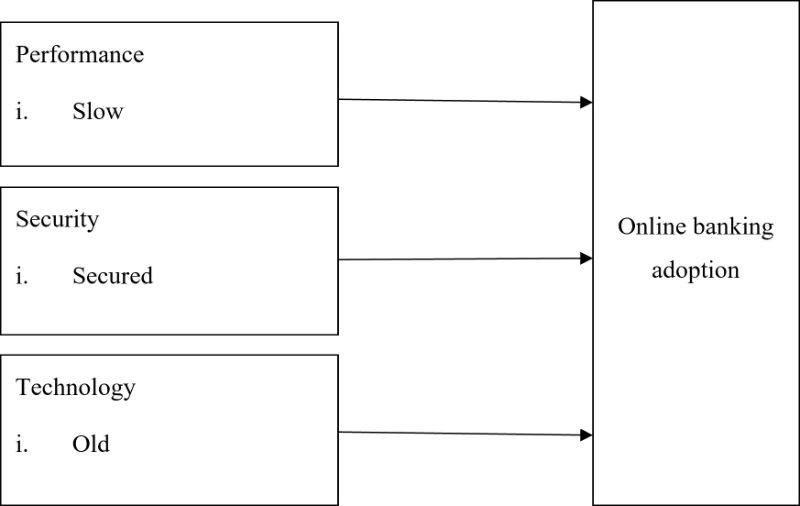
Figure 1: Conceptual Framework
Source: Richard and Mandari (2017).
2. Statement of the problem
Online banking is a banking service with mobile banking, point of sale, and automatic teller machine. Online banking gives an advantage for regular services to customers and banking institutions (Morant et al., 2021). Thus it gives advantages over traditional settings such as improvement of services provision, accessibility of services everywhere, and saving time in queue (Kibanda, 2020). However, it gives disadvantages to customers through high transaction cost fees and high deposit rates (Daniel, 2013).
Kambona (2013) found that online banking was deepening its roots in today’s banking industry as 90% of customers know about online banking. However, employees observed that it needs some improvement in IT performance. Richard (2017) found that 58% use online banking that the majority of users are informal employees and males. Morant et al. (2021); Kibanda (2020); Kambona (2013); Daniel (2013); and Richard (2017); investigated online banking adoption in cities and towns in terms of implementation, awareness, ease of use, perceived risk, and online transaction cost. However, they did not address challenges facing customers on the adoption of online banking services in terms of performance, realize security, and effect change of technology. Therefore the present study investigated challenges facing customers on the adoption of online banking services a case of CRDB Bank at Mwanjelwa Branch in Mbeya.
3. Research Methodology
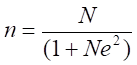
The research study was conducted at the CRDB Mbeya Mwanjelwa Branch located in Mbeya City. This was chosen because the branch has a high demand for online banking by customers as it is surrounded by various groups of traders, small business entrepreneurs, and university students. The population is all individuals of interest in the study (Marczyk, 2014) thus the study focused on the bank employees and customers. The research design refers to the way in which research is conducted to answer the questions asked (Marczyk, 2014). Whereas qualitative research design refers to exploring and understanding meaningful individuals and groups of people involved in the social problem (Creswell, 2014). The study employed a qualitative research design to answer questions of what and how about the adoption and challenges of online banking services. The sample is representative of a population (Boru, 2018) which was obtained using a mathematical expression:
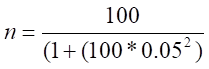
Where: N= population of interest; n = sample size; and e = confidence interval.
Yamane derived an expression and was later adopted by (Islam, 2018). The sample size was 80 customers for 100 populations with a confidence interval of 0.05. The sample was obtained using stratified sampling technique by grouping population into customers and banks so as to avoid over or under-representation (Islam, 2018).
The study employed both primary and secondary data. Secondary data refers to data already been collected and stored (Thakur, 2021) while primary data are collected directly from the field study (Thakur, 2021). Primary data was obtained from the field study through questionnaires to customers and bank employees (Ngaida, 2020). The study used both closed and open questionnaires and data collected were analyzed using descriptive statistics associated with the SPSS software program in coding data.
4. Study results and discussion
Demographic Information of Customers
Findings in Figure 2 showed that 60% followed by 40% of respondents were males and females, respectively. Results imply that males are the majority of users of online banking services compared to females. This is because males are the early adopters to technology as males have compatibility and personal innovativeness on perceived ease of use and the influence of use compared to females (Lwoga, 2017). Moreover, present findings (Figure 2) showed that 47.5% of customers were aged 20-29 years, followed by 22.5% of them aged 30-39 years while 17.5% of customers were aged 40-49 years. Findings suggest that majority of the customers were in the range of 20 - 29 years. This suggests that young-aged customers were more aware of online banking services compared to high-aged customers, as some aged customers need an assistant for their transactions (Kessy, 2021).
Furthermore, findings (Figure 2) showed that 51.2% were unemployed followed by 33.8% of self-employed and 15% of fully employed customers. Results reveal that majority of customers were unemployed. Probably, this is because almost a number of graduates lack the required skills by the labour market, thin jobs created and ineffective labor market information (Amani, 2017). Also, results (Figure 2) showed that 43.8% of respondents had attained bachelor’s degrees followed by 23.8% of diploma education while 18.8% of customers had secondary education. Findings suggest that majority of the customers were bachelor’s holders. This could be attributed to the fact that most customers with bachelor’s education are aware of online banking services due to the e-service experience during their college education. Hitherto, results (Figure 2) showed that 83.7% of customers had the experience of 0-3 years, followed by 12.5% of them with an experience of 4-7 years while 3.75% of customers had the experience of 8-11 years. Results signify that majority of the customers had the experience of almost 3 years. This is because e-service is still a growth in the banks’ industry (Mihambo, 2020; Kessy, 2021).
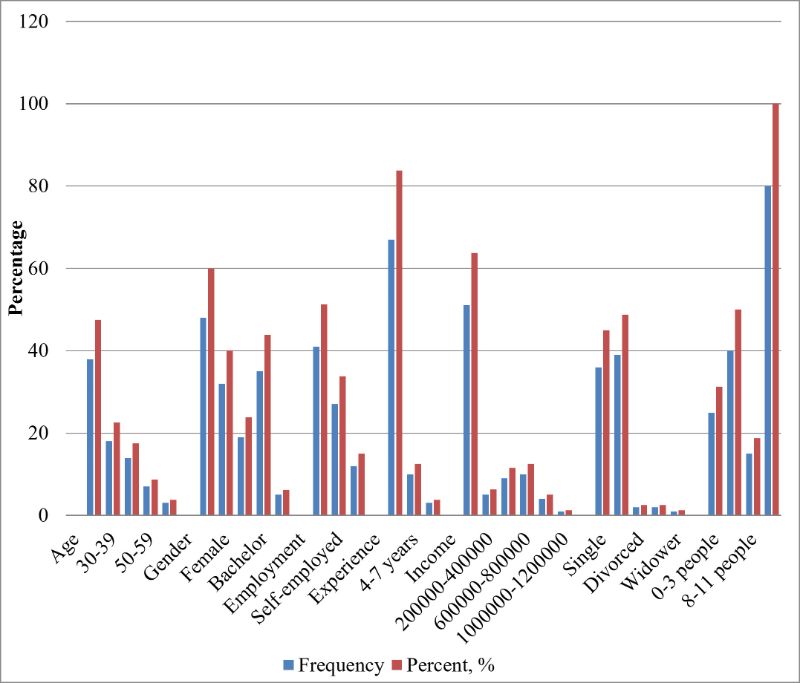
Figure 2: Respondent characteristics
Users’ adoption of Online Banking Services
Users Existence
Respondents were asked if they use online banking services for their banking transactions. Findings in Figure 3 showed that 68.8% of customers were users of online banking services while 31.2% of them were not users of it. Results suggest that majority of the customers were online banking users contrary to the minority. This could be attributed to the reason that more customers were aware of technology as globalization in the world is evolving on the provision of e-services. Thus, the bank has to make more promotions and education to change its customers who are not users of online banking services. Similar to Kessy’s (2021) observations that internet banking is based on both internet and non-internet access devices.
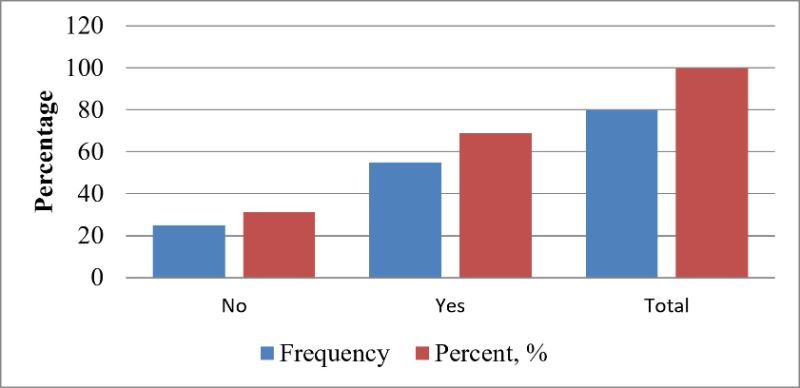
Figure 3: Online banking users
Awareness and Awareness Level of Online Banking Services
Respondent were asked if they are aware of online banking services or they had heard of online banking services. Results in Figure 5 showed that 91.2% of customers were aware of online banking while 8.8% of them were not aware of it. Results revealed that majority of the customers were aware of online banking services. Probably, the evolution of e-technology is a major leading tool in service provision as many customers need to access e-services. Moreover, findings in Figure 4 showed that 42.5% of respondents are moderate level, 38.8% of respondents are low level and 16.2% of respondents are high-level awareness. Findings reveal that majority of the customers had a moderate level of awareness. Probably, this is because the bank had not put much effort into new customers about online banking services and the old bank customers are not informed. Thus, customers remained with obsolete understanding about queuing banking services. Similar to Slazus’s (2022) observations that online banking customers lack enough awareness of the use of online banking services due to a lack of awareness of the evolution of technology.
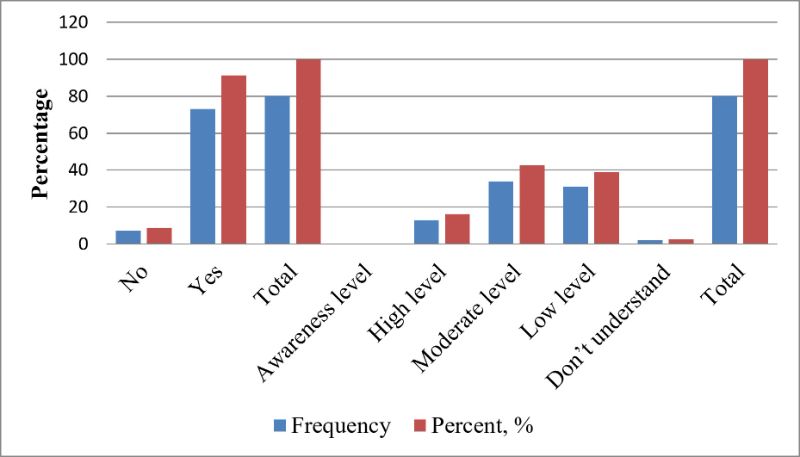
Figure 4: Awareness and awareness level of customers on online banking services
Source of Information
Surveyed customers were requested to give out where they got information about online banking services. They were given various choices of the source of information such as from friends, advertisement, bankers’ employee, by their own and none of above. Results in Figure 5 show that 37.5% of the surveyed customers obtain information from friends followed by 26.2% and 25% of customers obtaining information from bankers’ employees and bank advertisements, respectively. Results reveal that majority of the customers obtained information from friends this is because customers who are traders, students and employees share advantages information among themselves however banks had to make more efforts in marketing strategies that online banking services to be well exposed to many customers through advertisement. Results comply with Revathi’s (2019) findings that online banking marketing had failed to advertise as banking marketers face small marketing budgets.
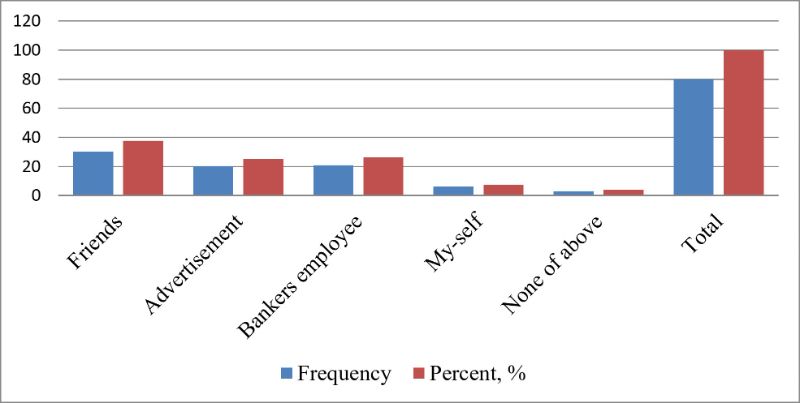
Figure 5: Customers source of information
Interest in Use of online Banking Services
Respondents were being asked to answer on what interested them to use online banking services rather than other banking services such as withdrawing cash from the teller. Findings in Figure 6 show that 62.5% of customers use online banking due to its availability at any time while 21.5% and 7.5% of customers use online banking due to ease of use and speeds respectively. Results suggest that the majority of the customers are interested in online banking services due to its availability of services at any time, this is because online banking gives a wide range to customers that enable customers to make transactions at any time. Similar to Widanengisih’s (2021) observations that customers are interested in mobile banking due to perceived ease of use.
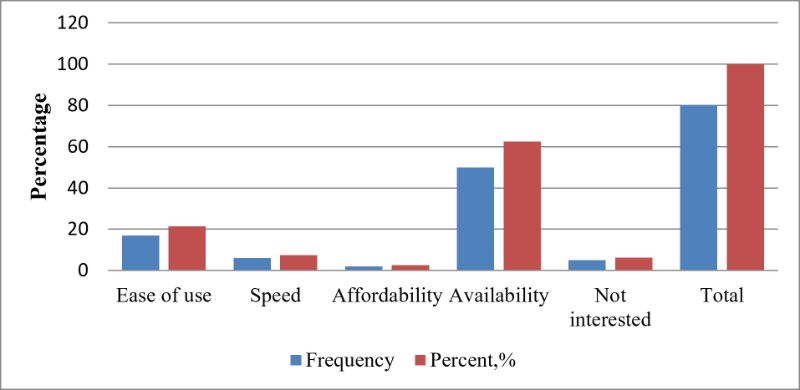
Figure 6: Interest in using online banking services
Time
The surveyed customers were asked at what time they use online banking services. They were asked if they use the service frequently, for emergence, only at once or when they distant from access of the bank. Results in Figure 7 showed that 32% of respondents use online banking for an emergency while 27.5% and 16.2% of customers use online banking frequently and when they are distant from the bank respectively. Findings suggest that majority of the customers use online banking for an emergency. This is because customers are afraid of online banking charges that bank has to make a clear description of the charges to some online banking services such as mobile banking. Findings contradict with observations Ojeniyi (2019) that customers use online banking frequently but the study indicates that customers use online banking for emergency transactions although has no huge difference from the frequent use of online banking services.
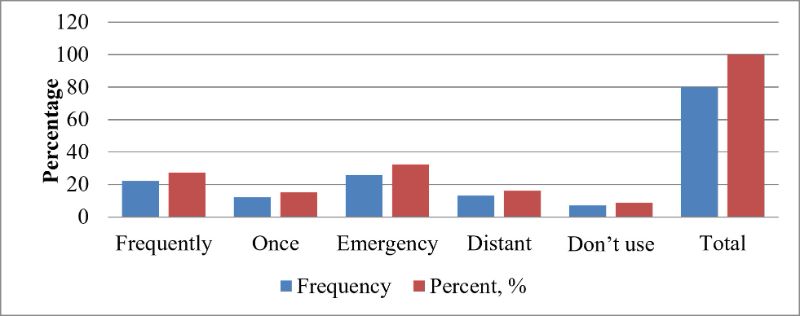
Figure 7: Customers’ time
Challenges Facing Customers on the Use of Online Banking Services
Transaction Cost
Transaction cost was the most problem to the respondent as online banking has its own charge of withdrawing. Respondents were given choice if the transaction cost is high, medium, or low.
Findings in Figure 8 show that 52.5% of customers reported that online banking had high costs while 43.8% of customers reported that online banking services had medium costs. Results suggest that the majority of the customers observed that online banking services have high transaction costs. This is because online banking services have a high cost in running its system such that it requires various expertise and internet to access services. However, it creates fear to customers not to use online banking services due to its high charges instead customers shift to other available services to make savings of the cost charged to reduce frequent use of online services. Similarly, Slozus (2022) observed that perceived costs such as transaction charges inhibit customers from using online banking because it cost them money.
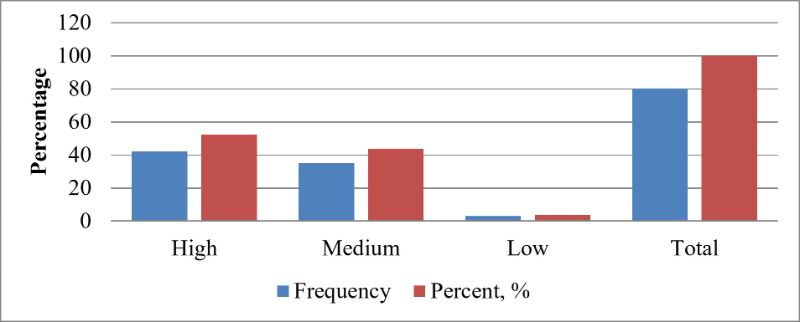
Figure 8: Online banking transaction
Service Improvement and Service to Improve
Surveyed customers were asked if online banking services need improvement for meeting their utility. Results in Figure 9 showed that 82.5% and 17.5% of the customers need and do not need service improvement, respectively. Findings suggest that the majority of the customers need improvement on online banking services. This is because the services do not give enough details on the transaction performed thus bank has to improve services to provide enough details on the transaction done such details include the remaining balance and the transaction charged. Furthermore, the surveyed customers request what type of online banking services requires improvements. Results (Figure 10) showed that 72% of customers need mobile banking to be improved while 16.2% and 11.2% of customers need ATM and point of sale to be improved, respectively. The results revealed that the majority of customers need mobile banking to be improved. This is because everyone has access to mobile phones and has an option to use a mobile phone without internet access but only using USSD code. However, findings contradict Slazus’s (2019) findings that mobile banking fulfills specific needs of banking.
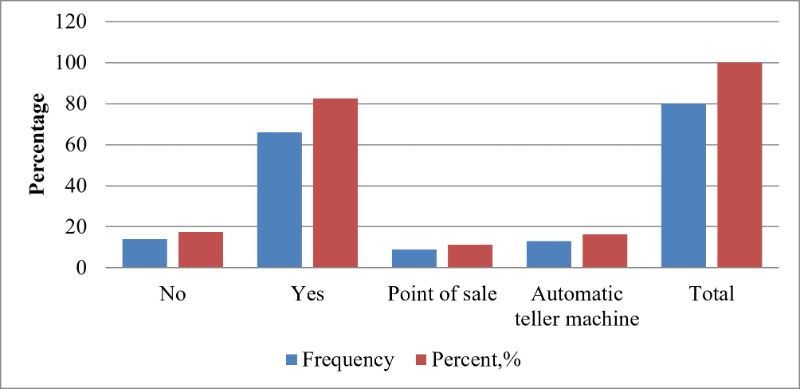
Figure 9: Type of service needs improvement
Cybercrime problem
Online banking cybercrime is theft on online banking transactions such theft can be due to sharing of PIN codes, loss of credit cards, and hacking of personal account details. The surveyed customers were asked if they know about online banking cybercrime. Results in Figure 11 show that 71.2% of customers know while 28.8% of them do not know about online banking cyber-crime. Results revealed that the majority of the customers are aware of online banking services. This is because of early precautions to users that they have to take care of the accounts and personal information and that using it saves more time and costs. Hitherto, the bank has to remind frequently the users about online cybercrime such as avoiding sharing personal PIN codes.
Furthermore, respondents were asked in what ways do they overcome online banking cybercrime such as reporting to bankers, changing PIN codes, and avoiding sharing PIN codes.
Findings (Figure 11) showed that 42.5% of customers reported the problem to the bankers, 30% of customers changed their PIN code while 25% of customers don’t share their PIN code with others. Results suggest that the majority reported the problem to the bankers as the best way to solve the problem. This is because bankers had the ability to make follow-ups of the transaction in their banking system until the account transaction is posted for the last time. However, bankers had to remind customers about online cybercrime. Customers facing perceived online risks such as cybercrime hacking online transactions, thus customers are less likely to adopt online banking (Ivanova and Kim, 2022). This could be attributed to sharing their online financial transactions passwords with third parties (Ojeniyi, 2019).
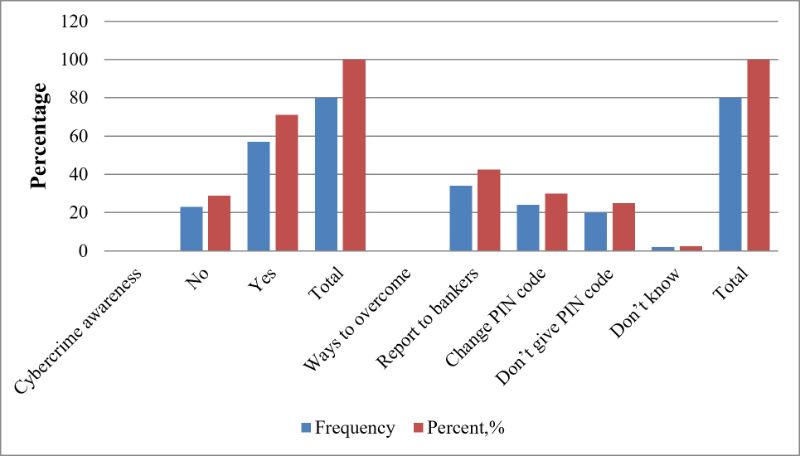
Figure 10: Awareness and way to solve online banking cybercrime
Contribution of Online Banking Services
Number of Transaction
The surveyed customers were asked if online banking services increased the number of transactions to customer. Findings in Figure 12 showed that 61.2% of customers agreed, followed by 27.5% of the customers strongly agreed while 7.5% of customers strongly disagreed that online banking services increased the number of transactions to customers. Findings revealed that the majority agreed that online banking had a greater contribution in increasing the frequency of transactions. This is because it does not depend on the bank in money transfer, cash withdrawal, and cash deposit also it involves a minimum amount, especially mobile banking. Similarly, observations by Kibanda (2020) that online banking increases frequency of transactions such employees’ salaries are deposited in their account thus the withdraw of cash increases frequencies of transactions where customers had choice to withdraw through ATM and mobile banking application.
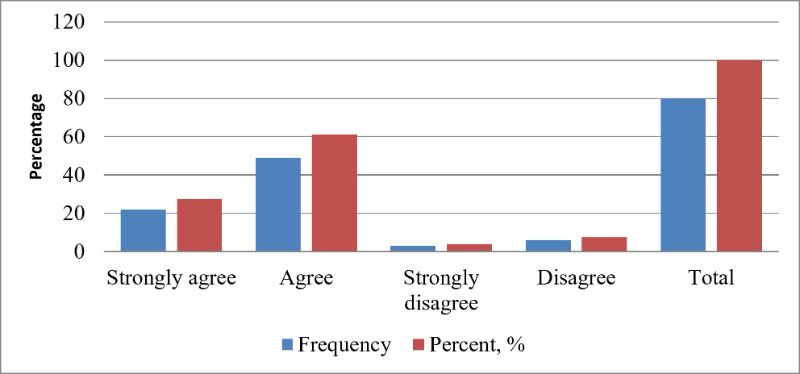
Figure 11: Number of customers’ transactions
Bank Agents
Surveyed customers were asked if online banking increases bank agents who are helpful in performing online banking services. Results in Figure 13 showed that 57.5% of respondents agreed and 31.2% of them strongly agreed while 6.2% of respondents disagreed that online banking increases bank agents. Findings revealed that the majority of the customers agreed that online banking is a source of increasing bank agents. This is because bank agents perform on behalf of banks in providing services to customers as banks are not available everywhere. However, bank agents face a problem as their machines are internet dependent, thus it could be better if their machines could work with USSD code. Similarly, Yawson (2022) observed that mobile money especially mobile banking had rapid expansion though had fraudulent attacks contrary to increased online transaction payment either customers being in rural or dwellers can perform the transactions.
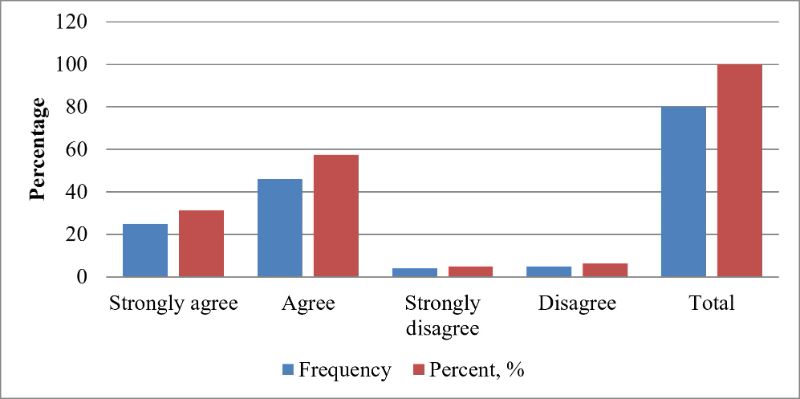
Figure 12: Bank agents
Customers Queue
Respondents have requested if online banking services contribute to reducing customers’ queues at banks. Findings in Figure 14 showed that 51.2% and 23.8% of the respondents strongly agreed and agreed, respectively while 16.2% of them disagreed. Findings suggest that majority of the customers strongly agreed that online banking services reduce queues at the bank. This is because online banking is an alternative way of service to customers that customers they can do on their own without a need for bankers’ assistance. Findings are Similar to Samarine et al.’s (2021) observations that on yearly basis the number of online banking customers increases consequently reducing bank queue.
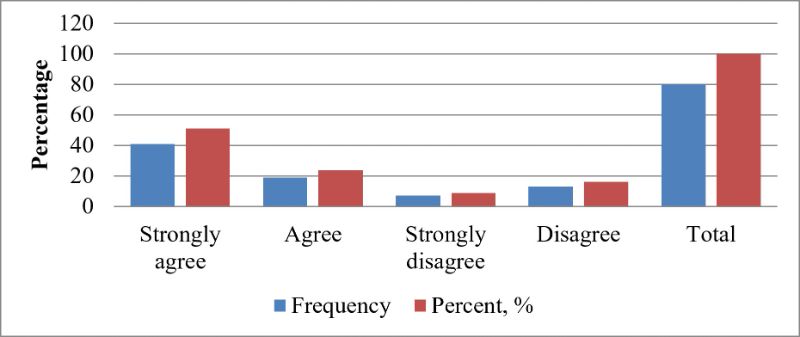
Figure 13: Customers queue at the bank
Employee Effective
Respondents were requested to give to what degree they agree and disagree with the statement of online banking services decrease workload to banker’s employees. Research results in Figure 15 showed that 36.2% and 35% of respondents agreed and strongly agreed, respectively while 16.2% of them strongly disagreed. Results suggest that majority of the customers had strongly agreed that online banking reduces the workload to the bankers’ employees. This is because customers can perform transactions themselves without employees’ engagement. Also, the presence of teller machines that performs work automatically reduces the bankers’ load. Similar observation by Ivanova and Kim (2022) that job performance is convenient payment, fast response, and effective.
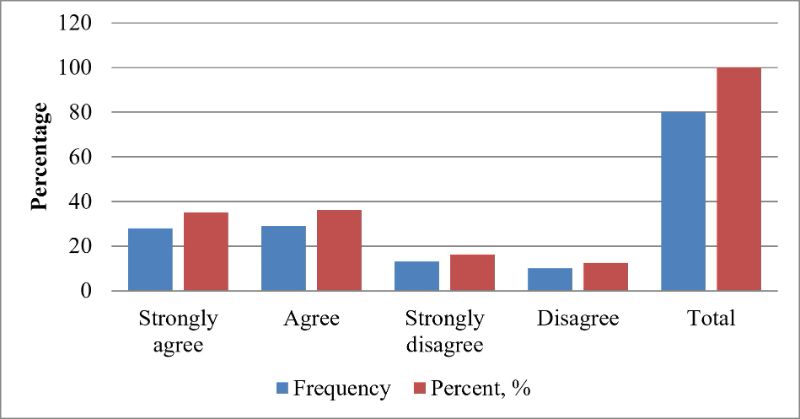
Figure 14: Employees’ effectiveness
Time Economy
Respondents were requested to answer a question of the contribution of online banking services in reducing the time economy. Findings in Figure 16 showed that 37.5% and 35.5% of customers strongly agreed and agreed, respectively while 8.8% of customers strongly disagreed that online banking services reduce the time economy. Study findings reveal that majority of customers had agreed that online banking saves time. This is because money transaction does not require the customer to travel to the bank instead a customer can access ATM Centre, bank agent, and use a mobile phone to meet his service utility. Similarly, Mihambo (2020) observed that online banking saves time for waiting in queues and reduces operational and human resources.
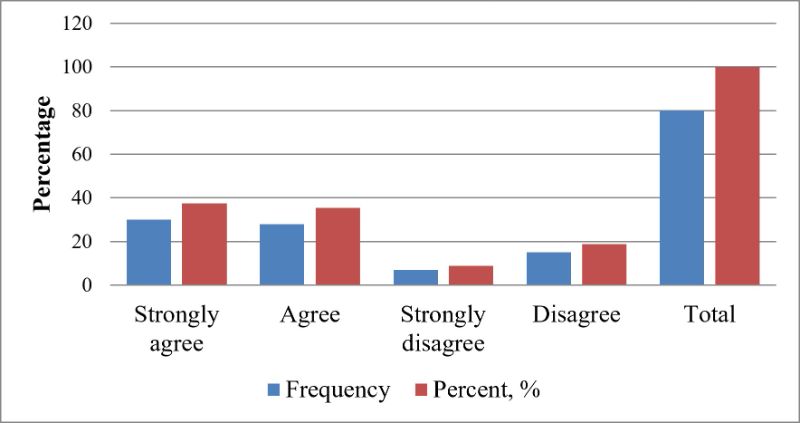
Figure 15: Time economy
5. Conclusion and recommendations
Results on challenges facing customers on the use of online banking service that many customers are not aware of the use of online banking services and also they are afraid due to factors such as transaction cost and online cybercrime. Therefore, the study concluded that transaction cost and cybercrime factors had a negative influence on customers’ adoption of online banking services. However, the ease of use and its accessibility had a positive influence on customers’ adoption of online banking services. It is therefore recommended that banks should make more efforts on raising awareness through advertisement both on radios and television so that they can reach many customers at once so as to enhance adoption. It is further recommended that education on online banking services should be provided on the advantages and disadvantages of online banking.



Open Access By Aditum Open Access Journals id licensed under Creative Commons Attribution 4.0 International License. Based On a Work at aditum.org