
International Journal of Business Research and Management
OPEN ACCESS | Volume 4 - Issue 3 - 2026
ISSN No: 3065-6753 | Journal DOI: 10.61148/3065-6753/IJBRM


Abhay Chatterjee1, Surjadeep Dutta2*, Arunava Mookherjee3, Somroop Siddhanta4
1,2,3,4 Faculty of Management Studies, Dr. B.C. Roy Engineering College, Durgapur, West Bengal, India.
*Corresponding author: Surjadeep Dutta. Faculty of Management Studies, Dr. B.C. Roy Engineering College, Durgapur, West Bengal, India.
Received: March 27, 2026 | Accepted: April 13, 2026 | Published: April 20, 2026
Citation: Chatterjee A, Dutta S, Mookherjee A, Siddhanta S., (2026). “Personalized WhatsApp Messaging and Brand Loyalty: The Role of Self-Sender Communication”. International Journal of Business Research and Management 4(4); DOI: 10.61148/3065-6753/IJBRM/080.
Copyright: © 2026. Surjadeep Dutta, This is an open access article distributed under the Creative Commons Attribution License, which permits unrestricted use, distribution, and reproduction in any medium, provided the original work is properly cited.
The rapid development of digital communication technologies has created new ways for businesses to connect with customers because they now use methods that build relationships through targeted messages instead of sending mass messages. The mobile instant messaging platform WhatsApp lets users communicate through its direct real-time interactive features. This research investigates how personalized WhatsApp messages help businesses build brand loyalty by examining self-sender communication strategies which make messages look like they come from people instead of companies. The research establishes a conceptual model which shows how personalized messages impact brand loyalty through customer engagement and customer satisfaction and trust and emotional attachment as essential intermediating elements. The study investigates how privacy concerns and message frequency serve as moderating elements which impact the success of personalized communication. The study demonstrates through existing empirical literature that personalized humanized messaging creates stronger emotional bonds which build trust and better customer experiences which result in greater customer loyalty and permanent relationships with customers. The study results add to digital and relationship marketing research by showing how self-sender communication through messaging platforms affects psychological and relational aspects. The study shows marketers how to create effective campaigns by showing them that personalized messages must maintain privacy standards while their target audience receives messages at the best possible frequency.
Personalized WhatsApp Messaging, Brand Loyalty, Self-Sender Communication, Customer Engagement, Trust, Customer Satisfaction
Digital communication technologies have developed rapidly which has changed how brands and consumers interact because people now prefer personalized two-way communication instead of traditional mass-media methods. Mobile instant messaging (MIM) platforms like WhatsApp serve as effective communication tools which enable brands to connect with consumers through direct and customized two-way conversations. WhatsApp enables businesses to interact with their customers through personal conversations which create stronger relationships and improve customer satisfaction because it has more than two billion users worldwide [1, 2]. Personalized messaging has become the main element of current digital marketing strategies because it enables companies to create content that matches their customers' personal preferences for delivery times and communication styles. Research shows that personalized content helps businesses boost customer engagement because it makes their messages more relevant to customers while increasing their value to customers. Personalized messaging has become the main element of current digital marketing strategies because it enables companies to create content that matches their customers' personal preferences for delivery times and communication styles. Research shows that personalized content helps businesses boost customer engagement because it makes their messages more relevant to customers while increasing their value to customers [3,4]. WhatsApp provides brands with direct messaging and multimedia sharing and automated response features which they can use to create human-like interactions that build emotional bonds and trust with their customers. The evolution of conversational marketing is now moving according to relationship marketing principles which focus on establishing long-term customer connections instead of short-term business transactions [5,6].
A growing body of literature indicates that self-sender communication strategies which brands use to create personalized informal and humanlike communication play a vital role in determining how customers view brands and what they do. The self-sender communication method enables brands to establish authentic links with their audience because it breaks down the conventional sender-receiver communication framework which separates brand identity from individual identity [7]. At the same token, the notion of authenticity is often linked to more customer approval, greater trust, and hence increased brand commitment [8].
Literature Review
WhatsApp marketing functions as an essential part of digital marketing strategies because it enables businesses to establish direct personal contact with customers through instant messaging. Companies can use the platform's interactive features, which include instant messaging and multimedia sharing and group communication, to develop better customer relationships and boost their customer involvement levels [9,10]. Research shows that WhatsApp Business tools help businesses increase their sales results because they enable businesses to answer customer questions and provide customized marketing messages [9]. The use of WhatsApp in marketing strategies increases consumer engagement and brand interaction because of its effectiveness when combined with persuasive communication methods [10]. The effectiveness of WhatsApp marketing depends on trust because users prefer to interact with brands which they think are trustworthy and not disruptive. The private nature of messaging applications creates a secure atmosphere which enables users to share personal information while responding to advertisements [11]. WhatsApp enables viral marketing because users share promotional material with their contacts which expands the advertising reach and customer impact [12,13]. The social endorsement aspect of peer-to-peer dissemination makes it more convincing than traditional advertising methods.
Brand loyalty describes how consumers permanently choose one brand because they are dedicated to that brand which leads them to buy products from that brand repeatedly while they share favorable opinions about it to others. The relationship between consumers and brands develops through three factors which include brand experience and customer satisfaction and emotional attachment to the brand [14,15]. Research shows that when customers have positive brand experiences their loyalty to the brand increases because their commitment to the brand grows. Customers develop brand loyalty based on their perception of value and the quality of service they receive because these factors determine how they assess the brand according to research [16,17].
Research Objectives
To explore personalized WhatsApp messaging efficacy as a marketing tool in boosting the loyalty of users through self-sender communication processes.
Research Gap
Previous studies investigate the concept of personalization yet they fail to study self-sender communication, which shows messages sent from people instead of brand entities. The psychological impact of perceived human presence, authenticity, and conversational tone remains underexplored. Previous studies investigate the concept of personalization yet they fail to study self-sender communication, which shows messages sent from people instead of brand entities. The psychological impact of perceived human presence, authenticity, and conversational tone remains underexplored.
Research Methodology
The research methodology adopted in this study is based on a conceptual model approach supported by existing empirical and theoretical literature which does not require primary data collection. The study identifies personalized WhatsApp messaging as the independent variable and examines its influence on brand loyalty through a series of mediating psychological and relational constructs which include customer engagement customer satisfaction trust and emotional attachment. The model predicts that self-sender communication which makes messages seem to originate from an individual instead of a brand will increase authenticity and human connection which will boost these mediators. The methodology combines results from different research methods which include experimental research (Bleier & Eisenbeiss, 2015) and surveys plus regression analysis (Aguirre et al., 2015; Karjaluoto et al., 2015) and longitudinal studies (Merisavo, 2008) and structural equation modeling (Pansari & Kumar, 2017; Thomson et al., 2005) to confirm the relationships between studied variables. The study adds privacy concerns together with message frequency as moderating factors which affect how well personalization works. The study creates a theoretical framework which shows how WhatsApp personalized communication methods lead to customer loyalty over time through evidence from different academic sources.
Research Model
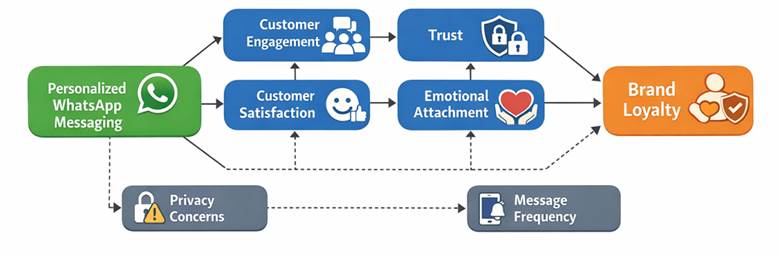
Figure 1: Personalized Whatsapp Messaging on Brand Loyalty
Model Discussion
The research model demonstrates how personalized WhatsApp messaging affects brand loyalty through psychological and relational mechanisms which operate in self-sender communication strategies. The model establishes personalized WhatsApp messaging as the independent variable which consists of tailored and relevant individual messages sent through WhatsApp. Self-sender message design creates the illusion of human authorship which results in stronger human interaction and authentic communication that produces more engaging and relatable content.
The process of personalized communication establishes direct links to customer engagement, which measures how customers interact with and respond to brand communications. Customers who show more engagement with a brand develop deeper connections to that brand. The practice of personalized messaging improves customer satisfaction because customers find the messages useful and timely and suitable for their particular circumstances. The nature of a relationship requires both engagement and satisfaction as essential components which lead to more profound psychological reactions.
The results of these studies show that trust develops as customers gain confidence in the brand's ability to deliver reliable and honest operations and genuine brand intentions. WhatsApp marketing requires marketers to establish trust with customers because the platform contains private and personal communication elements. Personalized messaging creates emotional connections with customers while trust functions as the primary element that links customers to their preferred brand. The emotional bond customers create with a brand develops when they receive personal and caring communication that resembles human interaction.
People develop brand loyalty through their emotional ties to brands which they consider trustworthy. Brand loyalty includes both behavioral aspects (repeat purchases) and attitudinal aspects (commitment and positive word-of-mouth). The connection between trust and emotional attachment to a brand leads to customer loyalty which lasts over time.
The model also uses two moderating variables which are privacy concerns and message frequency. Privacy concerns refer to the extent to which customers feel their personal data is being misused or intruded upon; high privacy concerns can weaken the positive effects of personalization. Message frequency defines the rate at which customers receive messages; excessive messaging may lead to irritation and reduce engagement while optimal frequency enhances effectiveness.
Finding with Implications
Table 1: Model Evidence with Key Findings and Implications
|
Variable Relationship |
Study |
Methodology |
Key Findings |
Implication for Model |
|
Personalized Messaging → Customer Engagement |
Bleier & Eisenbeiss (2015) |
Experimental study |
Personalization very well improves click-through and engagement rates. |
Tailor-made WhatsApp messages boost engagement. |
|
Personalized Messaging → Customer Satisfaction |
Aguirre et al. (2015) |
Survey + regression |
The high cost of setting up of mobile marketing infrastructure makes sure that only big companies can do it. |
Authorizes Inclusion of the Satisfaction and Privacy Moderator |
|
Customer Engagement → Trust |
Hollebeek et al. (2014) |
Conceptual + empirical validation |
Stronger the relationship experience, the better the trust. |
Engagement acts as a precursor to trust |
|
Customer Satisfaction → Emotional Attachment |
Pansari & Kumar (2017) |
Structural Equation Modeling (SEM) |
Emotional bonds are something formed between satisfied customers and brands. |
Supports satisfaction → emotional attachment link |
|
Trust → Brand Loyalty |
Lin & Wang (2006) |
Survey (mobile commerce users) |
On the trustworthiness front, very little media has been revisiting the subject or even discussing any significant impact on performance or sustainability factors. |
Confirms trust as a key mediator |
|
Emotional Attachment → Brand Loyalty |
Thomson et al. (2005) |
SEM analysis |
Strong emotional attachment leads to higher brand commitment and loyalty |
Validates emotional pathway to loyalty |
|
Engagement → Brand Loyalty |
Dehghani & Tumer (2015) |
Survey (social media users) |
Social media engagement positively impacts loyalty |
Extends to WhatsApp engagement context |
|
Personalized Communication → Trust & Loyalty |
Merisavo (2008) |
Longitudinal study |
Personalized digital communication improves trust and long-term loyalty |
Supports overall model pathway |
|
Privacy Concerns (Moderator) |
Aguirre et al. (2015) |
Experimental study |
High personalization can backfire when privacy concerns are high |
Justifies moderating role of privacy |
|
Message Frequency (Moderator) |
Karjaluoto et al. (2015) |
Survey |
Excessive messaging reduces effectiveness and increases irritation |
Supports inclusion of frequency as moderator |
Conclusion
The study reveals that personalized WhatsApp messaging serves as an effective method to boost brand loyalty when companies use self-sender communication methods which create authentic human contact. The research shows that personalization needs to be implemented because its effectiveness depends on how it affects essential relationship and psychological factors which include engagement and satisfaction and trust and emotional attachment. The variables function as essential mediators which convert communication activities into lasting connections with customers. The study shows that privacy concerns and message frequency work as moderating variables. The customer experience improves through personalization yet excessive messaging creates a perception of intrusion which damages trust and engagement. Marketers need to create their communication methods through a balanced approach which prioritizes customer needs.



Open Access By Aditum Open Access Journals id licensed under Creative Commons Attribution 4.0 International License. Based On a Work at aditum.org


