
The Journal of Social and Behavioral Sciences
OPEN ACCESS | Volume 4 - Issue 3 - 2026
ISSN No: 3065-6990 | Journal DOI: 10.61148/3065-6990/JSBS


Dak Gai Badeng1, Jacob Dut Chol Riak2*
1Lecturer, Department of Peace and Conflict Studies. Catholic University of South Sudan. Bishop Vincent Campus-Malakal.
2Senior Researcher and Associate Professor. Department of Political Science. School of Social and Economic Studies. Director (Dean), Institute of Japanese Studies. University of Juba.
*Corresponding author: Jacob Dut Chol Riak, Senior Researcher and Associate Professor. Department of Political Science. School of Social and Economic Studies. Director (Dean), Institute of Japanese Studies. University of Juba.
Received: October 16, 2026 | Accepted: October 21, 2026 | Published: November 04, 2026
Citation: Badeng, DG and Riak, JDC. (2026) “The Impact of Integration and Merging of Paramilitary Groups and Its Effects on National Security of South Sudan” The Journal of Social and Behavioral Sciences, 4(2): 1-15; DOI: 10.61148/3065-6990/JSBS /096.
Copyright: © 2026 Dak Gai Badeng, Jacob Dut Chol Riak. This is an open access article distributed under the Creative Commons Attribution License, which permits unrestricted use, distribution, and reproduction in any medium, provided the original work is properly cited.
The study investigates the impact of integration and merging of paramilitary groups and its effects on the national security of South Sudan. The research was guided by the following objectives; to examine the integration and merging of paramilitary groups in South Sudan, to identify the effects of integration on SSPDF and the entire security institutions, and to explore or suggest strategies and solutions to address the negative effects on SSPDF. Mixed methods approach was used to gather information focusing on describing a phenomenon in a deep comprehensive manner. Questionnaires and interviews were used to collect the data from the respondents. The findings of the study are that lack of patriotism and nationalism is the main impact of integration and merging of paramilitary groups which has led to increasing of insecurity and continuous disintegration of security institutions in South Sudan. Recurrent of rebellions is the major negative effects of paramilitary groups integration in SSPDF institutions and this study further found that promotion of patriotism and nationalism are the main strategies and solutions for ending negative effects of integration, merging and amalgamation of paramilitary forces into national army. The study concludes that recurrence of rebellions is one of the major negative effects of paramilitary groups integration in SSPDF institutions where integration and promotion of the bandits in the security sector become a kind of excuse for reward and financing. The study recommends that for South Sudan to retreat from weakening its security institutions through endless integrations promotion of patriotism, professional training and improvement of status of SSPDF institutions as well as prioritizing payment policy will attract soldiers to demonstrate their interests and loyalty to the country.
1. Introduction
The integration and merging of paramilitary groups into national security institutions is often used as a strategy for resolving armed conflicts, promoting peace, and strengthening national unity. However, the success of this process depends on effective planning, proper training, transparent recruitment, and the establishment of a unified command structure.
In South Sudan, integrating different armed groups into the national security system has been a major challenge because of historical divisions, political rivalries, and the different loyalties of military personnel.
Although integration can contribute to peace and stability, poorly managed processes could create internal divisions, dissatisfaction among soldiers, and renewed conflict (Kamais, 2019).
Following South Sudan’s independence in 2011, the country continued to face difficulties in establishing a professional, unified, and accountable security sector. The outbreak of civil war in December 2013 further exposed weaknesses within the national military and increased the importance of integrating forces that had previously fought against one another. The Revitalized Agreement on the Resolution of the Conflict in South Sudan (R-ARCSS), signed in 2018, provided for security arrangements that included the assembly, cantonment, training, and integration of forces into a unified national army or other security services. Nevertheless, delays and implementation challenges have raised concerns about whether the integration process can effectively improve security and build trust among different armed groups and communities (McCrone, 2020).
The integration and merging of paramilitary groups may affect national security positively or negatively, depending on how the process is managed. Effective integration can strengthen military capacity, improve coordination, and support lasting peace, while inadequate implementation may encourage divided loyalties, competition for ranks and resources, and continued dependence on political or former military commanders. Research on South Sudan has also highlighted the risks of using military payrolls and material incentives to maintain peace without adequately addressing deeper institutional and political problems (de Waal & Boswell, 2020). Therefore, this study examines the impact of integrating and merging paramilitary groups on the national security of South Sudan, with particular attention to the South Sudan People’s Defense Forces (SSPDF), institutional unity, operational effectiveness, and the challenges affecting the development of a stable and professional security sector.
1.1 Background of the Study
Globally, the integration of paramilitary groups, militias, and former rebel fighters into national security institutions has been used as a strategy for managing armed conflicts, supporting peace agreements, and restoring state authority in countries emerging from war. Governments and peace negotiators may integrate former combatants into national armed forces to reduce armed opposition and encourage former enemies to participate in national security structures. However, integration does not automatically guarantee peace or institutional stability. Its success depends on transparent recruitment, proper screening, professional training, clear command structures, adequate resources, and accountability. Research indicates that poorly planned integration may create dissatisfaction within existing armed forces, encourage further defections, and weaken long-term security sector reform (Kamais, 2019; Rynn, 2025).
The international experience also demonstrates that integrating armed groups can create difficulties when political agreements prioritize immediate peace over the long-term development of professional security institutions. Former combatants may be absorbed into national armies without adequate assessment of their qualifications, discipline, or commitment to national objectives. When military ranks and positions are distributed primarily to satisfy political interests, the resulting force may experience competition, divided loyalties, and weak institutional cohesion. A 2025 evidence review by Rynn highlights the importance of accountability, appropriate incentives, and the relationship between militia integration and wider security sector reform. These considerations are relevant to countries seeking to transform fragmented armed groups into disciplined, accountable, and nationally oriented security forces (Rynn, 2025).
Across Africa, the integration of armed groups into national security institutions has been used in several conflict-affected countries, including South Sudan, the Democratic Republic of Congo, and the Central African Republic. Such arrangements have often formed part of peace negotiations intended to end rebellion and bring opposing forces under government authority. Nevertheless, military integration has sometimes produced only temporary improvements because the underlying political, ethnic, and organizational divisions remained unresolved. Kamais (2019) argues that rushed implementation, inadequate resources, limited political commitment, and the competing interests of armed groups can undermine the long-term success of integration. This regional experience shows that integrating combatants must be accompanied by institutional reforms that strengthen discipline, professional standards, and loyalty to the state (Kamais, 2019).
The conflict in Sudan further demonstrates the security risks that can arise when paramilitary forces maintain considerable organizational independence and become involved in political competition. The war that began in April 2023 between the Sudanese Armed Forces and the Rapid Support Forces illustrates the dangers associated with rival military power centres, competing chains of command, and the political influence of armed organizations. Analysis of the Sudanese crisis identifies the relationship between paramilitary forces, domestic politics, and political instability as an important issue for national security. Although Sudan’s circumstances differ from those of South Sudan, the experience provides a regional warning about the importance of establishing clear command authority and ensuring that armed groups operate within accountable national security institutions (Onamu & Nyadera, 2024).
Regional conflicts also demonstrate that armed groups may operate across borders and influence security conditions beyond the countries in which they originate. In parts of the Horn of Africa and the wider region surrounding Sudan, South Sudan, the Central African Republic, and the Democratic Republic of the Congo, armed mobilization is connected to political instability, competition over resources, and cross-border networks. These relationships can complicate national efforts to disarm, demobilize, or integrate armed groups because fighters and weapons may move between communities and territories. Consequently, integrating paramilitary groups requires both national institutional reforms and regional cooperation to address cross-border security threats. Such regional dynamics are important when assessing how the integration of armed groups affects South Sudan’s national security (Nyuon, 2025).
In South Sudan, the integration and merging of armed groups into national security institutions have been closely connected to the country’s history of armed struggle, peace agreements, and efforts to establish a unified national army. Before independence in 2011, different military factions and armed groups were incorporated into broader military structures at various stages of the peace process. Although these arrangements sometimes helped accommodate former opponents, they also created challenges involving differences in military experience, political allegiance, command arrangements, and institutional identity. The experience of South Sudan illustrates that the integration of former combatants is not simply a matter of adding personnel to the national army; it also requires the development of shared military standards, effective leadership, and commitment to national defence (Kamais, 2019; Warner, 2023).
Following independence, South Sudan continued to face difficulties in consolidating its security institutions. The outbreak of civil war in December 2013 exposed serious divisions within the military and contributed to widespread insecurity and political instability. The continued presence of armed factions and the incorporation of former opponents into national security structures created concerns about military cohesion, loyalty, and the ability of security institutions to function under a unified command. Research on South Sudan’s military integration process between 2006 and 2013 highlights how the incorporation of armed groups was used to manage political and military divisions but did not necessarily resolve the underlying institutional weaknesses. These experiences provide important historical context for examining the effects of paramilitary integration on the South Sudan People’s Defence Forces (Warner, 2023).
The signing of the Revitalized Agreement on the Resolution of the Conflict in the Republic of South Sudan (R-ARCSS) in September 2018 established arrangements intended to support peace and unify the country’s security forces. The agreement provided for the assembly, training, and deployment of Necessary Unified Forces drawn from different security formations. However, implementation has faced challenges related to funding, training, deployment, command harmonization, and the resolution of disagreements over military ranks. Reports on implementation of the agreement have continued to identify delays in establishing and deploying unified forces, demonstrating the gap between the commitments made in the peace agreement and the practical requirements of building a unified national security structure (RJMEC, 2024; Peace Accords Matrix, 2024).
The continuing challenges associated with integration and the unification of forces make it necessary to examine the effects of merging paramilitary groups into South Sudan’s national security institutions. Poorly managed integration may contribute to factional loyalties, disputes over rank and leadership, repeated rebellions, and reduced confidence in the professionalism of the national army. Conversely, a transparent and well-supported process that emphasizes professional training, national loyalty, accountability, regular payment, and a unified chain of command may strengthen military effectiveness and national stability. This study therefore examines the impact of integrating and merging paramilitary groups on the national security of South Sudan, focusing particularly on the SSPDF, the effects on security institutions, and possible strategies for improving institutional unity and professionalism (Kamais, 2019; Rynn, 2025).
1.2. Statement of the Problem
The integration and merging of paramilitary groups into national security institutions in South Sudan have raised significant concerns regarding military professionalism, institutional cohesion, and the protection of national security. Rather than consistently contributing to the establishment of a unified and disciplined national army, the integration process has faced challenges associated with divided loyalties, competing political interests, inadequate military training, and the proliferation of small arms. Some integrated fighters may continue to maintain allegiance to former commanders, political factions, or ethnic groups rather than to the national security institutions. Such circumstances can weaken the state's capacity to protect its territorial integrity, maintain public order, and safeguard its citizens. Furthermore, the incorporation of armed groups without adequate screening, training, and accountability may contribute to the militarization of communities, social fragmentation, and the continuation of insecurity.
Historically, South Sudan has experienced recurring security crises associated with divisions within its armed forces and difficulties in implementing security arrangements. The clashes in Malakal in 2006 and 2009 involving the Sudan People's Liberation Army (SPLA) and other armed formations illustrated the challenges of managing competing military loyalties during the implementation of the Comprehensive Peace Agreement. Similarly, the outbreak of civil war in December 2013 exposed serious divisions within the national army, with military defections and armed mobilization increasingly influenced by political and ethnic affiliations. These developments reflected broader institutional weaknesses and demonstrated the difficulties of maintaining a unified military structure in a politically fragmented environment. The continuing implementation challenges associated with the Revitalized Agreement on the Resolution of the Conflict in the Republic of South Sudan (R-ARCSS) have further raised concerns about the establishment of unified security forces, particularly regarding training, command structures, deployment, and accountability (McCrone, 2020; Reconstituted Joint Monitoring and Evaluation Commission [RJMEC], 2024).
Despite successive peace agreements and efforts to integrate former combatants into national security institutions, concerns remain about whether the integration and merging of paramilitary groups have strengthened national security or contributed to continuing institutional weaknesses. Insufficient evidence is available to establish how integration arrangements influence military discipline, command effectiveness, loyalty to the state, and the operational capacity of the South Sudan People's Defence Forces (SSPDF). This creates a need for systematic academic investigation into the relationship between paramilitary integration and national security in South Sudan. Therefore, this study seeks to examine the impact of integrating and merging paramilitary groups on national security, identify the major challenges associated with the process, and propose measures for improving military professionalism, institutional unity, and the protection of national security.
1.3. Research objective
1.4. Significance of Study
The integration and merging of irregular armed forces into the national army in South Sudan have raised significant security concerns, particularly regarding their implications for national stability, social cohesion, and economic development. When such integration processes are poorly planned or inadequately implemented, they may contribute to renewed armed conflicts, widespread violence, displacement of populations, increased poverty, political instability, banditry, and organized crime. Therefore, this study is significant because it seeks to examine the implications of integrating and merging paramilitary groups into the national army and how this process affects security and sustainable development in South Sudan.
The findings of this study are expected to contribute valuable knowledge to the fields of security studies, strategic defense, and peacebuilding. They may assist policymakers, government institutions, security agencies, and other relevant stakeholders in understanding the challenges associated with integrating irregular armed forces into the national army. Furthermore, the study may provide evidence-based recommendations to support the development of effective policies and national frameworks for managing military integration, strengthening institutional discipline, promoting accountability, and preventing future security crises in South Sudan.
Additionally, this study will serve as a useful academic resource for students, researchers, and scholars interested in security and strategic policy issues, particularly those relating to military integration and national security in post-conflict societies. It will provide a foundation for further research into the political, social, and economic consequences of integrating paramilitary groups into formal military institutions. Ultimately, the study is expected to contribute to ongoing discussions on strengthening national security, promoting lasting peace, and supporting stability and development in the Republic of South Sudan.
2. Literature Review
2.1. Integration and Merging of Paramilitary Groups
Military integration is a peacebuilding strategy through which former rebel combatants and members of other armed groups are incorporated into an existing national army or a newly established military institution. The strategy is commonly adopted during peace negotiations to reduce armed resistance, promote reconciliation, and establish a unified security system. Integration may also provide former combatants with security guarantees by allowing them to participate in the institution that previously opposed them. However, the success of military integration depends on the implementation of peace agreements, the establishment of effective command structures, and the willingness of former adversaries to cooperate. Poorly implemented integration arrangements may preserve the political divisions and organizational loyalties that contributed to the original conflict (Glassmyer & Sambanis, 2008). Military integration can take different forms, including the incorporation of former rebels into an existing national army, the creation of a new military institution, or the establishment of joint security units. Each arrangement presents different opportunities and challenges concerning command, representation, professional standards, and institutional accountability. Joint security units, for example, may allow former adversaries to cooperate while retaining aspects of their original organizational identities. Although this approach can provide a temporary security arrangement, it may also preserve divisions that prevent the development of a genuinely unified force. Consequently, the selection of an integration model should reflect the political and security conditions of the country concerned (Hoddie & Hartzell, 2003; Glassmyer & Sambanis, 2008).
2.1.1. Military Integration and Its Disintegration in South Sudan
South Sudan's military integration process faced significant challenges following the outbreak of civil war in December 2013. Although the conflict emerged from political disagreements within the Sudan People's Liberation Movement (SPLM), divisions within the national army contributed to the rapid escalation of violence. Political competition between President Salva Kiir and former Vice President Riek Machar intensified tensions within the ruling party and weakened relationships among senior political and military leaders. These disagreements exposed the vulnerability of security institutions that had not fully separated military command from political allegiance. The crisis demonstrated that integrating former armed groups into the national army did not necessarily eliminate the political rivalries that had existed before their incorporation (Johnson, 2014; Warner, 2016). The outbreak of violence in Juba on 15 December 2013 marked a major turning point in South Sudan's security situation. Fighting among military personnel rapidly expanded into a broader political and armed conflict, spreading beyond the capital to other parts of the country. Machar subsequently emerged as the leader of the armed opposition, while sections of the national army defected and joined the Sudan People's Liberation Movement/Army in Opposition (SPLM/A-IO). These developments revealed that some military personnel continued to maintain political and personal loyalties that competed with their obligations to the national command structure. The resulting fragmentation weakened the government's ability to maintain discipline and demonstrated the dangers of incomplete military integration (Johnson, 2014).
The fragmentation of the national army highlighted weaknesses in the integration arrangements established after the Comprehensive Peace Agreement. Some former combatants had entered the military without sufficient professional training, while others retained their original political, ethnic, and military affiliations. The distribution of military ranks and leadership positions was also affected by political negotiations, creating resentment among officers who believed that senior positions were not allocated according to professional competence or service experience. Such grievances weakened trust among military personnel and contributed to divisions within the security sector. The South Sudanese experience therefore demonstrates how integration arrangements can create additional tensions when political accommodation takes precedence over professional military standards (Warner, 2016). The disintegration of military cohesion in South Sudan illustrates that military integration alone cannot resolve the underlying causes of political conflict. Although incorporating former combatants initially helped reduce the capacity of some armed groups to challenge the government, the absence of effective command structures and reliable mechanisms for managing political disagreements left the military vulnerable to renewed fragmentation. The December 2013 crisis also demonstrated the importance of separating national defense institutions from partisan political competition. Sustainable integration requires transparent promotion procedures, professional training, effective disciplinary systems, and mechanisms for resolving disputes within the armed forces. These measures are essential for transforming a collection of former combatants into a cohesive national institution capable of protecting the country without becoming a vehicle for political competition (Glassmyer & Sambanis, 2008; Warner, 2016).
2.1.2. Reasons South Sudan Pursued Military Integration
South Sudan pursued military integration partly because the government needed to reduce the threat posed by armed groups that remained outside the formal security sector after the signing of the Comprehensive Peace Agreement in 2005. Although the agreement established arrangements for ending the war between the Sudanese government and the SPLM/A, it did not immediately eliminate divisions among armed groups operating in southern Sudan. Several militias retained weapons, military capabilities, territorial influence, and relationships with external political actors. Their continued existence presented a challenge to the implementation of the peace agreement and the establishment of a unified southern administration. Consequently, integrating selected armed groups into the SPLA became a strategy for reducing armed opposition and consolidating political and military authority (Young, 2006). The South Sudan Defense Forces represented one of the major challenges in an effort to establish a unified security system. The SSDF consisted of various armed factions that had previously fought against the SPLA, with some receiving support from the government in Khartoum. Their continued existence created security concerns because they operated independently of the emerging southern administration and maintained influence in strategically important areas. The Juba Declaration of January 2006 established an agreement between the SPLA leadership and SSDF leader Paulino Matip, facilitating the incorporation of significant numbers of former combatants into the SPLA. The agreement helped reduce immediate divisions between the two forces, although it did not eliminate all the institutional and political problems associated with integration (Young, 2006).
Another important reason for pursuing military integration was the need to promote political accommodation among competing factions. By offering former armed-group leaders military ranks, government appointments, and participation in public institutions, the government sought to reduce their incentives to continue fighting. These arrangements also provided a way to recognize former adversaries as participants in the emerging political and security system. Political and military power-sharing therefore became a means of managing historical grievances and reducing the risk that excluded armed groups would disrupt the peace process. However, the effectiveness of this strategy depended on whether the agreements established genuine institutional cooperation or merely rewarded armed groups for their capacity to threaten the government (Hoddie & Hartzell, 2003; Glassmyer & Sambanis, 2008).
Military integration also supported South Sudan's preparations for self-determination and independence in 2011. By incorporating some armed groups into the SPLA, the government sought to reduce the number of independent military factions capable of threatening the referendum process. Integration also limited opportunities for competing political actors to use armed groups to undermine the emerging administration. Nevertheless, the strategy created considerable financial and institutional demands for a government facing substantial reconstruction needs. The experience suggests that military integration may help governments manage immediate security threats, but its long-term success depends on adequate financing, careful planning, and the transformation of former combatants into a professional military force. Without these conditions, integration risks becoming a recurring response to armed rebellion rather than a sustainable security policy (Young, 2006; Warner, 2016).
2.1.3. Means and Modalities of Military Integration in South Sudan
Military integration in South Sudan was largely driven by political negotiations between the government and the leadership of armed groups. Senior political and security officials played important roles in negotiating agreements, determining the terms of accommodation, and deciding how former combatants would enter national security institutions. Incentives offered to armed-group leaders could include military promotions, government appointments, financial benefits, and promises of regular salaries. These arrangements were intended to persuade commanders to abandon independent military operations and accept government authority. However, when incentives were based primarily on military strength or political influence, the process risked encouraging armed groups to use rebellion as a means of obtaining political and material rewards (Young, 2006; Warner, 2016). The Juba Declaration of 2006 established a framework for incorporating significant elements of the SSDF into the SPLA. Its implementation required coordination between political leaders and military officials responsible for managing the transfer of personnel and the allocation of military positions. The broader process involved decisions concerning the incorporation of former combatants into the military and other organized security institutions. In principle, these arrangements were intended to transform separate armed formations into a coordinated security structure operating under government authority. However, the absence of consistently applied procedures for subsequent integration exercises created difficulties in maintaining uniform standards of recruitment, rank allocation, and command (Young, 2006; Warner, 2016).
The practical integration of former combatants requires the registration and verification of personnel, assessment of professional qualifications, rank determination, training, and assignment to military units. These procedures help distinguish eligible combatants from individuals who may seek military positions without meeting the established requirements. They also provide an opportunity to assess the suitability of former combatants for military service and identify additional training needs. When the process is rushed or influenced by political pressure, however, decisions may be made without adequate verification or consideration of professional competence. This can create resentment among existing military personnel and undermine confidence in the national command structure (Glassmyer & Sambanis, 2008; Warner, 2016).
The financial and administrative consequences of military integration also present major challenges. Integrating large numbers of former combatants increases government expenditure on salaries, accommodation, equipment, training, and operational requirements. The process may also generate dissatisfaction among existing officers who believe that former rebels have received preferential treatment in the allocation of senior ranks. Furthermore, the absence of clear criteria for determining when an armed group has been fully integrated can allow the process to become prolonged and politically driven. These weaknesses indicate that successful integration requires transparent procedures, independent verification, sustainable financing, professional training, and clear completion criteria. Without these safeguards, integration may temporarily reduce violence while creating institutional problems that threaten the long-term stability of the national army (Glassmyer & Sambanis, 2008; Warner, 2016).
2.1.4. Impact of Military Integration in the Democratic Republic of the Congo
The Democratic Republic of the Congo (DRC) provides an important comparative example of the challenges associated with integrating former armed groups into national security institutions. The country experienced successive armed conflicts during the 1990s and early 2000s, involving government forces, domestic rebel movements, neighboring states, and other armed actors. Peace agreements sought to end hostilities and establish a political transition, while subsequent arrangements aimed to bring former belligerents into the national armed forces. These initiatives reflected the recognition that a lasting settlement required the participation of former adversaries in the country's political and security institutions. Nevertheless, the persistence of armed groups demonstrated that negotiated settlements did not automatically establish effective state authority throughout the country (Stearns, 2011).
Following the peace agreements, former belligerents were expected to contribute personnel to the Armed Forces of the Democratic Republic of the Congo (FARDC). The integration process was intended to create a unified military from forces that had previously fought against one another. However, many former combatants retained their original loyalty and relationships with their commanders. Differences in training, organizational culture, political objectives, and ethnic affiliation complicated efforts to establish a cohesive force. Consequently, formal incorporation into the FARDC did not always translate into effective subordination to a unified national command (Stearns, 2011). The integration of the National Congress for the Defense of the People (CNDP) into the FARDC in 2009 illustrates these difficulties. Although the agreement was intended to reduce violence and incorporate former rebels into the national army, disputes over the deployment of former CNDP members and the position of their commanders remained unresolved. In 2012, former CNDP combatants mutinied and formed the March 23 Movement (M23), demonstrating that integration had not eliminated the group's grievances or independent organizational networks. The rebellion highlighted the risks associated with allowing former armed groups to retain substantial internal cohesion and influence after formal incorporation. These developments suggest that integration arrangements require effective command oversight and credible mechanisms for addressing disputes over rank, deployment, and institutional treatment (Stearns, 2011).
The DRC experience further demonstrates how competition over natural resources and external support can undermine military integration. Armed groups operating in mineral-rich areas have been associated with struggles over territorial control, taxation, and access to valuable resources. Such economic interests can provide incentives for commanders to preserve independent networks even after signing peace agreements. Allegations of external support for armed groups have also complicated efforts to establish lasting peace in eastern Congo. The case therefore suggests that military integration should be accompanied by accountable resource governance, effective border management, professional training, and sustained political dialogue. These lessons are relevant to South Sudan, where competition over political authority, economic resources, and military leadership can similarly undermine efforts to establish a unified security institution (Stearns, 2011; Glassmyer & Sambanis, 2008).
2.1.5. Military Integration and Conflict in the Central African Republic
The Central African Republic (CAR) has experienced prolonged instability involving government forces, rebel movements, and community-based armed groups. Among the most prominent actors in the country's more recent conflicts have been the Seleka coalition and anti-balaka militias, whose confrontations contributed to widespread insecurity and civilian displacement. Other armed organizations have also participated in earlier conflicts and peace negotiations. Successive governments attempted to resolve these conflicts through agreements combining political accommodation, commitments to disarmament, and provisions for the reintegration of former combatants. However, persistent violence demonstrated the difficulty of transforming negotiated agreements into lasting security arrangements (International Crisis Group, 2013).
Peace agreements signed during the 2000s sought to incorporate selected rebel combatants into the national armed forces or support their transition into civilian life. The 2008 Libreville Comprehensive Peace Agreement formed part of broader efforts to establish a political settlement involving the government and several armed opposition groups. Other agreements addressed the cessation of hostilities, political participation, and the reintegration of former combatants. These initiatives reflected the government's recognition that military operations alone were insufficient to resolve the country's political and security problems. Nevertheless, implementation was constrained by weak institutions, limited state authority outside major urban centres, and persistent disagreements between the government and armed-group leaders (International Crisis Group, 2013). The Seleka offensive in December 2012 exposed the weaknesses of earlier peacebuilding arrangements. Seleka leaders argued that the government had failed to fulfil important commitments under previous agreements, while the coalition's military advance further weakened the authority of President François Bozizé. In March 2013, Seleka forces seized Bangui, and Michel Djotodia became president. The subsequent collapse of the government contributed to a worsening security situation, including violence between Seleka-associated forces and anti-balaka groups. These developments demonstrated that political agreements and the incorporation of selected combatants could not guarantee peace when grievances, weak state institutions, and competing armed networks remained unresolved (International Crisis Group, 2013).
The CAR experience illustrates the importance of implementing military integration alongside broader security-sector reform and reconciliation initiatives. Integrating former combatants without adequately verifying their backgrounds, restructuring the security institutions, and establishing effective command arrangements can leave armed groups capable of operating independently. Similarly, peace agreements may fail when they offer political positions without establishing clear implementation timetables, adequate funding, and credible monitoring mechanisms. A sustainable settlement requires the restoration of public security, accountability for serious abuses, and opportunities for former combatants to enter civilian life when they are not selected for military service. These lessons demonstrate that military integration should be part of a comprehensive peacebuilding strategy rather than a substitute for institutional reform (Glassmyer & Sambanis, 2008; Kamais, 2019).
2.1.6. Military Integration: A Good Strategy or a Bad Compromise?
Military integration can be an effective short-term strategy for reducing violence when armed groups are willing to negotiate and the government is able to implement credible security arrangements. Incorporating former combatants into a national army may reduce the likelihood that they will continue fighting because their interests become connected to the survival of the post-conflict political settlement. It can also help address concerns that former rebels will be vulnerable to government retaliation after surrendering their weapons. However, research indicates that the effectiveness of military integration varies considerably according to the quality of implementation. When agreements are poorly implemented, integration may fail to establish lasting peace and can instead preserve the conditions for renewed conflict (Glassmyer & Sambanis, 2008).
One major challenge arises when military integration becomes a political compromise rather than a process of professional institutional transformation. Governments may offer senior military ranks and political appointments to armed-group commanders to secure immediate peace, even when those individuals do not meet established professional requirements. Such arrangements can create dissatisfaction among existing officers and weaken confidence in military promotion systems. They may also encourage other groups to take up arms in the expectation that rebellion will eventually provide access to government positions and material benefits. In South Sudan, the open-ended nature of integration arrangements contributed to incentives for further armed mobilization, while the military's incomplete transformation weakened its institutional cohesion (Warner, 2016). Comparative experiences also show that integration should not be treated as a universal solution to armed conflict. Some former combatants may be suitable for military service, while others may be better served through disarmament, demobilization, vocational training, and civilian reintegration. The appropriate approach depends on the security context, the needs of the national army, the qualifications of former combatants, and the availability of resources. Where governments attempt to incorporate all armed-group members without proper assessment, the resulting military may become oversized, expensive, and difficult to manage. A more selective and transparent process can help reconcile the objective of political accommodation with the need to maintain professional standards and operational effectiveness (Glassmyer & Sambanis, 2008; Sawani, 2017).
Military integration should therefore be evaluated according to whether it contributes to lasting peace, military professionalism, public security, and accountable governance. An agreement may achieve short-term success by persuading armed groups to stop fighting, yet fail in the long term if it does not establish a unified chain of command or address the causes of rebellion. Successful implementation requires credible political commitments, adequate resources, professional training, independent monitoring, and clear rules governing rank allocation and deployment. Governments must also develop alternative pathways for combatants who are not absorbed into the national army. Military integration is most likely to support durable peace when it forms part of a broader security-sector reform strategy rather than serving as a recurring response to political and military pressure (Hoddie & Hartzell, 2003; Glassmyer & Sambanis, 2008; Warner, 2016).
2.2. Negative Effects of Paramilitary Groups
Paramilitary groups can create serious security problems when they operate outside effective state control or exercise coercive power without adequate legal accountability. Although some groups emerge in response to perceived failures of formal law enforcement, their activities may develop into violence, intimidation, and the unlawful punishment of suspected offenders. In South Africa, groups associated with vigilantism, including People Against Gangsterism and Drugs (PAGAD), emerged in an environment of concern about crime and the effectiveness of the police. However, some vigilante activities involved killings and other forms of violence that undermined the rule of law. Such experiences demonstrate that non-state groups claiming to provide security can become sources of insecurity when they replace lawful institutions with coercive practices (Swanepoel & Duvenhage, 2007; Monaghan, 2004).
A further negative effect of paramilitary activity is the weakening of state authority and public confidence in formal security institutions. When armed groups establish their own systems of enforcement, communities may become dependent on competing sources of coercive power rather than on accountable police and courts. This situation can create uncertainty about which institutions have legitimate authority to enforce the law. It can also expose vulnerable groups to arbitrary punishment, discrimination, and violence. Research on vigilantism in South Africa shows that informal security organizations may attract community support while simultaneously engaging in practices that violate human rights and reinforce unequal forms of social control (Buur & Jensen, 2004; Martin, 2010). Paramilitary groups can also contribute to prolonged conflict by creating cycles of retaliation between armed organizations, communities, and state security forces. In Colombia, the development of right-wing paramilitary organizations, including the United Self-Defense Forces of Colombia (AUC), was associated with the broader conflict involving guerrilla movements, state institutions, landowners, and other political and economic actors. Paramilitary violence included serious abuses against civilians, and armed groups frequently pursued objectives that extended beyond the immediate protection of communities or government interests. The persistence of such organizations demonstrated how armed actors can acquire their own political and economic agendas. Consequently, paramilitary activity may intensify conflict and make peacebuilding more difficult, particularly when perpetrators operate with impunity or benefit from relationships with powerful interests (Duncan, 2006; Thomson, 2026).
The proliferation of paramilitary groups may also undermine economic development and the delivery of public services. Insecurity can discourage investment, disrupt agricultural activities, restrict movement, and force households to spend resources on protection or displacement. Armed groups may establish unauthorized checkpoints, demand payments, control local markets, or interfere with access to natural resources. These activities weaken public administration and may deepen mistrust between communities and the state. Addressing these consequences requires the restoration of accountable security institutions, protection of civilians, investigation of human rights abuses, and the creation of credible mechanisms through which communities can report threats without relying on unauthorized armed organizations (Sawani, 2017; Bangura et al., 2024).
2.3. Strategies for Addressing the Challenges of Paramilitary Group Integration
An important strategy for improving military integration is the development of a clear policy framework before former combatants are absorbed into national security institutions. Governments should establish transparent eligibility criteria, verification procedures, rank-allocation rules, training requirements, and mechanisms for assessing the professional suitability of former combatants. These procedures should be communicated to all participating armed groups and applied consistently to prevent political interference and perceptions of favoritism. A clearly defined framework can also help governments determine which combatants should enter the military and which should participate in civilian reintegration programmes. Such planning reduces uncertainty and improves the likelihood that integration will contribute to a professional and accountable national army (Glassmyer & Sambanis, 2008; Warner, 2016). Military integration should also be coordinated with disarmament, demobilization, and reintegration programmes and broader security-sector reform. Not every former combatant needs to enter the national army, and the government should provide viable civilian alternatives for individuals who are not selected for military service. Such alternatives may include vocational training, education, livelihood support, psychosocial assistance, and help accessing employment. At the institutional level, security-sector reform should strengthen command arrangements, professional standards, civilian oversight, and accountability mechanisms. Integrating these processes helps prevent the military from becoming an oversized institution that absorbs former combatants without adequately preparing them for professional service (Sawani, 2017; Bangura et al., 2024).
Another important strategy is the provision of sufficient financial, administrative, and technical resources throughout the integration process. Governments need realistic budgets to cover personnel verification, training, accommodation, equipment, salaries, and the administrative costs of restructuring military units. International partners may support these efforts through technical assistance, monitoring, training, and financial support, provided that their activities are coordinated with national priorities and accountable institutions. However, external assistance cannot replace the political commitment of the government or the need for transparent management of resources. Sustainable integration therefore requires realistic planning, reliable financing, and regular evaluation to determine whether the process is achieving its intended security and institutional objectives (Glassmyer & Sambanis, 2008; Warner, 2016).
Finally, successful integration requires long-term trust-building among former adversaries, existing military personnel, political leaders, and affected communities. Training should emphasize professional conduct, civilian protection, respect for human rights, and loyalty to constitutional institutions rather than to individual political leaders or former armed-group commanders. Transparent promotion procedures and fair treatment can reduce resentment among officers and strengthen confidence in the national chain of command. Governments should also establish regular review mechanisms to identify emerging tensions, assess compliance with integration agreements, and correct institutional weaknesses before they contribute to renewed violence. In South Sudan, these measures are particularly important because the history of military fragmentation demonstrates that formal integration must be supported by sustained professional reform and political accountability to achieve lasting peace (Warner, 2016; Bangura et al., 2024).
2.4. Literature Gap and How to Fill It
The reviewed literature demonstrates that military integration has been widely used as a peace-building strategy to reduce armed conflict, accommodate former combatants, and establish unified national security institutions. Studies by Glassmyer and Sambanis (2008) and Warner (2016) examine the challenges of integrating former rebel combatants into national armies, particularly the difficulties associated with divided loyalties, political interference, and weak military command structures. However, the existing literature provides limited context-specific understanding of how these challenges collectively affect national security in South Sudan. Although previous studies discuss the fragmentation of the South Sudanese military and the persistence of political rivalries, further investigation is needed into how the integration of paramilitary groups influences military discipline, civilian protection, and the government's ability to maintain peace and stability (Young, 2006; Warner, 2016).
Another important gap concerns the limited understanding of the long-term consequences of integrating paramilitary groups without adequate professional training, transparent rank allocation, effective accountability mechanisms, and sustainable financial support. Comparative studies from the Democratic Republic of the Congo demonstrate that former armed groups may retain independent loyalties and organizational networks after formal integration into national armies. However, the experiences of other countries cannot be directly applied to South Sudan without considering its distinct political history, institutional weaknesses, and conflict dynamics. Therefore, further research is necessary to establish how these challenges manifest within South Sudan's security institutions and contribute to continuing insecurity. Addressing this gap will provide a clearer understanding of the relationship between military integration, institutional cohesion, and national security (Glassmyer & Sambanis, 2008; Stearns, 2011; Warner, 2016).
The present study will fill these gaps by examining the effects of integrating and merging paramilitary groups on national security in South Sudan through fieldwork. Specifically, it will investigate the challenges associated with political interference, divided loyalties, rank allocation, inadequate training, resource constraints, and weaknesses in military command and accountability. Data will be collected from relevant respondents using the research instruments specified in the study methodology and analyzed to establish how these challenges affect military cohesion, civilian security, and the effectiveness of national security institutions. The findings will contribute context-specific evidence and practical recommendations for improving military integration, strengthening professionalism within the security sector, and promoting sustainable peace and stability in South Sudan.
3. Research Methodology
3.1. Research Design and Approach
The study adopted a descriptive cross-sectional research design and a mixed-methods approach. The descriptive design enabled researchers to examine the existing conditions surrounding the integration of paramilitary groups and their implications for national security without manipulating the study variables. The cross-sectional design allowed data to be collected from the selected respondents during a specific period. The mixed-methods approach combined quantitative and qualitative data to provide a broader understanding of the research problem. The quantitative component facilitated the presentation of responses in numerical form, while the qualitative component provided detailed explanations of the experiences and opinions of the respondents.
According to Kothari (2004), research design provides the framework for collecting, measuring, and analyzing data in a manner that addresses the objectives of a study. In this research, quantitative data was collected mainly through structured questionnaire items, while qualitative information was obtained through open-ended questionnaire questions and interviews. Relevant secondary information was also reviewed from academic books, journal articles, research reports, policy documents, and other credible publications. The combination of these methods enabled the researcher to examine the challenges associated with military integration and understand how they related to national security in South Sudan.
3.2. Population of Study
The target population comprised individuals who were considered relevant to the study of paramilitary integration and national security in South Sudan. The population included selected security personnel, government officials, community representatives, and other individuals with relevant knowledge or experience of the integration process, depending on their availability and suitability for the study. These categories were considered important because they could provide information concerning military integration, institutional challenges, security conditions, and the effects of armed-group integration on the wider community. The target population consisted of 30 respondents. The selection of this population was intended to obtain information from individuals whose experiences and responsibilities were relevant to the research objectives.
3.3. Sample Size and Sampling Techniques
The study used a sample size of 30 respondents drawn from the target population. The sample size was determined according to the size and accessibility of the study population and the researchers’ available resources. Where the accessible population consisted of exactly 30 eligible individuals and all were selected, the study constituted a census of that population rather than a sample drawn from a larger group. This approach enabled the researchers to obtain information from all eligible members of the defined population, subject to their willingness and availability to participate. The study employed appropriate sampling techniques to identify respondents from the relevant categories. Stratified sampling was used where the population consisted of identifiable subgroups, allowing respondents to be selected from each category. Simple random sampling was applied where a complete list of eligible individuals was available, and everyone had an equal chance of selection. The use of these techniques was intended to reduce selection bias and ensure that the views of relevant respondent categories were represented in the study. The final selection of respondents was guided by the research objectives, the structure of the target population, and the availability of eligible participants.
3.4. Data Collection
Data collection involved gathering information relevant to the research objectives from primary and secondary sources. Primary data were obtained directly from the selected respondents through questionnaires and interviews. Secondary data were obtained from academic books, peer-reviewed journal articles, research reports, relevant policy documents, and other credible publications concerning military integration, security-sector reform, and national security. The use of both primary and secondary data enabled the researcher to compare information obtained from respondents with existing academic and documentary evidence. Questionnaires and interviews were selected because they allowed the researcher to collect both standardized responses and detailed explanations of the research problem. The questionnaires facilitated the collection of information from several respondents within the available time, while interviews provided an opportunity to explore complex issues in greater depth. Open-ended questions enabled respondents to explain their experiences and opinions in their own words. Secondary information complemented the primary data by providing background knowledge and a basis for interpreting the findings.
3.5. Types of Data
The study used both primary and secondary data. Primary data consisted of information obtained directly from respondents through questionnaires and interviews concerning the integration of paramilitary groups and its implications for national security in South Sudan. These data included respondents' views on military cohesion, command structures, political interference, institutional challenges, and security conditions, where relevant to the research questions. Secondary data consisted of information obtained from published academic literature, policy documents, reports, and other relevant documentary sources. The combination of these data sources helped provide a more comprehensive understanding of the research problem.
3.6. Methods of Data Collection
The study employed questionnaires, interviews, and documentary review as the principal methods of data collection. Questionnaires were used to obtain standardized information from selected respondents, while interviews provided more detailed explanations of their experiences and opinions. Documentary review was used to examine existing academic research, official reports, and relevant policy documents concerning military integration and national security. These methods were selected to ensure that the study addressed its research questions using information from different sources. The combination of methods also enabled the researcher to compare and interpret findings from the primary data alongside information available in the existing literature.
3.6.1. Questionnaire
A questionnaire was used as one of the principal instruments for collecting primary data. It consisted of a structured set of questions designed to obtain information relevant to the research objectives. The questionnaire included closed-ended questions, which allowed respondents to select from predetermined answers, and open-ended questions, which enabled them to provide additional explanations and opinions. The closed-ended questions facilitated the classification and quantitative analysis of responses, while the open-ended questions provided qualitative information about respondents' experiences and perceptions of military integration and national security. The questionnaire was administered to selected respondents who were considered capable of providing relevant information about the research problem. Clear instructions were provided to guide respondents in completing the questions accurately. The instrument was selected because it allowed information to be collected systematically and enabled responses to be compared across participants. It also provided respondents with an opportunity to express their opinions independently and, where confidentiality was assured, to respond without unnecessary pressure from the researcher. The use of questionnaires therefore supported the collection of standardized information within the available time and resources.
3.6.2. Interview Guide
Interview guide was used to conduct interviews. Interviews were conducted with selected respondents who possessed relevant knowledge or experience concerning paramilitary integration and national security in South Sudan. An interview guide was prepared to ensure that the discussion remained focused on the research objectives. The interviews enabled the researchers to obtain detailed explanations of issues that could not be fully explored through closed-end questionnaire items. They also provided an opportunity for clarification and follow-up questions when respondents raised important issues relating to the research problem.
The interviews focused on respondents' understanding of military integration, the challenges associated with incorporating former armed-group members into formal security institutions, and the implications of these challenges for national security. The researchers recorded the information provided by respondents in accordance with the agreed procedures and ethical requirements. Interview responses were subsequently organized and examined to identify recurring themes and explanations relevant to the study objectives. This method complemented the questionnaire findings by providing additional context and a deeper understanding of the issues under investigation.
3.6.3. Documentary Review
Documentary review was used to obtain secondary information relevant to the study. The researchers examined academic books, peer-reviewed journal articles, published research reports, policy documents, and other credible materials addressing military integration, armed groups, security-sector reform, and national security. Documentary sources were selected according to their relevance to the research objectives and the credibility of their authors or publishing institutions. Attention was given to literature discussing South Sudan and comparable post-conflict countries.The information obtained through documentary review provided the theoretical and empirical background for interpreting the primary data. It also helped the researcher identify recurring challenges associated with military integration, including political interference, divided loyalties, command and control problems, and resource constraints. Relevant documentary findings were compared with information obtained through questionnaires and interviews. This process strengthened the contextual interpretation of the research findings and helped identify areas of agreement or difference between respondents' views and existing literature.
3.7. Sampling Procedures
The sampling procedures involved identifying eligible respondents, establishing the relevant respondent categories, and selecting participants according to the adopted sampling techniques. Where the population contained distinct categories, stratified sampling was used to ensure that the relevant groups were represented. Where simple random sampling was appropriate, eligible individuals were assigned identifiers and selected randomly from the sampling frame. These procedures were intended to reduce selection bias and ensure that the respondents were relevant to the study objectives. Before the main data collection exercise, the research instruments were reviewed and, where feasible, pilot-tested with a small group of individuals who had characteristics like those of the intended respondents but were not included in the final study. The pilot exercise was intended to identify unclear questions, ambiguous wording, and practical difficulties in administering the instruments. Feedback obtained during the pilot exercise was used to improve the clarity and suitability of the questions. The procedures helped prepare the instruments for the main data collection exercise.
3.7.1. Sample Selection Technique
Stratified sampling was used where the target population consisted of distinct categories relevant to the research problem. The population was divided into appropriate subgroups, and respondents were selected from each subgroup according to the sampling plan. This approach was intended to ensure that important categories of respondents were not overlooked during the selection process. It was particularly useful where different groups had different responsibilities, experiences, or perspectives concerning military integration and national security. Simple random sample was used where a suitable list of eligible respondents was available. Under this technique, each eligible individual had an equal probability of being selected. The researchers used a random selection procedure to identify participants from the relevant sampling frame. The sampling techniques were applied according to the characteristics of the population and the availability of reliable lists of eligible respondents. This approach helped promote fairness and consistency in the selection of participants.
3.8. Validity and Reliability of Research Instruments
Validity and reliability were considered important in ensuring that the research instruments generated appropriate and consistent information. Validity concerned the extent to which the instruments measured the concepts relevant to the research objectives, while reliability concerned the consistency of the information obtained through the instruments. The researcher took steps to ensure that the questions were understandable, relevant, and appropriately linked to the research questions. The instruments were reviewed before administration, and any necessary revisions were made to improve their suitability.
3.8.1. Validity of Research Instruments
Validity referred to the extent to which the research instruments measured the issues they were intended to investigate. To assess content validity, the questionnaire and interview guide were reviewed by the research supervisor and, where available, other individuals with relevant methodological or subject knowledge. The reviewers examined whether the questions adequately covered the study objectives and whether the wording was clear and appropriate for the respondents. Their feedback was used to revise ambiguous or irrelevant questions and improve the overall coverage of the research problem. The researchers also ensured that the questions were logically organized and directly related to the integration of paramilitary groups and national security in South Sudan. Questions that were repetitive, unclear, or unrelated to the research objectives were revised or removed. Where pilot testing was conducted, feedback from the pilot participants was used to identify additional problems with the instruments. These procedures helped improve the relevance, clarity, and content coverage of the data collection instruments. Validity was measured using Content Validity Index (CVI) which came to 0.78 that is above 0.70 scale considered valid in this endeavor.
3.8.2. Reliability of Research Instruments
Reliability referred to the consistency of the research instruments in collecting information about the issues under investigation. The researcher sought to improve reliability by using clear questions, standardized instructions, and consistent procedures for administering the questionnaires and interviews. Where feasible, the instruments were pilot tested with individuals who had characteristics like those of the intended respondents. The pilot exercise helped identify questions that could be interpreted differently and allowed the researcher to revise them before the main data collection exercise. Where the questionnaire contained suitable multi-item scales, internal consistency could be assessed using an appropriate statistical measure, such as Cronbach's alpha, with the results of 0.82 scale. If a test–retest procedure or Spearman's rank correlation was conducted, the relevant results were to be reported to demonstrate the consistency of the measurements. No reliability coefficient was assumed without the necessary data and analysis. For qualitative information, consistency was supported through systematic interview procedures, accurate recording, and the careful organization of responses into themes.
3.9. Data Collection Procedure
Before collecting data, the researchers obtained the necessary authorization from the relevant university department and sought permission from the appropriate authorities responsible for the study area or participating institutions. The researchers then contacted the respondents intended, explained the purpose of the study, and arranged suitable times for administering questionnaires and conducting interviews. Participation was voluntary, and respondents were informed about the general nature of the information required. The researchers also explained the measures adopted to protect confidentiality and respect the rights of participants.
During data collection, the researchers administered the questionnaires to the selected respondents and conducted interviews according to the prepared interview guide. Completed questionnaires were collected and checked for completeness, while interview notes or other approved records were organized for analysis. Nothing missing or unclear information was addressed where appropriate and only when doing so did not compromise the voluntary nature of participation. The collected materials were stored securely and accessed only for purposes related to the study. These procedures supported orderly data collection and helped protect the privacy of respondents.
3.10. Data Analysis
The quantitative data obtained from the completed questionnaires were checked, coded, and entered the Statistical Package for Social Sciences (SPSS) V.30 or another appropriate statistical programme. Descriptive statistics, including frequencies and percentages, were used to summarize responses and present the main patterns in the data. The results were presented in tables and, where appropriate, charts to facilitate interpretation. The quantitative analysis focused on the research questions and objectives rather than making claims that could not be supported by the collected data. Qualitative information obtained through open-ended questionnaire questions and interviews was analyzed thematically. The researcher reviewed the responses, identified recurring ideas, grouped related statements into themes, and interpreted the themes according to the research objectives. Relevant documentary information was also reviewed and compared with the primary findings to provide context for the analysis. Where appropriate, the qualitative and quantitative findings were compared to identify areas of agreement, difference, or additional explanation. This approach enabled the researcher to develop a broader understanding of the relationship between military integration and national security in South Sudan.
3.11. Ethical Considerations
The researchers observed ethical principles throughout the research process. Before data collection, the necessary institutional authorization and permission from relevant authorities were obtained. The purpose of the study, the nature of participation, and the intended use of the information were explained to prospective respondents. Informed consent was obtained before participation, and respondents were informed that participation was voluntary and that they could decline to answer questions or withdraw in accordance with the agreed research procedures. Confidentiality and privacy were maintained by avoiding unnecessary collection of personal identifying information and by securely storing the data collected. Information provided by respondents was used only for the purposes of the research and was not disclosed in a manner that identified individual participants without their explicit permission. Given the sensitivity of military integration and national security, the researcher avoided requesting operational details that could expose participants or compromise security. The study also respected the dignity, safety, and rights of all participants and presented the findings honestly without fabricating, altering, or misrepresenting the information collected.
4. Results and Discussions
4.2. Rate of Return of Research Instruments
Table 4.2.1. Rate of Return of Research Instruments
|
Sample size |
Rate of Response |
Missing |
|||
|
|
% |
|
% |
|
% |
|
30 |
100 |
26 |
87 |
4 |
13 |
Source: Primary Data
A total of 30 questionnaires were distributed to respondents who were randomly selected. According to the table above, 26 out of those 30 questionnaires distributed were filled and returned. Therefore, the rate of return of instruments is 87%. According to Kothari (2010) a response rate of 65% is sufficient to continue with the study.
4.3. Demographic Information of Participants
This section includes characteristics of the population such as age, gender, marital status, work experience, job category and educational level of participants. The participants are mainly employees working for various organizations within the area of study.
4.3.1. Age of Participants
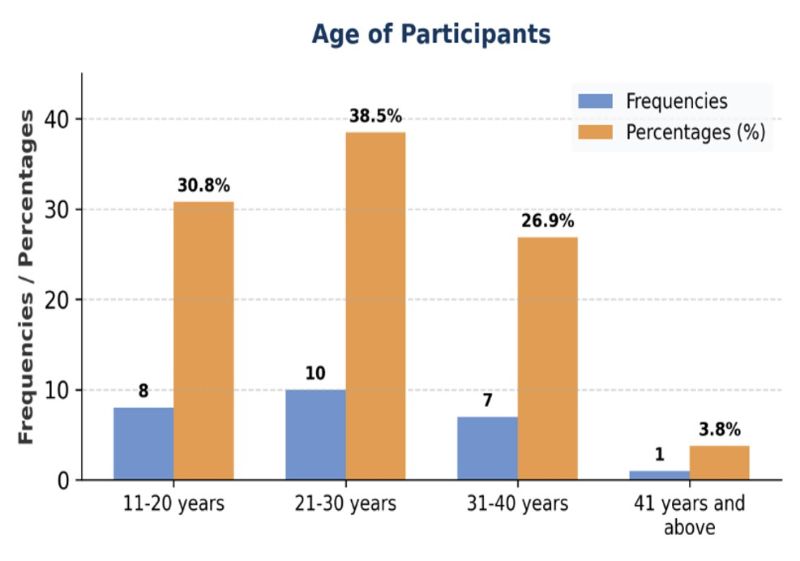
The distribution of age of respondents was as shown in figure 4.3.1 below:
Source: Primary Data
The findings from figure 4.3.1 above indicate that 38.5% or 10 participants were aged between 21-30 years, 30.8% or 8 participants were aged between 11-20 years, 26.9% or 7 participants were aged between 31-40 years, and the remaining 3.8% or 1 participant was aged 41 years and above. The findings show that majority of participants were matured adults aged 21-30 years; which means that questionnaires were filled out by employees who are of matured age to give reliable answers on how staff performance is being affected.
4.3.2. Gender of Participants
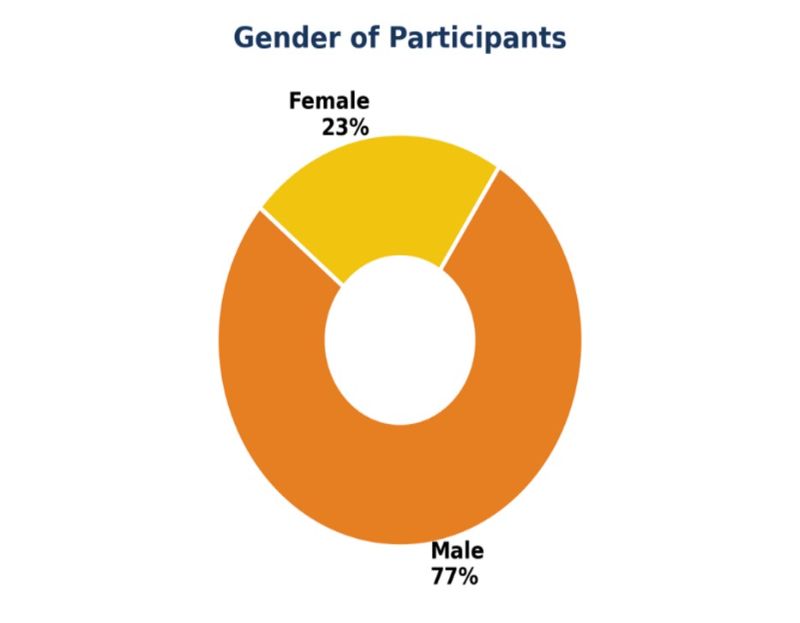
The distribution of gender of respondents was as shown in figure 4.3.2 below:
Source: Primary Data
The findings from figure 4.3.2 above indicate that 77% or 20 participants were male and 23% or 6 participants were female. The findings show that majority of participants were male, which implies that questionnaires were being filled by both male and female staff.
4.3.3. Marital Status of Participants
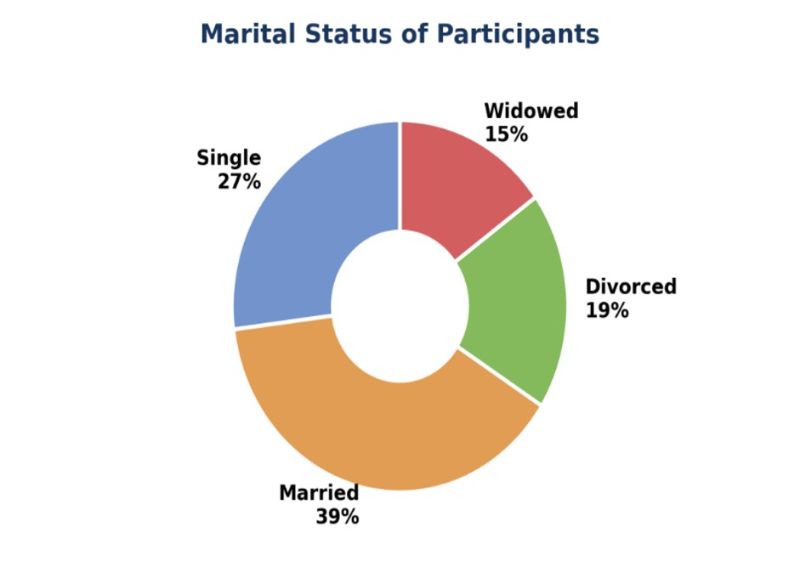
The distribution of marital status of respondents was as shown in figure 4.3.3 below:
Source: Primary Data
The findings from figure 4.3.3. above indicate that 39% or 10 participants were married, 27% or 7 participants were single, 19% or 5 participants were divorced, and the remaining 15% or 4 participants were widowed. The findings show that majority of participants were married; which means that questionnaires were filled out by employees who have families and responsibilities to give reliable answers on how staff performance is being affected.
4.3.4. Educational Level of Participants
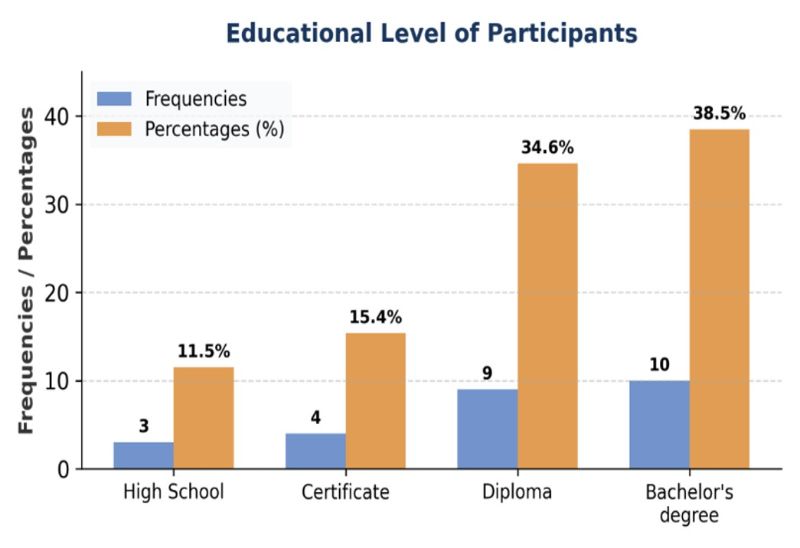
The distribution of educational level of respondents was as shown in figure 4.3.4 below:
Source: Primary Data
The findings from figure 4.3.4 above indicate that 38.5% or 10 participants were holders of bachelor's degrees, 34.6% or 9 participants were diploma holders, 15.4% or 4 participants were certificate holders, and the remaining 11.5% or 3 participants were secondary school graduates. The findings show that majority of participants were bachelor's degree holders; which implies that questionnaires were filled in by educated employees who have knowledge to give reliable answers on how staff performance is being affected.
4.3.5. Working Experience of Participants
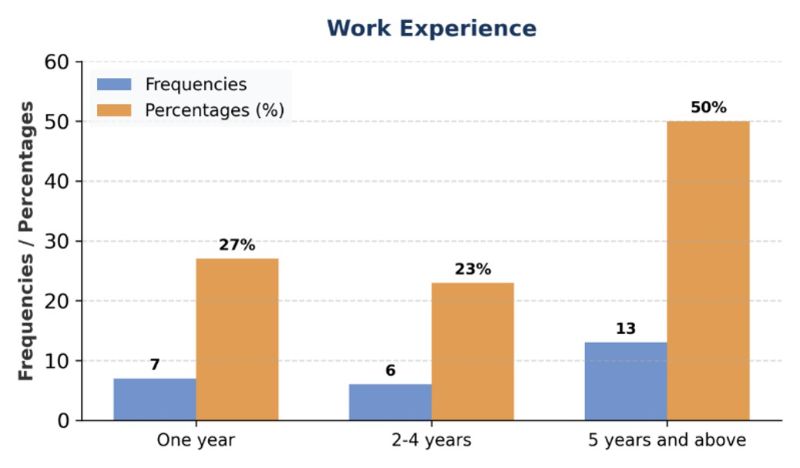
The distribution of work experience of employees was as shown in figure 4.3.5 below:
Source: Primary Data
The findings from figure 4.3.4 above indicate that 50% or 13 participants have been working for their respective organization for about 5 years or more than five years, followed by 27% or 7 participants who have been working for a year, and the remaining 23% or 6 participants that have a work experience lying between 2-4 years. The findings show that majority of participants are employees who have been working for about 5 more years; which implies that questionnaires were being filled by employees who have extensive knowledge of five consecutive years of experience.
4.3.6. Job Title of Participants
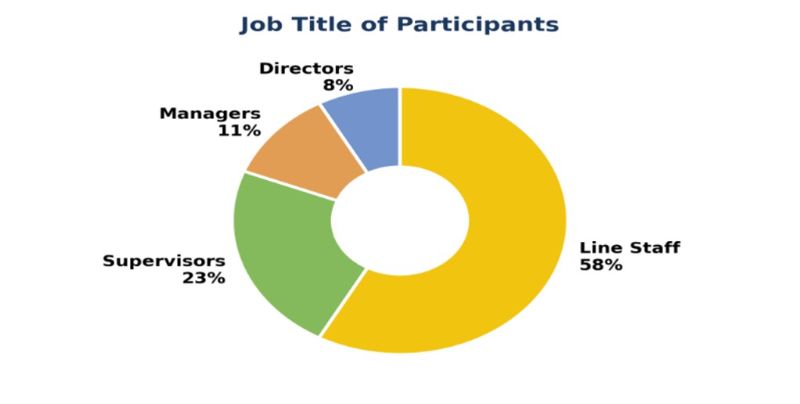
The distribution of job category of participants was as shown in figure 4.3.6 below:
Source. Primary Data
The findings from figure 4.3.6 above indicate that 58% or 15 participants are employed and holds positions other than those ones mentioned above, junior posts of their organizations as line staff, 23% or 6 participants who are employed as at a lower level of management as supervisors, 8% or 2 participants are employed at higher level of management as directors, 11% or 3 participants are employed at higher level of management as managers. These results show that participants at different levels of management participated in the study with majority of participants being line staff.
4.4.1 Impact of integration and merging of paramilitary groups towards increasing of insecurity in South Sudan
Table 4.4 1: Showing the Impact of integration and merging of paramilitary groups towards increasing of insecurity in South Sudan
|
|
|
|
|
|
|
|
|
|
|
|
|
||||||||||||
|
STATEMENT/SCALE |
SA |
A |
U |
D |
SD |
TOTAL |
|||||||||||||||||
|
P |
% |
P |
% |
P |
% |
P |
% |
P |
% |
P |
% |
||||||||||||
|
Lack of patriotism |
10 |
38 |
7 |
27 |
2 |
8 |
3 |
12 |
4 |
15 |
26 |
100 |
|||||||||||
|
Loyalty to tribal groups |
9 |
35 |
8 |
31 |
1 |
4 |
3 |
12 |
5 |
19 |
26 |
100 |
|||||||||||
|
Widespread arms |
7 |
27 |
10 |
38 |
3 |
12 |
2 |
8 |
4 |
15 |
26 |
100 |
|||||||||||
Source: Primary Data
Results in table 4.4.1 above shows that 38% of participants strongly agreed with the statement that lack of patriotism is a one of the impacts of integration and merging of paramilitary groups towards increasing of insecurity in South Sudan, 27% or 7 participants agreed with statement above, 12% or 3 participants disagreed with the statement, 15% or 4 participants strongly disagreed with the statement, and 8% or 2 participants are uncertain about the truth of the statement above. In the second statement, 35% of participants strongly agree ed with the statement that loyalty to tribal groups is another impact of integration and merging of paramilitary groups towards increasing of insecurity in South Sudan, 27% or 7 participants agreed with statement above, 19% or 5 participants strongly disagreed with the statement, 4% or one participant is uncertain about the truth of the statement above, and 12% or 3 participants disagreed with the statement. In the third statement, 27% of participants strongly agreed with the statement that widespread arms volumes is as well another impact of integration and merging of paramilitary groups towards increasing of insecurity in South Sudan, 38% or 10 participants agreed with statement above, 15% or 4 participants strongly disagreed with the statement, 12% or 3 participants are uncertain about the truth of the statement above, and 8% or two participants disagreed with the statement. Results as per table 4.4.1 discussed above indicates that 69% is the highest percentage, it is therefore conclusive that lack of patriotism is the main impact of integration and merging of paramilitary groups towards increasing of insecurity in South Sudan.
4.4.2. Negative Effects of Paramilitary Groups Integration in SSPDF Institutions
Table 4.4.2. Showing the negative effects of paramilitary groups integration in SSPDF institutions
|
STATEMENT/SCALE |
SA |
A |
U |
D |
SD |
TOTAL |
||||||
|
P |
% |
P |
% |
P |
% |
P |
% |
P |
% |
P |
% |
|
|
Recurrent of rebellions |
15 |
58 |
3 |
12 |
1 |
4 |
4 |
15 |
3 |
12 |
26 |
100 |
|
Insecurity |
10 |
38 |
4 |
15 |
2 |
8 |
6 |
27 |
4 |
12 |
26 |
100 |
|
Peace and stability |
8 |
31 |
9 |
35 |
3 |
12 |
2 |
8 |
4 |
15 |
26 |
100 |
Source: Primary Data
According to table 4.4.2 above 58% of participants strongly agreed with the statement that recurrent of rebellions is one the negative effects of paramilitary groups integration in SSPDF institutions, 12% or 3 participants agreed with the statement above 12% or 3 participants strongly disagreed with the statement, 4% or one participant is uncertain about the truth of the statement above, and 15% or 4 participants disagreed with the statement. In the second statement, 38% of participants strongly agreed with the statement that insecurity is also a negative effect of paramilitary groups integration in SSPDF institutions, 15% or 4 participants strongly disagreed with the statement, 8% or 2 participants are uncertain about the truth of the statement above, and 27% or 6 participants disagreed with the statement. In the third statement, 31% of participants strongly agreed with the statement that peace and stability is as well another negative effect of paramilitary groups integration in SSPDF institutions, 12% or 3 participants are uncertain about the truth of the statement above, 8% or 2 participants disagreed with the statement, and 15% or 4 participants strongly disagreed with the statement above.
According to results in table 4.4.2 above, 58% is the highest percentage; therefore, it is concluded that recurrent of rebellions is one the major negative effects of paramilitary groups integration in SSPDF institutions.
4.4.3. Strategies and solutions for ending negative effects of integration of paramilitary forces into national army
Table 4.4 3: Showing the strategies and solutions for ending negative effects of integration of paramilitary forces into national army
|
STATEMENT/SCALE |
SA |
A |
N |
D |
SD |
TOTAL |
||||||
|
P |
% |
P |
% |
P |
% |
P |
% |
P |
% |
P |
% |
|
|
Promotion of patriotism |
12 |
46 |
4 |
15 |
3 |
12 |
5 |
19 |
2 |
8 |
26 |
100 |
|
Professional training |
13 |
50 |
6 |
23 |
2 |
8 |
1 |
4 |
4 |
15 |
26 |
100 |
|
Arms control |
15 |
58 |
3 |
13 |
1 |
4 |
5 |
19 |
2 |
8 |
26 |
100 |
Source: Primary Data
According to table 4.4.3 above 46% of participants strongly agreed with the statement that promotion of patriotism is one of the strategies and solutions for ending negative effects of integration of paramilitary forces into national army, 15% or 4 participants agreed with the statement above 8% or 2 participants strongly disagreed with the statement, 12% or 3 participants are uncertain about the truth of the statement above, and 19% or 5 participants disagreed with the statement. In the second statement, 50% of participants strongly agreed with the statement that professional training is another strategy and solution for ending negative effects of integration of paramilitary forces into national army, 23% or 6 participants agreed with statement above, 15% or 4 participants strongly disagreed with the statement, 8% or two participants are uncertain about the truth of the statement above, and 4% or one participant disagreed with the statement. In the third statement, 58% of participants strongly agreed with the statement that arms control is another strategy and solution for ending negative effects of integration of paramilitary forces into national army, 13% or 3 participants agreed with statement above, 8% or 2 participants strongly disagreed with the statement, 4% or one participant is uncertain about the truth of the statement above, and 19% or 5 participant disagreed with the statement. According to results above, 58% is the highest percentage; therefore, it is critical to inference that promotion of patriotism is the main strategies and solutions for ending negative effects of integration of paramilitary forces into national army.
5. Conclusions
The study concludes that lack of patriotism is the main impact of integration and merging of paramilitary groups stand as risk and threats towards increasing of insecurity in South Sudan, as well as lack of sustainable development and social inequality. The recurrent rebellions is one of the major negative effects of paramilitary groups integration in SSPDF institutions where integration and promotion of the bandits in the security sector become a kind of excuse for reward and financing. Finally, the promotion of patriotism and restructuring of military strategies to counter rebellion through ideological tactics (policies) are the main strategies and solutions for ending rebellion and its negative effects of integration of defected officers and paramilitary forces into national security sector and other organized forces. Therefore, the findings predict and indicate how South Sudan could exit from political rebellions that generates bandits, paramilitary groups and ethnic regionalism. These practices have put the entire country into irresistible habit of cut-throat economic, political and military competitions that continued to cause disintegration, lawlessness and confused security in the Republic of South Sudan.
6. Recommendations
South Sudan has been affected with endless insurgencies for decades before and after independence from Sudan. This national insurgency brought forth continuous integration of untrained fighters affiliated to their tribal ideologies, warlords and other irregular forces which are interesting to coordinate their evils ideologies against the states and its supreme jurisdictions. As such, South Sudan security sector is overcrowded with tribal militias in which integration become an incentive for motivation and reward but instead as a incentive for motivation, integration of defectors encouraged rebellion, diffusion and proliferation of weapons to civil populations through tribal settings and affiliations.
For South Sudan to retreat from weakening its security institutions in mean of endless integrations promotion of patriotism, professional training and improvement of status of SSPDF institutions as well as prioritizing payment policy that attracts soldiers to demonstrate their interests and loyalty to the country. Adaptation of this strategy would encourage commitment to build up national army with all national obligations that delimit rebellion, tribalism in security sector and organized insurgencies and in addition to read insurgencies, in addition to merits of preventing ethnic mobilization among those break away politicians and disarmament of tribal militias are the only merits that could minimize rebellion, integration and its effects on security transformation.
Lastly, education is the only tool that could eliminate any form of integration and merging of irregular forces including national recruitment policies national recruitment policies conducted on the merits of nationalism, physical fitness and educational foundation. A country could be stable if rebellion and integration, amalgamation and merging of paramilitary groups are guided by strong policies.
7. Areas for Further Studies



Open Access By Aditum Open Access Journals id licensed under Creative Commons Attribution 4.0 International License. Based On a Work at aditum.org


