
The Journal of Social and Behavioral Sciences
OPEN ACCESS | Volume 4 - Issue 3 - 2026
ISSN No: 3065-6990 | Journal DOI: 10.61148/3065-6990/JSBS


Shuaibu Mukhtar1*, Umaima Kabir Bawa2 & Jabiru Abdulhamid3
1Department of Economics, Federal University Birnin Kebbi, Nigeria.
2Department of Social Sciences, Kebbi Polytechnic, Dankingari, Kebbi State, Nigeria.
3Department of Economics and Development Studies, Federal University Dutsin-Ma, Katsina State, Nigeria.
*Corresponding author: Shuaibu Mukhtar, Department of Economics, Federal University Birnin Kebbi, Nigeria.
Received: October 20, 2026 | Accepted: November 01, 2026 | Published: November 10, 2026
Citation: Mukhtar S, Umaima K Bawa & Abdulhamid J. (2026) “Assessing the Impact of Microfinance on Women's Educational Attainment and Occupation in Rural Kebbi State, Nigeria” The Journal of Social and Behavioral Sciences, 4(3); DOI: 10.61148/3065-6990/JSBS /097.
Copyright: © 2026 Shuaibu Mukhtar. This is an open access article distributed under the Creative Commons Attribution License, which permits unrestricted use, distribution, and reproduction in any medium, provided the original work is properly cited.
This study investigates the impact of microfinance on women's educational attainment and occupation in rural areas of Kebbi State, Nigeria. Cross-sectional survey of 384 women was selected through a multistage sampling technique. Data were analyzed using frequency table, descriptive statistics and Multinomial Logistic Regression. The findings reveal that microfinance services, particularly savings and loans, have a positive and statistically significant impact on women's educational attainment and occupation. It is revealed that, increases in income and savings positively influence the likelihood of women attaining formal education compared to informal Qur'anic education. Regarding occupation, the results reveal that, increase in loan access is associated with a greater likelihood of engaging in trading over farming. The study concludes that microfinance plays a significant role in empowering women economically and educationally, though challenges such as insufficient loan amounts persist. It is recommended that stakeholders enhance financial literacy campaigns and increase access to larger loan amounts to further empower rural women.
Microfinance, Women Empowerment, Educational Attainment, Rural Development, Kebbi State, Nigeria
1. Introduction
In most societies, Women's roles are limited because men are perceived as being more suited to work in certain industries (Wassie et al., 2024; Lecoutere & Chu, 2023). Although the immediate family of each individual should be the most secure environment, in most cases the rights and responsibilities of members are restricted are design to favour the male than the female member (Rahmawaty, 2015; Morduch, 2019). As a result, many women are denied the opportunity to pursue education and jobs opportunities due to inadequate family encouragement and support. The gender discrimination, rooted in societal myths and patriarchal norms, continues to limit women's roles and rights, particularly in rural Africa (Kasim, 2022; Kasiyan, 2024). Through governmental and non-governmental awareness programs can help in improving women’s access to education which can enhance better job opportunities especially in the formal sector, promoting women's economic participation through microfinance can lead to the expansion of businesses, educational attainment and general improvement overall well-being of women. According to Mishra et al., (2024), women typically enjoy secondary status in traditional male-dominated societies, which results in a lack of productive job and poor education.
This leads to a widespread condition of gender imbalance. Because of their lower social and economic standing, hence very little number of women are opportune to work in the formal sector of many societies. One way through which general inequality can be addressed is through empowerment.
Although women hold important positions in society, such as being the primary caregivers for children and managing the household, in certain Local Government Areas of Kebbi State, the empowerment that could elevate their status remains stagnant due to regional and cultural recognition of women. In addition to having a large percentage of women, the regions are rich in cultural diversity. Thus, women face significant obstacles in accessing education and economic opportunities, despite their crucial role in household management. Microfinance has been widely promoted as a tool for empowering women by providing access to credit, savings, and other financial services, thereby enabling them to start or expand businesses and improve their socio-economic status (Ledgerwood, 1999; Morduch, 2019). However, the effectiveness of microfinance in fostering women's educational attainment and occupation in Kebbi State remains uncertain due to cultural norms, limited loan sizes, and high interest rates.
Therefore, empowering women through access to microfinance can help micro, small, and medium-sized businesses (MSME) which will lead to the attainment of sustainable development and enhancing family well-being. Access to microfinance service by women serve as a key component in improving women's status and gender equality by enabling them to advance in the social and economic spheres. Thus, this study assesses the impact of microfinance on women's educational attainment and occupation in selected rural areas of Kebbi State, Nigeria.
2. Literature Review
2.1 Concept of Microfinance
Microfinance refers to the provision of small-scale financial services such as credit, savings, and insurance to low-income individuals, particularly women, who lack access to formal banking systems (Ledgerwood, 1999; Rehman et al., 2015). The goal is to enhance income-generating activities, reduce poverty, and promote economic self-reliance.
2.2 Theoretical Framework
This study is anchored in Sen's Capability Approach, which posits that development should be measured by individuals' real freedoms and opportunities their "capabilities" rather than just income (Sen, 1981). In this context, microfinance expands women's capabilities by increasing access to financial resources, which in turn enhances their economic independence, social participation, decision-making power, and freedom of choice. Empowerment is thus viewed as an expansion of these capabilities.
2.3 Empirical Review
Previous studies have shown mixed results. Yahya and Hadjatu (2024) found that decision-making participation significantly impacts women's empowerment, while education alone did not. Abebe and Kegne (2023a) reported that access to savings and credit positively influences women's entrepreneurship. Addai (2017) found a positive correlation between microfinance and women's economic and social empowerment in Ghana, though high interest rates remain a challenge. In Ethiopia, Mengistie (2022) identified age, education, credit amount, and training as significant determinants of women's empowerment.
Rehman et al., (2015) analyzed the effect of microfinance on women's empowerment in Pakistan using a qualitative and case-based approach. The study interviewed 13 female beneficiaries from the Akhuwat Foundation and the findings from the convenience sampling method reveals that women's social standing, family well-being, and home conditions all change when they get an interest-free microloan. Age, education, marital status, and family structure are also proven to be significant determinants of women's empowerment.
The impact of microcredit on women's empowerment in Rangamati Paurashava, Bangladesh, is examined by (Md & Ali, 2021). Borrowers were selected using a straightforward random selection technique, and nine in-depth interviews were conducted at the institutional level of NGOs. Secondary information gathered from primary, secondary, and tertiary sources. The findings demonstrated that microcredit had a strong effect on women's empowerment and encouraged microcredit borrowers particularly women to participate in domestic decision-making by gaining confidence, self-worth, commercial acumen, and institutional management.
By concentrating on women entrepreneurs who profit from microloans and leases from the Federal University of Technology Microfinance Bank (FMB) in the Nigerian city of Minna, Ekele et al., (2018) examine the effects of microfinance interventions on the psychological and economic circumstances of female entrepreneurs using a small purposive sample of 15 women entreprenuers. A thematic analysis of the study reveals that microfinance interventions significantly improved women's empowerment, according to a thematic analysis of the interviews with these women.
Khursheed, (2022) uses a qualitative approach to examine how MFI contributes to women's empowerment in Pakistan. Six female Rural Community Development Program (RCDP) borrowers participated in focus groups and in-depth interviews to gather qualitative data. The empirical findings shed important light on the RCDP's initiatives to support women entrepreneurs in order to empower them and fight poverty.
However, few studies have simultaneously examined the impact of microfinance on income, education, and occupation in the context of rural Kebbi State, creating a gap that this study seeks to fill.
3. Methodology
3.1 Study Area and Sampling
The study was conducted in rural areas of Kebbi State, Nigeria. A multistage sampling technique was employed. First, eight Local Government Areas (Kalgo, Aliero, Bagudo, Bunza, Fakai, Maiyama, Gwandu, and Yauri) were randomly selected. Second, three political wards were randomly selected from each LGA. Finally, using purposive sampling, 48 women were selected from each ward, yielding a total sample of 384 respondents. The sample size was determined using the Cochran (1977) formula for populations of unknown size. Cochran emphasized that when the size of the target population is not precisely known, researchers can estimate a representative sample through a specific statistical formula. In line with this, the present study applies the Cochran formula to establish an adequate sample size for assessing the impact of microfinance on women’s empowerment in selected rural communities of Kebbi State. The formula is expressed as follows:
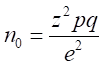

Where n0 is the sample size, z is the selected critical value of the desired confidence interval, p is the estimated proportion of an attribute (level of variability) that is present in the population, q = 1-p and e is the level of precision or level of significance.
3.2 Data Collection and Method of Data Analysis
Primary data were collected using structured questionnaires. The data were analyzed using descriptive such as statistics frequency tables and summary statistics. Similarly, inferential statistics such as Multinomial Logistic Regression (Mlogit) was employed to assess the impact of microfinance on educational attainment (with categories: Qur'anic, Formal, Not Educated) and occupation (with categories: Farming, Trading, Artisan, Civil Service), using farming and Qur'anic as base outcomes for occupation and educational attainment respectively.
The mathematical model specification for occupation and educational attainment is specified in equation 3.2 and 3.3 as follows;
EDU = ∂ + β1SAV + β2LOAN +β3INC +β4AGE + e (3.2)
OCC= ∂ + Ɵ1SAV + Ɵ2LOAN + Ɵ3INC + Ɵ4AGE + e (3.3)
Where β1 to β4
 and Ɵ1
 to Ɵ4
 are the parameters to be estimated. The model 3.2 and 3.3 are specified in mlogit form as in model 3.4 as follows;
ƞij= Y'ijβ+ εij ,j=1,…,J (3.4)
Where;
ƞij : utility of alternative j
 to individual i

Y'ij : vector of alternative-specific or individual characteristics
εij : i.i.d. Type I extreme value (Gumbel) distribution
Because only differences in utility matter, one alternative is normalized as the base category (say j=1 ) with β1=0
 . The probability that individual i chooses alternative j expressed as in model 3.5 as follows;
prXi=jYi=expY'ijβjk=1Jexp(yik'βk) (3.5)

with β1=0 .
For the base category j=1 the probability is given in the equation 3.6 as presented below;
prXi=1Yi=11+k=2Jexp(Yik'βk) (3.6)
The choice of each outcome in relation to base outcome is estimated using the probability equation to analyses the data in the mlogit.
4. Results and Discussion
4.2 Socio-Economic Characteristics of the Respondents
Here the individual characteristics of the respondents with respect to their age, marital status, educational attainment and occupation sourced from structured questionnaires is analyses using frequency table.
Table 4.1: Marital Status of the Respondents
|
Marital status |
Freq. |
Percent |
Cum. |
|
Single |
35 |
9.11 |
9.11 |
|
Married |
256 |
66.67 |
75.78 |
|
Divorced |
54 |
14.06 |
89.84 |
|
Widowed |
39 |
10.16 |
100.00 |
|
Total |
384 |
100.00 |
|
|
Sources: Field survey, 2025 |
|||
Table 2 reveals that majority of the respondents are married representing 66.67 percent of the respondents. The divorced women among the respondents represent 14.06 percent while widowed and single represent 10.16 and 9.11 percent of the population respectively. This justify the structure of the respondents which shows that the mean age of the respondent is 32 years.
Table 4.2: Educational status of the respondents
|
Education |
Freq. |
Percent |
Cum. |
|
Qur’anic |
211 |
54.95 |
54.95 |
|
Formal Education |
126 |
32.81 |
88.76 |
|
Not Educated |
47 |
12.24 |
100.00 |
|
Total |
384 |
100.00 |
|
|
Sources: Field survey, 2025 |
|||
Table 4.2 reveals that majority of the respondents with 54.95 percent attended Quranic education due to the religion of the respondents because they do not support the western system of education for women. Those that attend formal education are 32.81 percent of the respondents while 12.24 percent are not educated among the respondents.
Table 4.3: Occupation of the Respondents
|
Occupations |
Freq. |
Percent |
Cum. |
|
Farming |
88 |
22.92 |
22.92 |
|
Trading |
241 |
62.76 |
85.68 |
|
Artisan |
27 |
7.03 |
92.71 |
|
Civil service |
28 |
7.29 |
100.00 |
|
Total |
384 |
100.00 |
|
|
Sources: Field survey, 2025 The distribution of the occupation of respondents shown in table 4 reveals that, 63.50 percent of the respondents engage in trading, 22.92 percent are farmers, 7.03 percent are artisans while only 7.29 are civil servants. The low civil servants among the respondents can be attributed to illiteracy and less attainment of western education by the respondents which together represent 47.19 percent of the respondents. |
|||
4.2 Microeconomic Services Details
Table 4.4: Length of Period with Microfinance Bank
|
Duration |
Freq. |
Percent |
Cum. |
|
Less than one year |
171 |
44.53 |
44.53 |
|
1-3years |
140 |
36.46 |
80.99 |
|
More than 3years |
73 |
19.01 |
100.00 |
|
Total |
384 |
100.00 |
|
|
Sources: Field survey, 2025 Table 4.5 reveals that 171 respondents representing 44.53 percent are with microfinance for less than one year. Those that are with microfinance for one to three years are 140 respondents which represents 36.46 percent while the remaining 73 respondents’ equivalents to 19.01 percent have the experience of microfinance for more than three years. |
|||
Table 4.5: Microfinance Services Rendered to the Customers
|
Service |
Freq. |
Percent |
Cum. |
|
Loan |
261 |
67.97 |
67.97 |
|
Savings |
63 |
16.41 |
84.38 |
|
Financial training |
50 |
13.02 |
97.40 |
|
Insurance |
10 |
2.60 |
100.00 |
|
Total |
384 |
100.00 |
|
|
Sources: Field survey, 2025 |
|||
From Table 4.5, majority of the respondents with 67.97 percent collect loan as a service they enjoyed from microfinance banks. This service helps them expand their businesses which will also increase their income because of business expansion. Savings with microfinance banks and financial training account for 16.41 and 13.02 percent respectively of the microfinance service enjoyed by the respondents while only 2.60 percent of the respondents benefited from insurance services.
Table 4.6: Decision Maker about Taking Loan
|
Loan decision |
Freq. |
Percent |
Cum. |
|
Self |
252 |
65.63 |
65.63 |
|
Husband |
36 |
9.37 |
75.00 |
|
Both |
96 |
25.00 |
100.00 |
|
Total |
384 |
100.00 |
|
|
Sources: Field survey, 2025 |
|||
As presented in Table 4.6, women themselves play pivot role as per the decision to obtain loan from microfinance for the growth of their respective businesses. This is evidence as shown from the table where 65.63 percent of the respondents carried out the decision of taking the loan by themselves. The decision making by husbands is just 9.37 percent while 25.50 percent of the respondents reveals that the loan decision is jointly determined by them and their husbands. This justify that the women are more empowered due to their attachments with microfinances because they have the decision taking ability in their respective businesses.
Table 4.7: Challenges Faced by Women in Accessing Microfinance Service
|
Challenges |
Freq. |
Percent |
Cum. |
|
High interest rates |
93 |
24.22 |
24.22 |
|
Insufficient loan amount |
157 |
40.89 |
65.11 |
|
Limited financial literacy |
84 |
21.87 |
86.98 |
|
Limited branch access |
50 |
13.02 |
100.00 |
|
Total |
384 |
100.00 |
|
|
Sources: Field survey, 2025 |
|||
Table 4.7 presents the responses of the respondents as far challenges faced by them in the process of accessing the microfinance services. It is evidence from the results that the main challenge faced by women is the insufficiency of loan amount to the customer. This represent 40.89 percent of the entire respondents indicates their challenge is inadequate loan amount. 24.22 percent reveals that their main challenge is high interest rates. From the remaining, 21.87 percent of the respondents reveals that their challenge is limited financial literacy while only 13.02 percent indicates that, their main challenge is the limited branches access.
4.3 Business Details
Table 4.8: Business Name Bearer
|
Bearer |
Freq. |
Percent |
Cum. |
|
Husband |
86 |
22.40 |
22.40 |
|
Self |
265 |
69.01 |
91.41 |
|
Parents |
33 |
8.59 |
100.00 |
|
Total |
384 |
100.00 |
|
|
Sources: Field survey, 2025 |
|||
Table 4.8 reveals from table 8 that, 69.01 percent of the businesses carry the women’s names (self), 22.40 percent of the businesses carry husband’s names while only 8.59 percent of the respondents reveal that their businesses carry parent’s names. This support the loan taking decision that is majorly determined by women themselves.
Table 4.9: Management/In Charge of the Business
|
In charge |
Freq. |
Percent |
Cum. |
|
Self |
234 |
60.93 |
60.93 |
|
Employees |
42 |
10.94 |
71.87 |
|
Family members |
71 |
18.49 |
90.36 |
|
Husband |
37 |
9.64 |
100.00 |
|
Total |
384 |
100.00 |
|
|
Sources: Field survey, 2025 |
|||
The management of the business result is presented in table 4.9 which reveals that women are given more privilege to manage their businesses showing how they are empowered to manage their businesses and their finances. It is evidence that, 60.93 percent of the women control their business themselves, 10.94 percent of the business is managed by employees, family members account for 18.49 percent of the business management while husband only account for 9.64 percent as far as women’s business management. This is the justification that the businesses are controlled by the majority of women which is a good sign of women empowerment in Kebbi State.
4.1 Descriptive Statistics
The descriptive statistics which a clear picture of the distribution of the variables in term of mean, standard deviation minimum and maximum for the data is presented in the table 4.15 below
Table 4.10: summary statistics for Age, Income, Savings and Loan from Microfinance
|
Variable |
Obs |
Mean |
Std. Dev. |
Min |
Max |
|
Age |
384 |
32.085 |
8.041211 |
18 |
56 |
|
Income |
384 |
34372.35 |
28325.21 |
7500.5 |
175000.5 |
|
Savings |
367 |
16640.61 |
19331.17 |
7500 |
115000.5 |
|
Loan |
384 |
39171.34 |
36142.11 |
15000 |
175000.5 |
|
Sources: Field survey, 2025 |
|||||
The average age of respondents was 32 years (SD = 8.04). The mean income was ₦34,372.35 (SD = 28,325.21). Average savings and loan amounts were ₦16,640.61 (SD = 19,331.17) and ₦39,171.34 (SD = 36,142.11), respectively. A majority of respondents were married (66.7%), had informal Qur'anic education (55.0%), and were engaged in trading (62.8%). Most respondents (68.0%) accessed loans, and 73.4% reported that their income increased after joining microfinance.
4.4.3 Presentation of Multinomial Logistics Regression Results
The multinomial logistic regression and corresponding odds ration results are presented in table 4.11 to 4.12 as follows;
Table 4.11: Multinomial Logistic Regression Result for Education
|
|
Variables |
Coef. |
RRR |
Std.Err. |
Z-stat |
P>|t| |
[95% Conf. Interval] |
||||
|
|
|
Qur’anic (base outcome) |
|||||||||
|
Formal education |
INC |
2.58e-06 |
1.000003 |
7.72e-06 |
0.33 |
0.739 |
-.000013 |
.0000177 |
|||
|
SAV |
8.03e-06 |
1.000008 |
.0000102 |
0.79 |
0.432 |
-.000012 |
.0000281 |
||||
|
LOAN |
-4.13e-06 |
.9999959 |
5.38e-06 |
-0.77 |
0.442 |
-.000015 |
6.40e-06 |
||||
|
AGE |
-.1048281 |
.9004793 |
.0287437 |
-3.65 |
0.000 |
-.161165 |
-.048491 |
||||
|
CONS |
2.553636 |
12.85376 |
.8805622 |
2.90 |
0.004 |
.8277659 |
4.279506 |
||||
|
Not educated
|
INC |
-6.47e-06 |
.9999935 |
.0000126 |
-0.51 |
0.608 |
-.000031 |
.0000183 |
|||
|
SAV |
-.0000317 |
.9999683 |
.000038 |
-0.83 |
0.404 |
-.000106 |
.0000428 |
||||
|
LOAN |
-1.99e-06 |
.999998 |
9.02e-06 |
-0.22 |
0.826 |
-.000020 |
.0000157 |
||||
|
AGE |
.0220931 |
1.022339 |
.033585 |
0.66 |
0.511 |
-.043732 |
.0879185 |
||||
|
CONS |
-1.591225 |
.2036759 |
1.243741 |
-1.28 |
0.201 |
-4.02891 |
.8464625 |
||||
|
|
LR chi2(8) = 22.97 |
|
Prob >chi2 =0.0034 |
Pseudo R2 = 0.0778 |
|||||||
|
|
Sources: Author’s computation from Field survey data using stata, 2025 |
||||||||||
Result of Formal Education in relation to Qur'anic Education in Table 4.11 reveal that, the coefficients for income and savings were positive, indicating that women with higher income and savings are more likely to have formal education. Conversely, loan and age had negative coefficients, suggesting that older women and those with larger loans were less likely to have formal education relative to Qur'anic education. Similarly, Not Educated in relation to Qur'anic Education reveals that, Income, savings, and loan had negative coefficients, meaning that increases in these variables reduce the likelihood of being uneducated. Age had a positive coefficient, indicating older women are more likely to be uneducated.
The odds ratio of having formal education compared to Qur’anic education indicates that a unit increase in income lead to a relative odd of having formal education rather than Qur’anic education to increase 1.000003 times what they were before the changes in income. This means that the odds ratio increases. Similarly, when savings increases, the odds ratio of having formal education than Qur’anic education increases 1.000008 times than what it was before the changes in savings. But loan and age decrease the odds of having formal education than Qur’anic education 0.9999959 and 0.9004793 times than what it was before the change in loan and ages of the respondents respectively.
In a similar vein, the odds ratio of being not educated than having Qur’anic education decreases by 0.9999935, 0.9999683 and 0.999998 times than what it was before the changes in income, savings and loan of the respondents respectively. While age tends to increase the odds of being not educated than Qur’anic education by 1.022339 times before the change in the age of the respondents. The findings are similar to the findings of (Khursheed, 2022; Md & Ali, 2021; Rehman et al., 2015).
Table 4.12: Multinomial Logistic Regression Result for Occupation
|
|
Variables |
Coef. |
RRR |
Std.Err. |
Z-stat |
P>|t| |
[95% Conf. Interval] |
||||
|
|
|
Farming (base outcome) |
|||||||||
|
Trading |
INC |
-.0000158 |
.9999842
|
7.97e-06 |
-1.99 |
0.047 |
-.000031 |
-2.14e-07 |
|||
|
SAV |
-.000014 |
.999986 |
.0000118 |
-1.19 |
0.233 |
-.000037 |
9.01e-06 |
||||
|
LOAN |
1.80e-06 |
1.000002 |
5.99e-06 |
0.30 |
0.763 |
-9.94e-06 |
.0000136 |
||||
|
AGE |
-.0036763 |
.9963305 |
.0259885 |
-0.14 |
0.888 |
-.054613 |
.0472602 |
||||
|
CONS |
1.713197 |
5.546664 |
.9008515 |
1.90 |
0.057 |
-.05244 |
3.478833 |
||||
|
Artisan |
INC |
-.0000138 |
.9999862 |
.0000176 |
-0.79 |
0.432 |
-.000048 |
.0000207 |
|||
|
SAV |
-.0000365 |
. 9999635 |
.0000432 |
-0.84 |
0.399 |
-.000121 |
.0000482 |
||||
|
LOAN |
-3.22e-06 |
.9999968 |
.0000122 |
-0.26 |
0.792 |
-.000027 |
.0000207 |
||||
|
AGE |
-.0505449 |
.9507112 |
.0476603 |
-1.06 |
0.289 |
-.143957 |
.0428675 |
||||
|
CONS |
1.423102 |
4.149972 |
1.545945 |
0.92 |
0.357 |
-1.60689 |
4.453097 |
||||
|
Civil service
|
INC |
-9.11e-06 |
.9999909 |
.0000155 |
-0.59 |
0.557 |
-.000040 |
.0000213 |
|||
|
SAV |
.0000111 |
1.000011 |
.0000142 |
0.78 |
0.436 |
-.000017 |
.0000389 |
||||
|
LOAN |
-6.72e-06 |
.9999933 |
.0000111 |
-0.60 |
0.546 |
-.000029 |
.0000151 |
||||
|
AGE |
-.1158261 |
.8906301 |
.0571984 |
-2.02 |
0.043 |
-.227933 |
-.003719 |
||||
|
CONS |
2.522729 |
12.46256 |
1.619944 |
1.56 |
0.119 |
-.652302 |
5.69776 |
||||
|
|
LR chi2(8) = 20.56 |
|
Prob >chi2=0.0571 |
Pseudo R2 = 0.0636 |
|||||||
|
|
Sources: Author’s computation from Field survey data using stata, 2025 |
||||||||||
The multinomial logistic regression for occupation in Table 4.12 shows Trading in relation to Farming as a base outcome reveals income, savings, and age had negative coefficients which means that, women with higher income, savings, and age are more likely to be farmers. Loan had a positive coefficient, indicating that increased loan access makes trading more likely. Moreover, Artisan in relation to Farming indicates all independent variables (income, savings, loan, age) had negative coefficients, suggesting that increases in these variables make farming more likely than artisan work. On the other hand, civil Service in relation to Farming shows that, income, loan, and age decreased the likelihood of being a civil servant, while savings increased it. This supports the findings of (Khursheed, 2022; Md & Ali, 2021; Rehman et al., 2015). The findings contradict the previous finding of (Yahya & Hadjatu, 2024; Ekele, et al., 2018).
The odds ratio of trading compared to farmers indicates that, a unit increase in income, savings and age decreases the relative odds trading by 0.9999842, 0.999986 and 0.9963305 times than what it was before the changes in income, savings and ages respectively. Contrarily, loan increase the odds of trading by 1.000002 times than what it was before the increase in loan. This is in line with findings of (Khursheed, 2022; Md & Ali, 2021; Rehman et al., 2015).
The odds ratio of artisan compared to farmers shows that, a unit increase in income, savings, loan and age decreases the relative odds artisan by 0.9999862, 0.9999635, 0.9999968 and 0.9507112 times than what it was before the increases in income, savings, loan and age respectively. Lastly, the odds ratio of civil servants compared to farmers shows that, income, loan and age decrease the relative odds of being civil servant than farmer by 0.9999909, 0.9999933 and 0.8906301 times than what it was before the changes while savings increases the relative odds of being civil servant than farmer by 1.000011 times than what it was before the changes. The findings contradict the previous finding of (Yahya & Hadjatu, 2024; Ekele, et al., 2018).
5. Conclusion and Recommendations
This study concludes that microfinance has a significant positive impact on women's occupation and educational attainment in rural Kebbi State, particularly savings and income are crucial drivers for improving educational attainment, while access to loans influences occupational choices, favoring trading over farming. Despite microfinance positive impact on occupation and educational attainment, challenges such as insufficient loan amounts and limited financial literacy persist.
Based on these findings from the research, the following recommendations are made:



Open Access By Aditum Open Access Journals id licensed under Creative Commons Attribution 4.0 International License. Based On a Work at aditum.org


