
The Journal of Social and Behavioral Sciences
OPEN ACCESS | Volume 3 - Issue 1 - 2026
ISSN No: 3065-6990 | Journal DOI: 10.61148/3065-6990/JSBS


Anita. J 1 and Abhishek Budiguppe Panachakshari 2*
1Speech language Pathologist.
2Assistant professor in Language Pathology.
*Corresponding author: Abhishek Budiguppe Panachakshari, Speech language Pathologist.
Received date: June 14, 2024
Accepted date: June 24, 2024
Published date: July 16, 2024
Citation: Anita. J and Abhishek B.P. (2024) “Cognitive Control in Low Proficient and High Proficient Younger and Older Bilinguals.”, Journal of Social and Behavioral Sciences, 1(1); DOI: 10.61148/JSBS/001.
Copyright: ©22024 Abhishek Budiguppe Panachakshari. This is an open access article distributed under the Creative Commons Attribution License, which permits unrestricted use, distribution, and reproduction in any medium, provided the original work is properly cited.
Executive functions include basic cognitive processes such as attentional control, cognitive inhibition, inhibitory control, working memory, and cognitive flexibility. Executive function is reported to be advantageous in bilinguals when compared to monolinguals. The present study investigates the cognitive control in low and high proficient younger and older bilinguals. Kannada-English bilingual adults in the age range of 18-30 years and 55-70 years were recruited. Bilinguals were further divided into subgroups of high and low proficient bilinguals based on a self-rating proficiency questionnaire; LEAP-Q. Three tasks assessing different domains of cognitive control i.e. Simon’s task, Stroop task, and Conditioned naming task were administered on all the subjects. Reaction time and accuracy scores were computed. It was found that bilingual advantage of cognitive control was seen for both reaction time and accuracy scores in young and high proficient bilinguals. However, high proficient bilinguals were able to persist this advantage with increasing age.
Introduction:
Bilingualism- definition:
Bilingualism is a widespread phenomenon and it is estimated that half of the world’s population speak two or more languages (Grosjean, 2010). It exists in almost all countries in the world, in all different classes of society and in all age groups. According to ASHA (2004), Bilingualism is defined as the usage of and proficiency in at least two languages by an individual, which is subjected to change depending on the opportunities to use the languages and exposure to other users of the languages.
Classification and assessment of Bilingualism:
Bilinguals can be classified on the basis of age of acquisition of the second language as late and early bilinguals (Beardsmore, 1986). They can also be classified based on the mode of acquisition of the second language, i.e. whether there is a single lexicon moderating the activation of words in both the languages or if there is an independent lexicon for activation of words in each language. On the basis of competency, bilinguals are classified as balanced and dominant types (Peal & Lambert, 1962). When L1 competence is equal to L2 competence, the condition is a balanced type and in the dominant type, the L1 competence is greater than or less than the L2 competence.
Proficiency is a very important factor, based on which bilinguals are classified into high proficient and low proficient. Proficiency refers to the skill of an individual to use their second language more or less like a native or fluent speaker. Many different measures have been proposed to measure proficiency levels in the second language. The measures include self-rating scales, questionnaires, flexibility tests, fluency tests and dominance tests (McNamara, 1967). Out of these measures, the self-rating scale is a time economy measure to determine proficiency and has extensive usage. Rating scales such as the International Second Language Proficiency Rating Scale (Ingram, 2000); Interagency Language Roundtable Scale, ACTFL Proficiency Scale are commonly used. Rating scales clubbed with questioners such as LEAP-Q developed by Flege and revised by Marian, Blumenfeld & Kaushanskaya, 2007 has been used. This has also been developed for the Indian context by Ramya & Goswami (2009).
Advantages of Bilingualism:
The well-known advantages of Bilinguals include being able to speak in more than one language. Hence being able to converse with a larger group of people, making migration to other places less troublesome. This is also an advantage in the job sector. Previous researchers have reported “Bilingual advantage”, where they demonstrate a superior performance relative to the monolinguals. This enhances bilingual’s cognitive processes across the lifespan and develops better cognitive functions (Bialystok et al, 2004). Some of the cognitive benefits of bilingualism include suppression of irrelevant information and activate the relevant ones, despite adverse interference (Bialystok et al, 2008), shifting between mental sets (Garbin et al., 2010; Prior and MacWhinney, 2010), slow decline of onset of symptoms of dementia in aging adults (Bialystok, 2010), Mild Cognitive Impairment (Bialystok et al, 2014) and Alzheimer’s disease (Alladi et al., 2013) and better cognitive recovery (Alladi et al., 2016).
Reasons for the cognitive advantages seen in bilinguals:
Bilinguals share their knowledge or communicate in more than one language by code-switching (i.e. alternating between two or more languages, or dialects, in the circumstance of a single conversation) and/or language mixing; without impairing comprehension. Thus, there are instances that don't demand the exclusive use of one language and suppress the interference from the other one(s). Sometimes, complete language separation is even not desired as a certain pleasure often accompanies code-switching and language mixing. On the contrary, in many situations, where there are certain formal constraints or where communication has to be restricted to one language, there is the necessity of rather pure monolingual language use. In such cases, the target language has to be selected and its activation has to be maintained during the communication while the (co-activated) non-target language(s) need to be inhibited (Green, 1998).
The bilingual advantage is due to relative inhibition i.e. facilitation of relevant information and not due to active inhibition, where there is active inhibition of irrelevant information. This selection process is part of the cognitive function called the executive control system. Thus, the bilingual advantage is not a result of inhibiting the irrelevant language constantly, but a better selection of the relevant/target language from the irrelevant competing language(s) (Colzato et al., 2008). Hence, language selection tends to have generalized cognitive benefits (Kroll, Dussias, Bice, & Perrotti, 2015). It is also assumed that as the number of years of experience of selecting and managing two language increases, an individual becomes more skilled across different aspects of executive functions and this skill would reduce with aging.
However, some disadvantages also accompany bilinguals. In general, bilinguals are prone to have smaller vocabularies in the languages they know (Oller & Eilers, 2002), they are slower at naming pictures (Kaushanskaya & Marian, 2007), and occurrences of tip-of-the-tongue errors are higher when compared to monolinguals (Gollan & Acenas, 2004).
Executive functions:
Executive functions refer to a variety of skills which help in making socially responsible, self-serving, independent and purposive behavior possible (Lezak, 1995). Executive functions include basic cognitive processes such as attentional control, cognitive inhibition, inhibitory control, working memory, and cognitive flexibility. Higher order executive functions require the simultaneous use of multiple basic executive functions and include planning and fluid intelligence (e.g., reasoning and problem solving). Miyake and his colleagues (2000) claimed that executive function is not a unitary construct but includes many domains such as; Attention, Response inhibition, Cognitive flexibility and Memory
Executive functions in bilinguals:
Executive function is reported to be advantageous in bilinguals when compared to monolinguals as evident in the previous studies. It helps an individual to become more sensitive to finer distinctions between languages. Furthermore, it enhances the effective use of their first language and facilitates learning other/new languages. Various studies conducted in this area have found that bilingualism enhances a bilingual’s cognitive processes throughout life. This intern help develops better cognitive functions and this phenomenon is termed as “Bilingual Advantage” (Bialystok, Craik, Klein & Viswanathan, 2004).
The earlier studies have compared monolinguals and bilinguals. The present study is different compared to the previous studies as it compares bilinguals in terms of their proficiency.
Need for the study:
Studies previously have compared bilinguals with monolinguals. Also, very few studies have compared the cognitive control across proficiency levels i.e. high proficient and low proficient bilinguals. Though an earlier study was conducted, cognitive control was not tapped in that study.
The earlier studies on bilingualism have been done on younger bilinguals. In this study, older bilinguals were also considered. Hence, the Bilingual Advantage in the cognitive domain would be viewed as a function of age.
Most of the studies on cognitive control have used non-linguistic tasks. The present study intends to use a variety of tasks with varying complexity.
Method:
Participants:
The study involved a total of 40 participants. The participants were divided into two groups. Each group was further divided equally into two subgroups (with 10 males & 10 females) based on proficiency. The first group comprised of 20 individuals in the age range of 18 to 30 years while the second group comprised of 20 individuals in the age range of 55 to 70 years. Further, the subgrouping of participants was done. Young bilinguals were divided into subgroups i.e. high and low proficient same as the older group.
Participants who are successive bilinguals having Kannada as L1 and English as L2 were recruited for the study. Participants exposed to L2 (English) right from their childhood with a minimum of 10 years were included. Individuals with normal/corrected vision were included in the study. Participants with a history of any communication, psychological and other sensory impairments were excluded from the study. Informed consent was taken before enrolment.
Administration of LEAP-Q:
Based on the LEAP- Q findings, participants were divided into high proficient and low proficient bilinguals. The questionnaire contains 18 questions pertaining to language acquisition and usage which was used to determine bilingual proficiency. Question 10 of the questionnaire, participants had to rate their proficiency on four domains: understanding, speaking, reading and writing using a four-point rating scale (where, 1-Zero Proficiency, 2-Low, 3-Good, and 4-Perfect Proficiency).
Based on LEAP-Q, two claims have been proposed by researchers; Hayward (2013) claimed that if a bilingual has a score of 3 or 4 on the speaking domain of L1 they can be classified as high proficient bilinguals. Whereas Hickey (2010) claimed that a bilingual should receive a score of 4 in the understanding domain and a minimum score of 3 on all the other domains (speaking, reading and writing) in order to be classified as a high proficient bilingual. Based on the ratings by the participants they were classified as high proficient or low proficient bilinguals and were assigned into group 1 and group 2 respectively. In the present study, Hickey's criteria were used.
Tasks:
Three tasks i.e. Simon’s task, Stroop task, and a Conditioned naming task were administered on all the participants. The stimuli for all the tasks were presented in visual mode on a 15.6-inch laptop through the DMDX software. The participants were seated at a distance of 50cm from the laptop screen and the testing was carried out in a silent room. Instructions varied with respect to each task. Practice trials were presented for all the tasks before the presentation of the actual stimuli.
The first task was Simon’s task where arrow appeared on the top corners of the screen facing either to the right or left direction. The participant was required to look for the direction of the arrow and press keys based on the alignment of the arrow, irrespective of the location of the stimulus. Neutral stimulus, i.e. the arrow appearing in the middle of the screen was also displayed. The participant was instructed to press the right key when the arrow was in the right direction and left key when the arrow was in the left direction, ignoring the location of the arrow. For the neutral stimulus, the participant was asked to press the up key. The reaction time and accuracy scores for congruent and incongruent trials were considered.
The second task was a Stroop task where color words were represented in the same color ink (congruent) or in different color ink (incongruent). Stimuli were presented in both L1 Kannada and L2 English. The participants were instructed to press the right key for a congruent condition and the left key for the incongruent condition. Reaction time and accuracy scores for congruent and incongruent trials in L1 and L2 were considered.
The third task was a Conditioned naming task. Here, pictures of commonly occurring objects were chosen and they appeared on the computer screen accompanied by a red or a blue dot. Depending on the color of the dot the participant had to name the picture; in Kannada, if the picture was accompanied by a blue dot and in English, if the picture was accompanied by a red dot. The stimulus was presented randomly, reaction time and accuracy were calculated.
Results:
The primary aim of the study was to measure the effects of bilingualism on cognitive control in young and old, low proficient and high proficient bilinguals. Four objectives were included in the study, where first and second objectives were to compare the reaction time and accuracy scores across different age groups (young and old adults) and third and fourth objectives were to compare the reaction time and accuracy scores across proficiency levels (high and low proficient bilinguals)
Objective 1: To compare the reaction time and accuracy scores for high proficient young and old bilinguals on the three tasks.
The aim was to compare and look for any significant difference in reaction time and accuracy measures in high proficient bilinguals as an effect of aging on the three tasks
|
Reaction time (ms) |
Young bilinguals |
Old bilinguals |
|||||
|
Task 1 |
Task 2 |
Task 3 |
Task 1 |
Task 2 |
Task 3 |
|
|
|
Mean |
1121.94 |
1165.44 |
1211.85 |
1338.58 |
1498.07 |
1410.01 |
|
|
Median |
957.64 |
1107.90 |
1236.38 |
1293.95 |
1452.75 |
1386.53 |
|
|
SD |
397.48 |
210.14 |
202.31 |
542.10 |
311.58 |
213.94 |
|
|
Accuracy Scores (%) |
|
||||||
|
Mean |
94.99 |
96.83 |
95.31 |
86.65 |
94.34 |
87.64 |
|
|
Median |
100.00 |
96.80 |
96.60 |
91.65 |
96.80 |
90.00 |
|
|
SD |
8.06 |
2.95 |
4.21 |
17.22 |
6.89 |
11.78 |
|
Table 1: Descriptive values for reaction time and accuracy scores of high proficient young and old bilinguals on the three tasks.
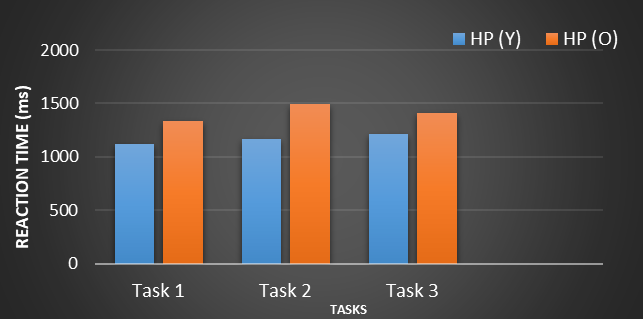
Figure 1: Mean of the reaction time for tasks 1, 2 and 3 in high proficient young and old bilingual adults.
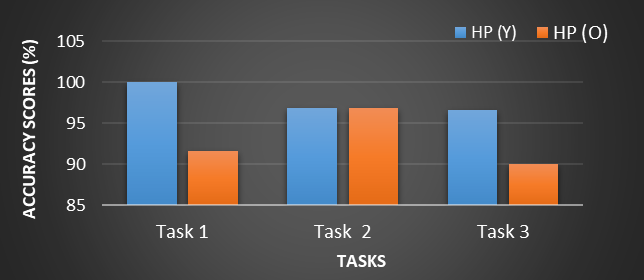
Figure 2: Median of the accuracy for tasks 1, 2 and 3 in high proficient young and old bilingual adults.
As shown in table 1, high proficient young bilinguals took the least time to respond for the T1 (Simon’s task) and then for T2 (Stroop task) and most time for T3 (Conditioned naming task). However, their accuracy was the least for T3 (Conditioned naming task), better for T2 (Stroop task) and highest for T1 (Simon’s task). In the case of high proficient old bilinguals, they responded the fastest for T1 (Simon’s task), slower for T3 (Conditioned naming task) and took the most time for T2 (Stroop task). Their accuracy scores were least for T3 (Conditioned naming task), then for T1 (Simon’s task) and highest for T2 (Stroop task).
Objective 2: To compare the reaction time and accuracy scores for low proficient young and old bilinguals on the three tasks.
The aim was to compare and look for any significant difference in reaction time and accuracy measures in low proficient bilinguals as an effect of aging on the three tasks.
|
Reaction time (ms) |
Young bilinguals |
Old bilinguals |
||||
|
Task 1 |
Task 2 |
Task 3 |
Task 1 |
Task 2 |
Task 3 |
|
|
Mean |
1327.25 |
1525.72 |
1206.64 |
1229.62 |
1817.46 |
1386.31 |
|
Median |
1209.43 |
1493.31 |
1137.84 |
1131.84 |
1846.20 |
1362.99 |
|
SD |
484.29 |
417.21 |
199.92 |
409.88 |
290.56 |
186.48 |
|
Accuracy Scores (%) |
|
|||||
|
Mean |
91.65 |
94.35 |
86.63 |
74.98 |
90.58 |
78.30 |
|
Median |
100.00 |
95.25 |
83.30 |
74.95 |
93.70 |
78.30 |
|
SD |
11.8 |
6.3 |
7.8 |
25.16 |
9.78 |
12.20 |
Table 2: Descriptive values for reaction time and accuracy scores of low proficient young and old bilinguals on the three tasks.
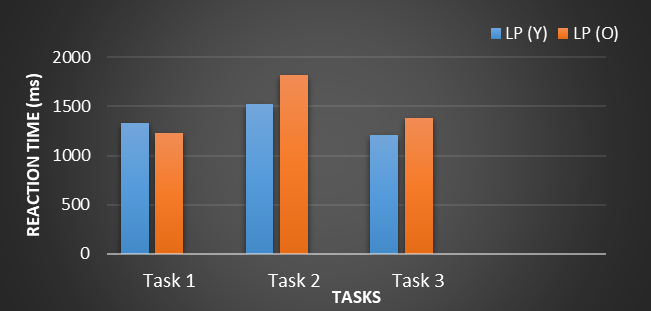
Figure 3: Mean of the reaction time for tasks 1, 2 and 3 in low proficient young and old bilingual adults.
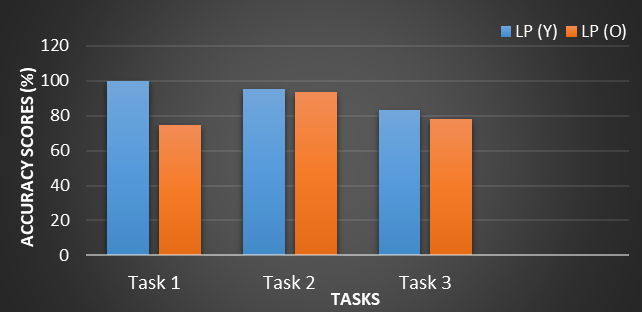
Figure 4: Median of the accuracy for tasks 1, 2 and 3 in low proficient young and old bilingual adults.
As shown in table 2, low proficient young bilinguals took the least time to respond for the T3 (Conditioned naming task) and then for T1 (Simon’s task) and most time for T2 (Stroop task). However, their accuracy was the least for T3 (Conditioned naming task), better for T2 (Stroop task) and highest for T1 (Simon’s task). In the case of low proficient old bilinguals, they responded the fastest for T1 (Simon’s task), slower for T3 (Conditioned naming task) and took the most time for T2 (Stroop task). Their accuracy scores were least for T1 (Simon’s task), better for T3 (Conditioned naming task) and highest for T2 (Stroop task).
Statistical Analysis:
Objective 1 & 2:
The objective was to compare the reaction time and accuracy measures of high proficient and low proficient bilinguals as an effect of age (young and old).
In order to verify any significant difference in the performance between the two groups - young and old bilinguals (between-group comparisons), statistical analysis was carried out. The data were subjected to test of normality using Shapiro Wilk test and it was observed that it follows a normal distribution (p>0.05) for reaction time for both young & old and high & low proficient bilinguals. Whereas for accuracy scores, it was found that the data was not normally distributed (p<0.05) for both young & old and high & low proficient bilinguals.
Reaction time:
A parametric test, Mixed ANOVA was carried out for the reaction time measures to check for the main effect of groups (young or old), proficiency (high or low), and tasks (Simon’s task or Stroop task or conditioned naming task). Also, the interaction effects between the following were checked for: group and task, group and proficiency, proficiency and task, group- proficiency and task. The results revealed a main effect for group, F (1, 36) = 5.264, p< 0.01 and main effect for task, F (2, 72) = 8.849, p< 0.01, but not for proficiency. An interaction effect was only seen for proficiency and task.
Since there was an effect of group, as the main effect further, independent 2 sample t-test was carried out to check for significant difference between the groups in each of the tasks. A significant difference was found for T2 – Stroop task (t38 = 2.79, p< 0.01), and T3- Conditioned naming task (t38 = 3.052, p< 0.01) but not for T1- Simon’s Task (p>0.01).
Since a main effect for the task was observed, further Bonferroni alpha correction was carried out, where reaction times of T1 (Simon’s task), T2 (Stroop task) and T3 (Conditioned naming task) were subjected for pairwise comparison to check for a significant difference. It was found that there was a significant difference between T1- Simon’s task & T2- Stroop task (p< 0.05) and T2- Stroop task & T3- Conditioned naming task (p< 0.05).
Accuracy Scores:
Since accuracy was not normally distributed, a non-parametric Mann Whitney-U test was performed for the comparison of young and old adults:
Comparison of T1, T2, and T3, Friedman’s test was carried out to see the significant difference between the tasks and further, if present, Wilcoxon’s signed rank test was carried out to see the pairwise significant difference.
To summarize, Main effect was seen for group. The mean reaction time between younger and older adults was statistically significant for T2 (Stroop task) and T3 (Conditioned naming task), but not for T1 (Simon’s task). This holds good for high proficient (high proficient young v/s high proficient old) and low proficient bilinguals (low proficient young v/s low proficient old).
The accuracy scores between younger and older adults (irrespective of proficiency) were statistically significant for T3 (Conditioned naming task) but not for T1 (Simon’s task) and T2 (Stroop task). Further, the performance of younger high proficient and older high proficient bilinguals was compared. Statistically significant difference was seen for T3 (Conditioned naming task). For low proficient young v/s old, a statistically significant difference was not seen for any of the tasks. In addition to the pre-set objectives, for each group, the performance across the three tasks was compared, using Wilcoxon’s signed rank test and no significant difference was seen.
Objective 3: To compare the reaction time and accuracy scores for high and low proficient young bilinguals (in the age range of 18 to 30 years) on the three tasks.
The aim was to compare and look for any significant difference in reaction time and accuracy measures in young bilinguals as an effect of their proficiency in L2 on the three tasks. Based on the rating of participants for question 10 on LEAP- Q, they were divided into high proficient and low proficient bilinguals. The rating included their proficiency on four domains: understanding, speaking, reading and writing using a four-point rating scale (where, 1-Zero Proficiency, 2-Low, 3-Good, and 4-Perfect Proficiency). A participant was classified as a high proficient bilingual if they received a score of 4 in the understanding domain and a minimum score of 3 on all the other domains i.e. speaking, reading and writing (Hickey, 2010).
|
Reaction time (ms) |
High proficient |
Low proficient |
||||
|
Task 1 |
Task 2 |
Task 3 |
Task 1 |
Task 2 |
Task 3 |
|
|
Mean |
1121.94 |
1165.44 |
1211.85 |
1327.25 |
1525.72 |
1206.64 |
|
Median |
957.64 |
1107.90 |
1236.38 |
1209.43 |
1493.31 |
1137.84 |
|
SD |
397.48 |
210.14 |
202.31 |
484.29 |
417.21 |
199.92 |
|
Accuracy Scores (%) |
|
|||||
|
Mean |
94.99 |
96.83 |
95.31 |
91.65 |
94.35 |
86.63 |
|
Median |
100.00 |
96.80 |
96.60 |
100.00 |
95.25 |
88.30 |
|
SD |
8.06 |
2.95 |
4.21 |
11.8 |
6.39 |
7.85 |
Table 3: Descriptive values for reaction time and accuracy scores of high and low proficient young bilinguals on the three tasks.
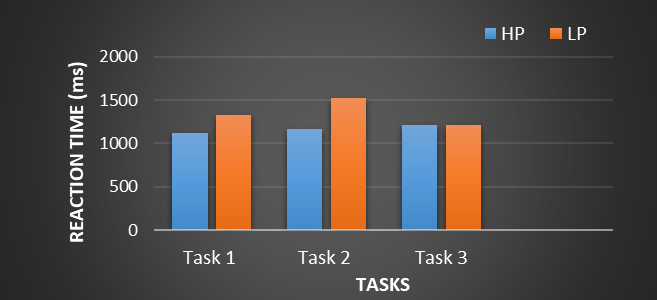
Figure 5: Mean of the reaction time for tasks 1, 2 and 3 in young bilingual adults.
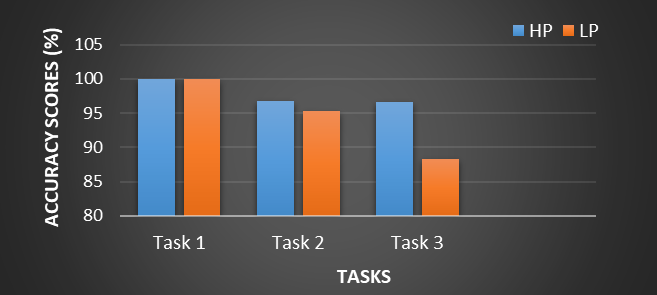
Figure 6: Median of the accuracy scores for tasks 1, 2 and 3 in young bilinguals.
As shown in table 3, high proficient young bilinguals took the least time to respond for the T1 (Simon’s task) and then for T2 (Stroop task) and most time for T3 (Conditioned naming task). However, accuracy scores for high proficient bilinguals were the least for T3 (Conditioned naming task), better for T2 (Stroop task) and highest for T1 (Simon’s task). Low proficient young bilinguals took the least time for T3 (Conditioned naming task) and then for T1 (Simon’s task) and most time for T2 (Stroop task). Accuracy scores for low proficient bilinguals were the least for T3 (Conditioned naming task), better for T2 (Stroop task) and highest for T1 (Simon’s task).
Objective 4: To compare the reaction time and accuracy scores for high and low proficient old bilinguals (in the age range of 55 to 70 years) on the three tasks.
The aim was to compare and look for any significant difference in reaction time and accuracy measures in old bilinguals as an effect of their proficiency in L2 on the three tasks.
Old bilinguals were also classified as high proficient based on the rating of participants for question 10 on LEAP- Q. Similar to that of young bilinguals, Hickey’s, 2010 criteria were used.
|
Reaction time (ms) |
High proficient |
Low proficient |
||||
|
Task 1 |
Task 2 |
Task 3 |
Task 1 |
Task 2 |
Task 3 |
|
|
Mean |
1338.58 |
1498.07 |
1410.01 |
1229.62 |
1817.46 |
1386.31 |
|
Median |
1293.95 |
1452.75 |
1386.53 |
1131.84 |
1846.20 |
1362.99 |
|
SD |
542.10 |
311.58 |
213.94 |
409.88 |
290.56 |
186.48 |
|
Accuracy Scores (%) |
|
|||||
|
Mean |
86.65 |
94.34 |
87.64 |
74.98 |
90.58 |
78.30 |
|
Median |
91.65 |
96.80 |
90.00 |
74.95 |
93.70 |
78.30 |
|
SD |
17.22 |
6.89 |
11.78 |
25.16 |
9.78 |
12.20 |
Table 4: Descriptive values for reaction time and accuracy of high and low proficient old bilinguals on the three tasks.
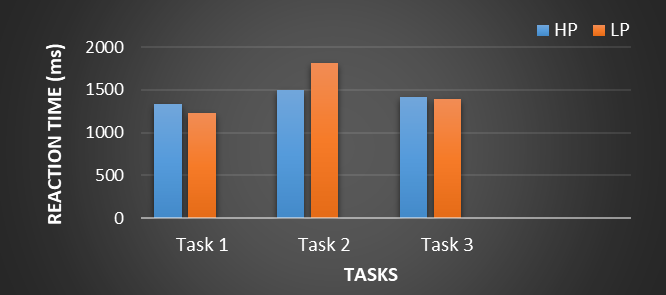
Figure 7: Mean of the reaction time for tasks 1, 2, and 3 in old bilingual adults.
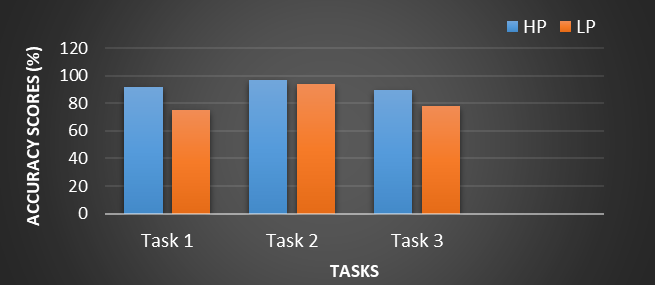
Figure 8: Median of the accuracy for tasks 1, 2 and 3 in old bilingual adults.
As shown in table 4, high proficient old bilinguals responded the fastest for T1 (Simon’s task), slower for T3 (Conditioned naming task) and took the most time for T2 (Stroop task). Their accuracy scores were least for T3 (Conditioned naming task) better for T1 (Simon’s task) and highest for T2 (Stroop task). In the case of low proficient old bilinguals, they responded the fastest for T1 (Simon’s task), slower for T3 (Conditioned naming task) and took the most time for T2 (Stroop task). Their accuracy scores were least for T1 (Simon’s task) better for T3 (Conditioned naming task) and highest for T2 (Stroop task).
Statistical analysis:
Objective 3 & 4:
The objective was to compare the reaction time and accuracy measures of young and old bilinguals as an effect of proficiency (high and low).
In order to verify any significant difference in the performance between the high and low- proficient bilinguals (within-group comparisons), statistical analysis was carried out. As mentioned in the previous objectives, the data were subjected to test of normality using Shapiro Wilk test and it was observed that it follows a normal distribution (p>0.05) for reaction time for both young & old and high & low proficient bilinguals. Whereas for accuracy scores, it was found that the data was not normally distributed (p<0.05) for both young & old and high & low proficient bilinguals.
Reaction Time:
A parametric test, Mixed ANOVA was carried out to check for the main and interaction effects. The results revealed a main effect for the task, F (2, 72) = 8.849, p< 0.01 but not for proficiency. Also, a positive interaction effect between the proficiency and task was found to be present, not for the other interactions tested. As mentioned in the previous objectives, since a main effect for task was observed, further Bonferroni alpha correction was carried out and it was found that there was a significant difference between T1- Simon’s task & T2- Stroop task (p< 0.05) and T2- Stroop task & T3- Conditioned naming task (p< 0.05).
Since there was an interaction effect for proficiency and task, further tasks were compared with respect to proficiency. Results revealed that for high proficient bilinguals no significant (p>0.05) task effect was observed. For low proficient bilinguals, a significant task effect was seen, F (2, 38) = 9.718, p< 0.05. When data was subjected for pairwise comparison to check for the significant difference between the tasks, similar results i.e. a significant difference between T1- Simon’s task & T2- Stroop task (p< 0.05) and T2- Stroop task & T3- Conditioned naming task (p< 0.05) were observed.
Accuracy Scores:
Since accuracy was not normally distributed, a non-parametric Mann Whitney-U test was performed for the comparison of high and low proficient bilinguals:
Comparison of T1, T2, and T3, Friedman’s test was carried out to see the significant difference between the tasks and further, if present, Wilcoxon’s signed rank test was carried out to see the pairwise significant difference.
To summarize, an interaction effect was seen for proficiency and task. It was found that for high proficient bilinguals no significant task effect was seen. For low proficient bilinguals, a significant task effect was seen and pairwise comparison between the tasks revealed a significant difference between T1- Simon’s task & T2- Stroop task and T2- Stroop task & T3- Conditioned naming task.
The mean reaction time was statistically significant for T1 (Simon’s task) & T2 (Stroop task) and for T2 (Stroop task) & T3 (Conditioned naming task) for young (high v/s low proficient) and old (high v/s low proficient) bilinguals. The accuracy scores between high and low proficient bilinguals (irrespective of the group) were statistically significant for T3 (Conditioned naming task) but not for T1 (Simon’s task) and T2 (Stroop task). Further, the performance of high proficient young & low proficient young bilinguals was compared and statistically significant difference was seen for T3 (Conditioned naming task). For high proficient old v/s low proficient old bilinguals, a statistically significant difference was not seen for any of the tasks.
Additionally, the performance across the three tasks was compared for high proficient young adults and it was found that they performed well on T1 and had difficulty on T3 in terms of reaction time. Similar trend was seen for accuracy scores. For low proficient young bilinguals, they performed well on T3 and had difficulty on T2 in terms of reaction time while they performed well on T1 and had difficulty on T3 in terms of accuracy scores.
Similarly, the performance across the three tasks was compared for high proficient old bilinguals and it was found that they performed well on T1 and had difficulty on T2 in terms of reaction time. In terms of accuracy scores, they performed well on T2 and had difficulty on T3. For low proficient old bilinguals, they performed well on T1 and had difficulty on T2 in terms of reaction time while they performed well on T2 and had difficulty on T1 in terms of accuracy scores. However, a statistically significant difference was not observed. In addition to the pre-set objectives, within each group (high proficient and low proficient), the performance across the three tasks was compared, using Wilcoxon’s signed rank test and no significant difference was seen.
In the present study, the output was in terms of reaction time and accuracy scores. The reaction time and accuracy were computed through the software used automatically. In addition to the investigator, the reaction time and accuracy scores were verified by two other examiners. Since reaction time would not vary for each examiner, statistical analysis was not carried out for the same. Thus, in order to verify the reliability, a manual check of 10% of the data was carried out. It was observed that the other examiners opined that the reaction time and accuracy measures were appropriate.
Discussion:
The aim of the present study was to compare the cognitive control in younger and older, high and low proficient bilinguals. Executive function was tested through Simon’s task, Stroop task and Conditioned naming task. Two of the tasks i.e. Simon’s task and Conditioned naming task measured response inhibition in non-verbal and verbal situations respectively. While the Stroop task measured cognitive flexibility. The output for all the tasks was measured in terms of reaction time and accuracy scores.
The 1st objective was to examine if there was any difference in high proficient young and old bilinguals on the three tasks. The 2nd objective was to investigate if there was any difference in low proficient young and old bilinguals on the three tasks. The results revealed that the mean reaction time for T2 (Stroop task) and T3 (Conditioned naming task) were greater and also showed a statistically significant difference for young v/s old high proficient bilinguals. This suggests that, as the complexity of the task increased, the participants took a long time to respond to the task. This result was evident in both high proficient young and high proficient old bilinguals. However, the reaction time was quicker in all the tasks for high proficient young bilinguals when compared to high proficient old bilinguals. Thus, high proficient young bilinguals outperformed high proficient old bilinguals on reaction time measures for tasks assessing cognitive flexibility and verbal response inhibition.
In the case of low proficient young bilinguals, greater reaction time was seen for the task assessing cognitive flexibility (T2), relatively faster reaction time for non-verbal response inhibition task (T1) and was the fastest for the verbal response inhibition task (T3). For low proficient young bilinguals, reaction time was faster when compared to low proficient old bilinguals. Greater reaction time was seen for the task assessing cognitive flexibility (T2), relatively faster reaction time for verbal response inhibition task (T3) and was the fastest for the non-verbal response inhibition task (T1). Also, the mean reaction time was statistically significant for T2 (cognitive flexibility task) and T3 (verbal response inhibition task) for young adults v/s old adults low proficient bilinguals. Thus, low proficient young bilinguals outperform low proficient old bilinguals on reaction time measures for tasks assessing cognitive flexibility and verbal response inhibition.
In the case of accuracy scores, T3 (verbal response inhibition task) was statistically significant between younger and older adults (irrespective of proficiency). When younger and older adults were compared with respect to proficiency, T3 (verbal response inhibition task) was statistically significant for high proficient bilinguals while none of the tasks were statistically significant for low proficient bilinguals. Thus, younger adults outperformed older adults on accuracy measures; predominantly the high proficient bilinguals.
The above discussion is with respect to between-group comparisons (young and old bilinguals). Considering within-group comparisons (high and low proficient bilinguals), two objectives were considered in the study. The 3rd objective was to examine if there was any difference in high proficient and low proficient young bilinguals on the three tasks. The 4th objective was to investigate if there was any difference in high proficient and low proficient old bilinguals on the three tasks. In high proficient young bilinguals, the mean reaction time was the fastest for T1 (non-verbal response inhibition task), followed by T2 (cognitive flexibility task) and then for T3 (verbal response inhibition task). For low proficient young bilinguals, the mean reaction time was fastest for T3 (verbal response inhibition task), followed by T1 (non-verbal response inhibition task) and then T2 (cognitive flexibility task). The mean reaction time in the case of high proficient old bilinguals was the fastest for T1 (non-verbal response inhibition task), followed by T3 (verbal response inhibition task), and then for T2 (cognitive flexibility task). Low proficient old bilinguals also followed the same trend, however, the values were higher for low proficient old bilinguals when compared to high proficient old bilinguals. Statistically, a significant difference was seen for T1 (non-verbal response inhibition task) & T2 (cognitive flexibility task) and for T2 (cognitive flexibility task) & T3 (verbal response inhibition task) for high proficient v/s low proficient, young and old adults. Thus, high proficient young bilinguals outperformed low proficient young bilinguals on reaction time measures for T1 (non-verbal response inhibition task) & T2 (cognitive flexibility task) and for T2 (cognitive flexibility task) & T3 (verbal response inhibition task). In older adults, high proficient bilinguals outperformed low proficient bilinguals on for reaction time measures for T1 (non-verbal response inhibition task) & T2 (cognitive flexibility task) and for T2 (cognitive flexibility task) & T3 (verbal response inhibition task).
In the case of accuracy scores, high proficient young bilinguals had better accuracy scores when compared to low proficient young bilinguals on all the tasks. A similar trend was seen in older bilinguals. A statistically significant difference was seen for T3 (irrespective of groups). When compared with respect to groups, T3 was statistically significant for high proficient v/s low proficient young bilinguals and none of the tasks were statistically significant for high proficient v/s low proficient old bilinguals. Thus, high proficient young bilinguals outperformed low proficient young bilinguals, also a similar trend was seen in high proficient old and low proficient old bilinguals.
In a nutshell, young bilinguals outperform old bilinguals on both the reaction time and accuracy score measures. For the reaction time measures, high proficient young bilinguals outperform high proficient old bilinguals on T2 and T3. Similarly, low proficient young bilinguals outperform low proficient old bilinguals on T2 and T3. In the case of accuracy scores, high proficient young bilinguals outperform high proficient old bilinguals only on T3, while, low proficient young bilinguals did not outperform low proficient old bilinguals on any of the tasks.
High proficient bilinguals outperform low proficient bilinguals on both reaction time and accuracy score measures. For reaction time measures, high proficient young bilinguals outperform low proficient young bilinguals on T1 &T2 and for T2 & T3. Similar findings were seen for older adults’ i.e. high proficient old bilinguals outperform low proficient old bilinguals on T1 & T2 and for T2 & T3. In the case of accuracy scores, high proficient young bilinguals outperform low proficient young bilinguals only on T3 whereas, high proficient old did not outperform low proficient old bilinguals on any of the tasks.
This is in line with the findings from the past where researchers have found that young bilinguals outperformed old bilinguals on executive functions. Bialystok and colleagues (2008) reported that younger adults were significantly faster compared to older adults indicating that older adults had larger Stroop effect.
Another support for this fact comes from a study by Goral, Campanelli & Spiro, 2015, whereas a negative correlation was seen with an increase in age and performance on domains of executive functions. Also, the age-related decline in inhibition was seen. Bialystok and Viswanathan (2004) in their study reported less Simon effect for bilinguals when compared to monolinguals. Also, larger response time for incongruent trials for both age and language groups. However, this difference was smaller for young adults and bilinguals.
Barbu, Orban, Gillet & Poncelet (2018) reported that faster reaction time was seen for high-frequency language switchers for cognitive flexibility. The high frequency and low-frequency switchers performed equally for alerting and response inhibition tasks. These results indicate that the frequency of switching is a predictor of increased cognitive flexibility in bilinguals.
Bialystok, Craik, Klein, and Viswanathan in 2004 also reported similar findings, longer RT was seen for the incongruent item when compared to the congruent one. Smaller Simon’s effect was seen for bilinguals in the incongruent item. This was significantly smaller for younger adults. Thus, older adults were able to attenuate the negative effect of aging on cognitive functions only to a lesser degree.
The present study also matches with a dissertation carried out earlier by Margaret and Abhishek (2017). They included domains on response inhibition, cognitive flexibility, and attention. The results revealed that high proficient bilinguals performed better compared to low proficient bilinguals.
Hence the overall results show that young bilinguals outperform old bilinguals on both the reaction time and accuracy score measures. For the reaction time measures, high proficient young bilinguals outperform high proficient old bilinguals on T2 and T3 similarly, low proficient young bilinguals outperform low proficient old bilinguals on T2 and T3. In the case of accuracy scores, high proficient young bilinguals outperform high proficient old bilinguals only on T3, while, low proficient young bilinguals did not outperform low proficient old bilinguals on any of the tasks.
High proficient bilinguals outperform low proficient bilinguals on both reaction time and accuracy score measures. For reaction time measures, high proficient young bilinguals outperform low proficient young bilinguals on T1 & T2 and for T2 & T3. Similar findings were seen for older adults’ i.e. high proficient old bilinguals outperform low proficient old bilinguals on T1 & T2 and for T2 & T3. In the case of accuracy scores, high proficient young bilinguals outperform low proficient young bilinguals only on T3 whereas, high proficient old did not outperform low proficient old bilinguals on any of the tasks.
Therefore it can be concluded that bilingual advantage of cognitive control was seen for both reaction time and accuracy scores in young and high proficient bilinguals. However, high proficient bilinguals were able to persist this advantage with increasing age.
Implications of the study:
The study will aid in understanding the cognitive control in neurotypical young and old, low proficient and high proficient bilinguals. It was found that young bilinguals outperformed old bilinguals on reaction time and accuracy measures. Also, high proficient bilinguals outperformed low proficient bilinguals on reaction time and accuracy measures, predominantly on the accuracy measures.
Task assessing verbal response inhibition or T3 (conditioned naming task) in the study is sensitive to demarcate younger and older adults on cognitive control advantage for accuracy measures. Similarly, task assessing verbal response inhibition or T3 (conditioned naming task) in the study is also sensitive to demarcate high proficient and low proficient bilinguals on cognitive control advantage for accuracy measures.



Open Access By Aditum Open Access Journals id licensed under Creative Commons Attribution 4.0 International License. Based On a Work at aditum.org


