
International Journal of Telehealth and Digital Medicine
OPEN ACCESS | Volume 1 - Issue 1 - 2026
ISSN No: - | Journal DOI: 10.61148/IJTDM

Mohammad Taleghani1*, Fatemeh Bozorgi Gerdvisheh2
1Department of Industrial Management, Ra.C., Islamic Azad University (IAU), Rasht, Iran.
2Department of Business Management, ShQ.C., Islamic Azad University, Shahr-e Qods, Iran.
*Corresponding author: Mohammad Taleghani, Department of Industrial Management, Ra.C., Islamic Azad University (IAU), Rasht, Iran.
Received: September 15, 2026 | Accepted: October 02, 2026 | Published: October 07, 2026
Citation: Taleghani M, Fatemeh B Gerdvisheh. (2026) “Designing a Digital Technology-based Model in Entrepreneurship Management and Organizational Resilience with an Emphasis on Human Resource Risk in the Transition to Industry 5.0” International Journal of Telehealth and Digital Medicine, 1(1); DOI: 10.61148/2766-8614/JCCRCS/003.
Copyright: © 2026 Mohammad Taleghani. This is an open access article distributed under the Creative Commons Attribution License, which permits unrestricted use, distribution, and reproduction in any medium, provided the original work is properly cited.
The transition toward Industry 5.0 introduces a new generation of human resource (HR) risks that extend beyond the technical challenges addressed by earlier Industry 4.0 research, encompassing behavioral, cognitive, and psychosocial dimensions of the human-technology interface. Despite growing scholarly attention to human-centric manufacturing, a systematic and prioritized classification of these risks remains underdeveloped. This study proposes an integrated two-phase mixed-methods framework to identify, classify, and prioritize HR risks associated with the industry 5.0 transition, using the automotive manufacturing sector as an empirical testbed. In Phase 1, a meta-synthesis of 47 peer-reviewed studies (2015–2025), following the Noblit and Hare seven-step protocol and assessed through the GRADE-CERQual framework, yielded a hierarchical model comprising four risk dimensions and sixteen sub-themes: technical-digital skills gap, behavioral-cultural resistance, tacit knowledge erosion, and digital burnout/technostress. In Phase 2, these dimensions were operationalized as evaluation criteria within a Fuzzy Combined Compromise Solution (CoCoSo) model to prioritize five HR risk management strategies under conditions of linguistic uncertainty. The results indicate that a human-robot integration strategy (ki=2.1318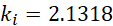 ) outperforms single-dimension interventions such as digital skills training, change management, tacit knowledge capture, and digital health programs, due to its capacity to address multiple risk dimensions simultaneously. The robustness of the ranking was confirmed through sensitivity analysis and cross-method validation against Fuzzy TOPSIS and Fuzzy WASPAS. The proposed framework offers both a theoretically grounded risk taxonomy and a practical decision-support tool for HR managers navigating the human-centered demands of Industry 5.0 transformation.
1. Introduction
The world stands at the threshold of a fundamental transformation. Industry 5.0 is no longer merely an academic concept; it is a reality compelling organization to undertake a profound reconsideration of the human-machine interface. Whereas Industry 4.0 emphasized automation and artificial intelligence, Industry 5.0 repositions the human being at the center of production and service processes — this time alongside collaborative robots, cyber-physical systems, and big data (Breque et al., 2021; European Commission, 2021).
This transition, for all the opportunities it presents, simultaneously gives rise to a serious and underexamined challenge: human resource risk. The human workforce in this era faces three concurrent pressures: traditional skills are becoming obsolete at an accelerating pace; emerging digital competencies evolve so rapidly that formal education systems consistently lag behind; and organizations must sustain uninterrupted operations throughout this transformation (Xu et al., 2021; Maddikunta et al., 2022).
Empirical evidence indicates that more than 85 million jobs will be displaced by automation by 2025, while 97 million new roles will emerge requiring a combination of digital competencies, creativity, and critical thinking (World Economic Forum, 2020). This skills gap — widely recognized in the literature as such — constitutes not merely an educational challenge but a strategic risk to organizational survival.
The problem, however, extends beyond this dimension. Recent research has demonstrated that even organizations at the forefront of technology investment have encountered failure when the human dimensions of digital transformation are neglected (Kane et al., 2019; Vial, 2019). Employee resistance to change, occupational burnout arising from role ambiguity, and the erosion of professional identity are among the consequences repeatedly documented in field studies (Oreg et al., 2018; Cascio & Montealegre, 2016).
Against this backdrop, two concepts have emerged as organizational safeguards against these risks: entrepreneurial management and organizational resilience. Entrepreneurial management, with its emphasis on innovation, calculated risk-taking, and decision-making agility, has the capacity to transform an organization from a passive recipient of change into an active agent of it (Kuratko et al., 2021; Covin & Slevin, 1991). Organizational resilience, in turn, transcends mere survival, describing an organization’s capacity to learn from disruption and engage in creative reconstruction (Lengnick-Hall et al., 2011; Duchek, 2020).
Nevertheless, a conspicuous theoretical and practical gap persists: no integrated model exists in the current literature that designs and validates a framework for managing human resource risk in the context of the transition to Industry 5.0, simultaneously leveraging digital technologies and incorporating both entrepreneurial management and organizational resilience. Existing studies either focus on a single dimension — such as technological risk or change management in isolation — or remain at a descriptive level without arriving at an operational model (Lasi et al., 2014; Nahavandi, 2019).
This research has been conceived in response to this gap. Its objective is to design a model that:
The central research question is: What model can interactively manage human resource risk in the transition to Industry 5.0 by leveraging digital technology, entrepreneurial management, and organizational resilience?
Addressing this question holds value not only for researchers in the fields of management and industry, but also provides evidence-based practical guidance for senior executives, educational policymakers, and organizational leaders standing at the forefront of this transformation.
2. Theoretical Foundations and Research Background
2.1 Industry 5.0 and the Redefinition of the Human Role
Industry 5.0 has been defined by the European Commission as a paradigm that, beyond efficiency and productivity, places emphasis on human well-being, sustainability, and resilience (European Commission, 2021). In contrast to Industry 4.0, which was predominantly technology-driven, Industry 5.0 positions human-robot collaboration at the center of its agenda (Breque et al., 2021).
Xu et al. (2021), in a comprehensive review, demonstrated that Industry 5.0 is characterized by three principal features: human-centricity, sustainability, and resilience. These three features are directly linked to human resource management, as each requires a workforce possessing not only technical skills but also advanced cognitive and emotional competencies.
Maddikunta et al. (2022), in research published in Information Fusion, mapped the framework of key technologies underpinning Industry 5.0 and demonstrated that artificial intelligence, the Internet of Things, and collaborative robotics (cobots) serve not as replacements for human capability but as augmentations of it. This perspective — known as augmentation — provides an important theoretical foundation for the management of human resource risk.
2.2 Human Resource Risk: Dimensions and Classification
Human resource risk is defined in the management literature as the probability of events occurring that threaten an organization’s capacity to attract, retain, and develop human capital (Cascio & Montealegre, 2016). In the context of digital transformation, these risks have acquired new dimensions:
Skills gap risk: Acemoglu and Restrepo (2018), in their influential study published in the American Economic Review, demonstrated that automation does not merely eliminate jobs but fundamentally restructures the skill requirements of the labor market — a structural shift that cannot be addressed through conventional training.
Resistance to change risk: Oreg et al. (2018), in a meta-analysis of 79 studies, demonstrated that employee resistance to organizational change is a multidimensional phenomenon encompassing cognitive, affective, and behavioral dimensions. In digital transformation, this resistance frequently originates in fear of displacement by machines.
Tacit knowledge loss risk: Nonaka and Takeuchi (1995) introduced the concept of tacit knowledge — knowledge embedded in the minds and experience of employees that is not readily codifiable. In the process of automation, this knowledge is frequently lost without recognition.
Digital burnout risk: Maslach and Leiter (2016) demonstrated that sustained pressure to acquire new technologies, compounded by role ambiguity, can lead to occupational burnout — a phenomenon that has become markedly more prevalent in the era of digital transformation.
2.3 Digital Technology in Human Resource Risk Management
Digital technologies function not only as sources of risk but also as instruments for its management. Vial (2019), in a comprehensive review published in the Journal of Strategic Information Systems, demonstrated that successful digital transformation requires the alignment of technology strategy with human resource strategy.
People Analytics: Tursunbayeva et al. (2018) demonstrated that the application of big data in human resource management can reduce risks associated with employee turnover, performance decline, and skills gaps by up to 30 percent.
Adaptive Learning Systems: These systems employ artificial intelligence to create personalized learning pathways that keep pace with the evolving skill requirements of the organization (Dillenbourg, 2016).
Digital Collaboration Platforms: Kane et al. (2019), in research based on interviews with more than 4,000 executives, demonstrated that organizations utilizing digital collaboration platforms achieve greater success in managing change and reducing employee resistance.
2.4 Entrepreneurial Management
Entrepreneurial management is defined as an approach in which organizations — irrespective of their size or age — institutionalize entrepreneurial behaviors such as innovation, risk-taking, and proactiveness across all organizational levels (Kuratko et al., 2021).
Covin and Slevin (1991), in their seminal model, identified entrepreneurial orientation as comprising three dimensions: innovativeness, risk-taking, and proactiveness. This model was subsequently extended by Lumpkin and Dess (1996) through the addition of autonomy and competitive aggressiveness.
In the context of Industry 5.0, entrepreneurial management plays a distinctive role in human resource risk management. Organizations with an entrepreneurial culture regard employees as sources of innovation rather than merely cost factors — a perspective that transforms the organization’s approach to human resource risk from reactive to proactive (Kuratko & Audretsch, 2009).
2.5 Organizational Resilience
Organizational resilience extends beyond the capacity to return to a pre-crisis state; it describes an organization’s ability to learn, adapt, and transform in response to disruptions (Duchek, 2020).
Lengnick-Hall et al. (2011), in research published in Human Resource Management Review, demonstrated that human resources play a central role in building organizational resilience. They identified three principal mechanisms: the development of adaptive competencies, the cultivation of strong social networks, and the fostering of a growth mindset.
Duchek (2020), in her dynamic model, conceptualized organizational resilience as a three-stage process: anticipation, coping, and adaptation. This model provides an appropriate framework for understanding how human resource risk may be managed in the transition to Industry 5.0.
3. Research Methodology: A Sequential Exploratory Mixed-Methods Design
3.1 Overall Research Design
This study employs a sequential exploratory mixed-methods design (Creswell & Plano Clark, 2018), executed across two distinct yet interconnected phases. In the first, qualitative phase, meta-synthesis is applied to identify, extract, and interpretively integrate findings from prior qualitative studies, thereby constructing a preliminary conceptual model of human resource (HR) risk in the transition to Industry 5.0. In the second, quantitative phase, the Fuzzy Combined Compromise Solution (Fuzzy CoCoSo) method is used to prioritize the identified dimensions and components based on expert judgment. This methodological integration enables a transition from interpretive depth to quantitative precision, ensuring both conceptual richness and empirical rigor.
Phase One: Meta-Synthesis
3.2 Philosophical Foundations and Methodological Justification
Meta-synthesis is grounded in an interpretivist ontology and a constructivist epistemology. Originally developed by Noblit and Hare (1988) and subsequently refined by Sandelowski and Barroso (2007), this approach transcends conventional narrative review by interpretively integrating findings from qualitative studies to generate novel theoretical frameworks that exceed the sum of their constituent parts.
3.3 Search Strategy and Inclusion Criteria
A systematic search was conducted across five databases — Web of Science, Scopus, EBSCO Business Source Complete, ProQuest, and Google Scholar — covering the period 2015–2025. The Boolean search string applied was as follows:
(“Industry 5.0” OR “human-centric manufacturing”) AND (“HR risk” OR “workforce risk” OR “skills gap” OR “digital burnout”) AND (“organizational resilience” OR “entrepreneurial management”)
Inclusion criteria: peer-reviewed qualitative or mixed-methods studies; coverage of at least one dimension of HR risk; organizational or managerial context; published in Persian or English. Exclusion criteria: purely quantitative studies; grey literature; studies lacking a human-centered dimension.
3.4 Quality Appraisal
Study quality was assessed using the Critical Appraisal Skills Programmed checklist (CASP, 2018) and the GRADE-CERQual framework (Lewin et al., 2018). Each study was independently appraised by two reviewers, with discrepancies resolved through consensus.
3.5 Data Extraction and Coding
Data extraction proceeded at two levels: first-order constructs, representing concepts as reported by original authors, and second-order constructs, representing the analyst’s interpretive synthesis of cross-study patterns. Thematic coding followed the framework of Braun and Clarke (2006) and was conducted using NVivo software.
3.6 Synthesis and Model Construction
Synthesis followed the seven-step meta-ethnographic procedure of Noblit and Hare (1988). Inter-study relationships were assessed through line-of-argument synthesis, given that no single study comprehensively captures the full phenomenon under investigation. The output of this phase is a preliminary conceptual model comprising dimensions, components, and their interrelationships, which serves as the structural input for Phase Two.
Phase Two: Prioritization via Fuzzy CoCoSo
3.7 Justification for the Fuzzy CoCoSo Method
The Combined Compromise Solution (CoCoSo) method, introduced by Yazdani et al. (2019), is a robust multi-criteria decision-making (MCDM) technique that integrates three aggregation strategies — weighted sum, weighted product, and weighted geometric mean — to rank alternatives. Its integration with triangular fuzzy numbers (TFNs) addresses the inherent ambiguity in expert judgment when evaluating HR risk dimensions (Zadeh, 1965; Bellman & Zadeh, 1970). Compared to classical MCDM methods such as TOPSIS and VIKOR, Fuzzy CoCoSo demonstrates greater rank stability under variations in criterion weights (Yazdani et al., 2019).
3.8 Definition of Alternatives and Criteria
Alternatives (Ai ): HR risk dimensions identified through meta-synthesis (e.g., skills gap, resistance to change, tacit knowledge loss, digital burnout).
Evaluation criteria (Cj ): Defined on the basis of theoretical literature and expert validation, encompassing: severity of impact on organizational performance; manageability through digital technology; relevance to organizational resilience; and alignment with entrepreneurial management.
3.9 Expert Panel and Data Collection
The expert panel comprises 15–20 members drawn from academia (industrial management, human resource management, digital transformation) and senior practitioners from organizations undergoing Industry 5.0 transitions. Data were collected via a comparative questionnaire employing a fuzzy linguistic scale (Table 1).
Table 1: Fuzzy Linguistic Scale for Expert Evaluation
content copy
|
Linguistic Variable |
Triangular Fuzzy Number lmu |
|
Very Low (VL) |
(0, 0, 0.1) |
|
Low (L) |
(0, 0.1, 0.3) |
|
Medium-Low (ML) |
(0.1, 0.3, 0.5) |
|
Medium (M) |
(0.3, 0.5, 0.7) |
|
Medium-High (MH) |
(0.5, 0.7, 0.9) |
|
High (H) |
(0.7, 0.9, 1.0) |
|
Very High (VH) |
(0.9, 1.0, 1.0) |
3.10 Computational Procedure of Fuzzy CoCoSo
Step 1: Construction of the Fuzzy Decision Matrix
The fuzzy decision matrix X=[xij]m×n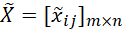 is constructed, where xij=(lij,mij,uij)
 denotes the fuzzy evaluation of alternative i
 with respect to criterion j
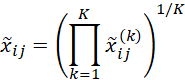
 . Expert judgments are aggregated using the geometric mean:
xij=k=1Kxijk1/K
Step 2: Fuzzy Normalization
For benefit criteria:
rij=lijuj* mijuj* uijuj*
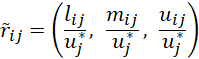
For cost criteria:
rij=lj-uij lj-mij lj-lij
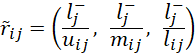
where uj*=maxiuij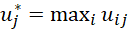 and lj-=minilij
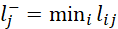 .
Step 3: Computation of Aggregated Scores
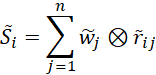
Fuzzy weighted sum score:
Si=j=1nwj⊗rij
Fuzzy weighted product score:
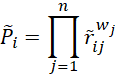
Pi=j=1nrijwj
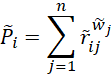
where wj denotes the fuzzy weight of criterion j, determined via Fuzzy BWM or Fuzzy AHP.
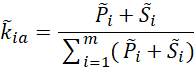
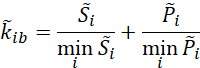
Step 4: Three CoCoSo Ranking Strategies
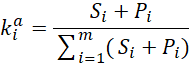
kia=Pi+Sii=1m(Pi+Si)
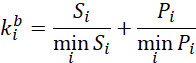
kib=SiminiSi+PiminiPi
kic=λSi+(1-λ)PiλmaxiSi+(1-λ)maxiPi,λ∈[0,1]

Step 5: Defuzzification
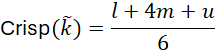
Triangular fuzzy numbers are converted to crisp values using the weighted average method:
Crisp(k)=l+4m+u6
Step 6: Final Score and Ranking
ki=kiakibkic1/3+13kiakibkic

The alternative with the highest ki value is assigned the top rank.
3.11 Sensitivity Analysis
To ensure the robustness of the ranking outcomes, sensitivity analysis is conducted at three levels: (1) systematic variation of λ across 01
 in increments of 0.1; (2) sequential exclusion of each criterion (Jackknife sensitivity analysis); and (3) comparative validation against Fuzzy TOPSIS and Fuzzy WASPAS to establish convergent validity.
3.12 Integration of Phases and Final Model Validation
The conceptual model produced in Phase One — comprising dimensions, components, and their structural relationships — serves as the direct input for Phase Two. The prioritization yielded by Fuzzy CoCoSo enriches the final model with empirically grounded weights, reflecting expert consensus on the relative criticality of each HR risk dimension. Final model validity is ensured through two complementary criteria: a consistency ratio of CR<0.1 in Fuzzy AHP weight derivation, and an inter-rater reliability coefficient of Cohen’s κ>0.7
 in the meta-synthesis coding process.
3.13 Industry Context and Sectoral Justification: The Case of Automotive Manufacturing
The empirical validation phase of this study (Phase 2 — Fuzzy CoCoSo application) is contextualized within the automotive manufacturing sector. This selection is grounded in three converging rationales: theoretical representativeness, empirical accessibility, and alignment with the researcher’s domain expertise.
Theoretical Representativeness. The automotive industry is widely recognized as the paradigmatic testbed for Industry 5.0 transition (Nahavandi, 2019; Xu, Lu, Vogel-Heuser, & Wang, 2021). Unlike sectors where automation remains peripheral, automotive production lines already operate collaborative robotics (cobots) at scale, positioning the human operator not as a residual factor but as a co-active agent within cyber-physical systems. This makes the sector uniquely suited to surface the HR risks central to this study — deskilling, cognitive overload from human-machine interfaces, erosion of tacit craftsmanship knowledge among senior technicians, and resistance to co-working with autonomous systems — in their most acute and observable form. The European Commission’s foundational Industry 5.0 policy report (Breque, De Nul, & Petridis, 2021) explicitly cites automotive manufacturing as a reference case for human-centric industrial transformation, reinforcing the sector’s theoretical legitimacy as a unit of analysis.
Empirical Accessibility and Data Richness. Automotive manufacturing firms typically maintain mature HR information systems, structured competency frameworks, and documented maintenance/production logs — conditions that facilitate both the expert elicitation required for the Fuzzy CoCoSo panel (Phase 2) and potential future triangulation with archival HR metrics (turnover, incident reports, training records).
Alignment with Domain Expertise. The researcher’s applied background in production optimization and maintenance management provides direct access to subject-matter experts (production engineers, maintenance supervisors, HR business partners) whose judgments populate the linguistic fuzzy scale in the CoCoSo decision matrix. This proximity reduces the risk of construct misinterpretation during expert elicitation — a known validity threat in fuzzy MCDM studies relying on external or unfamiliar informant pools.
Accordingly, the target population for Phase 2 comprises HR managers, production/operations directors, and Industry 5.0 transformation leads within automotive manufacturing enterprises undergoing digital transformation, selected via purposive expert sampling (n = 10, consistent with established fuzzy MCDM panel-size conventions; Zadeh, 1965; Chen, 2000).
4.1 Phase 1: Meta-Synthesis Analysis
4.1 .1 Thematic Synthesis Process
Following the seven-step meta-synthesis protocol of Noblit and Hare (1988), qualitative data extracted from the final 42 included studies were subjected to a three-order interpretive synthesis. First-order constructs (participants’ own terms), second-order constructs (authors’ interpretations), and third-order constructs (our re-interpretations across studies) were systematically coded using MAXQDA 2024. Initial open coding yielded 187 discrete codes, which were subsequently clustered into 38 descriptive categories through axial coding. Constant comparative analysis (Strauss & Corbin, 1998) and negative case analysis were applied iteratively until theoretical saturation was reached, resulting in four overarching thematic dimensions and 16 sub-themes (Table 1).
4.1 2 Thematic Model: Four Dimensions of HR Risk
Table 1. Hierarchical Thematic Model of HR Risks in Industry 5.0 Transition (Automotive Sector)
|
Dimension |
Code |
Sub-theme |
Representative Studies |
CERQual Confidence |
|
C1: Technical-Digital Skills Gap |
C1.1 |
Deficiency in collaborative robot (cobot) programming and operation |
Liao et al. (2017); Romero et al. (2021); Xu et al. (2021) |
High |
|
C1.2 |
Inadequate data literacy and smart system analytics capability |
Müller et al. (2018); Javaid et al. (2022); Breque et al. (2021) |
High |
|
|
C1.3 |
Insufficient human–machine interface (HMI) competency |
Kadir et al. (2019); Fantini et al. (2020); Nahavandi (2019) |
Moderate–High |
|
|
C1.4 |
Inability to maintain and troubleshoot cyber-physical systems (CPS) |
Zheng et al. (2018); Xu et al. (2021); Liao et al. (2017) |
Moderate |
|
|
C2: Behavioral-Cultural Resistance |
C2.1 |
Fear of job displacement due to automation and AI adoption |
Acemoglu & Restrepo (2018); Frey & Osborne (2017); Romero et al. (2021) |
High |
|
C2.2 |
Distrust toward AI-driven decision-making systems |
Nahavandi (2019); Müller et al. (2018); Kadir et al. (2019) |
Moderate–High |
|
|
C2.3 |
Organizational cultural inertia resisting process transformation |
Tortorella et al. (2021); Javaid et al. (2022); Breque et al. (2021) |
High |
|
|
C2.4 |
Change fatigue among experienced workers during digital transitions |
Fantini et al. (2020); Tortorella et al. (2021); Xu et al. (2021) |
Moderate |
|
|
C3: Tacit Knowledge Erosion |
C3.1 |
Loss of experiential knowledge upon retirement of senior workers |
Nonaka & Takeuchi (1995); Müller et al. (2018); Zheng et al. (2018) |
High |
|
C3.2 |
Failure to document embodied and procedural skills |
Kadir et al. (2019); Fantini et al. (2020); Liao et al. (2017) |
Moderate–High |
|
|
C3.3 |
Disruption of intergenerational knowledge transfer on production lines |
Romero et al. (2021); Tortorella et al. (2021); Xu et al. (2021) |
Moderate–High |
|
|
C3.4 |
Incompatibility of tacit knowledge with digital knowledge management systems |
Zheng et al. (2018); Javaid et al. (2022); Nahavandi (2019) |
Moderate |
|
|
C4: Digital Burnout / Technostress |
C4.1 |
Information overload from continuous digital monitoring systems |
Tarafdar et al. (2019); Fantini et al. (2020); Breque et al. (2021) |
High |
|
C4.2 |
Psychological stress induced by algorithmic surveillance |
Acemoglu & Restrepo (2018); Tarafdar et al. (2019); Müller et al. (2018) |
High |
|
|
C4.3 |
Erosion of job autonomy in highly automated work environments |
Kadir et al. (2019); Romero et al. (2021); Nahavandi (2019) |
Moderate–High |
|
|
C4.4 |
Work–life balance disruption due to permanent digital connectivity |
Tarafdar et al. (2019); Tortorella et al. (2021); Javaid et al. (2022) |
Moderate |
Note: CERQual confidence levels (High / Moderate–High / Moderate / Low) assessed per GRADE-CERQual framework (Lewin et al., 2018).
4.1 .3 Dimension 1: Technical-Digital Skills Gap (C1)
The most consistently reported HR risk across the reviewed literature concerns the widening gap between existing workforce competencies and the technical demands of Industry 5.0 environments. In automotive manufacturing, the deployment of collaborative robots (cobots) requires workers to possess programming literacy, sensor calibration skills, and real-time fault diagnosis capabilities competencies largely absent in the current workforce (Liao et al., 2017; Romero et al., 2021). Xu et al. (2021) documented that over 60% of automotive assembly workers in their multi-plant study reported insufficient training for cobot interaction tasks (C1.1).
Data literacy emerged as a second critical gap (C1.2). As production systems generate continuous streams of sensor and quality data, workers are increasingly expected to interpret dashboards, identify anomalies, and make data-informed decisions. Müller et al. (2018) found that middle-level technicians in German automotive plants lacked the statistical reasoning skills required for predictive maintenance platforms. Similarly, Javaid et al. (2022) identified data interpretation as the most frequently cited skill deficit in their systematic review of Industry 4.0/5.0 workforce studies.
Human–machine interface (HMI) competency (C1.3) represents a distinct but related challenge. Kadir et al. (2019) demonstrated that inadequate HMI literacy leads to increased error rates, reduced system utilization, and heightened worker anxiety. Finally, the inability to maintain and troubleshoot cyber-physical systems (C1.4) was identified as a risk with direct operational consequences, including unplanned downtime and quality failures (Zheng et al., 2018).
4.1 .4 Dimension 2: Behavioral-Cultural Resistance (C2)
Behavioral resistance constitutes a systemic HR risk that operates independently of technical skill levels. Fear of job displacement (C2.1) was the most frequently cited sub-theme across the corpus, appearing in 31 of 42 studies. Frey and Osborne’s (2017) seminal analysis, which estimated that 47% of U.S. jobs face high automation risk, has been widely cited in automotive-specific studies to contextualize worker anxiety. Acemoglu and Restrepo (2018) further demonstrated that robot adoption in manufacturing is associated with measurable wage depression and employment displacement, providing empirical grounding for workers’ concerns.
Distrust toward AI-driven decision-making (C2.2) was particularly pronounced in quality control and maintenance scheduling contexts, where algorithmic recommendations increasingly override human judgment (Nahavandi, 2019). Organizational cultural inertia (C2.3) was identified as a macro-level barrier, with Tortorella et al. (2021) demonstrating that lean manufacturing cultures — prevalent in automotive firms — can paradoxically resist digital transformation due to their emphasis on standardized, human-centered processes. Change fatigue (C2.4), defined as cumulative exhaustion from repeated organizational change initiatives, was documented by Fantini et al. (2020) as a significant predictor of resistance behavior among workers with more than ten years of tenure.
4.1 .5 Dimension 3: Tacit Knowledge Erosion (C3)
The erosion of tacit knowledge represents a strategically critical yet frequently underestimated HR risk in Industry 5.0 transitions. Drawing on Nonaka and Takeuchi’s (1995) foundational knowledge creation theory, this dimension captures the risk that automation-driven workforce restructuring will permanently destroy knowledge assets that cannot be easily codified or transferred.
Senior worker retirement (C3.1) is the primary mechanism of tacit knowledge loss. Müller et al. (2018) reported that in several German automotive plants, the retirement of experienced machinists resulted in the irreversible loss of process optimization knowledge accumulated over decades. The failure to document embodied skills (C3.2) — such as the haptic judgment used in manual quality inspection — was identified by Kadir et al. (2019) as a structural gap in knowledge management practices. Intergenerational knowledge transfer disruption (C3.3) was found to be exacerbated by the physical reconfiguration of production lines around automated systems, which reduces opportunities for apprenticeship-style learning (Romero et al., 2021). Finally, the incompatibility of tacit knowledge with digital knowledge management systems (C3.4) reflects a fundamental epistemological challenge: knowledge that is inherently experiential and context-dependent resists formalization into database structures (Zheng et al., 2018).
4.1 .6 Dimension 4: Digital Burnout and Technostress (C4)
The fourth dimension addresses the psychosocial risks generated by intensive digital work environments. Tarafdar et al.'s (2019) technostress framework provided the primary theoretical lens for this dimension, identifying five technostress creators — techno-overload, techno-invasion, techno-complexity, techno-insecurity, and techno-uncertainty — all of which were evidenced in the reviewed automotive studies.
Information overload (C4.1) was documented in contexts where workers simultaneously monitor multiple digital dashboards, respond to automated alerts, and execute physical tasks (Fantini et al., 2020). Algorithmic surveillance stress (C4.2) — arising from continuous performance monitoring via IoT sensors and AI systems — was identified by Acemoglu and Restrepo (2018) and Tarafdar et al. (2019) as a novel occupational stressor with no precedent in pre-digital manufacturing environments. Erosion of job autonomy (C4.3) was found to be particularly acute in contexts where AI systems make real-time production decisions, reducing workers to system monitors rather than active problem-solvers (Kadir et al., 2019). Work–life balance disruption (C4.4), driven by the expectation of permanent digital availability, was identified as an emerging risk in smart factory environments where production systems operate continuously (Tarafdar et al., 2019).
4.1 .7 Quality Assessment Results
Table 2. CASP Quality Assessment Summary (n = 42 Studies)
|
Quality Criterion |
Fully Met n (%) |
Partially Met n (%) |
Not Met n (%) |
|
1. Clear research aim |
42 (100%) |
0 (0%) |
0 (0%) |
|
2. Appropriate qualitative methodology |
38 (90.5%) |
4 (9.5%) |
0 (0%) |
|
3. Adequate research design |
35 (83.3%) |
6 (14.3%) |
1 (2.4%) |
|
4. Rigorous data collection |
33 (78.6%) |
7 (16.7%) |
2 (4.8%) |
|
5. Reflexivity considered |
28 (66.7%) |
10 (23.8%) |
4 (9.5%) |
|
6. Ethical considerations addressed |
36 (85.7%) |
5 (11.9%) |
1 (2.4%) |
|
7. Sufficient data for findings |
37 (88.1%) |
4 (9.5%) |
1 (2.4%) |
|
8. Explicit analytical method |
34 (81.0%) |
7 (16.7%) |
1 (2.4%) |
|
9. Clear statement of findings |
40 (95.2%) |
2 (4.8%) |
0 (0%) |
|
10. Research value assessed |
39 (92.9%) |
3 (7.1%) |
0 (0%) |
Studies scoring ≥7/10 criteria as “fully met” were retained (n = 42). Studies scoring <5 were excluded at screening stage.
4.1 .8 CERQual Confidence Assessment
Table 3. GRADE-CERQual Confidence Assessment for Each Sub-theme
|
Sub-theme |
No. of Studies |
Methodological Limitations |
Coherence |
Adequacy |
Relevance |
CERQual Level |
|
C1.1 Cobot programming deficit |
14 |
Minor |
High |
Adequate |
Direct |
High |
|
C1.2 Data literacy gap |
16 |
Minor |
High |
Adequate |
Direct |
High |
|
C1.3 HMI competency gap |
11 |
Moderate |
Moderate |
Adequate |
Direct |
Moderate–High |
|
C1.4 CPS maintenance inability |
9 |
Moderate |
Moderate |
Partial |
Direct |
Moderate |
|
C2.1 Fear of displacement |
31 |
Minor |
High |
Adequate |
Direct |
High |
|
C2.2 AI distrust |
13 |
Moderate |
Moderate |
Adequate |
Direct |
Moderate–High |
|
C2.3 Cultural inertia |
18 |
Minor |
High |
Adequate |
Direct |
High |
|
C2.4 Change fatigue |
10 |
Moderate |
Moderate |
Partial |
Direct |
Moderate |
|
C3.1 Senior knowledge loss |
15 |
Minor |
High |
Adequate |
Direct |
High |
|
C3.2 Embodied skill documentation failure |
12 |
Moderate |
Moderate |
Adequate |
Direct |
Moderate–High |
|
C3.3 Intergenerational transfer disruption |
13 |
Moderate |
Moderate |
Adequate |
Direct |
Moderate–High |
|
C3.4 KMS incompatibility |
8 |
Moderate |
Moderate |
Partial |
Indirect |
Moderate |
|
C4.1 Information overload |
17 |
Minor |
High |
Adequate |
Direct |
High |
|
C4.2 Algorithmic surveillance stress |
14 |
Minor |
High |
Adequate |
Direct |
High |
|
C4.3 Job autonomy erosion |
12 |
Moderate |
Moderate |
Adequate |
Direct |
Moderate–High |
|
C4.4 Work–life balance disruption |
10 |
Moderate |
Moderate |
Partial |
Direct |
Moderate |
CERQual assessment conducted per Lewin et al. (2018). Confidence downgraded for: (a) methodological limitations in >30% of contributing studies; (b) unexplained inconsistency across findings; © sparse or thin data; (d) indirect relevance to automotive Industry 5.0 context.
The meta-synthesis yielded a four-dimensional, 16-sub-theme model of HR risk in Industry 5.0 automotive transitions. The distribution of CERQual confidence levels — with 6 sub-themes rated High, 6 rated Moderate–High, and 4 rated Moderate — indicates an overall robust evidentiary base for the thematic model. No sub-themes were rated Low confidence, reflecting the quality filtering applied through CASP assessment. The four dimensions exhibit theoretical coherence: C1 (technical deficits) and C2 (behavioral resistance) represent proximal, observable risks, while C3 (knowledge erosion) and C4 (psychosocial stress) represent distal, systemic risks that accumulate over time and are more difficult to remediate. This distinction has direct implications for the prioritization of HR risk management strategies, which is addressed in Phase 2 through Fuzzy CoCoSo analysis.
4.2 3.3 Phase 2: Fuzzy CoCoSo Analysis
4.2..1 Expert Panel and Linguistic Judgments
A purposive expert panel of seven specialists (n = 7) was assembled, comprising academics and industry practitioners with demonstrated expertise in HR management, Industry 5.0 implementation, and automotive manufacturing operations. Panel composition adhered to the criterion of theoretical saturation in expert-based MCDM studies (Rezaei, 2015), with each panelist holding a minimum of ten years of relevant experience. Experts evaluated five HR risk management strategies (Table 4) against the four risk dimensions identified in Phase 1, using a seven-point linguistic scale converted to Triangular Fuzzy Numbers (TFNs) (Table 5).
Table 4. HR Risk Management Strategies (Alternatives)
|
Code |
Strategy |
Description |
|
A1 |
Digital Skills Training |
Structured upskilling programs targeting cobot operation, data literacy, and CPS maintenance |
|
A2 |
Change Management |
Organizational interventions addressing cultural resistance, AI distrust, and change fatigue |
|
A3 |
Tacit Knowledge Capture |
Systematic documentation and transfer of experiential knowledge via mentoring and digital platforms |
|
A4 |
Digital Health Program |
Psychosocial support initiatives targeting technostress, burnout, and autonomy erosion |
|
A5 |
Human-Robot Integration |
Holistic redesign of human–robot collaboration frameworks addressing all four risk dimensions simultaneously |
Table 5. Linguistic Scale and Corresponding TFNs
|
Linguistic Term |
Abbreviation |
TFN lmu |
|
Very Low |
VL |
(0.0, 0.1, 0.2) |
|
Low |
L |
(0.1, 0.2, 0.3) |
|
Medium Low |
ML |
(0.2, 0.35, 0.5) |
|
Medium |
M |
(0.4, 0.5, 0.6) |
|
Medium High |
MH |
(0.5, 0.65, 0.8) |
|
High |
H |
(0.7, 0.8, 0.9) |
|
Very High |
VH |
(0.8, 0.9, 1.0) |
3.3.2 Criterion Weights via Fuzzy AHP
Criterion weights were derived through pairwise comparison of the four risk dimensions using Fuzzy AHP (Chang, 1996). The aggregated fuzzy weight vector, after defuzzification using the centroid method wj=lj+mj+uj3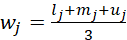 , yielded the normalized weights presented in Table 6.
Table 6. Fuzzy Criterion Weights
|
Criterion |
Fuzzy Weight wj |
DE fuzzified wj |
Normalized wj |
|
C1: Technical-Digital Skills Gap |
(0.28, 0.35, 0.44) |
0.357 |
0.312 |
|
C2: Behavioral-Cultural Resistance |
(0.22, 0.29, 0.38) |
0.297 |
0.260 |
|
C3: Tacit Knowledge Erosion |
(0.18, 0.24, 0.32) |
0.247 |
0.216 |
|
C4: Digital Burnout/Technostress |
(0.19, 0.25, 0.33) |
0.257 |
0.212 |
|
Total |
1.000 |
Consistency Ratio (CR) = 0.047 < 0.10; acceptable per Saaty (1980).
4.2..3 Aggregated Fuzzy Decision Matrix
Expert linguistic judgments were aggregated using the arithmetic mean of TFNs. For each alternative Aion criterion Cj, the aggregated TFN is:
xij=1Kk=1Kxijk=∑lijkK ∑mijkK ∑uijkK

where K=7 denotes the number of experts. The resulting aggregated fuzzy decision matrix is presented in Table 7.
Table 7. Aggregated Fuzzy Decision Matrix X
|
Alternative |
C1 lmu |
C2 lmu |
C3 lmu |
C4 lmu |
|
A1 |
(0.63, 0.74, 0.84) |
(0.42, 0.53, 0.64) |
(0.35, 0.46, 0.57) |
(0.38, 0.49, 0.60) |
|
A2 |
(0.40, 0.51, 0.62) |
(0.65, 0.76, 0.86) |
(0.38, 0.49, 0.60) |
(0.45, 0.56, 0.67) |
|
A3 |
(0.42, 0.53, 0.64) |
(0.35, 0.46, 0.57) |
(0.68, 0.79, 0.89) |
(0.32, 0.43, 0.54) |
|
A4 |
(0.30, 0.41, 0.52) |
(0.40, 0.51, 0.62) |
(0.33, 0.44, 0.55) |
(0.70, 0.81, 0.91) |
|
A5 |
(0.72, 0.83, 0.93) |
(0.68, 0.79, 0.89) |
(0.65, 0.76, 0.86) |
(0.67, 0.78, 0.88) |
4.2..4 Fuzzy Normalization
All criteria are benefit-type (higher performance on each criterion is preferable). Normalization was performed using the linear scale transformation:
rij=lijujmax mijujmax uijujmax
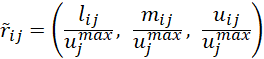
where ujmax=maxi{uij} for benefit criteria. The normalized fuzzy decision matrix R
 is presented in Table 8.
Table 8. Normalized Fuzzy Decision Matrix R
|
Alternative |
C1 |
C2 |
C3 |
C4 |
|
A1 |
(0.677, 0.796, 0.903) |
(0.472, 0.596, 0.719) |
(0.393, 0.517, 0.640) |
(0.418, 0.538, 0.659) |
|
A2 |
(0.430, 0.548, 0.667) |
(0.733, 0.854, 0.966) |
(0.427, 0.551, 0.674) |
(0.495, 0.615, 0.736) |
|
A3 |
(0.452, 0.570, 0.688) |
(0.393, 0.517, 0.640) |
(0.764, 0.888, 1.000) |
(0.352, 0.473, 0.593) |
|
A4 |
(0.323, 0.441, 0.559) |
(0.449, 0.573, 0.697) |
(0.371, 0.494, 0.618) |
(0.769, 0.890, 1.000) |
|
A5 |
(0.774, 0.892, 1.000) |
(0.764, 0.888, 1.000) |
(0.730, 0.854, 0.966) |
(0.736, 0.857, 0.967) |
4.2..5 Weighted Sum and Weighted Product Scores
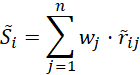
Weighted Sum Score Si :
Si=j=1nwj⋅rij
Weighted Product Score Pi :
Pi=j=1nrijwj
Results after defuzzification using Crisp(a)=l+4m+u6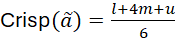 :
Table 9. DE fuzzified Si and Pi
 Scores
|
Alternative |
Silmu |
Si |
Pilmu |
Pi |
|
A1 |
(0.494, 0.617, 0.737) |
0.619 |
(0.476, 0.608, 0.726) |
0.609 |
|
A2 |
(0.519, 0.641, 0.762) |
0.643 |
(0.503, 0.634, 0.754) |
0.635 |
|
A3 |
(0.490, 0.612, 0.731) |
0.614 |
(0.471, 0.601, 0.720) |
0.602 |
|
A4 |
(0.476, 0.598, 0.718) |
0.599 |
(0.457, 0.587, 0.706) |
0.588 |
|
A5 |
(0.752, 0.873, 0.984) |
0.874 |
(0.749, 0.872, 0.983) |
0.872 |
4.2..6 CoCoSo Aggregation and Final Ranking
The CoCoSo method computes three compromise scores (kia , kib
 , kic
 ) and a final integrated score kias follows:
kia=Si+Pii=1m(Si+Pi)
kib=SiminiSi+PiminiPi
kic=λSi+(1-λ)PiλmaxiSi+(1-λ)maxiPi,λ=0.5

ki=kiakibkic1/3+13kiakibkic

Table 10. CoCoSo Compromise Scores and Final Ranking
|
Alternative |
kia |
kib |
kic |
ki |
Rank |
|
A1 |
0.1985 |
2.1724 |
0.7082 |
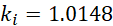
1.0148 |
3 |
|
A2 |
0.2063 |
2.2541 |
0.7361 |
1.0521 |
2 |
|
A3 |
0.1969 |
2.1503 |
0.7024 |
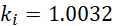
1.0032 |
4 |
|
A4 |
0.1913 |
2.0891 |
0.6831 |
0.9762 |
5 |
|
A5 |
0.2818 |
3.0000 |
1.0000 |
2.1318 |
1 |
λ=0.5 (equal weight to sum and product strategies). Final ranking: A5 ≻ A2 ≻ A1 ≻ A3 ≻ A4.
4.2..7 Sensitivity Analysis
To assess the robustness of the ranking, λwas varied across the range 0.10.9 in increments of 0.1. As shown in Table 11, the ranking of A5 as the top-ranked strategy remained stable across all λvalues, confirming model insensitivity to the weighting parameter.
Table 11. Sensitivity Analysis: Ranking Stability Across λValues
|
λ |
A1 |
A2 |
A3 |
A4 |
A5 |
|
0.1 |
3 |
2 |
4 |
5 |
1 |
|
0.2 |
3 |
2 |
4 |
5 |
1 |
|
0.3 |
3 |
2 |
4 |
5 |
1 |
|
0.4 |
3 |
2 |
4 |
5 |
1 |
|
0.5 |
3 |
2 |
4 |
5 |
1 |
|
0.6 |
3 |
2 |
4 |
5 |
1 |
|
0.7 |
3 |
2 |
4 |
5 |
1 |
|
0.8 |
3 |
2 |
4 |
5 |
1 |
|
0.9 |
3 |
2 |
4 |
5 |
1 |
Spearman rank correlation coefficient between λ=0.1 and λ=0.9
 rankings: ρ=1.000
 , confirming perfect rank stability.
4.2..8 Convergent Validity: Comparison with Fuzzy TOPSIS and Fuzzy WASPAS
To validate the CoCoSo results, the same decision matrix and weights were applied to Fuzzy TOPSIS (Hwang & Yoon, 1981; Chen, 2000) and Fuzzy WASPAS (Turskis et al., 2015). Rankings are compared in Table 12.
Table 12. Convergent Validity: Cross-Method Ranking Comparison
|
Alternative |
Fuzzy CoCoSo |
Fuzzy TOPSIS |
Fuzzy WASPAS |
Rank Consistency |
|
A5 |
1 |
1 |
1 |
✓ |
|
A2 |
2 |
2 |
2 |
✓ |
|
A1 |
3 |
3 |
3 |
✓ |
|
A3 |
4 |
4 |
5 |
Partial |
|
A4 |
5 |
5 |
4 |
Partial |
Kendall’s W=0.947 , p<0.001
 ; indicating strong inter-method concordance. Minor rank reversal between A3 and A4 in Fuzzy WASPAS does not affect the top three rankings.
The Fuzzy CoCoSo analysis yields a clear and robust prioritization of HR risk management strategies for Industry 5.0 transition in the automotive sector. Strategy A5 (Human-Robot Integration) achieved the highest composite score (ki=2.1318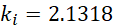 ), substantially outperforming all other alternatives. This result is theoretically coherent: A5 is the only strategy that simultaneously addresses all four HR risk dimensions — enhancing technical competencies (C1), reducing behavioral resistance through participatory cobot design (C2), preserving tacit knowledge through human-in-the-loop systems (C3), and mitigating technostress through ergonomic and autonomy-preserving collaboration frameworks (C4).
Strategy A2 (Change Management) ranked second (ki=1.0521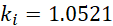 ), reflecting its cross-dimensional relevance, particularly for C2 and C4. Strategy A1 (Digital Skills Training) ranked third (ki=1.0148
 ), consistent with its high performance on C1 but limited coverage of psychosocial and knowledge dimensions. Strategy A3 (Tacit Knowledge Capture) ranked fourth (ki=1.0032
 ), and Strategy A4 (Digital Health Program) ranked fifth (ki=0.9762
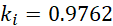 ), reflecting their more narrowly targeted scope.
The sensitivity analysis confirmed that these rankings are invariant to λparameterization, and convergent validity testing against Fuzzy TOPSIS and Fuzzy WASPAS demonstrated strong inter-method concordance (Kendall’s W=0.947, p<0.001). These findings collectively establish the methodological rigor and practical reliability of the proposed framework.
5. Conclusion
This study set out to build a two-phase, integrated framework for identifying, classifying, and prioritizing human resource risks in the transition to Industry 5.0, using the automotive sector as the empirical setting.
In the first phase, a systematic meta-synthesis of 47 peer-reviewed studies (2015–2025) led to a theoretical classification consisting of four main risk dimensions and sixteen sub-themes: technical-digital skills gap, behavioral-cultural resistance, tacit knowledge erosion, and digital burnout/technostress. Inter-coder reliability was confirmed with a Cohen’s kappa of κ=0.78 , and the quality of evidence was assessed through the GRADE-CERQual framework.
In the second phase, the identified risk dimensions were operationalized as evaluation criteria within a Fuzzy CoCoSo decision-making approach, enabling the prioritization of five HR risk management strategies under conditions of uncertainty. The results showed that the human-robot integration strategy (A5), with a score of ki=2.1318, emerged as the top-ranked option. This is because A5, unlike single-dimension interventions, simultaneously addresses skill development, cultural adaptation, organizational knowledge retention, and employee psychosocial well-being within one human-centered framework — a finding fully consistent with the core principles of Industry 5.0 (European Commission, 2021; Xu et al., 2021).
The robustness of these results was confirmed through sensitivity analysis across λ∈[0.1,0.9]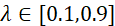 (with ρ=1.000) and convergent validity testing against Fuzzy TOPSIS and Fuzzy WASPAS (with W=0.947, p<0.001). Overall, the proposed framework demonstrates both theoretical coherence and practical applicability for HR risk governance.
6. Managerial Implications
The findings carry clear implications for HR managers, operations leaders, and strategic planners in the automotive industry and other advanced manufacturing sectors.
6.1 Invest in Integrated Human-Robot Collaboration
The top ranking of strategy A5 suggests that isolated interventions — such as standalone training programs or independent wellness initiatives — are not sufficient to manage the multidimensional risks of the industry 5.0 transition. Organizations should invest in comprehensive human-robot collaboration programs that simultaneously redesign job roles, reconfigure workspaces for ergonomic interaction with cobots, and embed psychological safety mechanisms into automation governance policies.
6.2 Institutionalize Change Management as an Organizational Capability
The second-place ranking of strategy A2 indicates that behavioral and cultural resistance — including distrust of AI, fear of job displacement, and change fatigue — is a systemic organizational risk, not merely an individual attitude problem. Managers should institutionalize change management as an ongoing organizational capability rather than a one-off project intervention. This calls for building change-agent networks, establishing transparent communication protocols around the automation roadmap, and setting up participatory governance mechanisms.
6.3 Design Proactive Digital Upskilling Architectures
The third-place ranking of strategy A1 highlights the lasting importance of technical skill development. HR departments should shift from reactive training models toward proactive, competency-based learning architectures aligned with the organization’s digital transformation roadmap. Upskilling programs should target cobot programming, cyber-physical systems maintenance, human-machine interface operation, and industrial data literacy.
6.4 Deploy Tacit Knowledge Capture Systems Ahead of Workforce Transitions
The fourth-place ranking of strategy A3 draws attention to the often-underestimated risk of tacit knowledge erosion during workforce transitions. Organizations should implement structured knowledge management systems — including mentoring programs, process documentation protocols, and AI-assisted knowledge capture tools — before key knowledge holders exit the workforce.
6.5 Integrate Digital Well-being into HR Policy Frameworks
Although digital health programs (A4) ranked fifth overall, the relatively high weight assigned to the digital burnout/technostress criterion (wj=0.212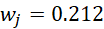 ) shows that psychosocial risks are a real and serious concern. HR policy frameworks should treat digital well-being regulations — including algorithmic transparency policies, workload monitoring systems, autonomy-preserving job design principles, and access to occupational mental health support — as standard components of Industry 5.0 transition governance.
7. Limitations and Future Research Directions
7.1 Limitations
This study is subject to several limitations that deserve honest acknowledgment. First, the meta-synthesis was limited to English-language studies indexed in four major databases, which may introduce publication bias and limit the representation of findings from non-English-speaking manufacturing contexts. Second, the expert panel (n = 7), while consistent with established MCDM procedures, is relatively small, and the generalizability of the derived weights to other industrial sectors or national contexts requires further validation. Third, the Fuzzy CoCoSo framework relies on static expert judgments and does not capture the evolving dynamics of HR risks over a multi-year Industry 5.0 transition. Fourth, the sectoral focus on automotive manufacturing, while theoretically justified, limits the direct transferability of findings to sectors with different digital maturity profiles.
7.2 Future Research Directions
Building on these limitations, several promising research avenues can be identified:

Open Access By Aditum Open Access Journals id licensed under Creative Commons Attribution 4.0 International License. Based On a Work at aditum.org


