
International Journal of Clinical Case Reports and Medical Cases
OPEN ACCESS | Volume 1 - Issue 1 - 2026
ISSN No: - | Journal DOI: 10.61148/IJCCRM


Abdelmoneim Elhadidy1*, Emad Balah1, Heba Ali Attia1, Hossam Abdelaziz Abdelshafi1, Kareem Samy Awad1, Awatif Nawara 2, Amira Hodiehd2 & Nermeen Ali Elghandour3
1Gastroenterology and Hepatology department, Damietta Fever and Gastroenterology hospital, Ministry of Health and Population, Egypt.
2Clinical Pathology and Microbiology, Damietta Fever and Gastroenterology hospital, Ministry of Health and Population, Egypt.
3Clinical pharmacy department, Damietta Fever and Gastroenterology hospital, Ministry of Health and Population, Egypt.
*Corresponding author: Abdelmoneim Elhadidy, Gastroenterology and Hepatology department, Damietta Fever and Gastroenterology hospital, Ministry of Health and Population, Egypt.
Received: September 15, 2026 | Accepted: September 29, 2026 | Published: October 02, 2026
Citation: Elhadidy A, Balah E, Heba A Attia, Hossam A Abdelshafi, Kareem S Awad, Nawara A, Hodiehd A & Nermeen A Elghandour. (2026) “Cryptococcal Meningitis in an Apparently Immunocompetent Adult: A Rare Case Report” International Journal of Clinical Case Reports and Medical Cases, 1(1); DOI: 10.61148/IJCCRM/003.
Copyright: © 2026 Abdelmoneim Elhadidy. This is an open access article distributed under the Creative Commons Attribution License, which permits unrestricted use, distribution, and reproduction in any medium, provided the original work is properly cited.
Background: Cryptococcal meningitis is a potentially life-threatening fungal infection of the central nervous system that predominantly affects immunocompromised individuals. It can also occur in apparently immunocompetent patients, in whom diagnosis may be delayed because no predisposing condition is recognized.
Case presentation: A 41-year-old man with no comorbidities and a history of travel to Saudi Arabia one month earlier presented with fever and severe headache for one week. On admission he was fully conscious, febrile (39 °C) and tachycardic. Within two days his consciousness level deteriorated (Glasgow Coma Scale 14) and he developed visual hallucinations. He was started empirically on ceftriaxone, acyclovir and dexamethasone for suspected encephalitis. Lumbar puncture showed a lymphocytic pleocytosis (100 cells/mm³) with elevated protein, and Cryptococcus was identified in the cerebrospinal fluid (CSF). Treatment was changed to high-dose fluconazole (1200 mg once daily). The patient improved, a repeat lumbar puncture was performed, and he recovered fully and was discharged on fluconazole therapy.
Conclusion: Cryptococcal meningitis should remain in the differential diagnosis of patients with persistent fever, headache and neurological deterioration, even when no immunocompromising condition is apparent. Early lumbar puncture with CSF examination allows timely diagnosis and treatment.
Cryptococcal meningitis (CM) is typically encountered in immunocompromised individuals, most often those with advanced human immunodeficiency virus (HIV) infection, transplant recipients, or patients on long-term immunosuppressive therapy. Its occurrence in an immunocompetent adult is rare and often presents a diagnostic dilemma. Cryptococcus neoformans is a ubiquitous encapsulated yeast and the most common cause of CM worldwide. Although now recognized primarily as an opportunistic infection, especially in HIV/AIDS, its history dates back >1 century. The first isolation of the organism was reported in 1894 by Otto Busse, who identified yeast-like cells in a sarcoma of the tibia, and independently by Abraham Buschke in the same year. (1)
Traditionally, CM was described as predominantly affecting immunocompromised hosts, including PLHIV, individuals who are solid organ transplant recipients, patients who are on long-term chemotherapy, those with type two diabetes mellitus, and patients with rheumatological disorders such as rheumatoid arthritis (RA) and systemic lupus erythematosus (SLE)(2). However, in recent years, the incidence of CM cases involving apparently immunocompetent individuals is increasingly being recognized, likely due to increased disease awareness and advancements in diagnostic capabilities.
CM is associated with high risks of mortality and morbidity with profound neurological sequelae due to its strong neurotropic properties and marked propensity to cause raised intracranial pressure, immune reconstitution inflammatory syndrome (IRIS), and disseminated fungal infection (3). Previous studies have shown that even in immunocompetent individuals, the mortality rate of CM ranges from 9% to 15% in North America and Australia, whereas in low- and middle-income countries (LMICs) such as Sub-Saharan African countries, the mortality rate remains high, ranging from 22% to 70% (2-4). Some literature has highlighted that HIV-negative patients with CM usually present with more atypical and indolent symptoms, which leads to significant diagnostic delays and subsequent poor clinical outcomes (5).
Because patients without a recognized predisposing condition are less likely to be suspected of having a fungal infection, the diagnosis of cryptococcal meningitis may be delayed in this population. Published reviews emphasize that HIV-negative and apparently immunocompetent patients can present with a subacute or non-specific illness that overlaps with bacterial, viral and other causes of meningoencephalitis.
We report a previously healthy 41-year-old man who presented with fever, headache and progressive neurological deterioration and was diagnosed with cryptococcal meningitis on CSF examination.
Case Report
Presentation. A 41-year-old man presented with fever and headache of one week’s duration. He had no known comorbidities and no history of blood transfusion or previous hospital admission. He was an ex-smoker who had stopped smoking five years earlier. He had travelled to Saudi Arabia one month before presentation.
Examination. The patient was fully conscious and vitally stable, with a blood pressure of 130/85 mmHg, heart rate of 110 beats/min and temperature of 39 °C. The chest was clear and the abdomen was soft. There was no lower-limb edema, no lymphadenopathy and the sclerae were normal.
Initial investigations. Chest radiography was normal. Laboratory results (Table 1) showed mild anemia, neutrophilic leukocytosis, mildly elevated aspartate aminotransferase and a raised C-reactive protein. Virology screening was negative. The patient was admitted to the ward.
Table 1. Initial laboratory findings
|
Test |
Result |
Comment |
|
Hemoglobin |
10 g/dL |
|
|
Total leukocyte count |
11.4 × 10³/µL |
Neutrophils 83.2% |
|
Platelets |
430 × 10³/µL |
|
|
Creatinine |
1 mg/dL |
|
|
AST / ALT |
71 / 40 U/L |
|
|
Total bilirubin |
0.6 mg/dL |
|
|
C-reactive protein |
24 mg/L |
|
|
Virology |
Negative |
|
|
Salmonella, Brucella, malaria rapid test |
All negative |
Sent after clinical deterioration |
Clinical course. Two days after admission the patient deteriorated, with a Glasgow Coma Scale score of 14 and visual hallucinations. He was prepared for lumbar puncture and, pending results, was started on ceftriaxone, acyclovir and dexamethasone for suspected encephalitis. Tests for Salmonella, Brucella and malaria (rapid test) were negative.
CSF findings. The first lumbar puncture showed 100 white blood cells/mm³ with lymphocyte predominance, glucose 120 mg/dL and protein 94 mg/dL; Cryptococcus was identified in the CSF as (figure 1) and (Table 2). The diagnosis of cryptococcal meningitis was made and
Liposomal or lipid-based amphotericin B formulations were not available in our center.
The treatment plan was changed to high-dose fluconazole, 1200 mg once daily. After the first lumbar puncture the patient improved partially, with a Glasgow Coma Scale score of 15, although visual hallucinations persisted.
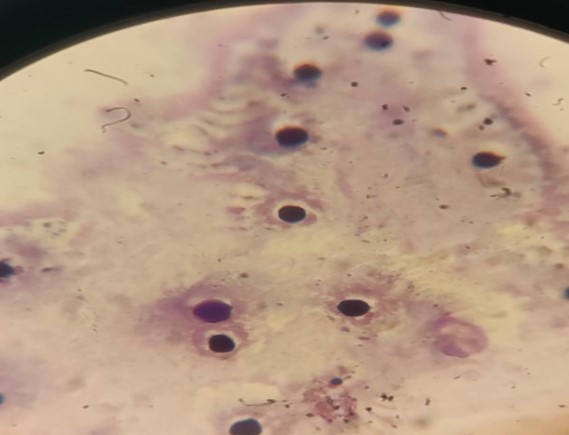
Figure 1: Initial cerebrospinal fluid (CSF) microscopic examination demonstrating encapsulated yeast cells consistent with Cryptococcus spp.
A second lumbar puncture, performed three days later, again showed 100 white blood cells/mm³ with lymphocyte predominance and persistent Cryptococcus in the CSF as in (figure 2), with glucose 52 mg/dL and protein 18 mg/dL (Table 2).
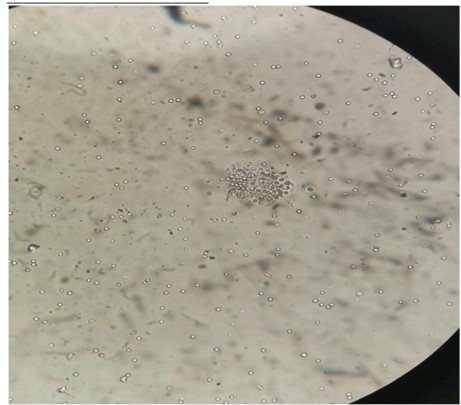
Figure 2: Follow up CSF microscopic examination performed 3 days later showing persistent Cryptococcus yeast cells.
Table 2. Cerebrospinal fluid findings
|
Parameter |
First lumbar puncture |
Second lumbar puncture (3 days later) |
|
White blood cells |
100/mm³ |
100/mm³ |
|
Predominant cell type |
Lymphocytes |
Lymphocytes |
|
Organism |
Cryptococcus |
Cryptococcus |
|
Glucose |
120 mg/dL |
52 mg/dL |
|
Protein |
94 mg/dL |
18 mg/dL |
The patient was continued to improve on fluconazole therapy, recovered fully, and was discharged from hospital on fluconazole therapy on day 10 of admission.
Discussion
Cryptococcus neoformans is a ubiquitous encapsulated yeast and the most common cause of CM worldwide. The first isolation of the organism was reported in 1894 by Otto Busse, who identified yeast-like cells in a sarcoma of the tibia, and independently by Abraham Buschke in the same year (6). Francesco Sanfelice isolated a morphologically similar yeast from peach juice and termed it Saccharomyces neoformans (7). In 1901, Jean Paul Vuillemin reclassified the organism into the genus Cryptococcus on the basis of its lack of ascospore formation, which distinguished it from the true Saccharomyces yeasts (8).
Cryptococcus neoformans is most classically associated with exposure to bird droppings, though the exact relationship between exposure and disease is not clear. Resultant meningitis or meningoencephalitis is thought to result from inhalation of the organism from the environment into the respiratory tract, with hematogenous dissemination to the central nervous system (CNS), possibly with tropism to the CNS by Cryptococcus (9). The proposed reasoning relates to the fact that Cryptococcus species possess multiple virulence factors that allow it to traverse the blood-brain barrier and survive in the relatively nutrient-deplete environment of the CNS (9). Entry into the body via respiratory inhalation and ability to grow preferentially in the CNS leads to simultaneous pulmonary and CNS involvement on presentation, noted among multiple case reports on our literature review.(10-11). Disseminated cryptococcus may involve multiple organ structures, with common sites including skin, lungs, eyes, and CNS, but has also been seen to affect bone and soft tissue. (10-12).
Clinical presentation of cryptococcal meningoencephalitis in HIV-negative individuals, according to a multicenter case study involving patients with predisposing risk factors, included headache (73%), constitutional symptoms (fever, weight loss, and night sweats; 68%), and altered mental status (42%) with predisposing factors including corticosteroid therapy (25%), solid organ transplant (15%), chronic organ failure (41%), chronic lung disease (4%), hematologic malignancies (11%), and other malignancies (5%). However, there was no significant predisposing factor reported in 30% of patients with CNS involvement. (13). Radiographic imaging is frequently unrevealing, though may demonstrate hydrocephalus. HIV-negative patients are, however, more likely to exhibit cryptococcoma and hydrocephalus.3 Given previously described tropism to the CNS, meningitis is the most common clinical presentation of cryptococcal disease; however, pulmonary disease may also be present.
To date, the diagnostic dilemma in cases of CM remains a significant challenge, especially in patients with no clinical features suggestive of immunosuppression. This aligns with emerging evidence showing that unexpected neurological collapse in seemingly immunocompetent individuals can resemble other acute intracranial pathologies. Previous research has demonstrated how nontraumatic brain injury in sudden and unexpected deaths may clinically mimic infectious or inflammatory neurological conditions, underscoring the diagnostic challenges in this population (14). Consequently, delays in diagnosis and treatment are usually associated with higher rates of morbidity and mortality even in immunocompetent patients. Many studies have emphasized the importance of maintaining a strong index of clinical suspicion for CM even in individuals who are immunocompetent, especially when high opening pressure is demonstrated in LP.
The antifungal strategy for CM mainly comprises three phases: induction, consolidation, and maintenance. Recent WHO guidelines in 2022 recommended a single high-dose liposomal amphotericin B in combination with other standard medications (flucytosine or fluconazole) as part of induction therapy for PLHIV, which aids in rapid sterilization of CSF due to potent fungicidal activity. In the absence of specific clinical guidelines for HIV-negative patients, we adhered to the induction regimen recommended by both the Infectious Diseases Society of America (IDSA) and the Malaysia National Antimicrobial Guideline (2024) for CM, which consists of amphotericin B and flucytosine (15).
Temporary percutaneous lumbar drain or ventriculostomy may be indicated in patients requiring recurrent daily drainage. Ventriculo-peritoneal shunt placement may also be considered for elevated intracranial pressures failing conservative management.15 Other adjunctive agents such as mannitol, acetazolamide, and glucocorticoids are not supported for lowering intracranial pressure in this setting (16) .
Conclusion
Cryptococcal meningitis without a known underlying immunocompromised state carries mortality of 12% and is often delayed in presentation due to the frequently subacute nature of symptom development. (12)
This case illustrates that cryptococcal meningitis can affect a previously healthy adult with no recognized immunocompromising condition. In a patient with persistent fever, severe headache and progressive neurological change, including altered consciousness and hallucinations, clinicians should consider cryptococcal infection early and perform lumbar puncture with CSF microscopy for the organism. In this patient, prompt CSF diagnosis and treatment with high-dose fluconazole were followed by full clinical recovery.
Acknowledgements
Not applicable.
Authors and Affiliations
Gastroenterology and Hepatology department, Damietta Fever and Gastroenterology hospital, Ministry of Health and Population, Egypt.
Abdelmoneim Elhadidy & & Emad Balah & Heba Ali Attia1& Hossam Abdelaziz Abdelshafi1& Kareem Samy Awad1,
Clinical pharmacy department, Damietta Fever and Gastroenterology hospital, Ministry of Health and Population, Egypt.
Nermeen El Ghandour
Clinical Pathology and Microbiology, Damietta Fever and Gastroenterology hospital, Ministry of Health and Population, Egypt.
Awatif Nawara , Amira Hodiehd
Authors’ contributions
All authors are responsible for the modification and giving final approval of the manuscript. Abdelmoneim Elhadidy was a contributor in writing the manuscript. All authors read and approved the final manuscript.
Funding
The authors received no funding for this study.
Availability of data and materials
Please contact the corresponding author for data requests.
Declarations
Ethics approval and consent to participate
Not applicable.
Consent for publication
Not applicable.
Competing interests
The authors declare that they have no competing interests.

Open Access By Aditum Open Access Journals id licensed under Creative Commons Attribution 4.0 International License. Based On a Work at aditum.org


