International Journal of Biomedical Engineering and Medical Devices
OPEN ACCESS | Volume 1 - Issue 1 - 2026
ISSN No: - | Journal DOI: 10.61148/IJBEMD


Amna Nasir1, Izzah Mudassar1, Shanza zafar1, Eaman Malik1, Ayesha Khan1, Aiza Junaid1, Shaista Rauf2, Fatima Mazhar3*
1Department of Medicine and Surgery, Hitec-institute of medical sciences Taxila Cantt.
2Department of Physiotherapy, University of Sargodha, Sargodha, Punjab.
3Department of Microbiology, MNSUAM.
*Corresponding author: Fatima Mazhar, Department of Microbiology, MNSUAM.
Received: September 20, 2026b | Accepted: September 30, 2026 | Published: October 05, 2026
Citation: Nasir A, Mudassar I, Zafar S, Malik E, Khan A, Junaid A, Rauf S, Mazhar F. (2026) “Network Pharmacology And Bioinformatics Approach Reveals The Multi-Target Pharmacological Mechanism Of Cinnamomum Verum Against Heptocellular Carcinoma” International Journal of Biomedical Engineering and Medical Devices, 1(1); DOI: 10.61148/10.61148/IJBEMD/005.
Copyright: © 2026 Fatima Mazhar. This is an open access article distributed under the Creative Commons Attribution License, which permits unrestricted use, distribution, and reproduction in any medium, provided the original work is properly cited.
Liver cancer is the sixth most prevalent carcinoma as well as the fourth primary reason of mortality globally. Due to broad spectrum and minimal quantity of information collected, it is challenging to fully understand the biological process behind liver cancer. The herb plant Cinnamomum verum is native to Asian countries and has been utilized for treating an extensive variety of diseases particularly liver cancer. Yet, the molecular explanation remains uncertain. This study was conducted to utilize network pharmacology approach for the particular analysis to screen compounds in Cinnamomum verum and their potential against liver cancer using IMPPAT, Swiss Target Prediction, STITCH and Gene Card database. Cytoscape 3.10.0 was used to construct network interactions among compounds, targets and pathways. The genes were functionally evaluated through the DAVID database. The analysis of Molecular docking was performed on compounds and core targets through discovery studio to understand the mechanism. It was observed that Cinnacasside D, Procyanidin B1, Procyanidin B2, Campesterol glucoside, Procyanidin B7, Kelampayoside A, Vanillylmandelic acid and Cinnacasside A plays a role in the treatment of liver cancer by affecting the VEGFA, HSP90AA1, HIF1A, CASP3, MAPK3, HRAS, EGFR, and GAPDH genes. Pathway analysis revealed that the mechanism of Hepatitis B, Hepatitis C and PI3K-Akt signaling pathways are strongly linked to the occurrence of liver cancer. Network pharmacology and molecular docking analysis showed that Cinnamomum verum functions in combination with associated pathways to avoid liver cancer. This serves as a basis for identifying and interpreting the process behind the Cinnamomum verum’s anti-cancer effect against liver cancer.
Liver cancer is among the top of the five deadly cancer having a yearly increase in prevalence. Liver diseases have more chances to be developed in developing countries [1]. The liver cancer can be developed by many factors like the hepatitis B and C viral infections. It can also be caused by smoking, diabetes mellitus, obesity, an excessive amount of iron and diverse nutritional sensitivities [2]. The diagnosis for liver cancer is poor. Only 5% to 15% of patients are eligible for surgical removal [3], [4]. The long-term use of chemotherapeutic drugs can cause further issues such as drug inefficacy or toxicity. Both chemotherapeutic and surgical removal methods can’t improve liver cancer [5].
The herb Cinnamomum verum is utilized for manufacturing the spice of cinnamon. It has been implemented in a various methods as an ancient Chinese herbal medicine [6]. The Lauraceae family contains the species of the plant Cinnamomum verum. In Asia, it consists of over 250 aromatic evergreen trees. The genus includes a small and everlasting cinnamon tree that’s indigenous to the country of Sri Lanka [7]. It could be utilized as a therapy for a variety of diseases, such as improving youth age, decreasing fever, wheezing and producing sweat [8].
Network pharmacology, is an approach which has capability of describing complex correlation between diseases, drugs and biological systems [9]. By the study of the various association networks, an innovative computational biology method is applied to evaluate the combined effects and possible mechanisms behind the drugs that aimed at multiple targets and compounds [10]. For understanding the procedure of action of herbal medicines, the network pharmacology is used. This approach has recently become popular. The development of the "protein-compound/disease-gene" network through a network pharmacology constitutes In vivo technique for exposing the mechanism behind the combined beneficial effects of traditional medicines [11].
This study uses the NP based approach to identify the Cinnamomum verum active substances from a plants for curing the liver cancer. In addition, this study has sparked a novel attention to search candidate drugs from the Cinnamomum verum. In the context of this study, Cinnamomum verum anti-cancer outcomes of biologically active compounds, were studied by utilizing the NP approach, as well as molecular-docking approach. Moreover, In the future wet lab experiments are needed to explore the substance’s pharmacological potential [12].
Materials and method
Filtering and prediction of active constituents of Cinnamomum verum
The active constituents of cinnamomum verum were obtained from few databases like Indian medicinal plants IMPPAT (https://cb.imsc.res.in/imppat/) [13], Dr Duke database (https://phytochem.nal.usda.gov/) and as well as from literature. Dr. Duke's Phytochemical and Ethnobotanical Databases provides phytochemicals using common names or scientific names. Cinnamomum verum keyword was used to search in google scholar for literature survey. Molsoft
L.L.C (https://www.molsoft.com/) (Ononamadu & Ibrahim, 2021) and Swiss ADME (http://www.swissadme.ch/) [14] were used for analyzing drug likeness and bioavailability of all active compounds. The active compounds with DL>=0.18 and F>=30% were selected for other investigation. From PubChem (https://pubchem.ncbi.nlm.nih.gov/) [15], the PubChem ID, Molecular weight and canonical smiles of compounds were also obtained.
Target genes prediction of Cinnamomum verum
Swiss target prediction was used for the prediction of gene targets of Cinnamomum verum. In human and vertebrates, the Swiss target prediction tool (http://www.swisstargetprediction.ch/)
[16] can be used for the prediction of targets. In this tool, PubChem smiley of an active compounds of Cinnamomum verum is needed to be pasted for further evaluation. The common genes of all active compounds were collected in excel file. The compounds with probability
>=0.7 were selected.
Searching of disease related genes
For the exploration of molecular mechanism of medicinal herbs, the searching of disease related genes were performed. In GeneCard database (https://www.genecards.org/) [17], the keyword of “liver cancer genes” was used for determining the disease related genes. This database is freely available for use. This database contains information related to proteomics, transcriptomic and genomic information. 1000 genes related to hepatocellular carcinoma was pasted in excel.
Finding of common genes
For finding out of common target genes, the Venn diagram was drawn from disease and compound related genes. For Venn diagram, ugent.be tool (https://bioinformatics.psb.ugent.be/webtools/Venn/) was used. In this tool, common genes from disease HCC and Cinnamomum verum were pasted. In first box, the genes of Cinnamomum verum were pasted. In the second box, the genes related with hepatocellular carcinoma were pasted. After that it was saved in word file and replaced space with comma. The comma separated values was converted into column separated values. In this way excel file was generated.
Hub genes prediction
Hub genes are the key target genes. Different tools were used for finding out hub genes. The common genes were subjected to STRING database [18]. For generating a PPI network the Homo sapiens organism was selected. After that tsv file was exported to Cytoscape 3.10.0 offline tool. Total 12 genes were found out by checking out different properties like MCC, MNC, betweeness and closeness with the help of Cytohubba tool. After that ugent Venn diagram (https://bioinformatics.psb.ugent.be/webtools/Venn/) was used for finding out hub genes.
Functional and pathway enrichment analysis
The DAVID database (https://david.ncifcrf.gov/) [19] was used for pathway analysis and functional annotation. This database is for functional enrichment analysis and it is an open access database. The 147 common targets were pasted in that tool and then Homo sapiens was selected. This was done for the prediction of functions at three levels: Biological process (BP), Cellular component (CC) and Molecular function (MF). The p-value <0.05 filter was used. For further analysis, the literature review was done for finding out related pathways and biological processes. The top 20 KEGG pathways and gene ontology enrichment suitable to liver cancer was selected. The next work was done by R language on R studio.
Construction of Network
Cytoscape 3.10.0 [20] was used for the creation and visualization of networks. This tool is used for the evaluation of interactions between various molecules and it is a bioinformatics tool. The edges represented the interaction between active compounds and target genes while the nodes represented them. The cytoscape tool was utilized for styling the network. The hub gene network was also constructed in that tool.
Molecular docking
The rcsb pdb (https://www.rcsb.org/) [21] is a database which contains 3D structure of small molecules like proteins. That database also contains information related to 3D structure. For molecular docking, 3D structure of protein is required. Therefore, I downloaded protein structure of active compound with relevant pathway to my disease from the rcsb pdb. Furthermore, the 3D structure was refined by UCSF chimera software [22]. It is an offline software which provides 3D pictures of molecules with high resolution and it is used for visualization. After that MOE (molecular operating environment) software [23] was used for molecular docking. It was used for finding out binding site of target protein by using site finder. MOE was used for virtual screening and molecular docking of active compounds and core targets.
After docking, the complexes with low RMSD and binding energy was selected. RMSD values are low root mean square deviation. Docking score tells us about the binding of target protein and compounds and it also helps us to filter out the potential compounds and their respective targets. After that two more offline software CHIMERA X [24]and DISCOVERY STUDIO [25] was used for visualizing the 3D inactions of active compounds and target proteins
Results
Screening of active compounds
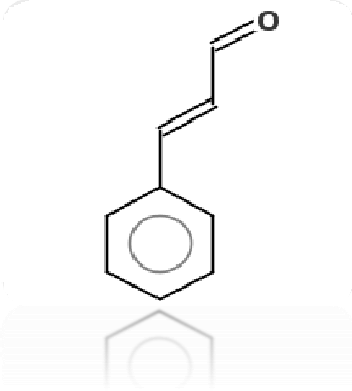
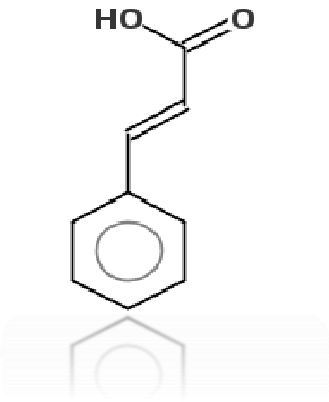
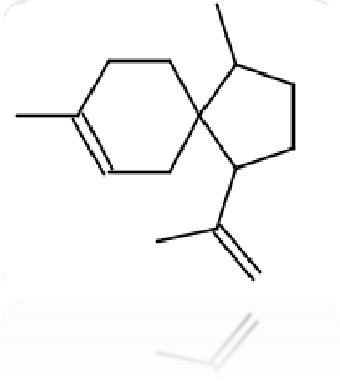
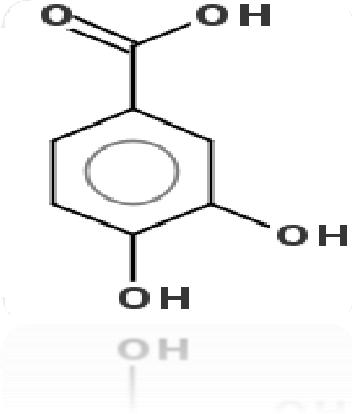
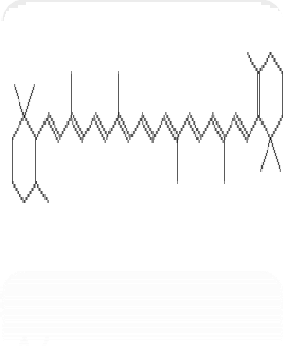
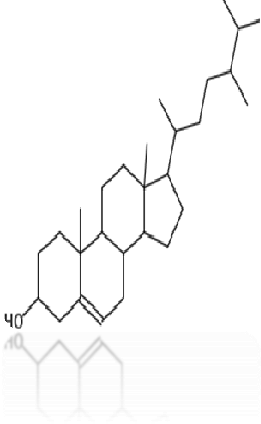
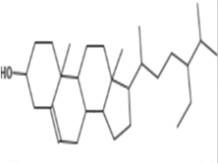
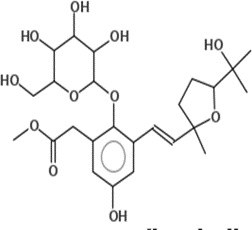
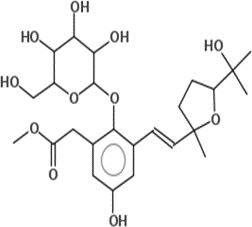
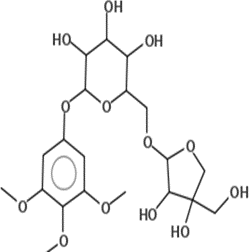
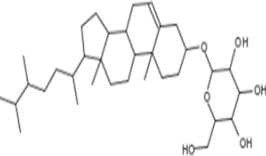
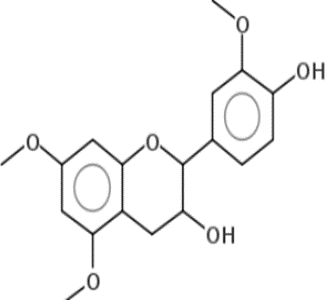
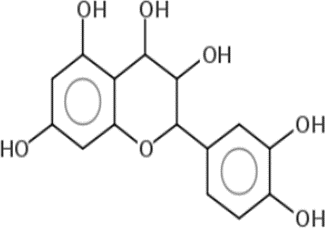
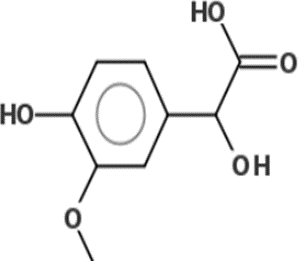
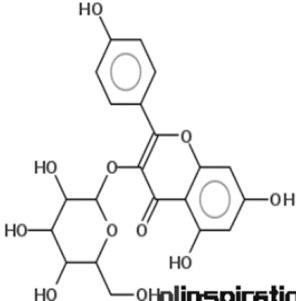
28 compounds were screened and selected on the basis of DL>=0.18 and F>=30 percent. These compounds are cinnamaldehyde, Cinnamic acid, Ld, beta-acoradiene, 3, 4-Dihydroxybenzoic acid, Betacarotene, Campestrol, Phytosterols, Thiamine, Sophoraflavonoloside, Cinnamoside, Cinnacasside D, Cinnacasside A, Kelampayoside A, Procyanidin B2, Procyanidin B1, Procyanidin B7, Campesterol-glucoside, Epicatechin 5,7,3'-trimethyl ether, Catechin 4'-methyl ether, leucocyanidin, camphorenone, Vanillylmandelic acid, adenosine, kaempferol 3-O-(3″,6″-di-trans-p-coumaroyl)-ß-d-galactopyranoside, kaempferol 3-O-ß-d-glucopyranoside, quercetin 3-O-α-l-rhamnopyranoside and buddlenol C.
Table 1. Structure and properties of active constituents of Cinnamomum verum.
|
Molecule name |
Molecular Weight (MW) |
Drug likeness (DL) |
Bioavailabilit y (F30%) |
Structure |
PubChem ID |
|
Cinnamaldeh yde |
132.16 |
0.29 |
0.55 |
|
637511 |
|
Cinnamic acid |
148.16 |
0.29 |
0.85 |
|
444539 |
|
Beta-acoradiene |
204.35 |
0.29 |
0.55 |
|
6428280 |
|
3,4- Dihydroxybe nzoic acid |
154.12 |
0.23 |
0.56 |
|
72 |
|
Beta-carotene |
536.9 |
0.64 |
0.17 |
|
5280489 |
|
Campestrol |
400.7 |
0.59 |
0.55 |
|
173183 |
|
Phytosterols |
414.7 |
0.78 |
0.55 |
|
12303662 |
|
Sophoraflavo noloside |
610.5 |
0.73 |
0.17 |
|
5282155 |
|
Procyanidin B1 |
578.5 |
0.73 |
0.17 |
|
11250133 |
|
Cinnacasside D |
512.5 |
0.26 |
0.17 |
|
25214691 |
|
Cinnacasside A |
512.5 |
0.26 |
0.17 |
|
10552637 |
|
Kelampayosi de A |
478.4 |
0.29 |
0.17 |
|
12273812 |
|
Procyanidin B2 |
578.5 |
0.73 |
0.17 |
|
13990893 |
|
Procyanidin B7 |
578.5 |
0.72 |
0.17 |
|
70699334 |
|
campesterol-glucoside |
562.8 |
0.35 |
0.55 |
|
6482487 |
|
Epicatechin 5,7,3'- trimethyl ether |
332.3 |
0.68 |
0.55 |
|
71629 |
|
leucocyanidi n |
306.27 |
0.53 |
0.55 |
|
5315646 |
|
Vanillylmand elic acid |
198.17 |
0.56 |
0.56 |
|
|
|
kaempferol 3-O-(3″,6″- di-trans-p-coumaroyl)-ß-d-galactopyra noside |
448.4 |
0.67 |
0.17 |
|
5282149 |
|
quercetin 3-O-α-l-rhamnopyra noside |
756.7 |
0.84 |
0.17 |
|
57397680 |
|
kaempferol 3-O-ß-d- glucopyrano side |
448.4 |
0.67 |
0.17 |
|
9911508 |
|
adenosine |
267.24 |
0.97 |
0.55 |
|
60961 |
Finding target genes for active compounds
The targets of 28 active compounds were predicted by Swiss-target database (http://www.swisstargetprediction.ch/). 2180 potential target genes were predicted for 34 compounds.
Finding target genes for hepatocellular carcinoma
The gene card database (https://www.genecards.org/ ) was used for finding out the liver cancer related target genes. The keyword of liver cancer genes was searched on that database. Liver cancer related genes were shown. Around 1000 liver cancer genes were used for further analysis.
Finding Common genes
Common genes are the genes that are present in disease related genes and active compounds target genes. Using Venn diagram, common genes from HCC and Cinnamomum verum were obtained. 147 common potential gene targets were obtained from them.
Figure 1 Common genes of liver cancer and Cinnamomum verum.
Total common genes are 147. In this figure, blue color is showing the potential target genes of cinnamomum verum and pink color is showing disease related dataset.
Table 2. Hub genes and their related pathways.
|
RANK |
GENES |
PATHWAYS |
|
1 |
CASP3 |
MicroRNAs in cancer |
|
1 |
CASP3 |
MAPK signaling pathway |
|
1 |
CASP3 |
Human cytomegalovirus infection |
|
1 |
MAPK3 |
EGFR tyrosine kinase inhibitor resistance |
|
1 |
MAPK3 |
Proteoglycans in cancer |
|
1 |
MAPK3 |
HIF-1 signaling pathway |
|
1 |
HRAS |
EGFR tyrosine kinase inhibitor resistance |
|
1 |
HRAS |
PI3K-Akt signaling pathway |
|
1 |
HRAS |
Proteoglycans in cancer |
|
1 |
HRAS |
Non-small cell lung cancer |
|
1 |
HRAS |
Hepatitis B |
|
1 |
HRAS |
MicroRNAs in cancer |
|
1 |
HRAS |
Human cytomegalovirus infection |
|
1 |
HRAS |
MAPK signaling pathway |
|
1 |
HRAS |
Hepatitis C |
|
1 |
HRAS |
VEGF signaling pathway |
|
1 |
EGFR |
EGFR tyrosine kinase inhibitor resistance |
|
1 |
EGFR |
PI3K-Akt signaling pathway |
|
1 |
EGFR |
Proteoglycans in cancer |
|
1 |
EGFR |
HIF-1 signaling pathway |
|
1 |
EGFR |
Ras signaling pathway |
|
1 |
EGFR |
Non-small cell lung cancer |
|
1 |
EGFR |
MicroRNAs in cancer |
|
1 |
EGFR |
Pancreatic cancer |
|
1 |
EGFR |
Hepatitis C |
|
1 |
EGFR |
MAPK signaling pathway |
|
1 |
EGFR |
Human cytomegalovirus infection |
|
1 |
EGFR |
Breast cancer |
|
1 |
SRC |
EGFR tyrosine kinase inhibitor resistance |
|
1 |
SRC |
Proteoglycans in cancer |
|
1 |
SRC |
Hepatitis B |
|
1 |
SRC |
Human cytomegalovirus infection |
|
1 |
GAPDH |
HIF-1 signaling pathway |
|
1 |
STAT3 |
Proteoglycans in cancer |
|
1 |
STAT3 |
HIF-1 signaling pathway |
|
1 |
STAT3 |
Hepatitis B |
|
1 |
STAT3 |
MicroRNAs in cancer |
|
1 |
STAT3 |
Pancreatic cancer |
|
1 |
STAT3 |
Hepatitis C |
|
1 |
STAT3 |
Insulin resistance |
|
1 |
TNF |
Proteoglycans in cancer |
|
1 |
TNF |
Hepatitis B |
|
1 |
TNF |
Hepatitis C |
|
1 |
TNF |
MAPK signaling pathway |
|
1 |
TNF |
Human cytomegalovirus infection |
|
1 |
VEGFA |
EGFR tyrosine kinase inhibitor resistance |
|
1 |
VEGFA |
VEGF signaling pathway |
|
1 |
VEGFA |
Pancreatic cancer |
|
1 |
VEGFA |
MicroRNAs in cancer |
|
1 |
VEGFA |
HIF-1 signaling pathway |
|
1 |
VEGFA |
HIF-1 signaling pathway |
|
1 |
VEGFA |
Proteoglycans in cancer |
|
1 |
VEGFA |
PI3K-Akt signaling pathway |
|
1 |
HSP90AA1 |
PI3K-Akt signaling pathway |
|
1 |
HIF1A |
Proteoglycans in cancer |
|
1 |
HIF1A |
HIF-1 signaling pathway |
|
1 |
CASP3 |
Proteoglycans in cancer |
|
1 |
CASP3 |
Hepatitis B |
RANK GENES PATHWAYS
1 CASP3 MicroRNAs in cancer
1 CASP3 MAPK signaling pathway
1 CASP3 Human cytomegalovirus infection
1 MAPK3 EGFR tyrosine kinase inhibitor resistance
1 MAPK3 Proteoglycans in cancer
1 MAPK3 HIF-1 signaling pathway
1 HRAS EGFR tyrosine kinase inhibitor resistance
1 HRAS PI3K-Akt signaling pathway
1 HRAS Proteoglycans in cancer
1 HRAS Non-small cell lung cancer
1 HRAS Hepatitis B
1 HRAS MicroRNAs in cancer
1 HRAS Human cytomegalovirus infection
1 HRAS MAPK signaling pathway
1 HRAS Hepatitis C
1 HRAS VEGF signaling pathway
1 EGFR EGFR tyrosine kinase inhibitor resistance
1 EGFR PI3K-Akt signaling pathway
1 EGFR Proteoglycans in cancer
1 EGFR HIF-1 signaling pathway
1 EGFR Ras signaling pathway
1 EGFR Non-small cell lung cancer
1 EGFR MicroRNAs in cancer
1 EGFR Pancreatic cancer
1 EGFR Hepatitis C
1 EGFR MAPK signaling pathway
1 EGFR Human cytomegalovirus infection
1 EGFR Breast cancer
1 SRC EGFR tyrosine kinase inhibitor resistance
1 SRC Proteoglycans in cancer
1 SRC Hepatitis B
1 SRC Human cytomegalovirus infection
1 GAPDH HIF-1 signaling pathway
1 STAT3 Proteoglycans in cancer
1 STAT3 HIF-1 signaling pathway
1 STAT3 Hepatitis B
1 STAT3 MicroRNAs in cancer
1 STAT3 Pancreatic cancer
1 STAT3 Hepatitis C
1 STAT3 Insulin resistance
1 TNF Proteoglycans in cancer
1 TNF Hepatitis B
1 TNF Hepatitis C
1 TNF MAPK signaling pathway
1 TNF Human cytomegalovirus infection
1 VEGFA EGFR tyrosine kinase inhibitor resistance
1 VEGFA VEGF signaling pathway
1 VEGFA Pancreatic cancer
1 VEGFA MicroRNAs in cancer
1 VEGFA HIF-1 signaling pathway
1 VEGFA HIF-1 signaling pathway
1 VEGFA Proteoglycans in cancer
1 VEGFA PI3K-Akt signaling pathway
1 HSP90AA1 PI3K-Akt signaling pathway
1 HIF1A Proteoglycans in cancer
1 HIF1A HIF-1 signaling pathway
1 CASP3 Proteoglycans in cancer
1 CASP3 Hepatitis B
Pathway and Functional Enrichment Analysis
For finding the biological function of the genes, gene ontology analyses were done. KEGG pathway analyses were done to find out the possible pathways related to liver cancer. The active compounds of Cinnamomum verum were used to perform these analyses. According to GO Biological processes analysis, targets of Cinnamomum verum were associated to signal transduction, positive regulation of gene expression and so forth (Figure 2A). GO cellular component analysis revealed that the target genes were present in cytoplasm, plasma membrane and so forth (Figure 2B). GO Molecular function analysis suggested the target genes were involved in protein binding, ATP binding and so forth (Figure 2C)
Figure 2. GO and KEGG pathways are displayed through a Bubble Plot. (A) KEGG pathway analyses. (B) GO in terms of biological processes. (C) GO in terms of cellular components. (D). GO in terms of molecular function.
Signaling pathways associated with liver cancer were analyzed by KEGG pathway analysis. According to KEGG pathway analysis mostly genes were involved in these pathways: EGFR tyrosine kinase inhibitor resistance, VEGF signaling pathway, HIF-1 signaling pathway, PI3K-Akt signaling pathway, Hepatitis B, MAPK signaling pathway and Hepatitis C (Table 2).The network diagram between active compounds, hub genes and pathways are shown in Figure 4.3.
Figure 3 Network diagram between active compounds, hub genes and pathways.
In this figure, the green diamond shaped nodes are representing hub genes, purple rectangular shaped nodes are representing pathways and orange circular shaped nodes are representing active constituents.
According to KEGG pathway analysis, the all genes in Table 2 were enriched genes. Furthermore, the interaction present between pathways and genes are shown in Figure 3.
Network construction
String PPI network of common genes was subjected to Cytohubba which calculated the top 15 genes according to Degree, MNC, MCC, Betweenness and closeness. These genes were subjected to Ugent Venn Diagram which predicted the key target genes.
The network of 28 active constituent of Cinnamomum verum and common genes related to the hepatocellular carcinoma was constructed by subjecting STRING file to Cytoscape, Edges between nodes showed the relationship between compounds and their target genes. A compound-target network, hub genes Venn diagram and hub genes network are shown in Figure 4.
Figure 4: Network pharmacology based analysis of target genes and active compounds for liver cancer. A) Network of active compounds and their targets. In this figure, green color is showing compounds while the orange color is showing the target genes. B) Venn diagram of key target genes. C) Network diagram of hub genes.
Molecular docking analysis of active compounds
12 hub genes were extracted by PPI network analysis. The names of hub genes are VEGFA, HSP90AA1, HIF1A, CASP3, MAPK3, HRAS, EGFR, ALB, SRC, GAPDH, STAT3 and TNF.
From which EGFR and HRAS were selected because they have important KEGG pathways and maximum target active compounds. So, they were selected for molecular docking with 23 active compounds. From 28 active compounds further 22 compounds were selected whose 3D conformer structures were available. The compounds names are cinnamaldehyde, cinnamic acid, beta acoradiene, beta-carotene, campesterol, phytosterols, sophoraflavonoloside, cinnacasside D, cinnacasside A, 3,4-dihydroxybenzoic acid, kelampayoside A, procyanidin B2, procyanidin B1, procyanidin B7, campesterol-glucoside, epicatechin 5,7,3’-trimethyl ether, leucocyanidin, camphorenone, vanillylmandelic acid, adenosine, kaempferol 3-O-(3″,6″-di-trans-p-coumaroyl)-ß-d-galactopyranoside and kaempferol 3-O-ß-d-glucopyranoside. The structures of target proteins HRAS and EGFR were obtained from rcsb pdb. The PDB ID’s of these are 6zl3 and 4i23 respectively. UCSF chimera was used for refining the structure. The non-standard amino acids and other atoms were also removed. The energy minimization was also done by chimera. For finding the active site or binding pockets of relevant proteins the site finder tool of MOE was utilized. Molecular docking and virtual screening was completed by MOE. Binding affinity, RMSD, and hydrogen bond along other interacting residues were calculated.
The molecular docking analysis revealed that HRAS has highest binding affinity and RMSD with Cinnacasside D, Procyanidin B1, Procyanidin B2, Campesterol glucoside and Procyanidin B7.EGFR has maximum binding affinity and RMSD with Kelampayoside A, Procyanidin B1, Vanillylmandelic acid, Procyanidin B7, and Cinnacasside A. These results indicates that these active compounds act on target genes to repress the chances of liver cancer.
Molecular docking analysis HRAS
A protein generated by the HRAS gene engages in signaling processes which controls the development of cells and deaths of cells. Certain types of cancer might contain HRAS gene which have recently experienced alterations. Cancer cells in the body could possibly grow and multiply as the consequences of these alterations.
HRAS (PTGS2 (PDB ID: 5F19) were docked against 22 active compounds using MOE, but they showed highest binding affinity and RMSD with Cinnacasside D, Procyanidin B1, Procyanidin B2, Campesterol glucoside and Procyanidin B7. All interactive residues among all complexes and other parameters.
The results have shown that Cinnacasside D has -10.07kj/mol binding affinity with HRAS. The RMSD value of Cinnacasside D is 3.08 Å. Interacting residues of Cinnacasside D are PRO A: 794, LEU A: 844 and many more. Interaction of HRAS with Cinnacasside D is illustrated in (Figure 5).
Figure 5: Docking outcomes for HRAS with cinnacasside D. It is based on highest binding affinity and minimum RMSD value.
Interactions of Cinnacasside D with HRAS is shown in blue color.
Procyanidin B1 has -10.8kj/mol binding affinity with HRAS. The RMSD value of Procyanidin B1 is 5.73 Å. Interacting residues of Procyanidin B1 are PRO A: 794, GLY A: 796, LEU A: 718 and many more. Interaction of HRAS with Procyanidin B1 is illustrated in (Figure 6).
Figure 6: Docking outcomes for HRAS with Procyanidin B1.
It is based on highest binding affinity and minimum RMSD value. Interactions of Procyanidin B1 with HRAS is shown in green color.
Procyanidin B2 has -10.7kj/mol binding affinity with HRAS. The RMSD value of Procyanidin B2 is 5.53 Å. Interacting residues of Procyanidin B2 are LEU: 718, MET: 793 and many more are shown. Interaction of HRAS with Procyanidin B2 is illustrated in (Figure 7).
Figure 7: Docking outcomes for HRAS with Procyanidin B2.
It is based on highest binding affinity and minimum RMSD value. Interactions of Procyanidin B2 with HRAS is shown in green color.
Campesterol glucoside has -10.83kj/mol binding affinity with HRAS. The RMSD value of Campesterol glucoside is 2.52 Å. Interacting residues of Campesterol glucoside are ALA A: 743, LEU: 844 and many more are shown in figure. Interaction of HRAS with Campesterol glucoside is illustrated in (Figure 8).
Figure 8: Docking outcomes for HRAS with campesterol glucoside.
It is based on highest binding affinity and minimum RMSD value. Interactions of campesterol glucoside with HRAS is shown in green color.
Procyanidin B7 have -10.65kj/mol binding affinity with HRAS. The RMSD value of Procyanidin B7 is 3.36 Å. Interacting residues of Procyanidin B7 are LEU: 844 and many more. Interaction of HRAS with Procyanidin B7 is illustrated in (Figure 9).
Figure 9: Docking outcomes for HRAS with Procyanidin B7.
it is based on highest binding affinity and minimum RMSD value. Interactions of Procyanidin B7 with HRAS is shown in green color.
Molecular docking analysis of EGFR
The EGFR gene generates a protein that is required to ensure cell development and continued existence. Some kinds of cancer, particularly non-small cell lung cancer, have been discovered with mutant variations of EGFR gene and protein.
EGFR (PDB ID: 4I23) was docked against 22 active compounds of cinnamomum verum. EGFR has maximum binding affinity and RMSD with Kelampayoside A, Procyanidin B1, Vanillylmandelic acid, Procyanidin B7, and Cinnacasside A.
The results have shown that Kelampayoside A has -10.7kj/mol binding affinity with EGFR. The RMSD value of Kelampayoside A is 1.23Å. Interacting residues of Kelampayoside A are LEU A: 844, ALA A: 743, VAL A:726, MET A:793 and many more are shown in figure. Interaction of EGFR with Kelampayoside A is illustrated in (Figure 10).
Figure 10: Docking outcomes for EGFR with Kelampayoside A. It is based on highest binding affinity and minimum RMSD value. Interactions of Kelampayoside A with EGFR is shown in purple color.
Procyanidin B1 has -10.9kj/mol binding affinity with EGFR. The RMSD value of Procyanidin B1 is 1.2413 Å. Interacting residues of Procyanidin B1 are VAL A: 726, ALA A: 743 and many interactions are also shown in figure. Interaction of EGFR with Procyanidin B1 is illustrated in (Figure 11).
Figure 11: Docking outcomes for EGFR with Procyanidin B1.
It is based on highest binding affinity and minimum RMSD value. Interactions of Procyanidin B1 with EGFR is shown in green color.
Vanillylmandelic acid has - 10.21kj/mol binding affinity with EGFR. The RMSD value of Vanillylmandelic acid is 0.9Å. Interacting residues of Vanillylmandelic acid are LEU A: 844, PRO A: 794 and many interactions also shown in figure. Interaction of EGFR with Vanillylmandelic acid is illustrated in (Figure 12).
Figure 12: Docking outcomes for EGFR with Vanillylmandelic acid. It is based on highest binding affinity and minimum RMSD value. Interactions of Vanillylmandelic acid with EGFR is shown in blue color.
Procyanidin B7 has - 10.3kj/mol binding affinity with EGFR. The RMSD value of Procyanidin B7 is 2.7Å. Interacting residues of Procyanidin B7 are VAL A: 726, MET A: 793 and many interactions are shown in figure. Interaction of EGFR with Procyanidin B7 is illustrated in (Figure 13).
Figure 13: Docking outcomes for EGFR with Procyanidin B7.it is based on highest binding affinity and minimum RMSD value. Interactions of Procyanidin B7 with EGFR is shown in sea green color.
Cinnacasside A has - 10.85kj/mol binding affinity with EGFR. The RMSD value of Cinnacasside A is 1.88Å. Interacting residues of Cinnacasside A are ALA A: 743 MET A: 793 and many interactions are shown in figure. Interaction of EGFR with Cinnacasside A is illustrated in (Figure 14).
Figure 14: Docking outcomes for EGFR with Cinnacasside A. It is based on highest binding affinity and minimum RMSD value. Interactions of Cinnacasside A with EGFR is shown in green color.
Table 3: Binding energy, RMSD and interactions of seven bioactive constituents and their two target proteins.
|
Protein Name |
Compound ID |
Compound Name |
Bindi ng Affin ity |
RMS D |
Hydrogen bonds and other Interacting Residues |
|
HRAS |
102035894 |
Cinnacasside D |
-10.0 |
3.08 |
GLY A:796, PRO A:794, LEU |
|
A:718, MET A:793, LEU |
|||||
|
A:844 , GLN A:791, ALA |
|||||
|
A:743, VAL A:726, LEU |
|||||
|
A:788, GLU A :762, LYS |
|||||
|
A:745 |
|||||
|
11250133Procyanidin B1-10.85.73 GLY A:796, PRO A:794, LEU |
|||||
|
A:718, MET A:793, LEU |
|||||
|
A:844 , GLN A:791, ALA |
|||||
|
A:743, VAL A:726, LEU |
|||||
|
A:788, GLU A :762, LYS |
|||||
|
A:745 |
|||||
|
122738Procyanidin B2-10.75.53 GLY A:796, PRO A:794, LEU |
|||||
|
A:718, MET A:793, LEU |
|||||
|
A:844 , GLN A:791, ALA A:743, VAL A:726, LEU A:788, GLU A :762, LYS A:745 |
|||||
|
12895786Campesterol glucoside-10.82.52 GLY A:796, PRO A:794, LEU A:718, MET A:793, LEU A:844 , GLN A:791, ALA A:743, VAL A:726, LEU A:788, GLU A :762, LYS A:745 |
|||||
|
13990893Procyanidin B7-10.73.36 GLY A:796, PRO A:794, LEU A:718, MET A:793, LEU A:844 , GLN A:791, ALA A:743, VAL A:726, LEU A:788, GLU A :762, LYS A:745 |
|||||
|
EGFR10552637Kelampayoside-10.71.23 GLY A:796, PRO A:794, LEU |
|||||
|
A A:718, MET A:793, LEU |
|||||
|
A:844 , GLN A:791, ALA |
|||||
|
A:743, VAL A:726, LEU |
|||||
|
A:788, GLU A :762, LYS |
|||||
|
A:745 |
|||||
|
11250133Procyanidin B1-10.82.62 GLY A:796, PRO A:794, LEU |
|||||
|
A:718, MET A:793, LEU |
|||||
|
A:844 , GLN A:791, ALA |
|||||
|
A:743, VAL A:726, LEU |
|||||
|
A:788, GLU A :762, LYS |
|||||
|
A:745 |
|||||
|
1245Vanillylmandel-10.20.9 GLY A:796, PRO A:794, LEU |
|||||
|
ic acid A:718, MET A:793, LEU |
|||||
|
A:844 , GLN A:791, ALA |
|||||
|
A:743, VAL A:726, LEU |
|||||
|
A:788, GLU A :762, LYS |
|||||
|
A:745 |
|||||
|
13990893Procyanidin B7-10.32.7 GLY A:796, PRO A:794, LEU |
|||||
|
A:718, MET A:793, LEU |
|||||
|
A:844 , GLN A:791, ALA |
|||||
|
A:743, VAL A:726, LEU |
|||||
|
A:788, GLU A :762, LYS |
|||||
|
A:745 |
|||||
|
25214691Cinnacasside A-10.91.8 GLY A:796, PRO A:794, LEU |
|||||
|
A:718, MET A:793, LEU |
|||||
|
A:844 , GLN A:791, ALA |
|||||
|
A:743, VAL A:726, LEU |
|||||
|
A:788, GLU A :762, LYS |
|||||
|
A:745 |
Discussion
The study of natural products has been receiving an abundance of interest lately [26].Ancient medicinal herbs with a long tradition in Asia, provides a cost-effective method of healthcare which is distinct from modern medicine by virtue in its substance, method and ideology. It’s essential to sustaining global wellness of everyone [27].
Since ages ago, Cinnamomum verum has been utilized for medicinal purposes. Furthermore, it has been employed for the treatment of cardiovascular diseases, respiratory infections, vomiting, migraines and irritation. Its oil of essence includes primarily cinnamic acid, eugenol and many compounds like these. These substances exhibits a wide range of medicinal properties which includes antioxidants, antimicrobial, antiseptic, anticancer and antidepressants characteristics [28]
In the current study, we have identified those target genes which are involved in various pathways in cancer. The disease can be controlled by targeting those genes that are involved to interfere the cancerous pathways. According to our research EFGR and HRAS genes are directly involved or linked with Hepatitis B pathways, so any disturbance in these genes can cause liver cancer. From the “compound target pathway” network it was found that cinnamaldehyde, cinnamic acid, beta acoradiene, beta-carotene, campesterol, phytosterols, sophoraflavonoloside, cinnacasside D, cinnacasside A, 3, 4-dihydroxybenzoic acid and kelampayoside A shows strong interactions in these networks. It shows that these compounds have anti-cancer properties.
KEGG pathway analysis revealed that the target genes were involved in cancer pathway, metabolic pathway, PI3K-Akt signal pathway, hepatitis B, hepatitis C, MAPK signaling pathway, and HIF-1 signaling pathway. These hub nodes comprising VEGFA, EGFR, ESR1, PLG, and MAPK3 had a greatest enrichment in pathways associated with proteoglycans in cancer, bladder cancer, and estrogen-signaling pathway [29], [30]. The target genes of active compounds are linked with different cancer related pathways.
The results shown that cinnamaldehyde, cinnamic acid, beta acoradiene, beta-carotene, campesterol, phytosterols, sophoraflavonoloside, cinnacasside D, cinnacasside A, 3,4-dihydroxybenzoic acid and kelampayoside A are stably binding with binding pockets of target proteins, revealed that these compounds can be used for the treatment of liver cancer by inhibiting HRAS and EGFR genes.
Network pharmacology study reveals that bioactive constituents, target genes and associated pathways to treat liver cancer are the basis for the experimental methods to this research. The theoretical methods are based on network pharmacology that used to treat disease by data mining from various databases. In spite of the facts that are repressed in the form of interesting data further studies, wet lab techniques and clinical trials are needed to insight the potential of cinnamon to validate its use in medicine.
Conflict of interest
The authors have no conflict of interest Contribution statement
The authors contribute equally in research.

Open Access By Aditum Open Access Journals id licensed under Creative Commons Attribution 4.0 International License. Based On a Work at aditum.org