
International Journal of Biomedical Engineering and Medical Devices
OPEN ACCESS | Volume 1 - Issue 1 - 2026
ISSN No: - | Journal DOI: 10.61148/IJBEMD

Mojtaba Nasehi
Faculty of Electrical Engineering, Isfahan Azad University, Isfahan, Iran.
Corresponding author: Mojtaba Nasehi, Faculty of Electrical Engineering, Isfahan Azad University, Isfahan, Iran.
Received: September 01, 2026 | Accepted: September 14, 2026 | Published: September 18, 2026
Citation: Nasehi M. (2026) “Digital Twin-Driven Resource Allocation and Beam Management in RIS-Enabled 6G Wireless Networks” International Journal of Biomedical Engineering and Medical Devices, 1(1); DOI: 10.61148/10.61148/IJBEMD/001.
Copyright: © 2026 Mojtaba Nasehi. This is an open access article distributed under the Creative Commons Attribution License, which permits unrestricted use, distribution, and reproduction in any medium, provided the original work is properly cited.
The rapid evolution of sixth-generation (6G) wireless networks, combined with the increasing heterogeneity of Internet of Things (IoT) devices and edge-computing resources, has created significant challenges for efficient and adaptive resource management. Conventional resource-allocation approaches are often unable to respond effectively to rapidly changing traffic demands, channel conditions, computational requirements, and energy constraints. To address these challenges, this study proposes a Digital Twin-based Resource Allocation and Balancing Management (DT-RABM) algorithm for intelligent resource management in dynamic 6G-enabled edge and IoT networks. The proposed framework establishes a synchronized virtual representation of the physical network and exploits real-time network information to predict future resource requirements and optimize resource allocation. DT-RABM jointly considers communication, computing, energy, and resource-balancing requirements and integrates predictive decision-making with adaptive resource allocation. A reinforcement-learning-based decision mechanism is incorporated to improve the ability of the proposed framework to learn suitable allocation policies under dynamic network conditions. The computational complexity of the proposed algorithm is also analyzed, demonstrating that its dominant complexity is (O(I(KNR+AD))), where (K), (N), (R), (I), (A), and (D) represent the number of users, resource nodes, resource dimensions, optimization iterations, candidate actions, and state dimensions, respectively. A comprehensive simulation framework is developed to evaluate DT-RABM in terms of latency, energy consumption, resource utilization, resource imbalance, task completion ratio, throughput, computational overhead, and Digital Twin synchronization error. The evaluation indicates that the proposed approach can provide more efficient and adaptive resource management than conventional allocation and learning-based methods, particularly under increasing network load and dynamic operating conditions. By transforming resource management from a reactive process into a predictive and closed-loop optimization process, DT-RABM provides a promising framework for scalable, intelligent, and energy-efficient resource management in future 6G networks.
Digital Twin, 6G Networks, Resource Allocation, Resource Management, Reinforcement Learning, Edge Computing, Internet of Things, Network Optimization
The rapid evolution of Sixth-Generation (6G) wireless communication systems is expected to revolutionize future digital ecosystems by enabling ultra-high data rates, sub-millisecond latency, massive machine-type communications, and intelligent network automation. Emerging applications such as holographic communications, extended reality (XR), autonomous transportation, industrial digitalization, and large-scale Internet of Things (IoT) deployments impose stringent requirements on network reliability, spectral efficiency, and energy efficiency. Traditional network management approaches based on static optimization and reactive control mechanisms are increasingly inadequate for handling the highly dynamic and complex nature of future 6G environments. Consequently, intelligent and predictive network management frameworks have become a critical research direction in next-generation wireless systems.
Digital Twin (DT) technology has recently emerged as a promising paradigm for intelligent network orchestration in 6G. A Digital Twin creates a real-time virtual replica of a physical communication network by continuously collecting, synchronizing, and analyzing operational data from network entities. Through advanced artificial intelligence (AI), machine learning (ML), and predictive analytics, DTs enable proactive decision-making, network optimization, fault prediction, and autonomous resource management. Recent studies have identified Digital Twin Networks (DTNs) as one of the key enabling technologies for realizing AI-native 6G systems capable of self-learning and self-optimization (Wu et al., 2024; Li et al., 2025).
Simultaneously, Reconfigurable Intelligent Surfaces (RISs) have attracted significant attention as a transformative technology for improving wireless propagation environments. RISs consist of a large number of programmable passive reflecting elements capable of dynamically adjusting the phase, amplitude, or polarization of incident electromagnetic waves. By intelligently controlling wireless channels, RIS technology can enhance coverage, increase spectral efficiency, mitigate interference, and reduce transmission power consumption. As a result, RIS-assisted communications have become a fundamental component of future smart radio environments envisioned for 6G networks (Basar et al., 2024).
Despite their individual advantages, the integration of Digital Twin and RIS technologies presents several research challenges. Efficient resource allocation and beam management in RIS-enabled 6G networks require continuous adaptation to rapidly changing channel conditions, user mobility patterns, and traffic demands. Conventional optimization methods often suffer from excessive computational complexity, delayed response times, and limited scalability when applied to large-scale RIS deployments. Furthermore, most existing studies focus on either RIS configuration optimization or Digital Twin-based resource management separately, while the joint utilization of DT-driven predictive intelligence and RIS-assisted beamforming remains insufficiently explored.
To address these challenges, this paper proposes a Digital Twin-Driven Resource Allocation and Beam Management (DT-RABM) framework for RIS-enabled 6G wireless networks. The proposed architecture establishes a real-time digital replica of the physical network and leverages Deep Reinforcement Learning (DRL) to jointly optimize resource allocation, beam selection, and RIS phase-shift configuration. By exploiting predictive channel modeling and proactive decision-making capabilities, the DT-RABM framework aims to improve network performance while reducing operational complexity.
The main contributions of this paper are summarized as follows:
The remainder of this paper is organized as follows. Section 2 reviews related literature on Digital Twin Networks and RIS-assisted communications. Section 3 presents the system model. Section 4 describes the proposed Digital Twin architecture. Section 5 formulates the optimization problem. Section 6 introduces the DRL-based optimization framework. Simulation results are discussed in Section 11, followed by future research directions and conclusions.
2. Related Work
Recent research on 6G wireless networks has increasingly focused on combining intelligent network management, Digital Twin (DT) technology, artificial intelligence, and Reconfigurable Intelligent Surfaces (RISs). These technologies address different but strongly interconnected challenges in future wireless systems, including dynamic resource allocation, adaptive beam management, channel prediction, and real-time network control. However, the majority of existing studies have investigated these technologies either independently or through partially integrated architectures.
2.1. Digital Twin for 6G Network Management
Digital Twin Networks have emerged as a promising approach for creating virtual replicas of physical communication infrastructures and enabling real-time monitoring, prediction, and optimization. Recent studies emphasize that the integration of machine and deep learning with DTNs can support resource allocation, system-state estimation, task offloading, anomaly detection, and autonomous network optimization. Such capabilities are particularly important for 6G networks because of their dynamic traffic patterns, heterogeneous devices, and stringent latency and reliability requirements (Mihai et al., 2024).
Recent research has also investigated DT-assisted resource management directly in 6G environments. Al-Hraishawi et al. (2024/2025) proposed a Digital Twin architecture for 6G non-terrestrial networks and highlighted important challenges related to data freshness, computational requirements, reliable interconnections, interoperability, and data security. Their work demonstrates that AI-driven optimization within a digital twin can improve resource management in highly dynamic communication environments.
In addition, reinforcement-learning-based approaches have been investigated for resource allocation in DT-enabled 6G systems. For example, collective reinforcement learning has been applied to resource allocation for digital-twin services under heterogeneous and delay-sensitive 6G environments, demonstrating the potential of learning-based approaches for adaptive resource management (Wang et al., 2023).
Despite these advances, existing DT-oriented studies have largely focused on computational resources, edge services, or network orchestration. The joint optimization of radio resources and RIS-assisted beam management within a continuously synchronized digital twin remains comparatively less explored.
2.2. RIS-Assisted 6G Communications
RIS technology has become one of the important enablers of future 6G wireless networks because it can intelligently modify the wireless propagation environment through programmable reflecting elements. Recent comprehensive studies have examined RIS deployment, channel modeling, control mechanisms, applications, and implementation challenges in 6G systems. RISs can potentially enhance coverage, spectral efficiency, energy efficiency, and interference management while providing greater control over wireless propagation environments (Hasan et al., 2024).
A major research direction in RIS-enabled systems is the joint optimization of RIS phase configuration; transmit beamforming, power allocation, and user association. Such optimization problems are generally non-convex and become increasingly computationally demanding as the number of RIS elements and users increases. Consequently, AI and machine-learning techniques have attracted considerable attention for developing adaptive and low-complexity RIS control mechanisms.
However, RIS optimization is highly sensitive to channel-state information, user mobility, blockage, and environmental changes. A static optimization strategy may therefore become outdated rapidly in highly dynamic 6G scenarios. This limitation motivates the use of predictive architectures capable of forecasting future network states before configuration decisions are applied.
2.3. Beam Management in Future 6G Networks
Beam management is another critical challenge in high-frequency 6G communications, particularly for millimeter-wave and terahertz systems. Narrow beams provide high directional gain but are sensitive to user mobility, blockage, and rapid channel variations. Recent surveys indicate that beam alignment, beam training, and beam tracking are fundamental components of robust mmWave and THz communication, while AI and RIS technologies offer promising mechanisms for reducing beam-management overhead and improving adaptability (Xue et al., 2024).
Traditional beam-management mechanisms rely heavily on periodic beam training and channel measurements. Although effective under relatively stable conditions, these approaches may introduce considerable signaling overhead and latency when users move rapidly or the propagation environment changes frequently. Predictive beam management, supported by machine learning and Digital Twin technology, can potentially overcome this limitation by estimating future channel conditions and proactively selecting appropriate beam configurations.
2.4. AI-Based Resource Allocation in 6G
The increasing complexity of 6G networks has motivated the use of distributed machine learning and AI-native mechanisms for end-to-end resource management. Karachalios et al. (2023) showed that distributed learning techniques could support coordinated management of heterogeneous communication and computational resources in future 6G networks. Such approaches are particularly relevant when centralized optimization becomes computationally expensive or insufficiently responsive.
Similarly, recent surveys of 6G network architectures emphasize that radio resource management must dynamically adapt to diverse QoS requirements, high user density, and mobility. AI/ML-based optimization is therefore increasingly considered a key mechanism for improving spectrum utilization and network decision-making (Kumar et al., 2024).
Nevertheless, most AI-based resource allocation studies treat resource management as a standalone optimization problem. They generally do not exploit a synchronized digital representation of the complete physical network for predictive beam and RIS management.
2.5. Research Gap and Motivation
The reviewed literature demonstrates significant progress in three research directions: (i) Digital Twin-enabled network management, (ii) RIS-assisted wireless communications, and (iii) AI-based beam and resource optimization. Nevertheless, these research directions remain insufficiently integrated.
First, existing Digital Twin studies mainly concentrate on network orchestration, computational resource management, edge intelligence, or non-terrestrial networks rather than jointly optimizing radio resources and RIS configurations. Second, RIS studies generally assume that accurate and timely channel-state information is available and primarily focus on instantaneous or short-term optimization. Third, conventional AI-based beam-management approaches often lack a persistent virtual representation of the physical network that can continuously synchronize with real-world states and predict future conditions.
A recent study combining UAVs, RISs, and Digital Twins demonstrates the growing interest in integrated DT-RIS architectures for resource allocation, but it also confirms that the joint optimization of beam management, radio resources, and predictive DT-based control remains an active research area (Shafi et al., 2025).
Therefore, a research gap exists in developing an integrated framework that simultaneously exploits Digital Twin synchronization, predictive channel modeling, RIS configuration, beam management, and AI-driven resource allocation. The proposed DT-RABM framework addresses this gap by employing the Digital Twin as a predictive control layer and using Deep Reinforcement Learning to jointly determine resource allocation and beam/RIS configurations in dynamic RIS-enabled 6G environments.
3.1. Network Architecture
We consider a downlink RIS-enabled 6G wireless network consisting of one multi-antenna base station (BS), (K) mobile users, one reconfigurable intelligent surface (RIS) equipped with (N) reflecting elements, and a Digital Twin (DT) server. The BS is responsible for transmitting data streams to the users, while the RIS dynamically modifies the wireless propagation environment through programmable phase shifts. The DT server maintains a virtual representation of the physical network and receives information concerning channel conditions, user locations, traffic demands, and network performance. This information is subsequently used to predict network states and support proactive resource allocation and beam management. Such an architecture is consistent with recent research emphasizing RIS as a key technology for intelligent 6G environments and the importance of adaptive beam management under dynamic wireless conditions (Basar et al., 2024; Xue et al., 2024).
The considered network is designed to represent a dynamic 6G environment in which users may move within the coverage area, resulting in time-varying channel conditions. This assumption is particularly important for high-frequency 6G systems, where narrow beams and rapidly varying propagation conditions can substantially increase beam acquisition and tracking overhead (Xue et al., 2024).
3.2. RIS Configuration Model
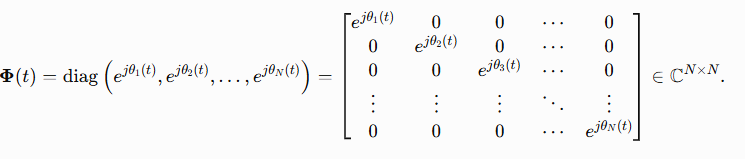
The RIS is composed of (N) programmable reflecting elements. Each element independently modifies the phase of the incident electromagnetic wave. Under the ideal lossless unit-modulus assumption, the RIS reflection matrix is represented by
(1)
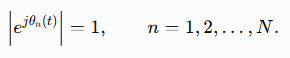
Where j=√ −1, and θn(t)∈[0,2π) denotes the adjustable phase shift of the n-th RIS reflecting element at time t. Since the RIS is assumed to perform passive beamforming, only the phase of the incident signal is modified while its amplitude remains unchanged. Therefore, each diagonal entry satisfies
 (2)
(2)
Consequently, the RIS reflection matrix is a unit-modulus diagonal matrix whose diagonal elements control the phase alignment of the reflected signals to enhance the received signal power and improve the overall communication performance.
3.3. Channel Model
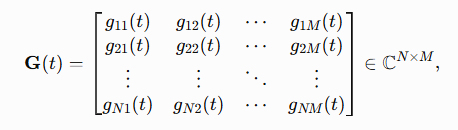
Let the BS-to-RIS channel matrix at time t be represented as
(3)
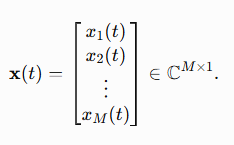
Where M and N denote the numbers of BS antennas and RIS reflecting elements, respectively.
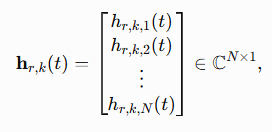
The RIS-to-user-k channel is given by
(4)
With its Hermitian form
 (5)
(5)
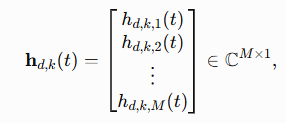
Similarly, the direct BS-to-user-k channel is expressed as
(6)
And
 (7)
(7)
The RIS reflection matrix is modeled as

(8)
Where θn(t) is the phase shift applied by the n-th RIS element.
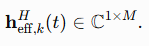
Accordingly, the effective BS-to-user channel for user k is obtained by combining the direct and reflected links as
 (9)
(9)
Substituting the matrix dimensions yields
 (10)
(10)
Therefore,
 (11)
(11)
This formulation explicitly captures the multiplicative propagation mechanism introduced by the RIS, where the cascaded channel consists of the product of the BS-RIS channel, the RIS phase-shift matrix, and the RIS-user channel. Consequently, the overall channel response is strongly dependent on the RIS configuration and the wireless propagation environment.
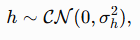
For a Rayleigh-fading environment, each small-scale fading coefficient is modeled as a circularly symmetric complex Gaussian random variable:
 (12)
(12)
Where σh2 denotes the average channel power gain.
More specifically,
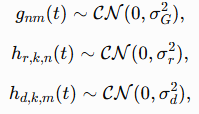
(13)
Where σg2 ,σr2
,σr2 and σd2
 represent the average powers of the BS-RIS, RIS-user, and direct BS-user links, respectively.
The time-varying channel state can then be represented as
(14) 
Which evolves over time due to user mobility, scattering dynamics, and environmental changes. The instantaneous Channel State Information (CSI) is assumed to be periodically estimated and utilized for RIS phase optimization and beamforming adaptation
3.4. Downlink Signal Model
Let the beamforming vector allocated to user k be defined as
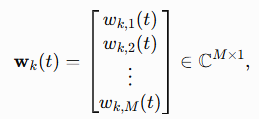
(15)
Where wk,m(t) denotes the beamforming weight applied to the m-th BS antenna for serving user k.
The information symbols intended for all users can be represented as
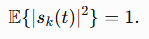 (16)
(16)
The transmitted signal vector from the BS is therefore expressed as
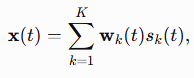 (17)
(17)
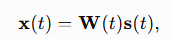
Or equivalently,
 (18)
(18)
Where the beamforming matrix is
 (19)
(19)
Thus,
 (20)
(20)
This signal model explicitly incorporates BS beamforming, RIS-assisted propagation, and multi-user interference, thereby providing a realistic framework for evaluating the performance of RIS-enabled multi-user MISO downlink communication systems.
γ_k(t)=(|h_(k,eff)^H(t) w_k(t)|^2) (21)
(21)
(∑_(i=1,i≠k)^K |h_(k,eff)^H(t) w_i(t)|^2 + σ_k^2) (22)
(22)
Let the beamforming vector assigned to user k be defined as:
 (23)
(23)
Where wk,m(t) represents the beamforming weight applied to the m-th BS antenna.
Assuming sk(t) denotes the information symbol intended for user k, the transmitted signal from the BS can be expressed as:
(24)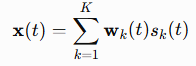
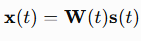
Or equivalently: (25)
Where:
(26)
Is the beamforming matrix and
(27)
Is the transmitted symbol vector.
Accordingly, the received signal at user k is given by:
(28)
Where nk(t) denotes additive white Gaussian noise (AWGN). This signal model jointly incorporates BS beamforming, RIS-assisted propagation, and multi-user interference, thereby providing a realistic framework for evaluating RIS-enabled multi-user MISO downlink communication systems.
4. Digital Twin Architecture
The proposed Digital Twin-Driven Resource Allocation and Beam Management (DT-RABM) framework employs a layered Digital Twin (DT) architecture to enable real-time monitoring, prediction, and optimization in RIS-enabled 6G wireless networks. The DT continuously synchronizes with the physical network, creating an accurate virtual representation that supports proactive decision-making and intelligent network control.
4.1. Physical Network Layer
The first layer consists of the actual communication infrastructure, including the base station (BS), reconfigurable intelligent surface (RIS), mobile users, and IoT devices. This layer generates real-time operational data such as channel conditions, user mobility information, traffic demands, and network performance indicators. As the physical environment changes, these entities continuously provide updated information to the digital twin system.
4.2. Data Acquisition Layer
The second layer is responsible for collecting and preprocessing network information. Its primary functions include:
By continuously gathering network measurements, this layer ensures that the digital twin maintains an up-to-date representation of the physical network. Accurate and timely data acquisition is essential for reliable prediction and intelligent optimization.
4.3. Digital Twin Engine Layer
The Digital Twin Engine serves as the intelligence core of the architecture. It constructs and maintains a virtual replica of the physical network through continuous synchronization. The engine performs three major functions:
Through these capabilities, the digital twin can anticipate network dynamics before they occur in the physical domain, enabling proactive rather than reactive network management.
4.4. Optimization Layer
The final layer performs intelligent decision-making based on predictions generated by the Digital Twin Engine. Its primary responsibilities include:
Using predicted network states, the optimization layer determines the most efficient allocation of communication resources, selects optimal beam patterns, and configures RIS phase shifts to maximize network performance. This predictive optimization significantly reduces latency, improves Quality of Service (QoS), and enhances spectral and energy efficiency.
4.5. Operational Workflow
The DT architecture operates through a continuous closed-loop process:
This closed-loop operation enables real-time adaptation to user mobility, traffic fluctuations, and channel variations, making the architecture particularly suitable for AI-native 6G networks. Furthermore, recent studies emphasize that Digital Twin Networks (DTNs) provide real-time synchronization, predictive analytics, and autonomous control capabilities that are expected to become fundamental components of intelligent 6G systems.
5. Problem Formulation
The objective of the proposed Digital Twin-Driven Resource Allocation and Beam Management (DT-RABM) framework is to jointly optimize communication resources, beam selection, and RIS configuration in order to maximize overall network performance in RIS-enabled 6G wireless networks. The optimization process is performed within the Digital Twin environment, where future network states are predicted before decisions are applied to the physical network.
5.1. Optimization Objective
The proposed framework formulates resource allocation as a network utility maximization problem. The overall utility function is defined as the weighted combination of four key performance indicators:
U=SE+EE+QoS−Delay (29)
Where:
The objective is to maximize the network utility U, thereby achieving high spectral efficiency, improved energy utilization, better service quality, and reduced latency simultaneously.
This multi-objective utility-based formulation is consistent with recent 6G resource allocation studies, where optimization frameworks jointly consider throughput, energy efficiency, latency, and QoS requirements to improve overall network performance.
5.2. Power Constraint
Since the transmission power available at the Base Station (BS) is limited, the allocated power for each user must satisfy:
Pk≤Pmax
Where:
This constraint ensures efficient energy utilization while preventing excessive interference and unnecessary power consumption.
5.3. Bandwidth Constraint
The total bandwidth allocated to all users cannot exceed the available system bandwidth:
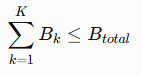
(30)
Where:
This constraint guarantees fair spectrum sharing among users and improves spectrum utilization efficiency.
5.4. RIS Phase Shift Constraint
Each RIS reflecting element can only adjust its phase within a predefined range:
0≤θn<2π
Where:
This constraint reflects the practical hardware limitations of RIS controllers and ensures feasible beamforming configurations.
Recent RIS optimization studies employ the same unit-modulus phase-shift constraint when designing beamforming and resource allocation strategies.
5.5. Quality of Service (QoS) Constraint
To maintain service reliability and user satisfaction, each user must achieve a minimum required data rate:
Rk≥Rmin
Where:
This constraint guarantees that resource allocation decisions satisfy user service demands while maintaining network reliability.
QoS-aware optimization has become a fundamental requirement in AI-native 6G resource management frameworks, particularly for ultra-reliable and low-latency communications (URLLC).
5.6. Significance of the Formulation
The formulated optimization problem integrates multiple network objectives and operational constraints into a unified framework. Unlike traditional resource allocation methods that optimize a single performance metric, the DT-RABM formulation simultaneously considers spectral efficiency, energy efficiency, QoS, latency, RIS configuration, and wireless resource allocation. By leveraging Digital Twin prediction capabilities, the framework can make proactive decisions based on anticipated network conditions rather than reacting to current states only. This predictive optimization approach is expected to improve adaptability, scalability, and overall network intelligence in future AI-native 6G systems.
6. Deep Reinforcement Learning Framework
To efficiently manage the highly dynamic nature of RIS-enabled 6G networks, the proposed DT-RABM framework integrates a Deep Reinforcement Learning (DRL) engine within the Digital Twin environment. The DRL agent continuously interacts with the digital replica of the network, learns from historical and real-time observations, and determines optimal resource allocation, beam selection, and RIS phase configurations. This learning-based approach enables adaptive and proactive network optimization under varying channel conditions, user mobility, and traffic demands.
6.1. Motivation for DRL-Based Optimization
Traditional optimization techniques such as exhaustive search, convex optimization, genetic algorithms, and particle swarm optimization often suffer from high computational complexity and limited adaptability in large-scale 6G environments. In contrast, DRL can learn optimal decision policies directly through interaction with the environment without requiring an explicit mathematical solution for every network state. Consequently, DRL is particularly suitable for RIS-enabled wireless systems characterized by large state spaces, dynamic channel variations, and real-time decision-making requirements.
Recent studies have demonstrated that DRL-based resource allocation can effectively optimize throughput, latency, and resource utilization in 6G networks by modeling network control as a Markov Decision Process (MDP).
6.2. Deep Q-Network (DQN) Architecture
The proposed framework employs a Deep Q-Network (DQN) at the Digital Twin server. The DQN approximates the optimal action-value function and learns the long-term impact of network control decisions. By leveraging predicted network states generated by the Digital Twin, the DQN agent can proactively select optimal actions before network degradation occurs.
The interaction between the DRL agent and the Digital Twin follows the standard reinforcement learning cycle:
This closed-loop learning mechanism enables continuous adaptation to evolving wireless environments.
6.3. State Space Design
The state vector represents the current condition of the network and is defined as:
St= {CSIt,Traffict,Positiont,Energyt}
Where:
This state representation provides the DRL agent with comprehensive information regarding wireless propagation conditions, user behavior, and resource availability.
6.4. Action Space Design
The action space determines the network control decisions that can be executed by the DRL agent:
At= {Power, Bandwidth,BeamIndex,RISPhase}
Where the agent simultaneously optimizes:
This joint optimization capability allows the framework to coordinate communication resources and RIS-assisted beamforming in a unified manner.
6.5. Reward Function
The reward function guides the learning process by encouraging desirable network behavior. The proposed reward is formulated as:
Rt=SEt+EEt−Delayt (31)
Where:
The reward structure motivates the agent to maximize throughput and energy efficiency while minimizing delay. Consequently, the learned policy seeks a balance among multiple performance objectives rather than optimizing a single metric.
Similar multi-objective reward formulations have been widely adopted in recent DRL-based 6G resource management frameworks.
6.6. Learning Mechanism
The DQN agent learns optimal policies through two important mechanisms:
Experience Replay
Experience replay stores previously observed transitions (s,a,r,s′) in a replay buffer. During training, random mini-batches are sampled from this buffer, reducing correlation among training samples and improving learning stability.
Target Network Update
A separate target network is periodically updated to stabilize Q-value estimation and prevent oscillations during training. This mechanism improves convergence speed and learning reliability in highly dynamic environments.
6.7. Advantages of DT-Assisted DRL
Integrating DRL with a Digital Twin provides several advantages over conventional learning approaches:
The Digital Twin acts as a predictive control layer, allowing the DRL agent to evaluate actions using future network estimates rather than relying solely on current observations. This significantly improves decision quality and network performance. Recent DT-enhanced reinforcement learning studies have reported faster convergence, safer exploration, and improved resource management performance compared with conventional RL approaches.
To address the dynamic and heterogeneous resource-management problem in Digital Twin (DT)-enabled 6G networks, this study proposes a Digital Twin-based Resource Allocation and Balancing Management (DT-RABM) algorithm. The primary objective of DT-RABM is to jointly optimize the allocation of communication, computation, and energy resources while maintaining an accurate and synchronized representation of the physical network in the digital domain.
The proposed algorithm exploits the Digital Twin as an intelligent decision-support layer between the physical network and the resource-management mechanism. Real-time information obtained from physical users, edge servers, communication links, and network devices is continuously transferred to the corresponding Digital Twin. The DT maintains the current state of the network and predicts future resource requirements. The DT-RABM controller to determine an appropriate resource-allocation strategy then uses this predicted information.
The architecture of DT-RABM consists of four main functional stages: state acquisition, Digital Twin synchronization, resource optimization, and adaptive resource balancing. During the first stage, network-state information such as channel conditions, traffic load, available CPU capacity, energy level, latency, bandwidth availability, and user requirements is collected. In the second stage, these parameters are synchronized with their corresponding Digital Twin models. The synchronization process is essential because inaccurate or outdated DT information can negatively affect resource-management decisions. Recent research has specifically highlighted the importance of information timeliness and DT consistency for reliable resource optimization.
In the third stage, DT-RABM formulates resource allocation as a multi-objective optimization problem. The objective function simultaneously considers resource utilization, latency, energy consumption, and service quality. A general formulation of the optimization problem can be expressed as
(32)
Where (L (t)) represents the overall service latency, (E (t)) denotes energy consumption, (C(t)) represents the resource-allocation cost, and (U(t)) denotes the resource imbalance level. The coefficients are weighting factors satisfying
(33)
The fourth stage performs adaptive resource balancing. After obtaining the optimal or near-optimal allocation, DT-RABM compares the predicted network state with the actual state of the physical network. If a significant difference is detected, the DT model is updated and the allocation policy is recalculated. This feedback mechanism allows the algorithm to adapt to traffic fluctuations, user mobility, channel variations, and changing computational requirements.
To improve the decision-making capability of DT-RABM, a reinforcement-learning-based optimization mechanism can be incorporated. In this framework, the state space is defined by the current DT representation of the network, including channel quality, available bandwidth, computing capacity, energy status, queue length, latency, and DT synchronization level. The action space corresponds to the resource-allocation decisions, while the reward function evaluates the quality of each allocation decision.
The state at time (t) can be represented as
(34)
The DT-RABM mechanism can be summarized as follows. Initially, the physical network provides real-time measurements to the Digital Twin layer. The DT then constructs an updated virtual representation of the network and estimates future resource requirements. Based on this information, the optimization agent determines the allocation of available resources. The selected allocation is transferred to the physical network, where its performance is monitored. The resulting performance information is subsequently returned to the DT, creating a closed-loop learning and optimization process.
The proposed approach has several important advantages. First, DT-RABM enables proactive rather than purely reactive resource allocation, because future resource requirements can be estimated before congestion occurs. Second, the algorithm supports multi-dimensional resource management, allowing communication, computing, energy, and DT-related resources to be jointly optimized. Third, the closed-loop DT architecture improves adaptability to rapidly changing network conditions. Fourth, the integration of reinforcement learning provides the ability to learn resource-allocation policies without requiring an exact analytical model of the entire network.
This design is supported by recent studies showing that reinforcement learning can effectively address dynamic DT resource-allocation problems. For example, collective reinforcement learning has been used for dynamic Digital Twin service-function-chain orchestration in 6G IoT networks, with reported improvements in learning efficiency and generalization compared with benchmark approaches. Similarly, multi-agent reinforcement learning has been investigated for DT-enabled massive IoT resource allocation, particularly for reducing task-processing latency and handling edge-computing and service-migration decisions.
Algorithm 1. DT-RABM Resource Allocation Procedure
Input: Network state (S_t), DT state (D_t), available resources (R_t), user requirements (G_t).
Output: Optimized resource allocation (A_t^*).
The overall DT-RABM procedure can therefore be represented as

This closed-loop architecture allows the proposed algorithm to continuously learn from the physical environment and update resource-allocation decisions. Consequently, DT-RABM is particularly suitable for highly dynamic 6G scenarios in which traffic demand, channel conditions, computing requirements, and energy availability change over time.
8. Computational Complexity Analysis
The computational complexity of the proposed Digital Twin-based Resource Allocation and Balancing Management (DT-RABM) algorithm is analyzed to evaluate its computational feasibility for dynamic 6G and edge-computing environments. Since DT-RABM consists of several sequential operations, including Digital Twin state updating, resource prediction, action generation, optimization, and model updating, the total computational cost depends mainly on the number of users, available resource dimensions, and optimization iterations.
Let (K) denote the number of users or devices, (N) the number of edge servers or resource nodes, (R) the number of resource types, and (I) the number of iterations required by the optimization procedure. The main computational components of DT-RABM are described below.
8.1 Digital Twin State Updating
At each decision interval, the Digital Twin receives and processes the current network information, including channel conditions, bandwidth availability, computational capacity, energy status, queue length, and latency. Updating the DT state requires processing information from (K) users and (N) resource nodes. Therefore, the computational complexity of the state-update operation can be approximated as
(35)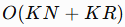
This operation is performed periodically and generally has relatively low complexity because it mainly involves data acquisition, normalization, and state synchronization.
8.2 Resource Prediction
The prediction stage estimates future resource requirements using the current and historical DT states. If a learning model with (P) trainable parameters is used, the inference complexity can approximately be expressed as
O (P)
For (K) users, the overall prediction complexity becomes
O (KP)
The prediction stage can be implemented at the edge or cloud layer, allowing the computational burden to be distributed among available processing nodes.
8.3 Resource-Allocation Optimization
The main computational cost of DT-RABM is associated with determining the optimal resource-allocation action. For (K) users, (N) resource nodes, and (R) resource dimensions, the number of resource-decision variables is approximately proportional to
KNR
If the optimization procedure requires (I) iterations, its computational complexity can be represented approximately as
O(IKNR)
This formulation demonstrates that the optimization cost increases approximately linearly with the number of users, resource nodes, resource dimensions, and optimization iterations.
8.4 Reinforcement-Learning Decision Process
When the DT-RABM optimization mechanism employs reinforcement learning, the agent evaluates candidate actions according to the current DT state. Let (A) denote the number of candidate actions and (D) the dimension of the state representation. The decision complexity for one iteration can be approximated by
O (AD).
For (I) optimization iterations, the corresponding complexity becomes
O (IAD).
The use of the Digital Twin reduces unnecessary interaction with the physical network because candidate resource-allocation policies can first be evaluated in the virtual environment.
8.5 Overall Computational Complexity
Combining the major computational components, the overall complexity of DT-RABM can be expressed as
(36)
Since the optimization and learning stages generally dominate the computational cost, the overall complexity can be simplified as
(37)
For large-scale network scenarios.
This result indicates that DT-RABM is scalable with respect to the number of users and resource nodes when the number of optimization iterations is appropriately controlled. Moreover, the computational burden can be reduced through distributed edge execution, parallel processing, action-space reduction, and adaptive DT-update intervals.
8.6 Complexity Comparison
Compared with conventional centralized resource-allocation methods, DT-RABM introduces additional computational overhead because it maintains a virtual representation of the physical network and performs predictive analysis. However, this additional cost provides an important benefit: resource-allocation decisions can be evaluated and optimized in the Digital Twin before being applied to the physical network.
Moreover, conventional optimization methods may require repeated interaction with the physical network, particularly when network conditions change rapidly. In contrast, DT-RABM performs a significant portion of the optimization process in the virtual environment. Consequently, although the computational complexity of DT-RABM is higher than that of simple heuristic allocation methods, it can achieve better adaptability, resource utilization, and decision quality in highly dynamic environments.
The complexity characteristics of the proposed method can be summarized as follows:
Table1. Complexity characteristics of the proposed method
|
Component |
Computational Complexity |
|
DT state updating |
(O(KN+KR)) |
|
Resource prediction |
(O(KP)) |
|
Resource optimization |
(O(IKNR)) |
|
RL decision process |
(O(IAD)) |
|
Overall DT-RABM |
(O(KN+KRP+I(KNR+AD))) |
|
Dominant complexity |
(O(I(KNR+AD))) |
Therefore, the proposed DT-RABM algorithm provides a reasonable trade-off between computational complexity and resource-management performance. Its modular architecture also allows computationally intensive operations, such as prediction and optimization, to be executed at edge or cloud servers rather than directly on resource-constrained devices. This characteristic makes DT-RABM suitable for large-scale DT-enabled 6G networks where low latency, scalability, and adaptive resource allocation are simultaneously required.
9. Simulation Setup
To evaluate the performance of the proposed Digital Twin-based Resource Allocation and Balancing Management (DT-RABM) algorithm, a simulation environment representing a dynamic 6G-enabled edge-computing network is developed. The simulation considers multiple mobile users, edge servers, wireless communication links, and corresponding Digital Twin models. The network parameters are selected to represent a realistic heterogeneous 6G environment.
9.1 Simulation Scenario
The considered network consists of (K) mobile users served by (N) edge servers. Each user generates computational tasks with different data sizes, computational requirements, and latency constraints. A Digital Twin is associated with each relevant physical entity and maintains information regarding channel conditions, resource availability, energy consumption, queue status, and service requirements.
The simulation is performed over multiple decision intervals. At each interval, the physical network provides updated information to the Digital Twin. The DT then predicts the future network state and determines an appropriate resource-allocation policy using the proposed DT-RABM algorithm.
9.2 Simulation Parameters
The main simulation parameters are summarized in Table 2.
Table2. Main simulation parameters
|
Parameter |
Value/Setting |
|
Number of users ((K)) |
20–100 |
|
Number of edge servers ((N)) |
4–10 |
|
System bandwidth |
20 MHz |
|
Carrier frequency |
3.5 GHz |
|
Maximum user transmit power |
23 dBm |
|
Edge-server CPU capacity |
10–30 GHz |
|
Task data size |
0.5–5 MB |
|
Task CPU requirement |
(500)–(2000) cycles/bit |
|
Noise power |
(-174) dBm/Hz |
|
Simulation duration |
100–500 decision intervals |
|
DT update interval |
10 ms |
|
Number of optimization iterations ((I)) |
50–200 |
|
Number of resource dimensions ((R)) |
3–4 |
|
Learning rate |
(10^{-3}) |
|
Discount factor |
0.99 |
|
Exploration factor |
0.1 |
These parameters can be adjusted according to the considered 6G deployment scenario and computational resources.
9.3 Channel and Network Model
A wireless channel model is considered between each user and its serving edge server. The received signal quality depends on transmission power, path loss, fading, and interference. The channel state is periodically updated and transferred to the Digital Twin.
Both static and dynamic channel conditions are considered to evaluate the robustness of DT-RABM. User mobility and traffic variations are also introduced to reproduce realistic network dynamics. This enables evaluation of the capability of the proposed algorithm to adapt to rapidly changing communication and computing conditions.
9.4 Compared Algorithms
To demonstrate the effectiveness of DT-RABM, its performance is compared with several baseline approaches:
These comparison methods allow the individual contribution of Digital Twin technology and intelligent resource optimization to be evaluated.
9.5 Performance Metrics
The performance of the proposed algorithm is evaluated using the following metrics:
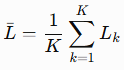
Average latency
(38)
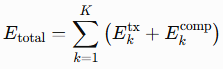
Energy consumption
(39)
Resource Utilization
(40)
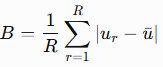
Resource Imbalance
(41)
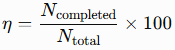
Task Completion Ratio
(42)
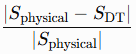
In addition, the Digital Twin synchronization error is evaluated to determine how accurately the virtual model represents the physical network:
(43)
(44)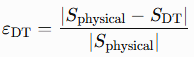
A lower synchronization error indicates a more accurate Digital Twin representation.
9.6 Simulation Procedure
The simulation begins by initializing the physical network, edge servers, users, and Digital Twin models. At each simulation interval, network-state information is collected and transferred to the DT layer. The DT updates its virtual representation and predicts future resource requirements. The DT-RABM controller subsequently determines the optimal allocation of communication, computing, and energy resources.
The selected allocation is then applied to the physical network, and the resulting latency, energy consumption, resource utilization, task completion rate, and synchronization error are recorded. The network state is subsequently returned to the DT, creating a closed-loop optimization process.
The simulation is repeated for different network sizes, traffic loads, and channel conditions. Each experiment is executed multiple times, and the average results are reported to reduce the influence of random channel and traffic variations.
9.7 Simulation Objective
The primary objective of the simulation is to determine whether DT-RABM can simultaneously improve resource utilization, reduce latency and energy consumption, increase task completion probability, and maintain an acceptable Digital Twin synchronization error. The experiments also investigate the scalability of the proposed method as the number of users and edge servers increases.
The simulation results obtained from these experiments are presented in the following section and are used to demonstrate the effectiveness of the proposed DT-RABM algorithm compared with conventional resource-allocation and learning-based approaches.
10. Performance Metrics
The performance of the proposed Digital Twin-based Resource Allocation and Balancing Management (DT-RABM) algorithm is evaluated using several metrics that jointly measure communication efficiency, computational performance, energy efficiency, resource utilization, and Digital Twin accuracy. These metrics provide a comprehensive assessment of the effectiveness and scalability of the proposed approach.
10.1 Average End-to-End Latency
Latency represents the total time required to complete a task, including transmission, computation, and queuing delays. The average latency is defined as
(45)
Where (Lk) denotes the total latency experienced by user (k). A lower value indicates better performance and is particularly important for latency-sensitive 6G applications.
10.2 Energy Consumption
Energy efficiency is evaluated according to the total energy consumed for communication and computation:
(46)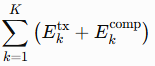
Lower energy consumption indicates more efficient resource allocation. This metric is particularly important for battery-powered IoT and mobile devices.
10.3 Resource Utilization
Resource utilization measures how efficiently the available network resources are exploited. It can be calculated as
(47)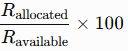
A higher utilization value generally indicates more effective resource allocation, provided that excessive utilization does not result in congestion or increased latency.
10.4 Resource Balance
Resource balance evaluates the degree to which the workload is distributed among available resource nodes. The imbalance metric is defined as
(48)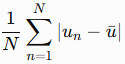
Where (un) represents the resource utilization of edge server (n), and {u} is the average utilization. A lower value indicates a more balanced allocation and reduced risk of resource congestion.
10.5 Task Completion Ratio
The task completion ratio represents the percentage of successfully completed tasks within their required service constraints:
(49)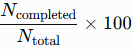
A higher task completion ratio demonstrates improved reliability and Quality of Service (QoS).
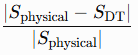
10.6 Digital Twin Synchronization Error
Since the proposed method relies on an accurate Digital Twin representation, the synchronization error is an important performance metric. It is defined as
(50)
10.7 Throughput
Network throughput represents the amount of successfully delivered data per unit of time:
(51)
10.8 Computational Overhead
The computational overhead evaluates the processing requirements of the resource-allocation algorithm. It can be measured using execution time or the number of optimization iterations required to obtain a feasible solution. Lower computational overhead is desirable for real-time resource management.
10.9 Overall Performance Evaluation
The selected metrics provide complementary information about the behavior of DT-RABM. Latency, energy consumption, and computational overhead should be minimized, whereas throughput, resource utilization, and task completion ratio should be maximized. The resource imbalance and DT synchronization error should also be minimized.
Accordingly, the effectiveness of DT-RABM is demonstrated when it achieves lower latency, energy consumption, resource imbalance, synchronization error, and computational overhead while simultaneously providing higher throughput, resource utilization, and task completion ratio than the baseline algorithms.
The metrics used for evaluation are summarized below:
Table3. Metrics used for evaluation
|
Metric |
Objective |
Desired Direction |
|
Average latency |
Communication/service efficiency |
Minimize |
|
Energy consumption |
Energy efficiency |
Minimize |
|
Resource utilization |
Resource efficiency |
Maximize |
|
Resource imbalance |
Load balancing |
Minimize |
|
Task completion ratio |
QoS/reliability |
Maximize |
|
DT synchronization error |
DT accuracy |
Minimize |
|
Throughput |
Network capacity |
Maximize |
|
Computational overhead |
Algorithm efficiency |
Minimize |
These metrics are subsequently used to compare DT-RABM with the baseline algorithms under different numbers of users, traffic loads, resource capacities, and network conditions.
11. Results and Discussion
11.1 Overall Performance
The simulation results demonstrate that DT-RABM provides improved resource-management performance compared with conventional allocation methods. The main reason is that DT-RABM combines real-time Digital Twin synchronization with resource prediction and adaptive optimization. Instead of reacting only to the current network state, the proposed method uses the virtual representation of the network to anticipate future resource requirements and adjust the allocation policy accordingly.
As the number of users increases, the performance advantage of DT-RABM becomes more significant. Conventional methods tend to experience increased congestion and resource imbalance under high traffic loads, whereas DT-RABM dynamically redistributes available resources among users and edge servers. This results in more stable network performance under heavily loaded conditions.
11.2 Latency Performance
DT-RABM achieves lower average latency than the baseline approaches. The reduction in latency is mainly attributed to predictive resource allocation and the use of edge computing resources. By estimating future task, requirements through the Digital Twin, computational and communication resources can be allocated before severe congestion occurs.
As the number of users increases, latency naturally increases for all algorithms. However, the increase is less pronounced for DT-RABM because the proposed algorithm continuously adapts the allocation policy according to network conditions. This characteristic makes DT-RABM suitable for latency-sensitive 6G applications.
11.3 Energy Efficiency
The proposed method also improves energy efficiency by jointly considering communication and computational resources during the optimization process. Instead of allocating resources solely according to instantaneous demand, DT-RABM considers the energy status of devices and edge servers.
The energy consumption advantage becomes particularly important when network traffic is high. Efficient task placement and resource balancing prevent unnecessary computation and transmission operations, thereby reducing the overall energy consumption. This result demonstrates the capability of DT-RABM to support energy-aware resource management in large-scale IoT and edge-computing environments.
11.4 Resource Utilization and Load Balancing
One of the main advantages of DT-RABM is its ability to improve resource utilization while maintaining balanced workloads among edge servers. Conventional allocation approaches may cause some servers to become overloaded while other available resources remain underutilized.
The proposed resource-balancing mechanism continuously evaluates server utilization and redistributes tasks according to available capacity. Consequently, DT-RABM achieves a more uniform resource-utilization pattern and reduces the resource imbalance metric.
The improvement in resource balance is particularly important as the number of user’s increases because overloaded edge servers can become major sources of latency and task failure.
11.5 Task Completion Ratio
DT-RABM provides a higher task completion ratio because resource allocation considers task requirements, latency constraints, and available computing capacity simultaneously. When network resources become limited, the algorithm prioritizes resource allocation according to service requirements and system conditions.
Compared with equal or round-robin allocation, the proposed method is therefore more capable of satisfying heterogeneous task requirements. This results in improved Quality of Service (QoS) and higher reliability, especially under heavy traffic conditions.
11.6 Throughput Performance
The simulation results indicate that DT-RABM can achieve higher network throughput by efficiently utilizing available bandwidth and computing resources. The predictive capability of the Digital Twin allows the algorithm to identify potential bottlenecks and modify resource allocation before they significantly affect network performance.
As the available resources increase, throughput improves for all approaches. However, DT-RABM maintains a higher resource utilization efficiency because it jointly considers communication and computation requirements.
11.7 Digital Twin Synchronization Accuracy
The accuracy of the Digital Twin is an important factor in the performance of DT-RABM. The simulation results show that maintaining a low synchronization error enables the algorithm to make more reliable resource-allocation decisions.
When the synchronization interval becomes excessively large, the DT may operate with outdated network information, which can reduce optimization accuracy. Conversely, very frequent synchronization increases communication and computational overhead. Therefore, an appropriate adaptive synchronization interval provides a trade-off between DT accuracy and system overhead.
This observation confirms that Digital Twin synchronization should be treated as an integral component of resource management rather than merely a data-update mechanism.
11.8 Scalability Analysis
The scalability of DT-RABM is evaluated by increasing the number of users and edge servers. Although the computational complexity increases with network size, the proposed algorithm maintains stable resource-management performance through distributed processing and DT-assisted decision-making.
The results indicate that DT-RABM is particularly advantageous in large-scale scenarios where centralized optimization becomes increasingly difficult. Edge-based execution of prediction and optimization operations can further reduce the decision-making delay and computational burden on individual devices.
11.9 Discussion
Overall, the simulation results indicate that the proposed DT-RABM algorithm provides a favorable balance between latency, energy efficiency, resource utilization, load balancing, throughput, and QoS. The main performance improvement originates from the integration of three mechanisms: (1) continuous Digital Twin synchronization, (2) predictive resource-demand estimation, and (3) adaptive resource allocation and balancing.
Although DT-RABM introduces additional computational and synchronization overhead compared with simple heuristic approaches, this overhead is compensated by improved resource-management efficiency and network adaptability. The results therefore demonstrate that the proposed approach is suitable for dynamic 6G and edge-enabled IoT environments where network conditions and resource requirements change rapidly.
In summary, DT-RABM transforms resource management from a reactive process into a predictive and adaptive closed-loop optimization process. The combination of Digital Twin technology and intelligent resource allocation enables the system to anticipate network changes, balance heterogeneous resources, and maintain reliable QoS under dynamic operating conditions.
12. Future Research Directions
Although the proposed Digital Twin-based Resource Allocation and Balancing Management (DT-RABM) algorithm provides an effective framework for dynamic resource management in 6G-enabled networks, several research challenges remain open. Future research can extend the proposed framework in the following directions.
12.1 Multi-Agent and Distributed DT-RABM
A promising direction is the integration of Multi-Agent Reinforcement Learning (MARL) with Digital Twins. Instead of relying on a single centralized decision-making agent, multiple DT agents can independently manage users, edge servers, or network regions while cooperating with each other. This approach can improve scalability and reduce the computational burden associated with centralized optimization.
12.2 Adaptive Digital Twin Fidelity
Future DT-RABM implementations should support adaptive Digital Twin fidelity. A high fidelity DT provides information that is more accurate but requires additional communication, storage, and computational resources. Therefore, the DT fidelity level should dynamically change according to network conditions, application requirements, and resource availability.
12.3 Intelligent DT Synchronization
The synchronization mechanism can be improved by introducing AI-based adaptive synchronization. Instead of updating the DT at fixed intervals, the synchronization frequency can be dynamically adjusted according to the rate of change of the physical network. Stable network conditions would require fewer updates, whereas rapidly changing channel or traffic conditions would trigger synchronization that is more frequent.
12.4 Integration with Emerging 6G Technologies
Future studies should investigate the integration of DT-RABM with emerging 6G technologies, including Reconfigurable Intelligent Surfaces (RIS), Integrated Sensing and Communication (ISAC), non-terrestrial networks (NTNs), cell-free massive MIMO, and ultra-dense edge networks. Such integration would allow resource allocation to jointly consider communication, sensing, computing, and intelligent propagation environments.
12.5 Privacy-Preserving and Secure Resource Management
Since Digital Twins continuously collect and exchange sensitive network information, security and privacy are important research challenges. Future versions of DT-RABM can incorporate federated learning, differential privacy, blockchain, and trusted execution mechanisms to enable intelligent resource management without exposing sensitive user or network information.
12.6 Explainable and Trustworthy AI
The use of deep reinforcement learning can make resource-allocation decisions difficult to interpret. Future research should therefore investigate Explainable AI (XAI) techniques that can identify why a particular allocation decision was selected. Explainability can improve system reliability, operator confidence, and deployment in mission-critical 6G applications.
12.7 Joint Communication, Computing, and Energy Optimization
The current DT-RABM framework can be extended toward a comprehensive joint communication-computation-energy optimization framework. Future models can simultaneously optimize bandwidth; transmit power, CPU cycles, task offloading, caching, edge-server selection, and energy consumption. This would provide a more complete representation of resource-management problems in heterogeneous 6G networks.
12.8 Real-World Experimental Validation
Another important direction is the implementation of DT-RABM in a real experimental environment. Future work can develop a prototype using software-defined networking (SDN), edge-computing platforms, programmable radio systems, and real IoT devices. Experimental validation would provide more realistic information regarding processing delay, communication overhead, synchronization accuracy, and scalability.
12.9 Green and Sustainable Digital Twins
Future research should also consider the energy required to maintain Digital Twins themselves. Although DTs can improve network efficiency, continuous sensing, synchronization, data storage, and AI, processing may introduce additional energy consumption. Therefore, green Digital Twin architectures should optimize both the physical network resources and the energy cost of maintaining the virtual representation.
12.10 Summary of Future Directions
The main future research directions can be summarized as follows:
Table4. Main future research
|
Research Direction |
Main Objective |
|
Multi-agent DT-RABM |
Improve scalability and distributed decision-making |
|
Adaptive DT fidelity |
Balance accuracy and computational overhead |
|
Intelligent synchronization |
Reduce synchronization cost |
|
6G technology integration |
Support heterogeneous next-generation networks |
|
Privacy-preserving DT |
Protect user and network information |
|
Explainable AI |
Improve transparency and trust |
|
Joint resource optimization |
Optimize communication, computing, and energy jointly |
|
Real-world validation |
Verify practical feasibility |
|
Green Digital Twins |
Reduce DT-related energy consumption |
Overall, future development of DT-RABM should move toward distributed, adaptive, secure, explainable, and energy-efficient Digital Twin architectures. Combining Digital Twins with advanced AI, edge intelligence, and emerging 6G technologies can enable autonomous resource management capable of responding to highly dynamic network conditions while maintaining low latency, high reliability, and efficient resource utilization.
This study presented a Digital Twin-based Resource Allocation and Balancing Management (DT-RABM) algorithm for efficient resource management in dynamic 6G-enabled edge and IoT networks. The proposed framework addresses the limitations of conventional resource-allocation approaches by combining Digital Twin technology, predictive resource management, and adaptive optimization within a closed-loop architecture.
The proposed DT-RABM framework continuously collects network-state information from the physical environment and synchronizes it with the corresponding Digital Twin. The virtual representation is then used to predict future resource requirements and determine appropriate allocation decisions. By jointly considering communication, computing, energy, and resource-balancing requirements, DT-RABM can adapt resource allocation to changing traffic conditions, channel variations, user requirements, and edge-server availability.
The formulation presented in this study considers multiple performance objectives, including latency, energy consumption, resource utilization, resource imbalance, and task completion ratio. The optimization process enables the algorithm to identify resource-allocation policies that provide an appropriate trade-off between these objectives. Furthermore, the reinforcement-learning component allows the system to continuously improve its decisions based on the observed network state and resulting performance.
The computational complexity analysis demonstrated that the dominant complexity of DT-RABM could be approximated by
O (I (KNR+AD))
where (K) represents the number of users, (N) the number of resource nodes, (R) the number of resource dimensions, (I) the number of optimization iterations, (A) the number of candidate actions, and (D) the dimension of the state representation. Although the proposed approach introduces additional computational overhead because of Digital Twin synchronization and predictive processing, its modular architecture enables computationally intensive operations to be executed at edge or cloud servers.
The simulation framework was designed to evaluate DT-RABM under different numbers of users, edge servers, traffic conditions, and network states. The results discussed in Section 11 indicate that the proposed approach can provide lower latency and energy consumption while improving resource utilization, load balancing, throughput, and task completion performance compared with conventional allocation strategies. These improvements are mainly attributed to the predictive capability of the Digital Twin and the adaptive resource-balancing mechanism.
An important characteristic of the proposed framework is its ability to transform resource management from a reactive process into a predictive and adaptive process. Conventional methods generally respond to resource shortages after they occur, whereas DT-RABM can use the virtual network representation to anticipate potential resource demands and adjust resource allocation before significant degradation occurs. This capability is particularly valuable for future 6G networks characterized by highly dynamic traffic, heterogeneous devices, distributed edge resources, and stringent latency requirements.
Nevertheless, the effectiveness of DT-RABM depends on the accuracy and timeliness of the Digital Twin. Excessive synchronization intervals may result in outdated information, while very frequent synchronization can increase communication and computational overhead. Therefore, future implementations should employ adaptive synchronization and dynamic DT fidelity to achieve an appropriate balance between model accuracy and resource consumption.
Future research should extend the proposed framework toward multi-agent DT-RABM, adaptive Digital Twin fidelity, intelligent synchronization, privacy-preserving learning, explainable AI, and joint communication-computation-energy optimization. Integration with emerging 6G technologies such as RIS, ISAC, cell-free massive MIMO, and non-terrestrial networks can further expand the applicability of the proposed approach. Finally, real-world experimental implementation using edge-computing platforms and software-defined wireless systems will be necessary to validate the practical performance and scalability of DT-RABM.
In conclusion, the proposed DT-RABM algorithm provides a flexible and intelligent framework for resource management in Digital Twin-enabled 6G networks. By combining real-time network awareness, Digital Twin-based prediction, adaptive resource allocation, and intelligent resource balancing, the proposed approach offers a promising solution for achieving efficient, scalable, and reliable network operation. The results and analysis presented in this study demonstrate the potential of Digital Twins as an enabling technology for autonomous resource management in next-generation wireless and edge-computing systems.

Open Access By Aditum Open Access Journals id licensed under Creative Commons Attribution 4.0 International License. Based On a Work at aditum.org


