
International Journal of Artificial Intelligence in Medicine and Healthcare
OPEN ACCESS | Volume 1 - Issue 1 - 2026
ISSN No: - | Journal DOI: 10.61148/IJAIMH


Mohammad Taleghani1*, Fatemeh Bozorgi Gerdvisheh2
1Department of Industrial Management, Ra.C., Islamic Azad University (IAU), Rasht.
2Department of Business Management, ShQ.C., Islamic Azad University, Shahr-e Qods.
*Corresponding author: Mohammad Taleghani, Department of Industrial Management, Ra.C., Islamic Azad University (IAU), Rasht.
Received: September 01, 2026 | Accepted: September 09, 2026 | Published: September 18, 2026
Citation: Taleghani M, Fatemeh B Gerdvisheh., (2026) “Prioritizing Key Success Factors for Adaptive Reuse of Historic Hotels with an Approach Integrating Sustainable Tourism Development and Urban Branding” International Journal of Artificial Intelligence in Medicine and Healthcare, 1(1); DOI: 10.61148/IJAIMH/005.
Copyright: ©2026. Mohammad Taleghani. This is an open access article distributed under the Creative Commons Attribution License, which permits unrestricted use, distribution, and reproduction in any medium, provided the original work is properly cited.
The Hotel Iran in Rasht is a valuable building from the first Pahlavi period, notable for its neoclassical and Art Deco architectural features. Situated in Shahrdari Square, it has remained unused for years despite its historical importance and excellent central location. Given Rasht’s designation as a UNESCO Creative City of Gastronomy, reviving this building could help reinforce urban identity, support sustainable tourism, and contribute to the regeneration of the surrounding historic area.
This study employs a descriptive-analytical approach and a mixed qualitative-quantitative methodology to identify and prioritize the key factors affecting the hotel’s adaptive reuse. Based on a review of the literature and analysis of similar cases, five main criteria were identified—heritage authenticity and continuity, functional and economic revitalization, urban branding and tourist experience, climatic and environmental sustainability, and integration with the urban and social context—along with 29 sub-criteria. In the quantitative phase, the Fuzzy BWM method is used to determine the weights of these criteria according to expert judgments.
The proposed framework recommends transforming the building into a heritage boutique hotel with a multi-layered revenue model, ensuring a balanced approach between historical conservation, economic viability, climate adaptability, and social interaction.
1. Introduction
In contemporary literature, tourism is no longer viewed merely as the movement of people for leisure or sightseeing. Instead, it is increasingly understood as a multidimensional phenomenon closely linked to cultural consumption, experiential value, the economy of place, and the reconstruction of urban identity (UN Statistics Division & UNWTO, 2010; Sutriadi & Van Zyl, 2016). Within this broader context, heritage tourism has emerged as one of the fastest-growing segments, as historic buildings and spaces are no longer seen solely as carriers of architectural and cultural value, but also as potential economic drivers, identity symbols, and tools for place branding (Ashworth, 2012; Chhabra, 2015). Consequently, heritage hotels are no longer regarded as simple accommodation facilities; they are now recognized as cultural-economic products that integrate history, architecture, experience, and urban narrative within a single structure (Amir et al., 2017).
However, the adaptive reuse of heritage hotels is not a straightforward or purely physical process. It requires a delicate balance among three fundamental components: the preservation of historical authenticity, economic viability, and physical-environmental sustainability (Yung & Chan, 2012). Pursuing heritage conservation without economic logic risks functional failure and operational stagnation, while advancing tourism development without sensitivity to cultural authenticity can lead to the erosion of identity and the commodification of heritage (Li, 2003; Wight, 1994; Waitt, 2000). Therefore, the core challenge in heritage building revitalization is not choosing between conservation and utilization, but rather designing a model that integrates both within a balanced decision-making framework.
This challenge becomes even more critical in today’s competitive historic cities. As cities increasingly function as “products” in the global economy, urban branding has become a strategic tool for shaping identity, enhancing recognizability, and attracting tourists and investment (Lucarelli & Berg, 2011; Zhang & Zhao, 2009). In this framework, cultural heritage is no longer viewed merely as a legacy of the past, but as a resource for generating future value—one that can strengthen a city’s image, increase tourist retention, and enhance place experience. The Council of Europe has also emphasized the adaptive reuse of protected properties in response to contemporary economic, social, and cultural needs (Council of Europe, 1985, 2005).
In Iran, although many heritage buildings have received attention in recent decades, most existing studies on restoration and revitalization have focused primarily on historical description, physical analysis, or technical conservation aspects, rather than on multi-criteria decision-making frameworks. While such studies are essential for understanding the building, they fall short of addressing the strategic questions of adaptive reuse—particularly when the building must function as an independent economic-heritage unit while responding to tourism market demands, urban identity, climatic sustainability, and stakeholder interests. As a result, a major gap in the literature is the lack of systematic, quantitative frameworks for prioritizing adaptive reuse criteria at the project level.
The Hotel Iran in Rasht represents a prominent example of this issue. Located on the northern side of Shahrdari Square, the building is one of the most significant examples of early Pahlavi architecture in Gilan. It embodies Iran’s architectural transition from tradition to modernity, combining neoclassical and Art Deco elements with climate-responsive design. Its symmetrical urban façade, vertical emphasis, cement-based ornamentation, wide verandas, and openings designed for cross-ventilation make it a structure of notable architectural, historical, and functional value. Furthermore, its prominent position within the Shahrdari Square complex integrates it into the city’s “urban wall” and contributes to the vitality of Rasht’s historic center.
Despite these potentials, the Iran Hotel has not yet been systematically examined as a strategic adaptive reuse project in relation to sustainable tourism and urban branding policies. Given Rasht’s status as a UNESCO Creative City of Gastronomy, the hotel has the potential to become a focal point linking architectural heritage, culinary culture, accommodation experience, and the city’s mental image. In other words, it can evolve from a “hotel-building” into a “hotel-destination,” provided that its revitalization strategy is based on multi-criteria analysis rather than solely on conservation considerations.
Comparative studies of successful cases—both domestic (e.g., Abbasi Hotel in Isfahan and historic houses in Kashan) and international (e.g., Pera Palace in Istanbul and Delano in Miami)—demonstrate that successful heritage hotel revitalization occurs when three dimensions are addressed simultaneously: preservation of physical authenticity, functional regeneration, and strengthening the building’s role in urban branding (Zavadskas et al., 2016).
Moreover, sustainability strategies for the Iran Hotel must be redefined according to Rasht’s specific climatic conditions. Unlike many prevailing sustainable architecture models in Iran, which are based on hot-arid climates, this project is situated in the humid temperate Hyrcanian climate. Therefore, the main challenges are not only temperature control but also moisture management, material degradation prevention, enhancement of natural ventilation, and improvement of climate resilience. In this context, indigenous strategies such as wide verandas, shading, cross-ventilation, and breathable materials can form the basis of a sustainable revitalization approach.
Despite the historical, architectural, and urban significance of the Iran Hotel, no systematic framework has yet been developed to prioritize its adaptive reuse criteria using a multi-criteria approach. Most previous studies have remained descriptive or physical in nature and have not addressed the hotel as an independent economic-heritage entity or as a strategic element in Rasht’s urban branding. Accordingly, the present study aims to identify and prioritize the key factors influencing the hotel’s revitalization across the dimensions of physical authenticity, functional regeneration, urban branding, and climatic sustainability using the Fuzzy BWM method, in order to propose a decision-support model for its sustainable and strategic adaptive reuse.
2. Literature Review
In recent decades, the revitalization of historic buildings has evolved from a purely conservation-oriented approach into an interdisciplinary strategy at the intersection of heritage preservation, sustainable tourism, urban regeneration, and place branding. Within this framework, historic buildings are no longer viewed merely as remnants of the past, but as strategic assets capable of generating economic value, strengthening urban identity, and enhancing destination experience (Ashworth, 2012; Chhabra, 2015). This paradigm shift holds particular significance for heritage hotels, as these buildings can simultaneously embody historical and architectural value while actively contributing to the tourism economy through functions such as accommodation, restaurants, galleries, or cultural venues.
2.1. Adaptive Reuse and Heritage Revitalization
The literature on adaptive reuse indicates that the success of heritage revitalization projects depends on achieving a balance between preserving the building’s authenticity and responding to contemporary needs. Bullen (2011) and Love and Bullen (2011), in a foundational study, present adaptive reuse not only as a conservation strategy for historic buildings but also as a tool for urban regeneration and sustainable development. They argue that this approach can support sustainable development by reducing the need for new construction, conserving resources, preserving local identity, and attracting investment. Similarly, Yung and Chan (2012) emphasize that successful heritage revitalization can only be achieved when multiple criteria—such as cultural value, economic feasibility, legal requirements, functional compatibility, and social acceptance—are addressed simultaneously.
More recent studies have also highlighted the connection between adaptive reuse and sustainable tourism. Yuliani et al. (2024) demonstrate that the green retrofitting and revitalization of heritage buildings can reduce environmental impacts and support sustainable tourism management. Additionally, the SOAR analysis (2023) on converting urban buildings into tourism accommodations shows that the success of such projects relies on the simultaneous recognition of heritage strengths, market opportunities, managerial capabilities, and physical-functional constraints. This body of literature is directly relevant to the Iran Hotel in Rasht, as its revitalization involves not only the restoration of a historic building but also the redefinition of an urban asset in relation to the tourism economy, city branding, and the climatic conditions of Gilan.
2.2. Heritage, Tourist Experience, and Destination Economy
Heritage tourism is widely recognized in contemporary literature as one of the most significant forms of cultural tourism. Ashworth (2012) argues that heritage gains meaning in tourism when it transforms from a purely historical object or place into a consumable and narratable experience. From this perspective, heritage hotels possess a dual advantage: they serve not only as destinations for visitation but also offer tourists the experience of staying within history itself. Chhabra (2015) further emphasizes that when heritage assets enter the tourism cycle, they can become strategic products that bundle historical identity, architecture, and destination marketing into a single offering.
However, the critical literature on heritage tourism warns that incorporating heritage into market logic may lead to superficial commodification and the erosion of authenticity. Waitt (2000) and Li (2003) demonstrate that when tourism exploitation overrides conservation considerations, historic buildings risk being reduced to consumable representations, thereby distorting their cultural identity. Therefore, the central challenge in heritage hotel revitalization lies not merely in attracting tourists, but in designing a model that balances authenticity, experience, revenue generation, and sustainability. For the Hotel Iran in Rasht, this issue is particularly important, as the building must preserve the architectural values of the early Pahlavi period and the identity of Shahrdari Square while becoming a meaningful experience for both tourists and residents.
2.3. Urban Branding and the Role of Landmark Buildings
In recent decades, cities competing to attract tourists, investment, and recognition have increasingly adopted place and urban branding strategies. Lucarelli and Berg (2011) view urban branding as a process through which elements of a city’s identity, history, culture, and mental image are organized into a recognizable narrative. Zhang and Zhao (2009) also note that a city’s attractiveness and distinctiveness often depend on its ability to represent its symbols and landmark locations. In this context, historic landmark buildings play a particularly important role in shaping the “destination image,” as they can function both as visual symbols and as carriers of the city’s historical and cultural narrative.
This approach is highly relevant to Rasht. As a UNESCO Creative City of Gastronomy, Rasht has the potential to strengthen its urban brand by linking culinary culture, urban heritage, and experiential tourism. Within this context, the Hotel Iran can move beyond a mere conservation project to become an active element in urban branding—especially if its revitalization incorporates functions such as a boutique hotel, restaurant-museum, cultural café, or themed event spaces. The urban branding literature clearly indicates that the revitalization of landmark buildings achieves the greatest impact when integrated into destination marketing and city image strategies, rather than being limited to physical conservation alone.
2.4. Climatic Sustainability and the Localization of Revitalization Strategies
A significant portion of contemporary heritage revitalization literature emphasizes the need to integrate conservation with environmental sustainability. While adaptive reuse is inherently considered a sustainable strategy due to its reduction of demolition and new construction, its success in any given climate requires localized solutions (Love & Bullen, 2011). In tourism projects, particularly heritage hotels, issues such as energy consumption, ventilation, humidity control, material durability, thermal comfort, and water management become especially critical (Yuliani et al., 2024).
For the Hotel Iran in Rasht, this dimension is of particular importance. Most existing heritage revitalization models in Iran have been derived from hot-arid climate examples, whereas Rasht is located in a humid temperate climate. Therefore, the success criteria for the hotel’s revitalization must seriously address issues such as natural ventilation, moisture resistance, material compatibility with humid conditions, durability of the building envelope, and reduced reliance on mechanical systems. This aspect has received limited independent attention in the existing literature concerning heritage hotels in northern Iran, further underscoring the necessity of the present study.
Table 1: Comparative analysis of successful domestic and international cases for extracting indicators for the revitalization of the Iran Hotel, Rasht (Source: Compiled by the author based on literature review and comparative case analysis).
|
Hotel Name |
Architectural Style |
Original Use |
Main Adaptive Reuse Strategy |
Impact on Urban Branding |
Environmental Sustainability Indicator |
|
Pera Palace (Istanbul) |
Neoclassical |
Hotel |
Preservation of historical authenticity combined with modern technology |
Very high (symbol of the city’s modernity) |
Smart energy management in a historic building |
|
Delano (Miami) |
Art Deco |
Office / Residential |
Revitalization as a luxury hotel |
Regeneration of Miami’s heritage district |
Preservation of the physical envelope with minimal demolition |
|
Abbasi Hotel (Isfahan) |
Safavid / Qajar |
Caravanserai |
Conversion into a 5-star heritage hotel |
National and international tourism brand |
Utilization of courtyard microclimate |
|
Ameriha House (Kashan) |
Traditional Iranian |
Residential |
Conversion into a boutique hotel and catalyst for development |
Creating a focal point in the historic fabric |
Use of local and renewable materials |
|
Hana Boutique Hotel (Tehran) |
Early Pahlavi |
House / Apartment |
Modern infill within the historic structure |
Enhancement of neighbourhood identity (Loolagar Alley) |
Thermal improvement of historic walls |
|
Hotel Iran (Rasht) |
Neoclassical / Pahlavi |
Hotel |
Conversion into a heritage boutique hotel based on urban branding |
Target: Symbol of the UNESCO Creative City of Gastronomy |
Target: Adaptation to the humid temperate climate of Gilan |
The comparative analysis of successful domestic and international cases reveals that the successful revitalization of heritage hotels depends on achieving a balance among four key dimensions: preserving architectural authenticity, ensuring functional adaptability, strengthening urban branding, and enhancing environmental sustainability.
In the international examples of Pera Palace in Istanbul and Delano in Miami, the combination of preserving neoclassical and Art Deco features with modern technologies and minimal physical intervention has significantly enhanced these buildings’ roles in shaping the city’s image. Similarly, in Iran, the Abbasi Hotel, Ameriha House, and Hana Boutique Hotel have successfully contributed to tourism development and historic fabric regeneration by leveraging local architectural capacities, microclimatic advantages, compatible materials, and controlled contemporary interventions.
Based on these findings, the adaptive reuse of the Hotel Iran in Rasht as a heritage boutique hotel can preserve the architectural characteristics of the early Pahlavi period while adapting to the humid temperate climate of Gilan. Furthermore, by linking the project with the brand of “Rasht: UNESCO Creative City of Gastronomy,” the building has the potential to function not only as a tourism destination but also as a strategic element for strengthening urban identity and promoting sustainable development.
3. Research Methodology
This study is applied in terms of purpose and descriptive-analytical in nature. From a methodological perspective, it employs a mixed qualitative-quantitative approach. In the first stage, the criteria and sub-criteria are extracted through a review of the literature and comparative case analysis. In the second stage, the Fuzzy Best-Worst Method (Fuzzy BWM) is applied to prioritize the key success factors for the adaptive reuse of the Iran Hotel in Rasht.
The hierarchical structure of the model consists of five main criteria C={C1,C2,C3,C4,C5} and 28 sub-criteria. Ten experts were selected through purposive sampling from the fields of heritage conservation, architecture, tourism, urban branding, and cultural heritage management. The statistical population of the study comprises experts and specialists relevant to the research topic, including:
The research process is carried out in the following steps:
3.3. Data Collection Tools
The main data collection tools in this study consist of two components:
3.3. Design and Administration of the Fuzzy BWM Questionnaire
In the first stage of the questionnaire, the experts were asked to identify the most important criterion, referred to as the best criterion CB , and the least important criterion, referred to as the worst criterion CW
 . They were subsequently asked to evaluate:
These comparisons were expressed using a predefined fuzzy linguistic scale. Accordingly, two fuzzy comparison vectors were obtained from each expert: the Best-to-Others (BO) vector and the Others-to-Worst (OW) vector.
The judgments of the K=12 experts were aggregated using the fuzzy geometric mean. For k=1,…,K
 , let the judgment of expert k
 regarding the preference of the best criterion B
 over criterion j
 be represented by the triangular fuzzy number:
aBjk=lBjkmBjkuBjk.

The aggregated fuzzy judgment is calculated as follows:
aBjagg=k=1KlBjk1/Kk=1KmBjk1/Kk=1KuBjk1/K.

Similarly, the aggregated preference of criterion jover the worst criterion W is obtained from:
ajWagg=k=1KljWk1/Kk=1KmjWk1/Kk=1KujWk1/K.

The fuzzy geometric mean was selected because it preserves the multiplicative structure of pairwise comparisons and reduces the influence of extreme judgments.
3.4. Fuzzy Linguistic Scale
A linguistic scale was employed to convert the experts’ qualitative judgments into triangular fuzzy numbers. The scale used in this study is presented in Table 2.
Table 2. Linguistic variables and corresponding triangular fuzzy numbers
|
Linguistic preference |
Symbol |
Triangular fuzzy number |
|
Equally important |
EI |
111 |
|
Weakly more important |
WI |
234 |
|
Fairly more important |
FI |
456 |
|
Very important |
VI |
678 |
|
Absolutely more important |
AI |
899 |
This scale may be adjusted where necessary to ensure consistency with the methodological literature and the specific decision context of the study. However, the selected scale must be applied consistently throughout all stages of data collection and analysis.
3.5. Rationale for Applying the Fuzzy BWM
The Best–Worst Method (BWM) is an efficient multi-criteria decision-making method that requires fewer pairwise comparisons than methods such as the Analytic Hierarchy Process (AHP). For a decision problem involving n criteria, BWM requires only 2n-3
 comparisons. This feature can reduce the cognitive burden imposed on experts and may improve the consistency of their judgments.
The fuzzy extension of BWM is particularly suitable for decision-making contexts in which expert judgments involve ambiguity, vagueness, and uncertainty. In the present study, several evaluation dimensions—including heritage authenticity, tourist experience, urban branding, collective memory, and sense of place—are inherently subjective and relative. Therefore, the use of Fuzzy BWM makes it possible to represent the uncertainty associated with expert judgments more realistically than conventional crisp weighting methods.
3.6. Mathematical Formulation of the Fuzzy BWM
3.6.1. Preliminary Definitions
Let the set of nevaluation criteria be defined as:
C={C1,C2,…,Cn}.

A triangular fuzzy number is represented by:
a=(l,m,u),

where l , m
, m , and u
 respectively denote the lower, modal, and upper values, such that:
l≤m≤u.

The membership function of the triangular fuzzy number a is defined as:
μa(x)=0,x<l,x-lm-l,l≤x≤m,u-xu-m,m≤x≤u,0,x>u.
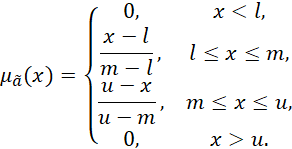
For a degenerate triangular fuzzy number such as 111 , the membership value is equal to one at x=1
 and zero elsewhere.
3.6.2. Fuzzy Linguistic Variables
The linguistic variables used for eliciting expert judgments are represented by triangular fuzzy numbers, as follows:
|
Linguistic variable |
Symbol |
Triangular fuzzy number lmu |
|
Equally important |
EI |
111 |
|
Weakly more important |
WI |
234 |
|
Fairly more important |
FI |
456 |
|
Very important |
VI |
678 |
|
Absolutely more important |
AI |
899 |
3.6.3. Aggregation of Expert Judgments
For K experts, the fuzzy Best-to-Others judgment provided by expert kis represented by:
aBjk=lBjkmBjkuBjk.
Following the fuzzy geometric mean approach, the aggregated Best-to-Others judgment is calculated as:
aBjagg=k=1KlBjk1/Kk=1KmBjk1/Kk=1KuBjk1/K.
The aggregated Others-to-Worst judgment is calculated in the same manner:
ajWagg=k=1KljWk1/Kk=1KmjWk1/Kk=1KujWk1/K.
Accordingly, the aggregated fuzzy Best-to-Others vector is expressed as:
AB=aB1,aB2,…,aBn,

where:
aBB=(1,1,1).

Similarly, the aggregated fuzzy Others-to-Worst vector is:
AW=a1W,a2W,…,anWT,

where:
aWW=(1,1,1).

3.6.4. Fuzzy BWM Optimization Model
The fuzzy weight assigned to criterion jis represented by:
wj=ljwmjwujw,

subject to:
0<ljw≤mjw≤ujw.

Under conditions of perfect consistency, the following relationships should hold:
wBwj=aBj,∀j,

and:
wjwW=ajW,∀j.

Because expert judgments are rarely perfectly consistent, the maximum deviations from these ideal relationships are minimized. The basic min–max formulation is therefore expressed as:
minξ

subject to:
dwBwjaBj≤ξ,∀j,

dwjwWajW≤ξ,∀j,

j=1nR(wj)=1,
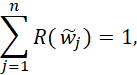
0<ljw≤mjw≤ujw,∀j.

In these equations, d(⋅) represents the distance between two triangular fuzzy numbers, and ξ
 is a non-negative scalar representing the maximum deviation between the estimated fuzzy weight ratios and the aggregated fuzzy comparisons.
Using the centroid method, the representative value of each fuzzy weight is calculated as:
R(wj)=ljw+mjw+ujw3.

3.6.5. Operational Form of the Optimization Model
For positive triangular fuzzy numbers, fuzzy division can be represented as:
wBwj=lBwujwmBwmjwuBwljw.

Similarly:
wjwW=ljwuWwmjwmWwujwlWw.

Therefore, the optimization model can be operationalized as:
minξ
subject to:
∣lBwujw-lBj∣≤ξ,∀j,

∣mBwmjw-mBj∣≤ξ,∀j,

∣uBwljw-uBj∣≤ξ,∀j,

∣ljwuWw-ljW∣≤ξ,∀j,

∣mjwmWw-mjW∣≤ξ,∀j,

∣ujwlWw-ujW∣≤ξ,∀j,

j=1nljw+mjw+ujw3=1,

0<ljw≤mjw≤ujw,∀j,

ξ≥0.

This formulation is generally solved as a constrained nonlinear optimization problem.
Methodological correction: The “linearized” constraints in the original text were removed because they did not include the modal component and did not fully account for the denominators involved in fuzzy division. Therefore, they did not constitute a complete equivalent formulation of the Fuzzy BWM model.
3.6.6. Defuzzification and Normalization
After solving the optimization model, the triangular fuzzy weight of criterion jis transformed into a crisp value using the centroid or Center of Gravity method:
wj=ljw+mjw+ujw3.

The resulting crisp weights are then normalized as:
wj*=wji=1nwi.

Consequently:
j=1nwj*=1.

The normalized weight wj* represents the final relative importance of criterion j.
The expression (l+m+u)/3 should be referred to as the centroid method or Center of Gravity method, rather than the “weighted average method,” because equal weights are assigned to the three parameters of the triangular fuzzy number.
3.6.7. Consistency Ratio
The optimal value of the maximum deviation, denoted by ξ* , is obtained by solving the optimization model. A smaller value of ξ*indicates greater consistency among the pairwise comparisons.
The Consistency Ratio is calculated as:
CR=ξ*CI(aBW),

where CI(aBW) is the Consistency Index corresponding to the aggregated preference of the best criterion over the worst criterion:
aBW.

The consistency index must be selected from the reference table associated with the same Fuzzy BWM model and linguistic scale used in the study. The commonly applied acceptance condition is:
CR≤0.10.

Accordingly:
 indicates an acceptable level of consistency;
 suggests that the experts’ judgments or the aggregation procedure should be re-examined.
A low consistency ratio indicates that the pairwise comparisons are sufficiently coherent to support the subsequent weighting and ranking analysis.
3.6.8. Global Weights of the Sub-criteria
When criteria are organized in a hierarchical structure, the global weight of sub-criterion junder main criterion i is calculated by multiplying its local weight by the normalized weight of its corresponding main criterion:
wijglobal=wi*×wj∣i*,

where:
 is the normalized weight of main criterion i;
 is the local normalized weight of sub-criterion jwithin main criterion i; and
 is the global weight of sub-criterion j.
The global weights are subsequently used to rank all sub-criteria across the entire hierarchical framework.
3.7. Validity and Reliability of the Research Instrument
Several measures were adopted to ensure the scientific validity and reliability of the research instrument.
3.7.1. Content Validity
Content validity was assessed by consulting experts in the fields of architectural conservation, adaptive reuse, architecture, urban planning, heritage tourism, and cultural heritage management. The experts evaluated the relevance, clarity, comprehensiveness, and contextual appropriateness of the main criteria and sub-criteria.
Their feedback was used to revise ambiguous expressions, eliminate overlapping indicators, and ensure that the questionnaire adequately represented the major dimensions of the research problem.
3.7.2. Theoretical Validity
The theoretical validity of the instrument was established by aligning the criteria and sub-criteria with the relevant literature on:
The criteria were also compared with findings from relevant national and international case studies to ensure their theoretical and practical applicability.
3.7.3. Consistency and Reliability of Expert Judgments
The reliability of the decision-making results was primarily evaluated through the consistency mechanism incorporated into the BWM framework. The optimal deviation value ξ*and the corresponding Consistency Ratio were used to assess the internal coherence of the pairwise comparisons.
Lower values of ξ*and CR indicate greater consistency and, consequently, greater confidence in the estimated weights. The expert judgments were regarded as acceptably consistent when:
CR≤0.10.
Because a BWM questionnaire is based on structured pairwise comparisons rather than reflective multi-item psychometric scales, internal-consistency coefficients such as Cronbach’s alpha are not necessarily appropriate for evaluating its reliability. Instead, the BWM Consistency Ratio provides the principal measure of judgment consistency.
4. Data Analysis
Following data collection, the questionnaire responses were coded, aggregated, and analyzed using Microsoft Excel. The fuzzy geometric means, defuzzied weights, normalized weights, global sub-criterion weights, and consistency ratio were calculated in this computational environment. Where necessary, the optimization model was solved using the Excel Solver add-in.
4.1. Identification of the Criteria and Sub-criteria
The criteria and sub-criteria employed in this study were identified through a three-stage process.
In the first stage, a comprehensive review was conducted of the theoretical and empirical literature on heritage conservation, adaptive reuse, urban branding, heritage tourism, and environmental sustainability.
In the second stage, a comparative analysis was carried out using relevant national and international cases, including the Pera Palace Hotel in Istanbul, the Abbasi Hotel in Isfahan, Saraye Ameriha in Kashan, Hanna Boutique Hotel in Tehran, and the Delano Hotel in Miami. This stage was intended to assess the practical applicability of the initially identified criteria within real-world contexts.
In the third stage, the preliminary criteria and sub-criteria were presented to experts in architectural conservation, architecture, urban planning, tourism, and cultural heritage. The experts evaluated their relevance, clarity, and contextual applicability. The validated criteria were subsequently prioritized using a Fuzzy Best–Worst Method questionnaire.
This three-stage process resulted in the identification of five main criteria and 29 sub-criteria, as presented in Table 3.
Table 3. Main criteria and sub-criteria of the study
|
4.2. Implementation of the Fuzzy BWM
The Fuzzy BWM procedure was implemented through the following steps.
4.2.1. Selection of the Best and Worst Criteria
Each expert was initially asked to identify the most important criterion—the best criterion, denoted by CB —and the least important criterion—the worst criterion, denoted by CW
 —from among the five main criteria C1
 to C5
to C5 .
.
The frequencies with which each criterion was selected as the best and worst criterion by the 12 experts are presented in Table 4.
Table 4. Frequencies of selecting the best and worst criteria
|
Criterion |
Frequency selected as best |
Frequency selected as worst |
|
C1 — Heritage Authenticity and Continuity |
5 |
0 |
|
C2 — Functional and Economic Renewal |
2 |
1 |
|
C3 — Urban Branding and Tourist Experience |
2 |
2 |
|
C4 — Climatic and Environmental Sustainability |
1 |
5 |
|
C5 — Integration with the Urban and Social Context |
2 |
4 |
|
Total |
12 |
12 |
Based on the majority of expert selections, Heritage Authenticity and Continuity was identified as the group-level best criterion, while Climatic and Environmental Sustainability was identified as the group-level worst criterion. Therefore:
CB=C1

and:
CW=C4.

It should be emphasized that identifying C4 as the worst criterion does not imply that climatic and environmental sustainability is unimportant. Rather, it indicates that this criterion received the lowest relative priority compared with the other criteria considered in the present decision-making framework.
Methodological requirement: The use of a single group-level best and worst criterion is valid only if the experts completed—or subsequently confirmed—the Best-to-Others and Others-to-Worst comparisons using the common pair CB=C1and CW=C4 . If each expert conducted the comparisons using a different individual best or worst criterion, those vectors should not be directly aggregated without an appropriate group-BWM procedure.
4.2.2. Construction of the Fuzzy Comparison Vectors
After selecting the common best and worst criteria, each expert completed two fuzzy comparison vectors:
over each of the other criteria; and.The Best-to-Others vector is expressed as:
AB=aB1,aB2,…,aB5,

where:
aBB=(1,1,1).
The Others-to-Worst vector is expressed as:
AW=a1W,a2W,…,a5WT,

where:
aWW=(1,1,1).
The raw judgments provided by the 12 experts are presented in Tables 5 and 6.
4.2.3. Aggregation of Expert Judgments
The judgments of the K=12experts were aggregated using the fuzzy geometric mean approach. For the Best-to-Others comparisons, the aggregated triangular fuzzy judgment was calculated as:
aBjagg=k=1KlBjk1/Kk=1KmBjk1/Kk=1KuBjk1/K.
Similarly, the Others-to-Worst judgments were aggregated using:
ajWagg=k=1KljWk1/Kk=1KmjWk1/Kk=1KujWk1/K.
Illustrative calculation for aB2
The comparison aB2 represents the preference of C1, the best criterion, over C2
 .
.
Assuming that six experts selected Weakly More Important (WI) and the other six selected Fairly More Important (FI), the triangular fuzzy numbers are:
WI=(2,3,4)

and:
FI=(4,5,6).

Therefore, the lower bound of the aggregated comparison is:
lB2=26461/12=8≈2.83.

The modal value is:
mB2=36561/12=15≈3.87.

The upper bound is:
uB2=46661/12=24≈4.90.

Consequently:
aB2agg≈(2.83,3.87,4.90).

The resulting aggregated fuzzy comparison vectors are presented in Table 7.
Table 7. Aggregated fuzzy comparison vectors
|
Comparison vector |
C1 |
C2 |
C3 |
C4 |
C5 |
|
Best-to-Others, CB=C1 |
111 |
2.833.874.90 |
2.523.474.43 |
6.487.438.32 |
2.523.874.90 |
|
Others-to-Worst, CW=C4 |
6.487.438.32 |
3.174.235.27 |
2.523.474.43 |
111 |
2.523.474.43 |
The first row shows the aggregated preferences of C1over all criteria. The second row presents the aggregated preferences of all criteria over C4.
The aggregated comparison between the best and worst criteria appears in both vectors and is equal to:
aBW=a14≈(6.48,7.43,8.32).

4.3. Fuzzy Weighting and Defuzzification Results
After constructing the aggregated fuzzy comparison vectors, the Fuzzy BWM optimization model was solved to obtain the triangular fuzzy weights of the main criteria:
wj=(ljw,mjw,ujw).

The fuzzy weights were subsequently transformed into crisp weights using the centroid, or Center of Gravity, method:
wj=ljw+mjw+ujw3.
The crisp weights were then normalized using:
wj*=wji=15wi.

Based on the reported crisp weights:
i=15wi=0.357+0.207+0.157+0.073+0.247=1.041.

Accordingly, the corrected normalized weights were calculated by dividing each crisp weight by 1.041 . The resulting weights and rankings are presented in Table 8.
Table 8. Final weights and rankings of the main criteria
|
Code |
Main criterion |
Crisp weight |
Corrected normalized weight |
Rank |
|
C1 |
Heritage Authenticity and Continuity |
0.357 |
0.3429 |
1 |
|
C2 |
Functional and Economic Renewal |
0.207 |
0.1988 |
3 |
|
C3 |
Urban Branding and Tourist Experience |
0.157 |
0.1508 |
4 |
|
C4 |
Climatic and Environmental Sustainability |
0.073 |
0.0701 |
5 |
|
C5 |
Integration with the Urban and Social Context |
0.247 |
0.2373 |
2 |
|
Total |
1.041 |
1.0000 |
— |
The findings indicate that Heritage Authenticity and Continuity received the highest normalized weight:
w1*=0.3429,

and was therefore ranked first. This result demonstrates that conserving the historical identity, architectural characteristics, and collective memory of the building represents the most important consideration in its adaptive reuse.
Integration with the Urban and Social Context was ranked second:
w5*=0.2373.

This finding highlights the importance of social acceptance, stakeholder participation, urban vitality, and the relationship between the historic building and its surrounding urban fabric.
Functional and Economic Renewal was ranked third:
w2*=0.1988,

indicating that the long-term success of the adaptive-reuse project depends not only on heritage conservation but also on its economic feasibility, functional adaptability, and operational sustainability.
Urban Branding and Tourist Experience occupied the fourth position:
w3*=0.1508,

while Climatic and Environmental Sustainability received the lowest relative priority:
w4*=0.0701.

Nevertheless, the lower relative weight assigned to C4should not be interpreted as evidence of its absolute unimportance. Rather, it indicates that the participating experts prioritized heritage, social, functional, and tourism-related considerations more strongly within the specific context of the adaptive reuse of Iran Hotel in Rasht.
4.4. Local and Global Weights of the Sub-criteria
The local weights indicate the relative importance of the sub-criteria within each corresponding main criterion. To compare all 29 sub-criteria across the entire hierarchical framework, their global weights were calculated as:
wijglobal=wi*×wj∣i*,
where:
denotes the corrected normalized weight of main criterion i;denotes the local weight of sub-criterion junder criterion i; anddenotes the global weight of the corresponding sub-criterion.Based on the corrected normalized weights reported in Table 8, the ten highest-ranked sub-criteria are presented in Table 9.
Table 9. Final weights of the ten highest-ranked sub-criteria
|
Code |
Sub-criterion |
Local weight |
Corrected global weight |
Overall rank |
|
C1.3 |
Continuity of historical identity and collective memory |
0.290 |
0.099 |
1 |
|
C1.1 |
Preservation of the historical façade and architectural composition |
0.248 |
0.085 |
2 |
|
C5.4 |
Social acceptance and stakeholder support |
0.289 |
0.069 |
3 |
|
C1.2 |
Conservation of decorations and distinctive architectural elements |
0.198 |
0.068 |
4 |
|
C2.3 |
Economic feasibility of the revitalization project |
0.312 |
0.062 |
5 |
|
C1.5 |
Preservation of the legibility of the early Pahlavi and Art Deco architectural styles |
0.172 |
0.059 |
6 |
|
C5.1 |
Contribution to the vitality of urban space |
0.231 |
0.055 |
7 |
|
C3.3 |
Synergy with Rasht’s UNESCO Creative City of Gastronomy identity |
0.341 |
0.051 |
8 |
|
C2.1 |
Spatial adaptability to new uses |
0.247 |
0.049 |
9 |
|
C3.5 |
Capacity for historical and cultural storytelling |
0.294 |
0.044 |
10 |
For example, the global weight of C1.3 was calculated as:
wC1.3global=wC1*×wC1.3∣C1*

=0.3429×0.290=0.0994≈0.099.

Similarly, the global weight of C5.4 was calculated as:
wC5.4global=0.2373×0.289=0.0686≈0.069.

The results show that the continuity of historical identity and collective memory C1.3 was the most important sub-criterion, with a global weight of approximately 0.099. This finding confirms that the adaptive reuse of Iran Hotel should preserve not only its physical fabric but also its historical meaning and position within the collective memory of Rasht.
The preservation of the building’s historical façade and architectural composition C1.1 was ranked second. Social acceptance and stakeholder support C5.4
 occupied the third position, demonstrating that the success of the revitalization project depends considerably on the support and participation of local stakeholders.
4.5. Consistency Analysis
The optimal deviation value obtained from the Fuzzy BWM optimization model was:
ξ*=0.049.

The aggregated fuzzy preference of the best criterion C1over the worst criterion C4was:
aBW=a14≈(6.48,7.43,8.32).
The modal value of this fuzzy comparison is approximately 7.43 and therefore corresponds most closely to the linguistic judgment Very Important (VI) and to an approximate comparison intensity of 7.
Based on the consistency-index table associated with the conventional BWM scale, the consistency index for an intensity of 7 is:
CI=3.73.

The Consistency Ratio was therefore calculated as:
CR=ξ*CI=0.0493.73=0.0131≈0.013.

Since:
CR=0.013<0.10,

the aggregated comparisons demonstrate an acceptable and high level of consistency. Thus, the expert judgments can be considered sufficiently coherent for deriving the final weights and rankings of the criteria and sub-criteria.
Nevertheless, the value CI=3.73 should be explicitly supported by the consistency-index table and methodological source adopted in the study. The same definition of ξ*, the same comparison scale, and the same optimization formulation must be used in both the weighting and consistency calculations.
4.6. Summary of the Findings
The findings of this study indicate that the adaptive reuse of Hotel Iran in Rasht is a multidimensional decision-making process that cannot be reduced to a single concern, whether architectural conservation or economic feasibility. The five main criteria—Heritage Authenticity and Continuity (C_1), Functional and Economic Renewal (C_2), Urban Branding and Tourist Experience (C_3), Climatic and Environmental Sustainability (C_4), and Integration with the Urban and Social Context (C_5)—form an interconnected framework. Therefore, any intervention should be planned with careful consideration of the relationships and potential trade-offs among these dimensions.
The Fuzzy BWM results further demonstrate that heritage conservation should form the foundation of the adaptive-reuse strategy. Heritage Authenticity and Continuity (C_1) received the highest normalized weight (0.3429), followed by Integration with the Urban and Social Context (C_5ⓜ=0.2373) and Functional and Economic Renewal (C_2ⓜ=0.1988). This ranking suggests that the success of the project depends primarily on preserving the historical identity of the building while reconnecting it with the social and urban life of Rasht. Economic and functional considerations remain essential, but they should support rather than undermine the building’s heritage values.
At the sub-criterion level, the continuity of historical identity and collective memory (C1.3) emerged as the most important priority, with a global weight of approximately 0.099. It was followed by the preservation of the historical façade and architectural composition (C1.1ⓜ=0.085) and social acceptance and stakeholder support (C5.4ⓜ=0.069). These findings show that the value of Hotel Iran extends beyond its physical fabric. The building is also part of the collective memory of Rasht; therefore, its revitalization should retain its historical meaning while responding to the expectations of local stakeholders.
The comparative examination of successful national and international cases supports this conclusion. At the Pera Palace Hotel in Istanbul, historical authenticity has been integrated with modern technologies and contemporary hospitality standards. At the Abbasi Hotel in Isfahan, a historic building has developed into a distinctive tourism brand. At Saraye Ameriha in Kashan, hotel use has contributed to the revitalization of the surrounding historic fabric. Similarly, at the Hanna Boutique Hotel in Tehran, new facilities and contemporary uses have been carefully incorporated into a historic architectural setting. Despite their different contexts, these examples share one important characteristic: they maintain a deliberate balance between heritage values and the practical requirements of contemporary use.
Hotel Iran, however, differs significantly from adaptive-reuse cases located in the hot and arid regions of Iran. Rasht is situated in the temperate and humid climatic context of Gilan, where high annual precipitation and relative humidity create particular challenges for building-envelope moisture control, material durability, indoor environmental quality, and thermal comfort. These concerns have received relatively limited attention in Iran’s technical literature on architectural conservation, which has largely focused on buildings in central and arid regions. In this respect, the present study highlights an important research and practice gap concerning the adaptive reuse of heritage buildings in the humid climate of northern Iran.
Although Climatic and Environmental Sustainability (C_4) received the lowest relative weight (0.0701), this result should not be interpreted as suggesting that environmental or climatic considerations are unimportant. The lower weight only indicates that the experts assigned greater relative priority to heritage authenticity, urban and social integration, functional and economic renewal, and tourism-related considerations. In practice, failure to address moisture penetration, material deterioration, natural ventilation, and long-term maintenance could threaten both the architectural authenticity and the financial viability of the project. Climatic adaptation should therefore be treated as an essential technical requirement rather than an optional design feature.
The strategic location of Hotel Iran in Rasht’s Municipality Square, together with Rasht’s designation as a UNESCO Creative City of Gastronomy in 2015, provides an exceptional opportunity for heritage-led urban regeneration. The hotel has the potential to become a point of convergence between two distinctive narratives: the architectural history of the early Pahlavi period and the food culture of Gilan. This combination could differentiate Hotel Iran from conventional accommodation facilities and position it as a cultural destination in its own right. Nevertheless, this potential has not yet been fully recognized or effectively incorporated into the building’s reuse strategy.
indicates that the aggregated expert judgments were highly coherent. The resulting priorities can therefore provide a reliable basis for evaluating alternative adaptive-reuse strategies for Hotel Iran.
The Fuzzy BWM analysis showed that Heritage Authenticity and Continuity was the most important main criterion in the adaptive reuse of Iran Hotel in Rasht. Integration with the Urban and Social Context and Functional and Economic Renewal occupied the second and third positions, respectively.
At the sub-criterion level, the three highest-ranked priorities were:
These results indicate that an appropriate adaptive-reuse strategy for Iran Hotel should prioritize the preservation of the building’s tangible and intangible heritage values while simultaneously ensuring social legitimacy, stakeholder participation, functional adaptability, and economic feasibility.
The low Consistency Ratio:
CR=0.013

also indicates that the aggregated expert judgments were highly coherent and that the resulting rankings provide a reliable basis for evaluating and selecting adaptive-reuse strategies.
Discussion, and Practical Recommendations
Discussion
The principal conclusion of this study is that none of the five main criteria can be removed from or disregarded within the proposed adaptive-reuse framework. Although the criteria have different relative weights, poor performance in any one dimension may weaken the overall success of the project, even when the proposed strategy performs well in other areas. For example, a financially attractive proposal may fail if it damages the building’s historical identity, while a conservation-oriented strategy may prove unsustainable if it lacks a viable operational model or fails to gain the support of local stakeholders.
The findings therefore support an integrated adaptive-reuse strategy in which conservation, contemporary functionality, economic viability, climatic responsiveness, tourism development, and social participation are considered simultaneously. Within such a strategy, heritage authenticity should serve as the guiding principle, while economic, technological, and functional interventions should be designed to sustain and communicate the building’s cultural significance.
The most appropriate future vision is to transform Iran Hotel into a heritage boutique hotel that preserves the architectural character and collective memory of the building while strengthening Rasht’s urban brand. The proposed hotel should respond to Gilan’s humid climate, support the local economy, provide authentic cultural and culinary experiences, and become part of the everyday social life of residents and visitors. Its success should therefore be measured not only by financial return or occupancy rates, but also by its contribution to heritage conservation, urban vitality, local participation, and the cultural identity of Rasht.
Practical Recommendations
Overall, the adaptive reuse of Hotel Iran should balance heritage conservation, economic viability, climatic adaptation, tourism development, and social participation. If properly managed, the hotel can become a living heritage asset and an important symbol of Rasht’s historical identity and future development.

Open Access By Aditum Open Access Journals id licensed under Creative Commons Attribution 4.0 International License. Based On a Work at aditum.org









