
Environmental Pollution and Health
OPEN ACCESS | Volume 3 - Issue 1 - 2026
ISSN No: 3065-7652 | Journal DOI: 10.61148/3065-7652/EPH

Faithwin Gbadamosi¹*, Kawthar Abdulmojeed²
¹Geography, University at Buffalo, Buffalo, USA.
²Geography, University of Ibadan, Ibadan, Nigeria.
*Corresponding author: Faithwin Gbadamosi, figbadam@buffalo.edu, +17164953213, 1975-Mile-High Stadium Cir, Denver, Colorado
Received: October 05, 2026 | Accepted: October 20, 2026 | Published: October 30, 2026
Citation: Gbadamosi F, Abdulmojeed K., (2026). “Sacrifice Zones and Slow Violence: A Comparative Scoping Review of Oil-Related Environmental Health Injustice in the Niger Delta and the Northeastern Ecuadorian Amazon” Environmental Pollution and Health, 2(1); DOI: 10.61148/3065-7652/EPH/060.
Copyright: © 2026 Faithwin Gbadamosi. This is an open access article distributed under the Creative Commons Attribution License, which permits unrestricted use, distribution, and reproduction in any medium, provided the original work is properly cited.
Background: Oil extraction has created “sacrifice zones” in the Global South, where economic benefits accrue elsewhere while contamination and illness concentrate among local and Indigenous communities. Cross-regional comparative evidence is limited. Objective: To compare oil-related environmental health harms, community adaptation and institutional responses in the Niger Delta (Nigeria) and the Northeastern Ecuadorian Amazon (NEA), drawing on sacrifice-zone and slow-violence concepts. Methods: We conducted a comparative scoping review following the PRISMA-ScR guideline. English-language academic and grey literature published between 2010 and 2025 was searched; 99 sources were included and coded deductively under three themes: pollution and exposure pathways, community adaptation and resistance, and institutional, legal and corporate responses. Results: Both regions show persistent soil and water contamination reaching residents through food, water and air, with a disproportionate burden on women and children. In the Niger Delta, spills, gas flaring and contaminated seafood predominate, and spills have been associated with doubled neonatal mortality. In the NEA, legacy waste pits and groundwater contamination predominate; more than 95% of sampled domestic wells exceeded a hydrocarbon limit. In both regions, regulators are financially or politically entangled with the oil sector, remediation is declared rather than verified, and pollution becomes normalised. Communities respond through survivalist adaptation (artisanal refining, forced retreat) and through litigation and rights-based mobilisation. Conclusions: Oil-related environmental health injustice in these regions is better understood as structurally produced and institutionally sustained than as a series of isolated regulatory failures. Independent monitoring, verifiable remediation, population health surveillance, cross-border corporate accountability and community-led governance are needed.
sacrifice zones; slow violence; environmental health injustice; oil extraction; Niger Delta; Ecuadorian Amazon; institutional normalisation; scoping review
1. Introduction
Over the past century, oil extraction has penetrated deep into the Global South. In many producing regions the needs of the oil and revenue industries have been prioritised over the health and lives of residents, creating what are described as “sacrifice zones” [1–3]. The Niger Delta in Nigeria and the Northeastern Ecuadorian Amazon (NEA) are two prominent examples. In both, environmental damage is not an isolated problem but an embedded, institutionalised condition.
In the Niger Delta, and particularly in Bayelsa State, decades of pipeline spills, gas flaring and pipeline vandalism have contaminated the mangroves, rivers and creeks on which Ijaw fishing communities depend. A state-commissioned inquiry described the situation as an “environmental genocide” [3]; the term is advocacy-laden and legally contested, but it signals the scale of local concern. The Bayelsa Commission estimated that the state has spilt 110–165 million gallons of oil over 50 years, 10–15 times the Exxon Valdez spill [3,4]; government data cited in its report record at least 234 spills per year in the state [4]. As fishing declines, many young people have turned to artisanal refining, locally known as kpo-fire [5]. Contamination at several sites exceeds international guideline values [6], and documented health consequences include heavy-metal accumulation, adverse maternal outcomes [7] and elevated neonatal mortality: spills within about 10 km of a mother’s residence before conception have been associated with a doubling of neonatal mortality [8].
A comparable pattern is evident in the Ecuadorian Amazon. In the late twentieth century, oil operations discharged formation water and left behind large numbers of unlined waste pits that continue to leach contaminants into soil and groundwater, affecting Indigenous Kichwa, Secoya and Waorani peoples as well as settler communities [9,10]. Studies report elevated cancer risk, including leukaemia, in affected provinces, although the evidence is largely descriptive and causal attribution remains contested [10–12]. Ecuador’s 2008 Constitution recognised the Rights of Nature (Pacha Mama), and Indigenous-led legal and political action has achieved landmark but incompletely implemented gains [13,14].
Despite their geographical and cultural distance, both regions share a governance problem: close relationships between the state and oil companies. In Nigeria, the National Oil Spill Detection and Response Agency (NOSDRA) has depended on operating companies for transport to spill sites, compromising its independence [15]. In Ecuador, the state company Petroecuador has been accused of failing to comply with a court order to shut down gas flares [16,17].
Single-region studies are abundant, but few compare the two regions or ask why harm persists. This review therefore addresses three questions: (1) How do pollution profiles and human exposure pathways compare between the Niger Delta and the NEA? (2) How do affected communities adapt to and resist these harms? (3) How do institutional, legal and corporate arrangements sustain or contest them? The aim is to identify recurring patterns of environmental health injustice and to inform more equitable, context-sensitive remediation and governance policy.
1.1 Conceptual framework
The review draws on two complementary concepts. First, a sacrifice zone is an area that is deliberately or functionally abandoned to the environmental and health costs of extractive or industrial activity in exchange for economic benefits generated elsewhere [1]. Such places are not merely polluted; they are locations where the state, through regulation, inaction or complicity with industry, has effectively treated certain communities and ecosystems as expendable. Oil revenue flows to national governments and multinational corporations, while contamination, illness and livelihood loss concentrate among local and Indigenous populations with little political power [3].
Second, Nixon’s [2] concept of slow violence describes harm that occurs gradually and out of sight: a violence of delayed destruction, dispersed across time and space, that rarely attracts the attention of media, governments, or courts in the way sudden disasters do. Oil pollution fits this description closely. Contamination accumulates through repeated spills, continuous flaring and long-term leaching of hydrocarbons, and its health consequences (cancer, neonatal mortality, nutritional decline) emerge over years or decades and are difficult to attribute to a single company or event. This makes such harm easy to normalise and hard to redress.
Two further analytic concepts are used. Institutional normalisation denotes the process by which regulators, companies and sometimes residents come to treat pollution as an ordinary background condition. The livelihood dysfunction trap denotes a cycle in which pollution undermines livelihoods, and the coping strategies adopted in response cause further environmental harm [18]. In existing literature, the sacrifice-zone concept has been applied mainly to the Niger Delta [5,18] and slow violence to the Ecuadorian Amazon [14]; combining them in a cross-regional comparison allows us to ask whether the observed patterns reflect a common, systemic logic of extraction.
2. Materials and Methods
2.1 Design and reporting
We conducted a qualitative comparative scoping review with deductive thematic synthesis. Search, selection and reporting followed the Preferred Reporting Items for Systematic Reviews and Meta-Analyses extension for scoping reviews (PRISMA-ScR) [19]. Systematic search and selection procedures were applied to two case regions in parallel, and findings were synthesised within and between cases rather than pooled. The cases were selected for their long histories of petroleum extraction, well-documented environmental degradation, impacts on Indigenous and local populations, and extensive legal and civil-society documentation.
2.2 Eligibility criteria
Eligible sources were (i) published between 2010 and 2025; (ii) in English; (iii) peer-reviewed articles, NGO or United Nations reports, environmental assessments or published court judgments; and (iv) explicitly linked oil extraction to environmental contamination, human health outcomes, food systems or regulatory responses in the Niger Delta or the NEA. Opinion pieces, media commentary and unverified online sources were excluded, as were papers addressing only macroeconomic or political-economy questions without environmental or health content. Three narrow exceptions applied: foundational earlier works [11] were used for context; news and advocacy reporting was used only to document dated legal and corporate events and litigation-derived figures, is classed as “context only” and was not counted as evidence of health outcomes; and studies from the neighboring Peruvian Amazon were used only as analogue evidence and are labelled as such. The restriction to English is a limitation (Section 4.5), particularly for Ecuador.
2.3 Search strategy
Academic databases (PubMed, Scopus and Google Scholar) were searched using Boolean strings tailored to each region and combining geographic, exposure and outcome terms. Examples: (“Niger Delta” OR Nigeria) AND (“oil pollution” OR “gas flaring”) AND (health OR “respiratory disease” OR cancer); and (“Ecuadorian Amazon” OR Oriente) AND (“crude oil” OR “toxic waste” OR “formation water”) AND (“Indigenous health” OR litigation). Grey literature was identified from Amnesty International, Environmental Rights Action/Friends of the Earth Nigeria, United Nations agencies, legal case repositories and assessments such as the United Nations Environment Programme (UNEP) Environmental Assessment of Ogoniland [6]. The initial search was run between January and March 2025; a targeted update to mid-2026 captured a small number of recent sources. Records were exported to reference-management software and de-duplicated before screening.
2.4 Source selection
Titles and abstracts were screened against the eligibility criteria, followed by full-text assessment. Screening was performed by two reviewers. One reviewer screened all records. A second reviewer independently screened a random 20% sample (Cohen’s κ = [value]); disagreements were resolved by discussion. Figure 1 shows the selection process: 1,193 records were screened after de-duplication, 121 full-text reports were assessed, and 99 were retained.
2.5 Data charting and thematic coding
Data were extracted with a structured template recording region, source type, design, population or setting, contaminants, outcomes and institutional or legal content. Coding was deductive [20] and organised around three predefined themes applied identically to both regions. Theme A (pollution profiles and exposure pathways) covered the types, intensity and spatial distribution of pollutants: for the Niger Delta, gas-flaring emissions, pipeline leaks, spills and hydrocarbon contamination of soil and water; for the NEA, formation-water disposal, open waste pits, river contamination and long-term soil toxicity. Theme B (community adaptation and resistance) covered livelihood change, dietary change, migration and collective action. Theme C (institutional and legal responses) covered regulatory frameworks, enforcement capacity, remediation programmes and access to justice, with particular attention to Nigeria’s Petroleum Industry Act (2021) [21] and Ecuador’s constitutional recognition of the Rights of Nature.
2.6 Quality appraisal
Peer-reviewed studies were appraised with an adapted Joanna Briggs Institute (JBI) checklist for qualitative evidence, and NGO and institutional reports with the JBI checklist for text and opinion papers [22], assessing methodological clarity, credibility of findings and appropriateness of conclusions. Appraisal was used to weight the strength of claims rather than to exclude sources. Claims in NGO reports were cross-checked against peer-reviewed studies and official assessments.
2.7 Synthesis
Findings were synthesized narratively within each region and then compared across regions to identify similarities and differences, summarized in a comparative matrix (Table 1). Key quantitative findings reported by individual sources are collated in Table 2 with their limitations; they are not pooled.
2.8 Ethical considerations
The study analyzed published literature only; no human participants were involved and ethical approval was not required.
3. Results
3.1 Characteristics of included sources
Ninety-nine sources met the inclusion criteria (Figure 1). Of the 52 included sources cited here, 30 concerned the Niger Delta, 20 the NEA and two were cross-cutting; 37 were peer-reviewed articles, six were books or chapters, one was a thesis and eight were grey-literature or legal sources; 25 were assigned primarily to Theme A, 14 to Theme B and 13 to Theme C. The evidence base is asymmetric. Niger Delta studies include a larger share of measured air-quality and food-chain data, whereas the NEA literature emphasises groundwater, legacy waste pits, litigation and Indigenous perspectives. This asymmetry reflects what has been studied as much as what exists, and it conditions the comparisons below.
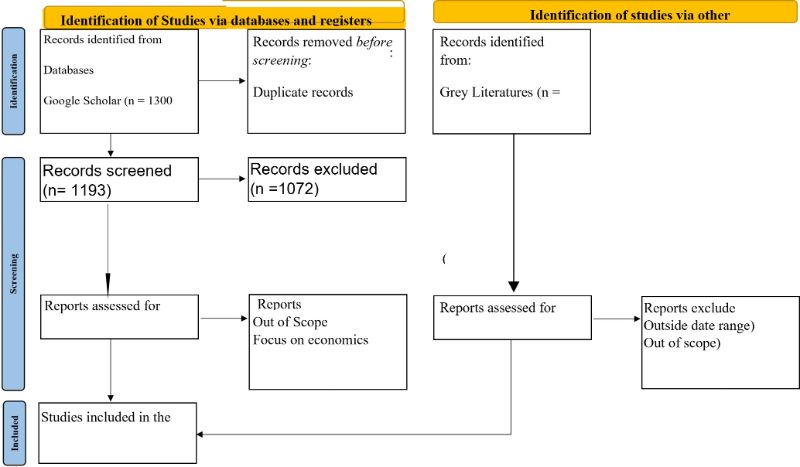
Figure 1. PRISMA-ScR flow diagram of source identification, screening and inclusion.
3.2 Pollution profiles and exposure pathways
Niger Delta. Between 2006 and 2015, NOSDRA recorded more than 9,300 oil spills, and approximately 550 million gallons of crude oil are estimated to have entered the environment since production began in 1958 [23]. Spills have degraded more than 1,000 km² of land, including forest, mangrove swamp and farmland essential to food production [24]. Gas flaring is a major source of air pollution: flare sites in Rivers and Akwa Ibom States emit volatile organic compounds, including benzene, toluene, ethylbenzene and xylene, that form ground-level ozone and fine particles under the region’s hot, sunny conditions [25, 26]. On Bonny Island, mean fine particulate matter (PM2.5) was 20.62 µg/m³ [27], roughly four times the 2021 World Health Organization (WHO) annual guideline of 5 µg/m³ [28]; this single-site value should not be generalized to the whole region. Oil spills have also reduced fish catches, with the 2008–2009 Bodo spill a well-known example, undermining a primary protein source [5, 29].
Northeastern Ecuadorian Amazon. Pollution is dominated by the long-term discharge of formation water and the use of unlined waste pits [30]. A groundwater study of 161 domestic wells in Sucumbíos and Orellana found total petroleum hydrocarbons (TPH) of 0.11–7.45 mg/L, with more than 95% of samples above Ecuador’s drinking-water limit of 0.2 mg/L; estimated cancer and non-cancer risks exceeded United States Environmental Protection Agency (US EPA) thresholds, with children the most vulnerable group [31]. Satellite-based analysis has also detected hydrocarbon effects on Amazon forest vegetation [32]. Naturally occurring radioactive material (NORM) has also been reported. In a survey of 77 measurement points in Pacayacu parish (Sucumbíos), including 63 closed oil wells, the mean ambient gamma dose rate was 0.12 µSv/h; however, one closed well, where scale inside pipes was the likely source, had an estimated annual effective dose of 1.51 mSv/year, above both the national public limit (0.3 mSv/year) and the 1 mSv/year IAEA limit [33]. This single-parish study therefore indicates a localized radiological hazard rather than widespread exposure. Estimates of the number of legacy waste pits vary and derive largely from litigation: Texaco acknowledged 326–333 pitlocalizeds, whereas court-ordered inspections and the court-appointed expert counted 916–990 [34–36]; one recent report cites 714 buried pits that have resurfaced [36]. These figures are contested by the company and should be read as estimates.
Exposure pathways in the Niger Delta. Residents are exposed chiefly through food, water and air. In blue crab (Callinectes sapidus) from the Iko River in Akwa Ibom State, cadmium ranged from 0.12 to 6.69 mg/kg across tissues, lead and cadmium exceeded guideline limits at downstream stations, and target hazard quotients indicated a non-carcinogenic risk to consumers (lead 1.34–10.74; cadmium 0.12–8.70) [37]. Because the Iko is a heavily industrialised estuary, the contribution of oil specifically cannot be isolated from other sources. Pipeline leaks can also contaminate the shallow hand-dug wells many households rely on, and pregnant women and young children are exposed to polluted air and water [7,38,39].
Exposure pathways in the NEA. Contaminants migrate vertically and horizontally from legacy sites into domestic water supplies [30,31]. Farmers working near abandoned wells have direct dermal contact with hydrocarbon-saturated soil [40]. Chronic multi-pathway exposure has been proposed as a plausible contributor to elevated leukaemia and other cancer rates in Sucumbíos [11,12], although available evidence is largely descriptive and a scoping review of the literature highlights its limitations [10]. Evidence from the adjacent Peruvian Amazon shows elevated urinary arsenic, cadmium and mercury among Indigenous people living near oil blocks [41]. In the NEA itself, metal contamination of fish and water reflects overlapping oil and artisanal-mining pressures, so attribution to oil alone is not possible [42,43].
Table 2. Key quantitative findings reported by included sources and their limitations
|
Source |
Region |
Reported finding |
Caveat |
|
NOSDRA data via [23] |
Niger Delta |
>9,300 spills (2006–2015); ~550 million gallons released since 1958 |
Operator-influenced investigations may under- or mis-report [15] |
|
[24] |
Niger Delta |
>1,000 km² of land degraded |
Geostatistical estimate; exposure not equal to health outcome |
|
[27] |
Niger Delta (Bonny Island) |
Mean PM2.5 20.62 µg/m³ (WHO 2021 annual guideline 5 µg/m³ [28]) |
Single island; not region-wide |
|
[37] |
Niger Delta (Iko River, Akwa Ibom) |
Crab tissues: Cd 0.12–6.69 mg/kg; hazard quotients Pb 1.34–10.74, Cd 0.12–8.70; Pb and Cd above guidelines at downstream stations |
12 crabs, one industrialised estuary; oil not separated from other sources |
|
[8] |
Niger Delta |
Spills within ~10 km before conception associated with doubled neonatal mortality |
Observational; spills during pregnancy showed no effect |
|
[31] |
NEA (Sucumbíos, Orellana) |
161 wells: TPH 0.11–7.45 mg/L; >95% above 0.2 mg/L limit; health-risk indices above US EPA thresholds |
Cross-sectional; 2024 sampling; risk modelled, not observed |
|
[33] |
NEA (Pacayacu parish) |
77 points (63 closed wells): mean 0.12 µSv/h; one closed well 1.51 mSv/year vs 0.3 national and 1 IAEA limit |
Single parish; one of 63 closed wells exceeded the limit |
NEA, Northeastern Ecuadorian Amazon; PM2.5, particulate matter ≤2.5 µm; TPH, total petroleum hydrocarbons. Values are as reported by the cited sources and are not pooled.
3.3 Persistence and normalisation of pollution
In the Niger Delta, pollution persists because clean-up is ineffective and contaminants recycle through the water system [3]. Remedial approaches, including enhanced natural attenuation by land farming, have shown limited efficacy where contamination extends beneath the topsoil, so oil can remain in swamp sediments for decades [44,45]. Over time residents may stop reporting spills because they expect no response, a form of resignation that normalises the harm [46]. Smoke, soot and contaminated water become features of everyday life, and the loss of fishing livelihoods feeds the growth of artisanal refining [5,18,47].
In the NEA, abandoned pits from the 1970s continue to release hydrocarbons into surrounding soil and water decades later, creating a persistent “toxic inventory” [30,31]. Normalisation here takes an institutional form: sites classed as remediated are not necessarily safe. Court-linked and journalistic accounts describe Texaco’s remediation of many pits as covering them with soil [35,36], and families have reportedly built homes and farms on covered pits without knowing of the buried waste [48]. These accounts are illustrative rather than systematic evidence. This reflects a broader approach in which the benefits of production are promoted while the costs are discounted [49]. In both regions women and children carry a disproportionate burden, as exposure during pregnancy interacts with social and economic inequity [7].
3.4 Livelihood disruption and coping strategies
In the Niger Delta, artisanal fishing and swamp farming were long the economic backbone of Ijaw and other communities, but repeated crude-oil contamination has made these activities economically unviable [5]. Oil-induced anaerobic conditions damage spawning grounds and fish production, notably around Bodo and Ogale [29]. Traditional ecological knowledge risks becoming obsolete within a generation [47]. Many disenfranchised young people have turned to artisanal refining as a survival strategy [50]. Refining residues in turn degrade soil for decades [51], producing the livelihood dysfunction trap in which ecological degradation necessitates survivalist activity that further degrades the ecosystem [18].
In the NEA, territorial enclosure by the oil frontier undermines food sovereignty [52]. For Waorani and Kichwa peoples the forest is simultaneously a source of food, medicine and spiritual meaning, so contamination of water and fish threatens subsistence and culture. In a survey of 53 Kichwa, Siona and Cofán fishers in seven communities of the Napo and Aguarico watersheds, respondents reported 30–40% declines in fish abundance, and more than a quarter linked this to oil extraction [53]; these are perceptions rather than measured stock declines. The April 2020 pipeline rupture, which released an estimated 15,800 barrels of oil into the Coca River, further disrupted Kichwa fishing livelihoods [54]. “Forced retreat” describes Indigenous families leaving ancestral land in search of safe water deeper in primary forest, which in turn intensifies competition and conflict over remaining resources as the oil frontier expands [55].
3.5 Social mobilisation and protest
Mobilisation in the Niger Delta has evolved from petitions to a protest movement that openly challenges the oil state, driven by the perception that communities bear the environmental and social costs while being excluded from the wealth generated [56,57]. The Ogoni struggle of the 1990s drew global attention by linking environmental abuse to human-rights violations [58]. Women have been prominent, at times staging naked protests and occupations of oil facilities to highlight the intersection of environmental degradation with maternal and family health [59]. Security-force repression of protest has been associated with a spiral of violence in which suppressed peaceful protest can shift frustrated communities towards violent resistance [60]. With the state and oil companies closely aligned, protest becomes a means of survival within the system [50].
In the Ecuadorian Amazon, women have been prominent in collective action. In 2013, Indigenous women from seven nationalities organised a 250-km “March of Life” from Puyo to Quito against new oil licensing in their territories [61]. This mobilisation was centred on Pastaza province and on opposing new concessions, rather than on legacy contamination in the NEA’s core oil-producing provinces, where water pollution is documented [31]. “Toxic tours” take researchers, journalists and human-rights monitors to abandoned pits and polluted sites, sometimes described as the “Amazon Chernobyl”, to sustain international attention and to contradict official claims that sites have been cleaned [14]. Community-based monitoring and counter-mapping generate locally produced evidence that contests state reports, so that experiential knowledge, including illness in Indigenous bodies, is mobilised as evidence of harm [12,55]. Gas flaring has been a litigation focus in both regions [16,17,62].
3.6 Institutional, legal and corporate responses
Nigeria. Oil regulation is weak or poorly coordinated, and environmental protection is frequently subordinated to production and revenue [63]. NOSDRA has limited capacity to investigate spills independently in swamp terrain and relies on operators for access during Joint Investigation Visits, creating a conflict of interest in how spills are reported and attributed [15]. Agencies are expected simultaneously to promote production and enforce environmental rules, which weakens enforcement [63]. Standards such as the Environmental Guidelines and Standards for the Petroleum Industry in Nigeria (EGASPIN) exist, but little effective air-quality monitoring or enforcement occurs in flaring communities [38]. The Petroleum Industry Act (2021) introduced host-community development trusts and decommissioning and abandonment funding obligations [21]; whether these will translate into remediation of legacy contamination or protection of health remains to be evidenced.
Ecuador. Policy approaches to legacy pits have varied over time, and regulatory attention has focused on surface contamination rather than subsurface flow to soil and groundwater [31,52]. The Rights of Nature, enshrined in the 2008 Constitution, are not fully implemented, notably in operations of the state company Petroecuador [55]. Remediation is governed by fixed concentration endpoints that have differed between regulatory instruments (Decree 1215 until 2019, Ministerial Agreement 097 since 2020), and their adequacy is contested: a recent study proposes bioavailability-based criteria under which soils exceeding current hydrocarbon limits could be judged to pose acceptable risk [64]. Historically, court-expert findings reported by Amazon Watch indicated that 42 of 46 inspected Texaco pits exceeded Ecuador’s 1,000 ppm TPH norm and 34 exceeded 5,000 ppm [34]. Critics argue that law and regulation can protect oil interests rather than affected communities in a development model that depends on oil income [49, 65].
Corporate practices. In the Niger Delta, international companies have increasingly divested onshore assets to local firms, a practice criticized as a “tainted sale” because buyers may lack the means to fund cleanup, and liabilities may be passed to them [66]. In 2025 UN experts concluded that divestments by Shell, Eni, ExxonMobil and TotalEnergies breached human rights obligations, and the cost of repairing damage in Bayelsa alone has been estimated at US$12 billion; at least one seller responded that the buyer’s capacity had been assessed and verified by regulators [67]. Corporate social responsibility projects such as clinics and schools improve corporate image but do not address pollution-related ill health [68]. Corporate denial of environmental data prevents communities from using scientific evidence in court [69]. In the NEA, the Chevron–Texaco litigation showed how corporations can prolong accountability processes through strategic use of scientific expertise [14, 65], and local knowledge is routinely ignored in environmental impact assessment [55]. Responsibility for legacy sites has also been contested between the former operator and the state company: Chevron has argued that a 1998 government release absolves Texaco and that remaining contamination is attributable to Petroecuador [70], while Petroecuador, which inherited the legacy liabilities, has been reported to have failed to remediate them [36].
Table 1. Comparative synthesis of oil-related environmental health injustice in the Niger Delta and the Northeastern Ecuadorian Amazon
|
Domain |
Niger Delta |
Northeastern Ecuadorian Amazon |
Common pattern |
|
Principal pollution sources |
Pipeline spills, vandalism, gas flaring, artisanal refining [23, 24, 27, 50] |
Formation-water discharge, unlined waste pits, spills, gas flaring [16, 30, 31] |
Legacy and ongoing releases; contamination accumulates rather than occurring as discrete events |
|
Main exposure pathways |
Contaminated fish and crab, shallow wells, flaring emissions (VOCs, PM2.5) [27, 37, 38] |
Groundwater and domestic water, dermal soil contact, food chain [31, 40] |
Daily exposure through food, water and air |
|
Health evidence |
Respiratory effects in children; adverse maternal outcomes; doubled neonatal mortality near spills [7, 8, 38] |
Cancer and leukemia signals; TPH health risk above US EPA thresholds, children most vulnerable [11, 12, 31] |
Burden concentrated on women and children; causal inference limited by study design |
|
Persistence mechanism |
Incomplete cleanup; topsoil treatment leaves subsurface oil [3, 45] |
Buried or covered pits; “remediated” sites remain hazardous [31, 55]. |
Remediation declared but not verified |
|
Livelihood impact and coping |
Fishing and farming collapse; artisanal refining (kpo-fire); livelihood dysfunction trap [5, 18, 50] |
Territorial enclosure; loss of food sovereignty; forced retreat [52, 55] |
Survivalist coping that can itself cause harm |
|
Collective action |
Ogoni movement; women’s protests; litigation in Europe [58,59,69] |
Indigenous-led Rights-of-nature claims; toxic tours; community monitoring [13,14,55] |
Community-generated evidence contests official accounts |
|
Institutional arrangements |
Regulator dependent on operators; promotion–regulation conflict [15,63] |
Weak enforcement; Rights of Nature not fully applied; flaring order not complied with [17,55] |
State is both regulator and revenue beneficiary [49] |
|
Corporate practices |
Asset divestment; CSR; restricted data access [66,68,69] |
Prolonged litigation; strategic use of expertise [14,65] |
Liability avoided or deferred |
CSR, corporate social responsibility; PM2.5, particulate matter ≤2.5 µm; TPH, total petroleum hydrocarbons; VOCs, volatile organic compounds.
4. Discussion
4.1 Converging patterns of environmental health harm
Despite differences in geography, culture and extraction methods, the two regions show convergent patterns of harm. Both are characterised by persistent, cumulative contamination that reaches the body through food, water and air. The evidence reviewed suggests that exposure pathways differ in emphasis rather than kind. In the Niger Delta, flaring emissions, spills and contaminated seafood and wells combine [27,37,38]; in the NEA, groundwater, soil contact and legacy pits dominate [31,40]. Gas flaring is also contested in Ecuador [16,17], and water contamination is central in Nigeria [6], so the sharp “air versus water” contrast that is sometimes drawn is in part an artefact of the asymmetric evidence base rather than a robust regional difference. In both settings the health burden falls disproportionately on women, children and Indigenous or riverine communities, and in both, long latency and multiple exposures make attribution difficult. This is the practical meaning of slow violence: harm that is real but legally and epidemiologically hard to prove [2].
4.2 Divergent forms of community response
Responses diverge. In the Niger Delta, adaptation has been largely reactive: as fishing and farming decline, people turn to risky coping strategies such as kpo-fire [5,18], and, having lost confidence in domestic courts, communities such as Bodo and Ogale have pursued parent companies in European courts [69]. In the NEA, resistance led by Waorani and Kichwa peoples is more anticipatory and rights-based, grounded in the principle that nature holds rights and in an Indigenous cosmology in which the forest is a living entity rather than a resource [13,14]. In 2019 the Waorani of Pastaza won a court ruling, upheld on appeal, that voided the government’s 2012 consultation and suspended the auctioning of about half a million acres of their territory to oil companies, on the grounds that their right to free, prior and informed consultation and self-determination had been violated [71,72]. Broadly, Niger Delta mobilisation centres on demands for environmental justice for people, while Ecuadorian mobilisation more often asserts the protection of nature itself. These contrasts should be read as tendencies, not absolutes: Niger Delta communities also use litigation and Ecuadorian communities also endure coping-driven harm.
4.3 Institutional normalisation of slow violence
The strongest cross-cutting finding is institutional. In both countries the state acts as regulator and as principal beneficiary of oil revenue, an inherent conflict in which revenue protection tends to override human and environmental protection [49,63]. Regulators lack independent access and data [15], remediation is declared rather than verified [45,55], and corporate practices such as asset divestment shift liability away from those best placed to pay [66,67]. This pattern is consistent with the sacrifice-zone concept and supports interpreting the observed harm as structurally produced and institutionally sustained, rather than as a series of isolated regulatory lapses. Our design cannot establish intent, however, and we therefore avoid characterising the harm as “deliberate”.
Recent events in Ecuador illustrate how normalisation can persist even after democratic and constitutional gains. In August 2023 almost 59% of voters backed ending oil operations in Block 43-ITT within Yasuní National Park, and the Constitutional Court had required progressive withdrawal [73]; by November 2025 civil-society groups were petitioning the Court to enforce the outcome [74]. These post-search sources are used for context only and were not part of the systematic synthesis.
4.4 Policy implications
Five implications follow. First, regulatory independence must be strengthened: monitoring agencies should not depend on operators for access or data, and spill and flaring data should be publicly released. Second, remediation must be verifiable: sites should be certified against subsurface as well as surface criteria before companies abandon, divest or close them. Third, population health surveillance is required in both regions, including cancer and neonatal-outcome registries and baseline biomonitoring, because the absence of data reinforces slow violence; community-based monitoring [55] can complement official systems. Fourth, legal accountability must extend beyond national borders so that parent companies answer for subsidiary harm [69]. Fifth, just-transition planning should include repairing past damage, restoring ecosystems and investing in alternative livelihoods, with Indigenous and local knowledge embedded in decision-making.
4.5 Strengths and limitations
Strengths include the use of a pre-specified, PRISMA-ScR-aligned process, deductive coding applied identically to both regions, and triangulation of NGO claims against peer-reviewed sources. Limitations should be noted. First, the review relies on published and grey literature rather than primary data, so findings reflect what has been documented. Second, restriction to English probably excluded substantial Spanish-language documentation from Ecuador. Third, evidence quality varies and much of the health literature is ecological or descriptive, limiting causal inference; overlapping exposures (for example, artisanal mining in the Amazon) cannot always be separated from oil. Future research should integrate Spanish-language sources, apply common exposure and outcome measures in both regions, and test the proposed normalisation pathway empirically.
5. Conclusions
Oil extraction in the Niger Delta and the NEA has produced long-lasting contamination to which communities are exposed daily through what they eat, drink and breathe. Although exposure pathways differ in emphasis (flaring, spills and food-chain contamination in Nigeria; legacy pits and groundwater in Ecuador), the outcome is similar: persistent environmental health injustice, sustained by weak and conflicted institutions and normalised over time. Communities respond with survivalist adaptation and collective resistance, shaped by local political and cultural contexts. Addressing this requires independent regulation, verifiable remediation, health surveillance, cross-border corporate accountability and a just energy transition that repairs past harm.


Open Access By Aditum Open Access Journals id licensed under Creative Commons Attribution 4.0 International License. Based On a Work at aditum.org


