
Clinical Psychology and Mental Health Care
OPEN ACCESS | Volume 8 - Issue 1 - 2026
ISSN No: 2994-0184 | Journal DOI: 10.61148/2994-0184/CPMHC


Atiya Sharmeen1, Nusrat Farhana3, Maliha Tasmeem Chowdhury5, Mithila Orin4, Rifat Farzan Nipun3, Shafi Bhuiyan3*
1Médecins Sans Frontières (MSF)/Doctors Without Borders.
3Dalla Lana School of Public Health, University of Toronto.
4Site Activation Partner at Pfizer.
5Baycrest Academy for Research and Education.
*Corresponding author: Dr. Shafi Bhuiyan, PhD, MBBS, MPH, MBA, University of Toronto.
Received: July 20, 2026 | Accepted: August 01, 2026 | Published: August 12, 2026
Citation: Sharmeen A, Farhana N, Maliha T Chowdhury, Orin M, Rifat F Nipun, Bhuiyan S. (2026) “Socioeconomic Status and Vulnerability to Common Mental Disorders Among Adults in Dhaka City, Bangladesh” Clinical Psychology and Mental Health Care, 8(1); DOI: 10.61148/2994-0184/CPMHC/069.
Copyright: © 2026 Atiya Sharmeen. This is an open access article distributed under the Creative Commons Attribution License, which permits unrestricted use, distribution, and reproduction in any medium, provided the original work is properly cited.
Background: Common mental disorders are an increasing public health concern in Bangladesh, yet evidence on the influence of socioeconomic status on mental health vulnerability among urban adults remains limited. This study examined the association between socioeconomic status and vulnerability to common mental disorders among adults in Dhaka City.
Methods: A community-based cross-sectional study was conducted among 576 adults aged ≥18 years using systematic random sampling. Mental health vulnerability was assessed using the World Health Organization Self-Reporting Questionnaire (SRQ-20), with scores ≥7 indicating vulnerability. Household income was categorized into low-, lower-middle-, and upper-middle-income groups. Associations were examined using chi-square tests and multivariable logistic regression.
Results: Mental health vulnerability was highest among the low-income group (24.3%), followed by the lower-middle-income (15.7%) and upper-middle-income groups (8.4%). After adjusting for sociodemographic factors, participants from the low- and lower-middle-income groups had significantly greater odds of vulnerability than those from the upper-middle-income group (adjusted OR = 2.43; 95% CI: 1.38–4.29; p = 0.002). Cognitive symptoms were associated with older age, while somatic symptoms were more common among participants living in joint families. Conclusions: Lower socioeconomic status, particularly low household income, was the strongest independent predictor of vulnerability to common mental disorders. Community-based screening and policies addressing socioeconomic inequalities are essential to improve mental health outcomes in urban Bangladesh.
Mental disorders are among the leading causes of disability and disease burden worldwide, accounting for a substantial proportion of disability-adjusted life years (DALYs) and years lived with disability (YLDs), with little evidence of a reduction in this burden over the past three decades (World Health Organization [WHO], 2022; GBD 2019 Mental Disorders Collaborators, 2022). Globally, approximately 280 million people live with depression and 301 million with anxiety disorders, making them among the most prevalent mental health conditions worldwide (WHO, 2022).
These disorders substantially diminish quality of life, impair social and occupational functioning, and impose considerable social and economic burdens on individuals, families, communities, and healthcare systems (WHO, 2022; Arias et al., 2022).
The burden of mental disorders falls disproportionately on low-and middle-income countries (LMICs), where the majority of the global mental health burden is concentrated despite limited mental health resources and substantial treatment gaps (WHO, 2022; Alloh et al., 2018). Despite this considerable burden, access to mental healthcare remains critically inadequate across many LMICs. Mental health service coverage is substantially lower than in high-income countries, and in many settings fewer than 10% of individuals receive minimally adequate treatment, resulting in treatment gaps exceeding 90% (Ferrari et al., 2022; Thornicroft et al., 2022). This disparity is further reflected in the quality of care received: approximately 23% of individuals with major depressive disorder receive minimally adequate treatment in high-income countries compared with only 3% in low- and lower-middle-income countries (Ferrari et al., 2022).
Bangladesh, a rapidly urbanizing lower-middle-income country with a population exceeding 170 million (World Bank, 2023), faces considerable challenges in addressing the growing burden of mental disorders because of limited mental health resources, workforce shortages, weak governance, and increasing demand for services (WHO, 2025; Hasan et al., 2021; Koly et al., 2024). Rapid demographic change, unplanned urbanization, environmental degradation, and widening socioeconomic inequalities have transformed living conditions in Dhaka, placing considerable pressure on housing, infrastructure, environmental sustainability, and public services (United Nations Human Settlements Programme [UN-Habitat], 2020; Roy et al., 2019). These adverse urban conditions are recognized as important social and environmental determinants of psychological stress and poor mental health, particularly in rapidly urbanizing settings (WHO, 2022).
Mental disorders are also among the strongest risk factors for suicide globally, and psychiatric disorders have likewise been identified as major determinants of suicide in Bangladesh (Too et al., 2019; Arafat et al., 2020). More broadly, mental health is strongly influenced by the social determinants of health. Poverty, unemployment, housing insecurity, social exclusion, limited social support, exposure to violence, and restricted access to healthcare are well-established determinants that increase vulnerability to common mental disorders (Allen et al., 2014; Lund et al., 2018; WHO & Calouste Gulbenkian Foundation, 2014). In Bangladesh, these challenges are compounded by an under-resourced mental healthcare system, where only 0.44% of the national health budget is allocated to mental health and approximately 67% of this expenditure is directed to specialized psychiatric hospitals rather than community-based services (WHO, 2025; Hasan et al., 2021). Furthermore, shortages of trained mental health professionals, persistent stigma, and limited mental health literacy continue to delay help-seeking and restrict access to appropriate care (Hasan et al., 2021; WHO, 2025).
Although the burden of mental disorders in Bangladesh has been increasingly recognized, evidence examining mental health vulnerability across socioeconomic groups remains limited, particularly among urban populations. Previous studies have primarily focused on estimating the prevalence of mental disorders, with comparatively little attention given to the socioeconomic and structural determinants that increase vulnerability or to identifying populations at heightened risk before the onset of clinically significant mental disorders. Examining vulnerability, rather than prevalence alone, provides important insight into the contextual factors that predispose individuals to common mental disorders and supports the development of preventive public health interventions targeting high-risk populations (Lund et al., 2018; WHO, 2022). Therefore, this study aimed to examine the association between socioeconomic status and vulnerability to common mental disorders among adults residing in Dhaka City, Bangladesh. Using the World Health Organization Self-Reporting Questionnaire (SRQ-20), the study assessed mental health vulnerability across different income groups and identified socioeconomic and demographic factors associated with psychological distress. The findings are intended to inform community-based screening, early intervention strategies, and evidence-based policies aimed at reducing mental health inequalities in rapidly urbanizing settings.
Methods
Sampling and Sample Characteristics
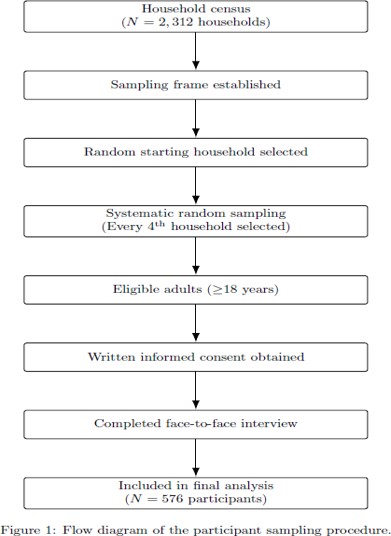
In this community-based cross-sectional study, the minimum required sample size was calculated to be 288 participants. To improve the statistical power of the study and increase the precision of the estimates, the sample size was doubled, resulting in a final sample of 576 participants.
Participants were adults aged 18 years and above residing in selected slum and urban areas of Dhaka City, Bangladesh. The study examined the association between socioeconomic status and vulnerability to developing mental health disorders among adults from different socioeconomic backgrounds. Socioeconomic status comprised monthly household income together with other demographic characteristics, including education, employment, marital status, family type, age, and sex.
A systematic random sampling technique was used for participant selection. Households were randomly selected based on a household census obtained from the Directorate General of Health Services (DGHS), with a sampling frame of 2,312 households. One eligible adult from every fourth household, following the selection of a random starting point, was interviewed. If more than one eligible adult was present in a household, one respondent was selected randomly. Individuals who refused to participate or were physically unable to complete the interview were excluded from the study.
For descriptive analyses, participants were classified into three socioeconomic groups according to monthly household income: low income (≤15,000 BDT); lower-middle income (15,001–30,000 BDT); and upper-middle income (>30,000 BDT). Participants representing the low-income group were recruited from the slum areas of Kamrangirchar and Mirpur, whereas participants from the lower-middle- and upper-middle-income groups were recruited from the residential areas of Dhanmondi, Bashundhara, and Banasree.
Data Collection Procedure
The study was conducted between June 2019 and February 2022, with data collection carried out between 2019 and 2020. Research ethics approval was obtained from the Ethical Review Committee of the Centre for Injury Prevention and Research, Bangladesh. Written informed consent was obtained from all participants. De-identified data were used, and participants were free to decline participation or withdraw from the study at any time without consequence.
Face-to-face interviews were conducted using a pre-tested structured questionnaire and the World Health Organization Self-Reporting Questionnaire-20 (SRQ-20), a widely used screening instrument for common mental disorders in community settings (Harpham et al., 2003; Sartorius & Janca, 1996). The Bangla version of the SRQ-20, validated by the National Institute of Mental Health, Bangladesh, was used in this study (Netsereab et al., 2018). Before each interview, participants were informed about the purpose and significance of the study. During the COVID-19 lockdown, data collection was temporarily suspended and subsequently resumed using appropriate personal protective equipment, including face masks.
Variables and Instruments Mental Health Assessment
Mental health status was assessed using the World Health Organization Self-Reporting Questionnaire-20 (SRQ-20). The SRQ-20 consists of 20 dichotomous (Yes/No) items assessing symptoms experienced during the preceding 30 days. Responses were scored as 1 ("Yes") or 0 ("No"), yielding a total score ranging from 0 to 20, with higher scores indicating poorer mental health status.
Participants with a total SRQ-20 score of ≥7 were classified as vulnerable to developing a mental health disorder, whereas those scoring <7 were classified as not vulnerable. In addition to the overall SRQ-20 score, symptom-specific analyses were conducted using predefined domains comprising cognitive symptoms (items 8, 12, and 13); anxiety/depression symptoms (items 4, 6, 9, and 10); and somatic symptoms (items 1, 2, 3, and 7).
Sociodemographic and Socioeconomic Variables
Sociodemographic information was collected using a structured questionnaire. Variables included age, sex, educational attainment, marital status, employment status, family type, and place of residence. Household characteristics, including access to electricity, cooking gas, telephone services, ownership of vehicles, and household furniture, were also recorded.
Socioeconomic status was assessed using monthly household income together with other socioeconomic characteristics. Monthly household income was categorized into three groups: low income (≤15,000 BDT); lower-middle income (15,001 - 30,000 BDT); and upper-middle income (>30,000 BDT).
Statistical Analysis
Data were analyzed using the Statistical Package for the Social Sciences (SPSS) version 24. Completed questionnaires were reviewed daily for completeness and accuracy before data entry and analysis.
Descriptive statistics, including frequencies, percentages, means, standard deviations, medians, and ranges, were used to summarize participant characteristics and SRQ-20 scores. Participants were classified as vulnerable (SRQ-20 score ≥7) or not vulnerable (SRQ-20 score <7).
Associations between socioeconomic characteristics and vulnerability to developing mental health disorders were initially examined using Pearson's chi-square test or Fisher's exact test, where appropriate. Epidemiologically relevant variables, including monthly household income, age, sex, education, employment, marital status, and family type, were subsequently entered into a multivariable logistic regression model to estimate adjusted odds ratios (AORs) and 95% confidence intervals (CIs) while controlling for potential confounding. Monthly household income was considered the primary exposure variable, whereas age, sex, education, employment, marital status, and family type were included as covariates. A two-sided p-value of <0.05 was considered statistically significant.
Results
Low-income participants had a higher vulnerability to developing mental health disorder compared to lower-middle and upper-middle-income participants. The proportion of low-income participants with a score of 7 or higher on the SRQ was 24.3%, compared to 15.7% for lower-middle-income and 8.4% for upper-middle-income participants.
The mean SRQ score was also significantly higher for low-income participants (4.27) compared to lower-middle-income (3.34) and upper-middle-income (2.57) participants. Moreover, it was reported that respondents in the low-income category had 3.7 times higher odds of vulnerability to mental disorders compared to those in the upper-middle income category [OR (95%CI): 3.73(1.47-9.42); p=0.005], and those in the lower-middle income category had 2.2 times higher odds of vulnerability to mental disorders compared to those in the upper-middle income category [OR (95%CI): 2.16(1.21-3.84); p=0.009].
Table1: Gender of the respondents (n=576)
|
Age Categories |
Male (n= 266) |
Female (n= 310) |
Total (n= 576) |
|
Percentage |
Percentage |
Percentage |
|
|
11-20 years |
4.50 |
9.20 |
13.70 |
|
21-30 years |
14.80 |
14.90 |
29.70 |
|
31-40 years |
9.00 |
14.90 |
23.90 |
|
41-50 years |
7.50 |
9.20 |
16.70 |
|
51-60 years |
5.40 |
3.50 |
8.80 |
|
61-70 years |
3.50 |
1.40 |
4.90 |
|
71-80 years |
1.40 |
.70 |
2.10 |
|
81-90 years |
.20 |
- |
.20 |
|
Total |
46.20 |
53.80 |
100.0 |
|
Mean |
36.56 |
||
|
Median |
35.00 |
||
|
St. deviation |
14.889 |
||
|
x2= 25.287; Cramer’s V= .39, df = 7; Sig; P= < .001 |
|||
Among the total 576 respondents, 76 participants met the SRQ-20 cut-off score (≥7), indicating vulnerability. Of these 76 vulnerable individuals, 56 (73.7%) belonged to the low and lower-middle income category, whereas only 20 (26.3%) were from the upper-middle income category. This distribution further confirms that vulnerability is concentrated among lower-income groups.
Table 2: Binary Logistic Regression Analysis of Factors Associated with Vulnerability to Developing a Mental Disorder (N = 576)
|
Variable |
Category |
Unadjusted OR (95% CI) |
p |
Adjusted OR (95% CI) |
p |
|
Gender |
Male (Ref.) |
— |
— |
— |
— |
|
|
Female |
1.56 (0.95, 2.56) |
.081 |
1.60 (0.89, 2.89) |
.120 |
|
Employment status |
> Secondary level (Ref.) |
— |
— |
— |
— |
|
|
≤ Secondary level |
1.41 (0.86, 2.24) |
.173 |
1.35 (0.79, 2.33) |
.273 |
|
Employment status |
Employed (Ref.) |
— |
— |
— |
— |
|
|
Unemployed |
1.39 (0.85, 2.26) |
.189 |
0.96 (0.54, 1.71) |
.879 |
|
Family type |
Nuclear (Ref.) |
— |
— |
— |
— |
|
|
Joint |
1.07 (0.65, 1.77) |
.780 |
1.33 (0.79, 2.24) |
.289 |
|
Marital status |
Married (Ref.) |
— |
— |
— |
— |
|
|
Single/Widowed/Separated |
1.00 (0.51, 2.00) |
.986 |
1.48 (0.63, 3.45) |
.365 |
|
Income category |
Upper-middle & High income (Ref.) |
— |
— |
— |
— |
|
|
Low & Lower-middle income |
2.18 (1.27, 3.74) |
.005 |
2.43 (1.38, 4.29) |
.002 |
The statistical significance of this association was confirmed by both chi-square analysis (p=0.004) and logistic regression models. In the unadjusted model, participants in the low and lower-middle income group had 2.18 times higher odds of vulnerability compared to those in the upper-middle income group (95% CI:1.27–3.74; p=0.005).
After adjusting for gender, education status, employment status, marital status, and family type, income remained an independent predictor, with an adjusted odds ratio of 2.43 (95% CI: 1.38–4.29; p=0.002).
Table 3: Summary of the Association Between Sociodemographic Characteristics and Specific Mental Health Disorders (N = 576) Sociodemographic Variable Anxiety & Depression Somatic Disorder Cognitive Disorder Overall Vulnerability (*SRQ-20 ≥7)
|
Sociodemographic Variable |
Anxiety & Depression |
Somatic Disorder |
Cognitive Disorder |
Overall Vulnerability (*SRQ-20 ≥7) |
|
Age |
No significant association (p = .382) |
No significant association (p = .729) |
Significant association (p < .001); highest prevalence among participants aged 66–75 years |
No significant association (p = .833); vulnerability was relatively higher among participants aged ≤35 years |
|
Education level |
No significant association (p = .659) |
No significant association (p = .644) |
No significant association (p = .228) |
No significant association (p = .884) |
|
Occupation |
No significant association (p = .273) |
No significant association (p = .273) |
No significant association (p = .079) |
No significant association (p = .191) |
|
Marital status |
No significant association (p = .843) |
No significant association (p = .121) |
No significant association (p = .954) |
No significant association (p = .398) |
|
Family type |
No significant association (p = .541) |
Significant association (p = .001); higher prevalence among participants from joint families |
No significant association (p = .097) |
No significant association (p = .780) |
*SRQ-20 = Self-Reporting Questionnaire-20.
The principal finding of this study is the statistically significant association between income category and vulnerability to developing mental health disorders. Participants from the low and lower-middle income group exhibited a markedly higher prevalence of vulnerability (16.6%) compared to participants from the upper-middle income group (8.4%). This nearly twofold difference clearly indicates that economically disadvantaged individuals are disproportionately affected.
Age-specific analysis showed that younger participants (≤35 years) demonstrated higher proportions of vulnerability (30.3% and 26.3%). However, the association between age and overall vulnerability was not statistically significant (p=0.833).
Cognitive disorder, however, was significantly associated with age (p<0.001), with higher prevalence in older participants (66–75 years). This suggests that certain cognitive symptoms may increase with aging, although overall vulnerability remains more strongly influenced by income. Thus, while age influences specific symptom domains, it does not independently predict overall vulnerability in this study.
Education level showed observable trends but no statistically significant association with vulnerability (p=0.884). Higher proportions of vulnerability were noted among participants with no education (26.3%) and those with higher secondary education (31.6%). However, after adjustment in regression analysis, education status was no longer a significant predictor. This suggests that although educational attainment may influence awareness and coping capacity, income disparity has a stronger and more direct impact on vulnerability.
Occupation showed no statistically significant association with overall vulnerability (p=0.191). However, homemakers (30.3%) and participants categorized under “other” occupations (35.5%) demonstrated relatively higher proportions of vulnerability. These findings may reflect hidden economic dependence or social stressors in certain occupational categories. Nevertheless, occupation did not independently predict vulnerability after adjustment.
Marital status was not significantly associated with overall vulnerability (p=0.398). Although married participants showed higher raw numbers of vulnerability, this is likely due to their larger representation in the sample. Family type also showed no significant association with overall vulnerability(p=0.780). However, somatic disorders were significantly higher among joint families (p=0.001). This may reflect interpersonal stress or resource-sharing pressures within extended households.
The multivariate logistic regression model confirmed that income category is the only independent predictor of vulnerability in this study. After controlling for all socio-demographic variables, low-and lower-middle-income participants had 2.43 times higher odds of vulnerability. Other variables (gender, education, employment status, marital status, family type) lost significance in adjusted models, emphasizing the central role of economic disparity.
Discussion
The present study examined the relationship between socioeconomic status and vulnerability to developing common mental health disorders among adults living in selected urban and slum communities of Dhaka City, Bangladesh. The findings show a clear and consistent pattern: participants from lower socioeconomic groups were more vulnerable to mental health problems than those from the upper-middle-income group. Based on the SRQ-20 cut-off score of ≥7, vulnerability was highest among low-income participants, followed by lower-middle-income participants, and lowest among upper-middle-income participants. This pattern was also reflected in the mean SRQ scores, which were highest in the low-income group and lowest in the upper-middle-income group. These findings indicate that psychological distress is not evenly distributed across the study population but is concentrated among participants experiencing greater economic disadvantages.
Income emerged as the most important factor associated with vulnerability in this study. Low-income respondents had 3.7 times higher odds of vulnerability compared with upper-middle-income respondents, while lower-middle-income respondents had 2.2 times higher odds. When low- and lower-middle-income participants were combined, they had more than twice the odds of vulnerability compared with the upper-middle-income group. Importantly, after adjusting for sex, education, employment status, marital status, and family type, income remained statistically significant, with an adjusted odds ratio of 2.43. This confirms that income was the only independent predictor of vulnerability in the multivariable model and suggests that economic hardship has a stronger influence on mental health vulnerability than the other sociodemographic variables examined in this study.
The concentration of vulnerability among low- and lower-middle-income participants is consistent with existing evidence that poverty and socioeconomic deprivation are strongly associated with common mental disorders in low- and middle-income countries. Economic disadvantages may increase vulnerability through several pathways, including chronic financial stress, insecure employment, poor housing conditions, overcrowding, food insecurity, reduced access to healthcare, and limited opportunities for social mobility. In urban Dhaka, these stressors may be especially severe among people living in slum or resource-constrained settings, where daily living conditions can place sustained pressure on mental well-being. Therefore, the findings of this study support the view that mental health vulnerability is closely linked to broader social and economic inequalities rather than being only an individual clinical issue.
Although some differences were observed across age, education, occupation, marital status, and family type, these variables were not significantly associated with overall vulnerability after adjustment. Age-specific analysis showed that younger participants had higher proportions of overall vulnerability; however, this association was not statistically significant. In contrast, cognitive symptoms were significantly associated with age and were more common among older participants, particularly those aged 66–75 years. This suggests that while age may not independently predict overall mental health vulnerability, it may influence specific symptom domains such as cognitive complaints. These findings highlight the importance of examining both overall SRQ-20 vulnerability and symptom-specific patterns when assessing mental health risk in community populations.
Education and occupation showed observable trends but did not reach statistical significance. Participants with no education and those with higher secondary education showed relatively higher proportions of vulnerability, while homemakers and participants in the “other” occupational category also appeared more vulnerable. However, these associations did not remain significant in adjusted analyses. This may indicate that the effect of education and occupation on mental health vulnerability is partly mediated by income or broader socioeconomic disadvantage. Similarly, marital status was not significantly associated with overall vulnerability, and the higher number of vulnerable married participants likely reflected their larger representation in the sample rather than a true independent effect.
Family type was also not significantly associated with overall vulnerability. However, somatic symptoms were significantly higher among participants living in joint families. This finding may reflect household-level stressors, interpersonal tension, caregiving responsibilities, or resource-sharing pressures within extended family structures. In Bangladesh, joint family systems may provide social support, but they may also increase practical and emotional demands, particularly in households facing limited financial resources. Further qualitative or longitudinal research would be useful to understand how family structure influences somatic expressions of distress in this context.
The findings have important public health implications. Because vulnerability was concentrated among low- and lower-middle-income groups, mental health screening and early intervention programs should prioritize economically disadvantaged urban communities. The SRQ-20 may be useful as a simple community-based screening tool for identifying individuals at risk of common mental disorders. However, screening alone is not sufficient. Interventions should also address the structural factors that contribute to psychological distress, including poverty, unstable employment, poor living conditions, limited access to healthcare, and stigma. Integrating mental health services into primary healthcare and community outreach programs may help improve early detection and access to care for vulnerable groups.
This study has several strengths, including its community-based design, inclusion of participants from different income groups, and use of the SRQ-20, a widely used screening instrument for common mental disorders. The use of logistic regression allowed the study to adjust for key sociodemographic variables and identify income as the only independent predictor of vulnerability. However, the findings should be interpreted in light of some limitations. The cross-sectional design does not allow causal conclusions, and SRQ-20 screening indicates vulnerability rather than clinical diagnosis. Self-reported responses may also be affected by recall bias, social desirability bias, or stigma-related underreporting. In addition, the results may not be generalizable to all urban or rural populations in Bangladesh. Future research using longitudinal designs, larger samples, and clinical assessments is recommended to better understand the pathways linking socioeconomic disadvantage with mental health vulnerability.
Conclusion
This study provides important evidence that socioeconomic disadvantage is strongly associated with vulnerability to common mental disorders among adults living in urban and slum areas of Dhaka City, Bangladesh. The findings demonstrate that individuals from low- and lower-middle-income groups were more likely to experience psychological vulnerability compared with those from the upper-middle-income group. After adjusting for key sociodemographic factors, household income remained the only independent predictor of vulnerability, highlighting the central role of economic hardship in shaping mental health risk.
These results suggest that mental health vulnerability should not be viewed solely as an individual or clinical issue, but as a public health concern closely connected to poverty, social inequality, and living conditions. In rapidly urbanizing settings such as Dhaka, financial insecurity, overcrowding, unstable employment, and limited access to healthcare may create persistent stressors that increase the risk of psychological distress. Therefore, improving mental health outcomes requires both accessible mental health services and broader social interventions that address the underlying economic and environmental conditions affecting vulnerable populations.
The study also underscores the importance of community-based screening, early identification, and targeted support for low-income groups. Integrating mental health assessment into primary healthcare and community programs may help identify at-risk individuals before symptoms progress to more severe mental disorders. At the same time, policies aimed at reducing poverty, strengthening social protection, improving housing and employment opportunities, and reducing stigma are essential for promoting mental well-being and reducing mental health inequalities.
Overall, this study contributes to the growing body of evidence on the social determinants of mental health in Bangladesh and highlights the urgent need for equity-focused mental health strategies. Future research using longitudinal designs and larger, more diverse samples is recommended to better understand causal pathways and to guide effective interventions. Addressing socioeconomic inequality should be considered a key component of mental health promotion and prevention efforts in urban Bangladesh.

Open Access By Aditum Open Access Journals id licensed under Creative Commons Attribution 4.0 International License. Based On a Work at aditum.org


