
Clinical Medical Case Reports and Case Series
OPEN ACCESS | Volume 3 - Issue 2 - 2026
ISSN No: 3065-7644 | Journal DOI: 10.61148/3065-7644/CMCRCS


Naila Mafazah1*, Afif Nurul Hidayati2,3,4
1General Practitioner, Unipdu Medika Hospital Jombang, Indonesia.
2Department of Dermatology Venereology and Aesthetics, Faculty of Medicine, Universitas Airlangga, Surabaya, Indonesia.
3Department of Dermatology Venereology and Aesthetics, Universitas Airlangga Hospital, Surabaya, Indonesia.
4Department of Dermatology Venereology and Aesthetics, Dr. Soetomo Academic General Hospital, Surabaya, Indonesia.
*Corresponding author: Naila Mafazah, General Practitioner, Unipdu Medika Hospital Jombang, Indonesia.
Received: September 10, 2026 | Accepted: September 29, 2026 | Published: October 08, 2026
Citation: Mafazah N, Afif N Hidayati. (2026) “Delayed Recognition of Suspected Scabies with Secondary Impetiginization in an Adolescent Boarding-School Resident: A Case Report”, Clinical Medical Case Reports and Case Series, 3(2); DOI: 10.61148/3065-7644/CMCRCS/067.
Copyright: © 2026. Naila Mafazah. This is an open access article distributed under the Creative Commons Attribution License, which permits unrestricted use, distribution, and reproduction in any medium, provided the original work is properly cited.
Background: Scabies may remain unrecognized when chronic excoriation and secondary bacterial infection obscure its characteristic morphology and distribution. Diagnostic delay is particularly consequential in congregate living environments, where untreated close contacts may sustain transmission and reinfestation.
Case presentation: A 15-year-old male student residing in an Islamic boarding school presented with a two-year history of recurrent pruritic lesions. Pruritus was worse at night, with a baseline numerical rating scale score of 7/10, and had initially involved the interdigital spaces. Two of his three roommates reported similar symptoms. Dermatological examination showed multiple bilateral papules and papulonodules involving the anterior lower legs, ankles, and dorsal feet, with excoriations, superficial erosions, adherent yellow-brown crusts, peripheral scaling, and post-inflammatory hyperpigmentation. Based on nocturnal pruritus, previous interdigital involvement, compatible symptoms among close contacts, and clinical findings, suspected scabies with secondary impetiginization was diagnosed. Dermoscopy and microscopic examination of skin scrapings were unavailable. Permethrin 5% cream was applied to the whole body from the neck down on 24 August 2026 and repeated on 31 August 2026. Oral loratadine was prescribed for pruritus. Localized impetiginized lesions were managed with 0.9% sodium chloride wet compresses followed by topical gentamicin three times daily for seven days. Close contacts received concurrent scabies treatment, and potentially contaminated clothing, bedding, towels, and other skin-contact items were cleaned or decontaminated. At follow-up on 4 September 2026, nocturnal pruritus and sleep quality had improved, no new lesions or burrows were identified, and erosions and crusting had substantially resolved. No treatment-related adverse effects were reported; however, longer-term recurrence and reinfestation could not be assessed because further follow-up was unavailable.
Conclusion: Scabies should be considered in patients with chronic nocturnal pruritus and epidemiological exposure even when secondary excoriation and impetiginization dominate the visible eruption. Accurate clinical assessment, completion of a two-application permethrin regimen, concurrent treatment of close contacts, and environmental measures are important for interrupting transmission in congregate living settings.
scabies; impetiginization; adolescent; boarding school
Scabies is a contagious ectoparasitic dermatosis caused by Sarcoptes scabiei var. hominis. It is characterized by intense pruritus, often worse at night, and a variable eruption of papules, vesicles, burrows, nodules, and secondary excoriations. The disease disproportionately affects children and adolescents living in socially disadvantaged or overcrowded settings, where prolonged skin-to-skin contact and delayed recognition promote transmission. Congregate living environments, including residential schools and boarding facilities, therefore represent important settings for transmission, reinfestation, and outbreak propagation. Recent clinical reviews emphasize that careful history-taking regarding close contacts and living conditions remains central to scabies assessment, alongside a complete dermatological examination 1–3.
Despite the common involvement of interdigital areas, flexural wrists, axillae, waistlines, buttocks, perineum, and genitals in classical scabies, the morphology and distribution can vary due to chronic rubbing, past treatments, eczematization, and infections. Such changes can make identification of scabetic lesions more difficult and pose challenges in diagnosis at the bedside level, especially when the active lesions consist predominantly of scratched papules, erosions, crusts, and post-inflammatory hyperpigmentation. Identification through microscopy of mites, eggs, and scybala, and dermoscopy where possible, can aid in diagnosis; but it may still be required in cases where such means are not available. Current guidelines still recommend treatment of the suspect cases and joint management of close contacts in situations of increased epidemiological risk 4,5.
Bacterial infection is one of the clinical complications of scabies. Scratching repeatedly damages the skin barrier, and it can result in bacterial infection, mostly impetiginsation, which includes both staphylococci and streptococci. As demonstrated by a parasitological study in 2024 on scabies with microscopic confirmation, 35.9% of patients have secondary bacterial infection. It is clinically significant as the infection may progress into deep tissue infection and possibly be a factor in post-streptococcal disease 6–8.
This report describes an adolescent boarding-school resident with chronic nocturnal pruritus, a close-contact history, and a lower-limb-predominant papulonodular eruption complicated by clinically diagnosed secondary impetiginization. The case highlights the diagnostic challenge of suspected scabies with an atypical active distribution, the importance of recognizing bacterial superinfection in chronically excoriated lesions, and the potential value of concurrent treatment of close contacts and environmental measures in a congregate residential setting.
Case Presentation
An adolescent male student aged 15 years old who lived in an Islamic boarding school was seen on 24 August 2026, with a two-year history of pruritic skin lesions. The adolescent shared a room with three other students. The pruritis initially affected the interdigital area of his hand and the regions below his knees, but later he developed lesions in both lower extremities and dorsum of his feet. He experienced intense pruritis during nighttime, with an NRS score of 7/10. During the last two years, the pruritis and lesions varied and had never healed.
The patient had been consulted before and told that food allergy might be the cause. Afterward, he restricted himself from various foods to no avail. He tried using an unknown lotion that did not show any improvement. He denied having fever or any pain in the lesions. Prior to consultation, some active lesions developed pus and discharged it. As a result of itching and scratching, the lesions had been ruptured or excoriated.
Similar pruritus was noted among two of the patient’s three roommates. There was a past history of close contact with other students who had pruritus as well as sleeping in close proximity to each other. He and other students would often share their sarongs in group activities. Mattresses, pillows, blankets, and clothes were normally personal items and were not usually shared. No one else from the household had similar symptoms.
Physical examination revealed multiple polymorphic lesions with bilateral distribution and relative symmetry over the anterior crura, extending up to the ankles and dorsum pedis. The lesions were comprised of discrete papules and papulonodules that were round to oval and varied in size. Some of the lesions were excoriated and superficially eroded with adherent yellow-brown crust with peripherally located scale. Multiple hyperpigmented macules and papules, which represent post-inflammatory hyperpigmentation, were seen in between. No active interdigital lesions were seen at presentation.
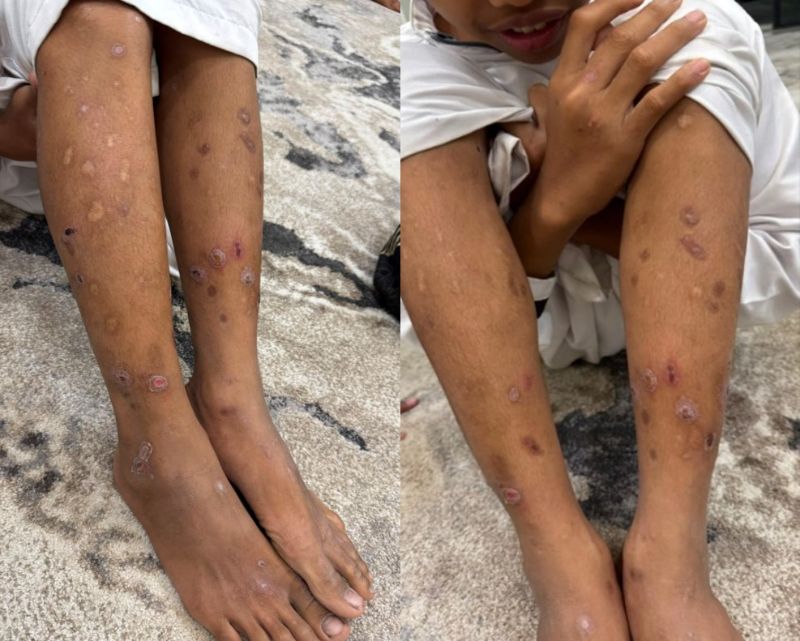
Figure 1. Pretreatment clinical photographs of lower-limb-predominant suspected scabies with secondary impetiginization.
Multiple discrete papules and papulonodules involving both anterior crura, ankles, and dorsal feet. Several lesions demonstrate excoriation, superficial erosion, adherent yellow-brown crust, and peripheral scale, consistent with clinically suspected secondary impetiginization. Multiple hyperpigmented macules and papules represent post-inflammatory hyperpigmentation. The distribution is bilateral, scattered, and relatively symmetrical.
The clinical diagnosis of probable scabies and superadded impetigo was made. The diagnosis fit the 2020 International Alliance for the Control of Scabies C2 criterion: atypical lesions or atypical distribution along with two history characteristics, which are itch and contact history. Impetigo due to the secondary superficial bacterial infection from preceding pustules/purulent lesions and crusted erosions was clinically diagnosed. Dermoscopy and microscopic skin scraping were not done because the facilities were unavailable.
Other diagnoses to rule out included papular eczema, chronic prurigo, papular urticaria, arthropod bite reaction, and other pruritic papular dermatoses. Scabies was the most probable diagnosis based on nocturnal itching, previous interdigital lesions, contact exposure, and common symptoms of roommates.
Permethrin 5% cream was applied on 24 August 2026 night. The patient was advised to apply the cream to his whole body starting from the neck down, including interdigital spaces, subungual regions, genital area, buttocks, ankles, and feet and leave it for 8-14 hours. The second whole-body treatment with permethrin 5% cream was done on 31 August 2026, 7 days after the first application. Loratadine 10 mg per day orally was prescribed for pruritus.
Localized secondary impetiginization was managed with sterile 0.9% sodium chloride wet compresses applied to crusted and eroded lesions three times daily, followed by topical gentamicin three times daily for seven days. The patient had no fever, lesion-related pain, or clinical features suggestive of cellulitis or systemic bacterial infection. The patient’s three roommates and other close contacts with compatible symptoms received concurrent treatment for suspected scabies. Sarongs, towels, clothing, bedding, and other skin-contact items were cleaned or decontaminated concurrently to reduce the risk of continued transmission and reinfestation.
During a follow-up on 4 September 2026 conducted 11 days after the initial examination and 4 days following the second permethrin application, there was an alleviation of overall pruritus, both daytime and nighttime, accompanied by improvements in the quality of sleep. There were no new papules, vesicles, nodules, and burrows identified. The examination revealed marked improvement in the crusted and eroded lesions with post-inflammatory hyperpigmentation and little excoriations on the bilateral anterior crura, ankles, and dorsum of feet. There was no notable crusting, no formation of new pustules, and no signs of cellulitis noted. The patient was compliant with the medication and did not experience any adverse effects of the medications including permethrin, loratadine, and topical gentamici.
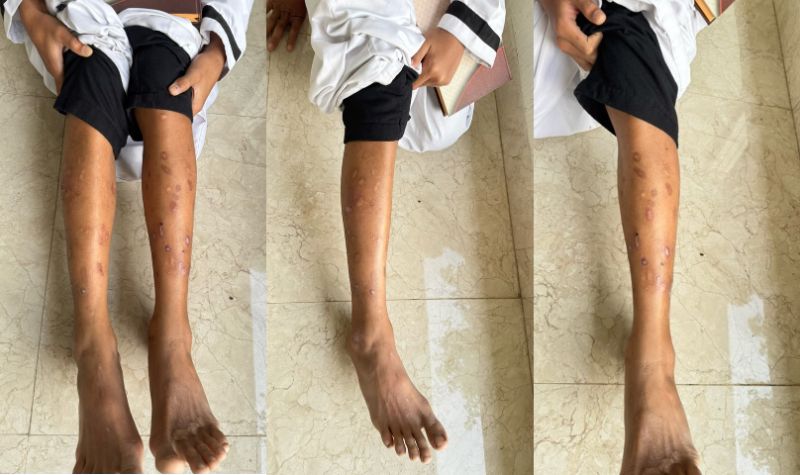
Figure 2. Post-treatment clinical photographs at follow-up on 4 September 2026
Marked reduction in active inflammatory lesions, erosions, and crusting after topical permethrin 5%, normal saline wet compresses, topical gentamicin, coordinated close-contact treatment, and environmental control measures. Residual multiple hyperpigmented macules and a limited number of excoriated papules are visible on both anterior crura, ankles, and dorsal feet. No obvious new pustules, extensive crusting, or active burrows are seen in the photographed areas
Overall, the clinical course was consistent with resolution of lower-limb-predominant suspected scabies with secondary impetiginization after permethrin 5%, saline compresses, topical gentamicin, simultaneous treatment of close contacts, and environmental decontamination. Parasitological confirmation could not be obtained because dermoscopy and skin-scraping facilities were unavailable.
Table 1 Timeline of events
|
Date |
Event |
|
Approximately 2024 |
Nocturnal pruritus began, initially involving interdigital spaces and below-knee areas |
|
2024–August 2026 |
Relapsing symptoms; food avoidance and unidentified lotion-like topical treatment did not provide meaningful improvement |
|
24 August 2026 |
Baseline assessment; suspected scabies IACS C2 with clinically diagnosed secondary impetiginization; pretreatment photographs; first permethrin 5% application that night; loratadine 10 mg once daily; saline compresses three times daily followed by topical gentamicin three times daily; contact treatment and environmental measures initiated |
|
31 August 2026 |
Second whole-body application of topical permethrin 5% completed, seven days after the first application |
|
4 September 2026 |
First follow-up: nocturnal itch and sleep improved; no new lesions/burrows; crusting reduced; residual hyperpigmentation and limited excoriation remained |
Discussion
Scabies is caused by the mite Sarcoptes scabiei var. hominis and is transmitted through prolonged skin-to-skin contact or, less commonly, via fomites such as shared bedding and clothing, conditions intrinsic to boarding-school dormitory life9. The 2020 IACS Consensus Criteria classify diagnostic certainty into three tiers: Confirmed scabies (A), requiring direct visualization of mites, eggs, or feces via microscopy or dermoscopy; Clinical scabies (B), based on burrows, genital lesions, or typical lesions in a typical distribution with two supportive history features; and Suspected scabies (C), relying on fewer typical findings plus history features such as itch and known contact exposure. In an institutional case report, documenting which IACS level strengthens diagnostic rigor before addressing management 10.
A key diagnostic pitfall is that secondary bacterial infection presentation, such as impetiginization, crusting, and purulent exudate from excoriated burrows, can obscure the primary scabietic lesions, leading clinicians to misattribute the presentation solely to pyoderma or cellulitis rather than an underlying mite infestation 11,12, likely seen in this case, where recurrent skin manifestations of itchiness and purulent exudate for 2 years were only treated as skin infections. Without detailed clinical history taking into account, it will still be treated as a skin infection not scabies. With atypical presentation from IACS guidelines, this scabies case is diagnosed as C2 classification. It can be diagnosed with B2 classification with typical distribution on feet and leg, but it has atypical lesion presentation. History taking is noted to have nocturnal itch with positive contact aligned with its environmental demography. Careful analyses of lesion presentation and distribution with history taking is needed to carefully diagnosis a scabies infestation.
First-line pharmacologic therapy as recommended by the 2025 BASHH guideline and many national treatment protocols is dependent upon two drugs: topical permethrin 5% cream or oral ivermectin 200 micrograms/kg with similar effectiveness in clinical trials. In both instances, a second dose 7-14 days after the initial dose must be given in order to eradicate the newly-hatched mites from the eggs missed during the first dosage, as neither of these drugs can destroy all of the eggs. Additionally, adjunct therapies include taking a warm shower using soap before the first application. There is some evidence that hot baths increase systemic absorption without providing any additional treatment benefits, oral antihistamines or calamine lotion for continued pruritus up to 6-12 weeks following treatment even after successful treatment and eradication of the mites, and informing patients that the cessation of itching occurs after the parasitic infection itself has been cured. Failure of the treatment or recurrence after 2 full topical doses, or continued development of new burrows beyond 6-12 weeks should lead to increased therapy with oral ivermectin or combination therapy 11,12.
|
Treatment |
Regimen |
Key Application Notes |
|
Permethrin 5% |
Apply neck-to-toe (whole body in infants/elderly), leave 8–24 hours, repeat at day 7 |
Reapply if hands washed during treatment window; treat all skin folds, finger webs, nails |
|
Oral ivermectin |
200 mcg/kg, two doses 7–14 days apart (up to day 15) |
Preferred where topical adherence is poor or coverage is difficult; avoid in pregnancy/lactation and low body weight per label |
|
Malathion 0.5% |
Applied whole body including scalp/face/ears, two applications day 1 and day 8, left 24 hours |
Alternative when resistance or permethrin failure suspected; alcohol-based lotion should be avoided on excoriated skin |
|
Crusted scabies (if suspected) |
Combined oral ivermectin (3, 5, or 7 doses over 28 days per severity grade) plus topical permethrin/benzyl benzoate and keratolytic (lactic acid-urea) |
Reflects highest mite burden; requires isolation precautions and specialist input. |
For classical scabies, “repeated permethrin” should distinguish the planned second application from additional courses given because of suspected failure. Current guidelines recommend permethrin 5% applied twice, with the second application 7–14 days after the first; each application should cover the entire body and remain for approximately 8–12 hours before washing off. The second application targets newly hatched mites because topical scabicides are not reliably ovicidal and also compensates for incomplete coverage during the first application 13–15. A systematic review found treatment-failure prevalences of 8.5% after a single permethrin application and 7.3% after repeated application, without a statistically significant subgroup difference 16.
Repeated courses beyond the standard two applications should not be based on persistent itching alone. Post-scabetic pruritus can persist for several weeks and occasionally up to three months, whereas new burrows, newly developing typical papules, visible mites, or ongoing transmission are more convincing evidence of active infestation14,17. Patients with persistent symptoms should therefore be reassessed approximately four to six weeks after completing treatment, ideally using dermoscopy or microscopy when available, before further scabicide exposure 13,18.
Excoriation from intense pruritus disrupts the skin barrier, permitting secondary colonization chiefly by Staphylococcus aureus and Streptococcus pyogenes, manifesting as impetiginization, folliculitis, abscesses, or cellulitis, and in endemic settings carrying downstream risk of post streptococcal glomerulonephritis and rheumatic heart disease. Because the secondary infection often dominates the visual presentation, it is essential that antimicrobial therapy be paired with definitive scabicidal treatment. Treating only the bacterial infection without eradicating the mite reservoir predictably leads to relapse19.
For this patient, the treatment with the topical antibiotic was deemed appropriate since the secondary bacterial infection was localized and clinically compatible with the non-bullous impetiginization. The course of treatment using the topical mupirocin 2% or fusidic acid 2% would be about five days, based on the sensitivity patterns locally prevalent. The topical gentamicin might have been used in this patient for the localized secondary bacterial infection. Nevertheless, it should not be prescribed as the empirical therapy for the impetiginized scabies. The use of the topical antibiotic in the treatment of the secondary bacterial infection in the scabies patients is warranted when the secondary infection is limited to the localized, uncomplicated non-bullous impetigo and the patient is systemically stable20, while NICE suggests that fusidic acid 2% should be used thrice daily for five days, with mupirocin 2% thrice daily used as an alternative in case of fusidic acid resistance, the choice should be made based on local resistance trends 21.Topical antibiotics address only the bacterial component and must not replace definitive scabicidal treatment. Widespread lesions, treatment failure, bullous disease, cellulitis, abscess formation, or systemic symptoms would warrant bacterial culture when feasible and escalation to an appropriate systemic antibiotic.
Systemic antibiotic therapy should cover gram-positive organisms for a minimum of seven days, guided by local antimicrobial resistance patterns. Flucloxacillin, or cefalexin as an alternative in penicillin-intolerant patients, is typically first-line, with erythromycin or trimethoprim-sulfamethoxazole reserved for patients with penicillin allergy. The timing of antibiotic initiation relative to scabicide application is flexible. It may be started concurrently or delayed by up to forty-eight hours to allow partial healing of erosions and reduce absorption or irritation interactions, and antiseptic soaks such as dilute potassium permanganate at a 1:10,000 concentration are useful adjuncts for impetiginized lesions21,22.
Individual cure without concurrent contact treatment and environmental decontamination is the principal driver of recurrent scabies in institutional settings, making this the pivotal discussion point for a case framed around breaking the cycle of reinfestation. All close contacts, including roommates, dormitory-mates, and household members from the past six weeks, should be treated simultaneously regardless of symptoms, since asymptomatic mite carriage during the three-to-six-week incubation period sustains transmission chains 11,12.
Environmental decontamination should focus on washing all clothing, bedding, and towels used in the preceding seventy-two hours at a temperature above 50°C, since mites separated from a human host die within roughly seventy-two hours. Items unsuitable for hot washing should instead be tumble-dried, sealed in plastic bags for seventy-two hours, or treated with insecticidal powder or aerosol only as a last resort. Furniture, mattresses, and carpets can be disinfected through heat treatment such as steaming or through physical removal of mites by vacuuming, rather than through chemical treatment. At the institutional level, temporary exclusion from shared school activities until the day after first treatment, along with the use of gloves and aprons by staff handling affected individuals for twenty-four hours post-treatment, further limits onward transmission 23.
At the boarding school level, Indonesian studies consistently link high scabies prevalence to overcrowded dormitories, shared mattress and bedding practices, and poor personal hygiene behaviour, with prevalence figures ranging from 21% to over 80% across different boarding schools nationally 24. This is markedly higher than Indonesia's general population prevalence of 4.6% to 12.95%, underscoring that institutional transmission dynamics, and not merely individual hygiene lapses, perpetuate reinfestation 25,26. Environmental sanitation quality has also been shown to independently predict scabies risk, with a prevalence ratio of approximately 0.7 for good versus poor sanitation practice, reinforcing that structural and environmental interventions are as important as individual treatment 27.
For settings where community prevalence is high, the WHO 2021–2030 Neglected Tropical Diseases roadmap now supports ivermectin-based mass drug administration as the preferred population-level control strategy once prevalence reaches or exceeds 10%. This approach consists of two oral ivermectin doses given seven to fourteen days apart, with topical permethrin offered to those in whom ivermectin is contraindicated, delivered over three to five rounds before reassessment, and discontinued once prevalence falls below 2% 28. This strategy, first operationalized nationally in Fiji and the Solomon Islands, reflects an evidence-based shift away from case-by-case treatment toward whole-community intervention in high-burden institutional settings such as pesantren, where sustained health education, hygiene behavior change, and coordinated bedding and laundry protocols must accompany any mass drug administration rollout to achieve durable control 29.
Limitation
This case has several limitations. Scabies was not confirmed by dermoscopy or microscopic examination of skin scrapings, and bacterial culture was not performed; therefore, the diagnoses of scabies and secondary impetiginization remained clinical. The active eruption was modified by chronic scratching and crusting, which limited morphological assessment and reduced diagnostic certainty. Clinical response followed multiple concurrent interventions, including permethrin, local wound care, topical antibiotic therapy, contact treatment, and environmental measures; therefore, the contribution of each intervention could not be determined independently. Follow-up was limited to a single visit 11 days after the initial assessment; consequently, long-term clinical cure, recurrent infestation, and reinfestation could not be evaluated. In addition, outcomes among close contacts were based on patient report rather than standardized clinical assessment.
Conclusion
This case shows that recurrent scabies cannot be resolved by treating the visible secondary bacterial infection alone, since it often masks an undertreated mite infestation driving relapse. Effective individual cure requires accurate IACS-based diagnosis, repeat-dosed scabicidal therapy (permethrin or ivermectin), and concurrent antibiotics for the bacterial component. In a dormitory setting, however, individual cure alone fails because asymptomatic contacts and environmental mite reservoirs sustain transmission. Breaking the cycle therefore demands simultaneous treatment of all close contacts and environmental decontamination alongside patient management. Given the high scabies burden reported in Indonesian pesantren, this case supports considering WHO-endorsed mass drug administration and sustained hygiene interventions where institutional prevalence is high, shifting the goal from individual symptom relief to institutional-level disease control.
Acknowledgement
The authors would like to express sincere gratitude to UNIPDU Medika Hospital Jombang for the support, encouragement, and positive environment provided during the preparation of this case report. The authors also appreciate all researchers and authors whose published studies and scientific contributions were included in this review and became valuable references in the development of this study.


Open Access By Aditum Open Access Journals id licensed under Creative Commons Attribution 4.0 International License. Based On a Work at aditum.org


