
Agricultural Research Pesticides and Biofertilizers
OPEN ACCESS | Volume 6 - Issue 1 - 2026
ISSN No: 2994-0109 | Journal DOI: 10.61148/2994-0109/ARPB


Idriss Ahamed1 , Halima Mohammed Abba2 , Mohammed Alhaji Bello3* , Abubakar Mohammed Maimota4
1,2 Department of Plant Sciences, Gombe State University, Gombe, Nigeria.
3,4 Department of Biology, Umar Suleiman College of Education, Gashua, Nigeria.
*Corresponding author: Mohammed Alhaji Bello, Department of Biology, Umar Suleiman College of Education, Gashua, Nigeria.
Received: June 01, 2026 | Accepted: June 10, 2026 | Published: June 12, 2026
Citation: Ahamed I, Halima M Abba, Mohammed A Bello, Abubakar M Maimota, (2026) “Effect of Weeds on Growth and Yield of Two Wheat Varieties (Triticum aestivum) Norman Borlaug and Atilla Gan Atilla in the Sudan Savanna, Yobe State, Nigeria” Agricultural Research Pesticides and Biofertilizers, 6(1). DOI: 10.61148/2994-0109/ARPB 092.
Copyright: © 2026 Mohammed Alhaji Bello. This is an open access article distributed under the Creative Commons Attribution License, which permits unrestricted use, distribution, and reproduction in any medium, provided the original work is properly cited.
Weeds compete with crops for sunlight, water, nutrients and space which eventually cause yield loss. The study was aimed to investigate the effects of weeds on vegetative growth and yield of two wheat varieties (Triticum aestivum) Norman Borlaug and Atilla Gan Atilla and to provide the checklist of weed species associated with growth and yield of this two wheat varieties and their phenology as well in Usur Bade Local Government Area, Sudan Savanna, Yobe State, Nigeria. A randomized complete block design (RCBD) was adopted, with three replicates. Each block (replication) contained all four treatment levels randomized within the block. Weed-free plot was manually weeded constantly while weedy plot was left undisturbed to allow natural weed growth. Weed identified were collected and kept in the herbarium specimen. Standard key and checklist were utilized for plant identification and organized using Angiosperm Phenology Group (APG) classification system. A total number of 43 plants species, distributed within 16 families and 34 genera were identified. Weeding significantly increase the plant height (PH) of Norman Borlaug at 8 weeks with (PH 30.87 cm) in comparison to Atilla Gan Atilla with (PH 14.43 cm) at 4 weeks respectively, also on the number of tillers (NT) Norman Borlaug at 4 weeks has the highest value of (NT 5.99 cm) in comparison to Atilla Gan Atilla with (NT 5.39 cm) respectively, while the number of leaves (NL) of both varieties Norman Borlaug and Atilla Gan Atilla at week 8 and 4 weeks are (NL 3.96 cm) and (NL 2.96 cm). The finding also reveals weeding significantly increase leave area (LA) of Norman Borlaug at 4 weeks with a value (LA 14.92 cm) and stem girth (SG) at 8 weeks with value (SG 1.48 cm) in comparison to Atilla Gan Atilla at 4 weeks with value (LA 13.71 cm) and stem girth at 8 weeks value (1.46 cm) respectively. On the yield, The weeded plots (W) showed significantly higher grain yield value 239.02 kg ha-1 for Norman Borlaug in comparison to non-weeded plot (NW) with value 236.46 ha-1 for Atilla Gan Atilla at p<0.05 and includes the number of replications using statistical test (ANOVA), the phenology revealed the highest value of planting to flowering in days was recorded on Norman Borlaug at 60 days produce flowers and on maturity weeded plot reaches (W 102 days to matured, compare to Atilla Gan Atilla flowering recorded 72 days and to matured value 127 days in (NW) yield productivity of both varieties resulted in better growth and yield than non-weeded condition, as also shows on phenology. The findings indicate that weed infestation is a major challenge to wheat production, significantly reducing wheat crop yield. The study recommends long term extension services so as to train the local farmers on the effects of weeds on vegetative growth and yield performance on wheat, and to trained farmers on the different methods of weeds control and to choice the best method to minimized the effect of weeds in order to increased wheat productivity.
Growth, Phenology, Productivity, Triticum aestivum, Varieties, Weed, Wheat
Wheat (Triticum aestivum L.) is a staple food for over 2.5 billion people worldwide, providing a significant portion of dietary energy and protein (Bayisa et al. 2025) wheat, commonly known as Triticum aestivum is a cereal grass place in the family poaceae with many species of wheat including Ttriticum aestivum and Triticum durum collectively make the genus Triticum. Wheat is grown throughout the world except in very warm tropics largely because of its wide adaptation and ability of its gluten to be moulded in different end products (Singh et al. 2023). The major producers of wheat in the developed world are Europe and North America, in the developing world, particularly China and India. At the same time, consumption largely outpaces production in Asia and Africa, making these two regions major net importers of wheat (Grote et al., 2021).
In Nigeria, wheat (Triticum aestivum L.) is a strategic crop, because the domestic consumption is 4,200,000 MT Lake Chad Research Institute (LCRI, 2014) and Nigeria spends over US $ 4.0 billion foreign exchange annually on its imports, but national production is only 300,000 MT Lake Chad Research Institute (LCRI, 2016). Wheat is the second largest crop after maize in terms of production, about 771.71 million tons in 2017 in the world (Poudel et al., 2020). Wheat plays an indispensable role in global food security, providing approximately 20% of the world’s protein and caloric intake, also as a dietary staple for over 35% of the global population (Sharma and Sharma, 2025). Wheat occupies approximately 25% of the global cereal production area (Punia et al., 2019). It is typically milled into flour which is then used to make a wide range of foods including many forms of noodles and snacks. About 80% of the global cereal production comes from wheat, rice and maize, however, the yield is significantly affected by weed (Javald et al., 2020). The varieties of wheat are called clean white or brown if they have high gluten content and they are called soft or weak flour, if gluten content is low (Haruna, et al., 2017).
Wheat differs from other cereals because of the high gluten quality, and dietary (nutritional) and medicinal values. In Nigeria latitudes 10-14 N is generally suitable for commercial wheat production under irrigation between November to march, when the temperature ranges from 15-20oC lake chad research institute (LCRI, 2016).
Weeds compete with rice (crop) plants for nutrients, water, light, and space, leading to reduced crop growth and productivity (Mohammed et al. 2026) Weeds are unwanted plants that compete with the crop plants for nutrients, water, space, and light and this competitive ability of weeds depends on the various unrelated factors such as growth form of weeds, their density, and time of weed emergence in relation to crop emergence.
Wheat crops are affected by different varieties of weeds this include grasses, sedges and broadleaf plants. Grasses such as Digeteria horizantalis wild, Eleusine indica, Eragrostis ciliaris R.B, Glyceria fluctan, Echinochloa colona L, Portulaca oleracea, and sedges like Cyperus iria, Cyperus rotundus, Cyperus esculentus, Kyllinga erecta, and broadleaf such as Cleome gynandra, Commelina benghalensis ( L)., Ageratum conyzoides Linn. Eclipta prostata Linn, these weeds usually affect rice and wheat crops in a field. Weed infestation is a significant challenge that severely restricts the productivity of crops, among the various biotic stresses that affect crop production, weeds are recognized as one of the most significant and challenging issues (Faieq, 2025). Weeds are responsible for approximately one-third of the total crop losses caused by pests (Faieq, 2025).
The floristic composition, diversity and distribution of weeds within the crop fields depends on the cultural practices within the agricultural fields, crop type, tillage systems, soil type, moisture availability, location and season (Tiwari et al., 2020).
Yield loses associated to weeds in wheat may occur from initial stages to the last stage of maturity, harvest, threshing, winnowing and storing of wheat grains. Weeds are more resistant, hardy and making faster growth than wheat and retard growth and cause significant yield loss due to competition. Generally, weeds reduce wheat yield by 30-50% losses may reached up to 100% depending on weed species and density (Ayana, 2020); the level of damage differs depending on growing stage, vigor, seed production, regenerative capacities and time of germination. Weeds decrease productivity and even the quality of the harvested products, whether due to competition for water, sunlight, nutrient and space, allelophathy or parasitism (Monteiro and Santos 2022).
Studies on the floristic composition of weed communities and distributions of weed species provide weed biologist with the quantitative information that is necessary for designing weed management programs and provide baseline data for measuring changes in the weed flora in future. Moreover, such studies are helpful in determining how a weed population changes over time in response to selective pressures due to field management practices (Nkoa et al., 2015). Timely and accurate identification of paddy weeds is essential for implementing effective control measures, emphasizing their economic importance and providing visual guides to support farmers botanist, agronomist and researchers (Mohammed et al. 2026).
Nigeria has many wheat-producing states, but commercial production is primarily in the northern states such as Jigawa, Kano, Borno, Katsina, Kaduna, Kebbi, Sokoto, Yobe, Bauchi, and Zamfara State. Additionally, new areas with highland regions such as Plateau, Taraba and Cross River State (specifically Mambila and Obudu) through new rainfed varieties that can grow in the rainy season.
In general, weeds present the highest potential yield loss to crops along with pathogens (fungi, bacteria, etc.) and animal pests (insects, rodents, nematodes, mites, birds, etc, which are of less concern (Oerke, 2006). In addition, they harbor insects and pathogens which attacked crop plants. Furthermore, they destroy native habitats, threatening native plants and animals.
The existing study primarily focused on the effect of weeds on growth and yield of two wheat varieties (Triticum aestivum) Norman Borlaug and Atilla Gan Atilla and the objectives is to provide a checklist of weed species and to determine the phenology in Usur Bade Local Government Area, Sudan Savanna, Yobe State, Nigeria where inadequate research conducted on the effect of weed on wheat growth and yield.
Materials And Methods Description of the Study Area
Usur village is a town located approximately six kilometers away from Gashua town, Gashua which is the headquarters of Bade Local Government Area. Bade Local Government Area is located in Yobe State, the Northeast, Nigeria between latitude 120 52I 18’ N and longitude 100 58I 47’ E with an altitude of 335m above sea level, it has an area of 772 Km2 with a population of 139,804 (NPC, 2010) (Figure 1) (Bello et al. 2024; 2025; Mohammed et al. 2026).
Vegetation
Usur village vegetation type is Sudan savannah with scattered acacia trees, there is an area of Sahel savannah consisting of highly sandy soil, clay and loamy soil in some place. The plants include mostly short and few tall trees about 5-10m e.g. Anogeissus leiocarpa, Acacia seyel, Balanites aegyptica, Faidherbia albida and grasses Cenchus biflorus, Heteropogon contortus, Tarmarindus indica, Baobob (Bello et al., 2024; 2025).
Climate
The average annual rainfall of the study area is 500-800mm with seasonal rainfall. Temperature ranges between 10-200C in December-January and 34-400C in March-May (Bello et al. 2025; NEAZD, 2015; Hassan et al., 2019). The soil is sandy loamy, high in bulk density, low porosity, weak structure and low in organic matter content (Alhassan et al., 2018; Bello et al. 2025).
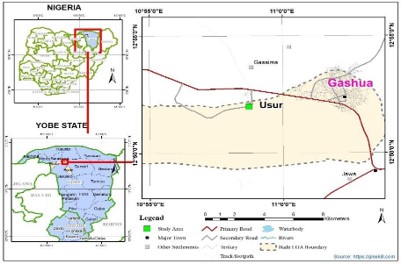
Figure 1: Map of Nigeria showing Usur, Bade Local Government Area, Yobe State
Experimental Design
A Randomized Complete Block Design (RCBD) was adopted, with three replicates to account for potential soil variability across the field (Gomez and Gomez, 1984). Two wheat varieties Norman Borlaug and Atilla Gan Atilla were evaluated under two weed management conditions; weed-free and weedy conditions. Each block contained all four treatment laid in a randomized complete block design (RCBD) as in the beginning of the paragraph, then the plots size’s, inter and intra plot boundary was made in the field. Each plot measured 3 m x 4 m, with spacing 20cm between rows in plants resulting in a planting density for approximately 200 seeds.
Table 1 Showing methods adopted for the collection of data
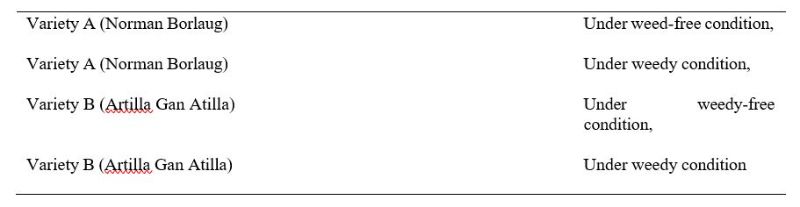
Randomized Complete Block Design (RCBD), Field work, 2025
Planting Method
Broadcasting method was used in an area of one hectare ploughed and seedbeds manually with hoe and shovel in rows, water channels passing between the rows linking every plot to allow water flows for irrigation and viability test.
Weed Parameter
Weed assessments were conducted at different wheat growth stages. The data collected on weed species composition and dominance.
Growth Parameters
Growth parameters were measured bi-weekly from 20 randomly selected plants per plot and these include plant height, number tillers, leaves, leaf area and stem girth.
Yield Parameters
At maturity yield parameters recorded are spike length (cm) number of grains per spike and grain yield in kg.
Temperature Ideal for Wheat Germination
Wheat can germinate at any temperature only that it will not bear grains unless at low temperature because it is a temperate crop, wheat seed germination generally falls within the range of 12°C - 25°C, with the optimum around 20–25°C. High temperature above 30°C tends to reduce germination. Wheat plant requires about 14-15°C optimum average temperature at the time of maturity, with 50-60% humidity for growth, above 25°C tends to decrease grain weight (Ruspa et al., 2023).
Soil Requirement for Wheat Germination
The soil in the study area is sandy loamy, high in bulk density, low porosity, weak structure and low in organic matter content that make the area advantage for farmers for wheat production where appropriate application of urea and NPK fertilizer were recommendable. According to Gikunda, (2020) who reported that wheat grow in a wide range of soils, but well-drained loamy soils rich in organic matter are considered the most suitable for germination and early establishment while light-textured sandy soils may not retain enough moisture for uniform germination and heavy clay soils can cause poor aeration and seedling emergence problems.
Identification of Specimen
Weeds were identified in the field by distinguished them from the desired plants by observing their morphological features such as roots, stem, leaves, flowers and fruits; the leaf shape, color, texture, margin and size of the leaf and leaf arrangement should be observe carefully, the flowers color, flower shape, flower arrangement should be observed; the stem and the roots system was observed by their distinguishing features of the stem such as hairy or smooth and root system such as tap root or fibrous root and root like structure like bulb and rhizomes was also observed other distinguishing features was also observed in the field for accurate identification. The use of weed floras, manuals, checklist and standard keys was used during identification like Akobundu and Agyakwa (1998) and Balogun, (2015), weed were organized using Angiosperm Phenology Group (APG) III) classification system. The weed specimen were collected and compared with herbarium specimen of the department of plant sciences Gombe State University where voucher number was given for each identified specimen, the identified weed species were represented and arranged alphabetically according to the distribution of the family and recognized through Raunkier (1934). The identified voucher samples were deposited at the herbarium of the department of plant sciences, Gombe State University.
Data Analysis
The data collected were subjected to analysis of variance (ANOVA) and the differences among the means were separated at 5% level of probability using Least Significant Difference (LSD) with the help of SPSS V. 29 statistical software.
Results And Discussion
The result showed different weed species associated with growth and yield of Norman Borlaug and Atilla Gan Atilla. The families, genus, species and the common names of (43) species were identified within (16) families and (34) genera (Table 1).
Broadleaves are 30 (69.76%), grass 9 (20.93%) and sedges 4 (9.30%). The family with the highest number of species was Poeceae with 8 (18.60%), followed by Malvaceae 7 (16.27%). The weed species were first grouped based on life cycle and were found the dominant are annual followed by perennial and biennial were the least with corresponding 27, 15, and 1 representing 67.79%, 34.88% and 2.70% respectively. The life form based classification revealed that therophyte were found dominant followed by geophyte with corresponding value 39 and 4 representing 90.69% and 9.30% respectively. The diversity of weed reflects a moderately complex weed flora that may influence the growth and yield of the wheat varieties under investigation. According to a study reported by Gobena et al., (2025) 62 weed species from 33 families were documented in their study on the assessment and identification of major weeds affecting the growth and yield of wheat (Triticum aestivum) The lower number of species in the present study could be attributed to differences in geographical location, field size, and management practices. Also, Gyawali et al. (2022) identified 38 common weed species in a study a review on effects of weeds in wheat (Triticum aestivum L.) and their management practices. In contrast, significantly higher weed species richness was reported by Panda et al. (2020), who documented 277 weed species belonging to 198 genera. These discrepancies can be explained by geographical variation, soil types, land use intensity, and anthropogenic disturbances such as pollution. The most dominant family recorded in this study was Poaceae, with 8 species. This finding is not consistent with the work of Gobena et al., (2025) and Gyawali et al., (2022) on wheat (Triticum aestivum), and reported Astereceae as the most dominant weeds species and this will be due to differences in the geographical location and soil type which consequently determine weeds species in a given area. The finding is aligns with the work of Bello et al., 2023 on their work on weed species composition in paddy field in Usur, Bade local government area, Yobe State, Nigeria, where they found poaceae as the most dominant with 20 species, it is also aligns with previous reports by (Ekeke et al. 2019; Panda et al. 2020 and Samba et al. 2020) who also found Poaceae to be the most represented family in similar agro ecological studies. The predominance of Poaceae may be due to their adaptability, fast growth, and high reproductive capacity, which enable them to thrive in various cropping systems and environmental conditions. Weeds flora can associate with wheat crop cultivation in many different dimensions. The weed flora in wheat fields can vary significantly across different regions and individual fields, this variation depend on a range of factors, including local environmental conditions, irrigation practices, fertilizer application, soil composition, and weed management techniques (Faieq, 2025). Amare, (2014) reported that weed flora in their study consisted of 83.3% broadleaf species, and 16.6% grasses. Among the grasses includes Avena fatua L. Phalaris paradoxa L., while the broadleaf weeds included Caylusea byssinica Meisn., C. trigyna L., Chenopodium album, L.. Weed management practice is very effective in order to have better harvest. Ahmed et al., 2020 in their study conducted in Bangladesh, reported that the common weed species present at the experimental wheat field included Amaranthus spinossus L., Anagallis arvensis L., Celosia argentea L., Chenopodium album L., Cleome rutidosperma DC., Cynodon dactylon (L) pers., Cyperus rotundus L., Digitaria ciliaris (Retz) Koel., Echinochloa colona (L) Link., and Phallantus nururi L. Tillage practice can have a significant impact on the dispersal patterns of weed seeds (Wang et al. 2022), tillage practice are essential in managing weed populations as they help to bury seed deeper in the soil profile (Faeiq, 2025).
Preventive method such as the use of clean farm equipment is very effective. Cultural method like hand weeding at 25 days after sowing (DAS) in wheat crops lead to notable improvement in several yield attributing parameters (Surin, et al. 2013).
Mechanical methods of weed control are also useful in managing weeds in agricultural fields as this approach involve the removal of weeds using tools.
The use of chemicals weed control is effective as the chemical leads to better cuticular penetration and stomatal infiltration, enhancing herbicide translocation and absorption resulting in more effective weed control, a foliar herbicide like clodinafop-propargyl and tribenuron-methyl require surfactant to improve control of weed (Buttar et al. 2022). Clodinafop-propargyl and tribenuron-methyl are post emergence herbicides used to selectively control grasses and broadleaved weeds in weed field.
The most effective weed management in wheat crop cultivation, is the use of integrated weed management practices as this practices require a range of strategies such as proper field preparation, using the stale seed bed techniques, effective residue management and choosing right planting time and method, fertilizer application, crop rotation, careful timing and method of herbicide application also contribute to effective integrated weed management strategies (Faeiq, 2025).
Effects of weeding on plant height (cm) of Norman Borlaug and Atilla Gan Atilla wheat varieties
The plant height (PH) level from the study demonstrated weeding practices had a significant impact on plant height for both wheat varieties. Norman Borlaug under weeded conditions recorded the highest plant height value, particularly at PH8 weeded value 30.87 cm, compared to its non-weeded counterpart 29.95 cm. In contrast, Atilla Gan Atilla showed the lowest plant height under both weeded and non-weeded conditions at PH4 with values of 14.43 cm and value 12.26 cm, respectively (Table 2). These findings suggest that effective weed control supports better vegetative growth, likely due to reduced competition for essential resources such as nutrients, light, and water. The results are consistent with those of Ruspa et al. (2023), who reported the highest plant height (158.15 cm) in wheat plots treated with hand weeding, while the lowest plant height (120.36 cm) was observed in plots treated with clodinafop at 0.75 kg/ha post-emergence (POE). This reinforces the conclusion that manual weeding can significantly enhance wheat growth parameters compared to chemical weed control under certain conditions.
Influence of weeding on the numbers of tillers (cm) of Norman Barloug and Atilla Gan Atilla wheat varieties
The influence of weeding and non-weeding practices on tiller production revealed that, Norman Borlaug under weeded conditions recorded a higher number of tillers (NT), with the highest value at NT4 5.99, compared to 5.44 under non-weeded conditions (Table 3). In contrast, Atilla Gan Atilla shows the lowest tiller value at NT8, with 17.59 tillers under weeded conditions and 15.75 under non-weeded conditions. This outcome suggests that weed-free conditions favor tiller development due to minimized competition for nutrients and other growth resources. The findings align with those of Ruspa et al. (2023), who reported a maximum tiller count of 8 under hand weeding and a lower count of 6 when treated with clodinafop at 0.75 kg/ha post-emergence (POE). These results confirm that manual weeding is effective compared to herbicide-based approaches under certain conditions.
Impact of weeding on leaf numbers (cm) of Norman Barloug and Atilla Gan Atilla wheat varieties
Weeding and non-weeding practices on leaf development shows both Norman Borlaug and Atilla Gan Atilla exhibited similar trends in leaf number (NL) across all growth stages. This indicates a consistent pattern in leaf development between the two varieties, suggesting that leaf production may be genetically stable and less sensitive to moderate weed pressure under conditions of the study. The findings are not consistent with the observations of Sharma et al. (2015), who reported significant differences in leaf area between weeded and non-weeded treatments. In their study the highest leaf area (17.40 cm²) was recorded under hand weeding (T2 - weed-free), and lowest (13.26 cm²) was observed in the weedy check treatment (T1) (Table 4). This discrepancy may be attributed to differences in environmental conditions, crop variety, or weed pressure.
Weeding effect on leaves area (cm2) of Norman Borlaug and Atilla Gan Atilla wheat varieties
The data from the study shows weeding practices significantly influenced leaf area (LA) in both wheat varieties. Norman Borlaug under weeded conditions exhibited the highest leaf area at LA4 with 14.92 cm², and 9.53 cm² under non-weeded conditions (Table 5). Similarly, Atilla Gan Atilla showed a greater leaf area under weeded conditions LA4 13.71 cm² than in non-weeded plots 6.31 cm². This result suggests that, the removal of weed competition enhances leaf development, likely due to improved access to light, water, and nutrients. The findings are consistent with those of Monika et al. (2023), who reported leaf area (10.24 cm²) in wheat under hand weeding, and (3.51 cm²) recorded with pendimethalin application at 750 g/ha. This confirms the effectiveness of manual weed control in promoting vegetative growth, particularly leaf expansion.
Stem girth (cm) responds in weeding practice of Norman Borlaug and Atilla Gan Atilla
The Stem Girth (SG) of the study shows both weeded and non-weeded conditions had a modest influence on stem girth in the wheat varieties assessed. In Artilla Gan Artilla, a slight increase in stem girth was recorded under weeded conditions with value SG8
1.46 cm, compared to 1.34 cm under non-weeded conditions (Table 6). This suggests that weeding may contribute to better stem development; the magnitude of difference was relatively small under the prevailing field conditions. However, these findings are not in line with the study by Monika et al. (2023), who reported a more pronounced difference in stem girth due to weed management practices. In their experiment, the highest stem girth (2.27 cm) was obtained under hand weeding, whereas the lowest (2.06 cm) was recorded in plots treated with pendimethalin at 750 g/ha. The variance may be attributed to differences in agro-ecological conditions, wheat genotypes, and management practices across locations.
Yield components of Norman Borlaug and Atilla Gan Atilla wheat varieties
Weeding is one of the greatest tools that demonstrate significantly that improved the grain yield performance of both wheat varieties. Norman Borlaug recorded a higher grain yield under weeded conditions SPSP 39.85 compared to non-weeded plots 36.71. Similarly, Atilla Gan Atilla produced the highest yield under weeded conditions 44.75 at PPSP, while the lowest yield was observed under non-weeded conditions 37.71 (Table 7). This improvement in yield under weed-free conditions highlights the importance of timely and effective weed management in wheat cultivation. Weed competition, particularly in the early growth stages, can severely reduce crop yield by limiting access to essential resources such as light, nutrients, and moisture. These findings are in line with recent research by Kumar et al. (2023), who reported significantly higher wheat grain yields under integrated weed management approaches, including hand weeding and selective herbicide application, compared to untreated plots. Consistently, earlier studies such as Amare et al. (2016) also reported superior yields in wheat under combined weed control treatments (2,4-D and hand weeding), which significantly outperformed untreated weedy checks. A study conducted in Bihar, where they found that hand weeding at 25 days after sowing (DAS) in wheat crops led to notable improvement in several yield attributing parameters Surin et al. (2013). The consistent outcomes across different studies and agro-ecological zones emphasize the role of weed control in improving wheat productivity.
Grain Yield (Kg) parameters of Norman Borlaug and Atilla Gan Atilla wheat varieties
In (Table 8), weeding had a significant positive effect on grain yield in both wheat varieties. For Norman Borlaug, the highest grain yield was observed under weeded conditions 239.02 kg while the yield was notably lower in the non-weeded plots 118.00 kg. Similarly, Atilla Gan Atilla recorded a higher yield under weeded conditions 236.46 kg, and the lowest value under non-weeded conditions 117.00 kg (Table 8). These findings indicate that weed competition can severely reduce yield when left unmanaged. Effective weeding enhances plant access to essential resources such as nutrients, light, and water leading to improved growth and productivity. This result aligns with the findings of Amare et al. (2016), who reported that the highest grain yields (4322 kg/ha and 3989 kg/ha) were achieved using a combination of 2, 4-D herbicide at 2.0 kg/ha and hand weeding. Conversely, the lowest yields (1168 kg/ha and 1028 kg/ha) were recorded in untreated weedy plots. The consistency across studies underscores the crucial role of integrated weed management in maximizing wheat yield. Sasode et al. (2017) reported that performing two manual hand weeding at 30 and 60 days after sowing (DAS) resulted to an increased in wheat grain to 4.66 t/ha.
Weeding influence on flowering to maturity of Norman Barloug and Atilla Gan Atilla
The phenological study indicated clear varietal differences in flowering and maturity durations influenced by weeding practices. The longest number of days to the initiation of flowering was observed in Atilla Gan Atilla under non-weeded conditions 72 days, while the shortest was recorded in Norman Borlaug under weeded conditions 60 days. Similarly, Atilla Gan Atilla under non-weeded conditions required the longest time to reach 50% flowering 79 days, and shortest duration was observed in the same variety under weeded conditions 75 days (Table 9). Regarding physiological maturity, Atilla Gan Atilla under non-weeded conditions reached maturity in 127 days, making it the longest duration observed, while Norman Borlaug matured earlier under weeded conditions at 102 days. These results suggest that weed competition delays flowering and maturity, likely due to resource limitation. This finding aligns with the work of Silva et al. (2021), who reported that in buckwheat (Fagopyrum tataricum Gaertn), early flowering occurred in genotype S1 (66.8 days), while the late was in S2 (70.2 days). Similarly, 50% flowering was earliest in S1 (73 days) and late in S2 (77 days), and on maturity early was found from S2 (117.3 days) while late from S3 (120.0) days, this is demonstrating varietal and environmental influences on phenological traits.
Table 1: Identified Weed Species Associated with Growth and Yield of Norman Borlaug and Atilla Gan Atilla
|
S / N |
Family |
Genus |
Species |
Common Name |
Hausa Name |
Life cycle |
Nativ e/ Exoti c |
Life Form |
Propa gation |
|
|
1
2 |
Aizoecea |
Sesivium
Alternanthe |
Sesivium portulascastrum L. Alternanthera |
Sea Purslance
Joseph |
Akuli-Kili
Chiyawa |
Perennial Herbs
Perennial |
E
E |
T
T |
Seed/ Vegeta tive Seed |
|
|
|
|
ra |
ficoidea L. |
Coat |
n Zomo |
Herbs |
|
|
|
|
|
3
4 |
Amaranthec |
Alternanthe ra Amaranthus |
Alternantheras Sesilis L. Amaranthus |
Sessile Joy Purple |
Mai Kai dubu Rukubu |
Perennial Herbs Annual |
E
E |
T
T |
Seed
Seed |
|
|
5 |
ea (Broad leaves) |
Amaranthus |
blitum Amaranthus |
amaranth Spiny Pig |
Namijin |
Herbs Annual |
E |
T |
Seed |
|
|
6 |
|
Chinopodiu |
spinosus L. Chinopodium |
weed Goose |
gaasayya Buro |
Herbs Annual |
E |
T |
Seed/ |
|
|
7 |
|
m Amaranthus |
ficifolium L. Amaranthus |
food Spreading |
Namijin |
Crops Annual |
N |
T |
Vegeta tive Seed |
|
|
8 |
Asteraceae |
Artemisia |
graecizens L.
Artemisia annua |
pig weed
Sweet |
gaasaya, Rukubu Tazargad |
herbs
Annual |
E |
T |
Vegeta |
|
|
9 |
|
Eclipta |
L. Eclpta prostrate |
worm wood False |
e Rimin |
Annual |
E |
T |
tive Seed/ |
|
|
1 |
Apiaceae |
Falcaria |
L.
Falearia |
daisy
Ockle |
Sauro
Gwandar |
Herbs
Bennial |
E |
T |
Vegeta tive Vegeta |
|
|
0 |
|
|
vudgaris |
weed |
daji |
|
|
|
tive |
|
|
1 |
Cistaceae |
Helianthenu |
Helianthenum |
Rock Rose |
Balka |
Perennial |
E |
T |
Seed |
|
|
1 |
|
m |
numularium L. |
|
|
Herbs |
|
|
|
|
|
1 |
Cyperaceae |
Kyllinga |
Kyllinga erecta |
Spike |
Ayaa-aya |
Erect |
N |
G |
Seed/ |
|
|
2
1 |
Cyperaceae |
Cyperus |
Schumach
Cyperus |
Sedges
Yellow |
turare
Ayaa |
Perennial
Perennial |
N |
G |
Vegeta tive Seed/ |
|
|
3
1 |
(Sedges) |
Cyperus |
esculantus L.
Cyperus iIria |
nut sedges
Rice field |
(Monier et.al., 2016) Aya-ayaa |
herbs
Annual |
N |
G |
Vegeta tive Seed |
|
|
4 |
|
|
Linn. |
flat sedge |
|
Herbs |
|
|
|
|
|
1 |
|
Cyperus |
Cyperus |
Nut grass |
Ayaa- |
Smooth |
N |
G |
Seed |
|
|
5 |
|
|
rotundus L. |
|
ayaa Jiji |
erect Peremmial |
|
|
|
|
|
|
Table 1: Cont’d. |
|
|
|
|
|
|
|
||
|
S/N |
Family Genus |
Species |
Common Name |
Hausa Name |
Life cycle |
Nativ e/ Exoti c |
Life Form |
Propagati on |
||
|
16 16 |
Family Chameacris ta Fabaceae Chameacris |
Chameacrista nunosoides Chameacrista |
Japanese tea Japanese |
Bakiskis Balsama Bakiskis |
Annual herbs Annual |
N N |
T T |
Seed Seed |
||
|
17 |
ta Crotalaria |
nunosoides Crotalaria |
tea Devilbean |
Balsama Birani |
herbs Annual |
E |
T |
Seed |
||
|
18 |
Indigofera |
ratusa L. Indigofera |
Hairy |
Makomi |
Herbs Annual |
N |
T |
Seed |
||
|
|
hirsuta L. |
indigo |
ya |
Herbs |
|
||||
|
19 |
|
Casia |
Casia |
Golden |
Bagaruw |
Annual |
N |
T |
Seed |
|
|
|
|
mimosoides |
Shower |
an Kasa |
Perennial |
|
|
|
|
20 |
|
Lotus |
Lotus |
Asparagus |
Karkakia |
Annual |
N |
T |
Seed |
|
|
|
|
tetragonolobus |
pea |
|
Shrubs |
|
|
|
|
|
|
|
L. |
|
|
|
|
|
|
|
21 |
Heliotropiac |
Heliotropim |
Heliotropium |
Dwaf |
Rimi |
Annual |
E |
T |
Seed |
|
|
eae |
|
spininum |
Heliotrop |
|
|
|
|
|
|
22 |
Lamiaceae |
Ocimam |
Ocimum |
African |
Daidoya |
Erect |
N |
T |
Seed |
|
|
|
|
gratissimum L. |
basic |
|
perennial |
|
|
|
|
23 |
|
Brancheria |
Brancheria lata |
Signal |
Guraji |
Loosely |
N |
T |
Seed |
|
|
|
|
(Schumach) |
grass |
Alnoar |
grass |
|
|
|
|
|
|
|
|
|
Gwadi |
annual |
|
|
|
|
24 |
|
Chloris |
Chloris Pilosa |
Hedgehog |
Lafar |
Tepering |
N |
T |
Seed |
|
|
|
|
(Schumach) |
grass |
Fakara |
erect |
|
|
|
|
|
|
|
|
|
|
annual |
|
|
|
|
25 |
Malvaceae |
Sida |
Sidarhobifolia L. |
Arrow leaf |
Faskara |
Perennial |
E |
T |
Seed |
|
|
(Broadleave |
|
|
sida |
Saiwa |
|
|
|
|
|
|
s) |
|
|
|
|
|
|
|
|
|
26 |
|
Sida |
Sida acuta |
Wireweed |
Garmani |
Erect |
N |
T |
Seed |
|
|
|
|
|
|
kaka |
Perenial |
|
|
|
|
27 |
|
Sida |
Sida cordifolia |
Flannel |
Farar |
Parennial |
N |
T |
Seed |
|
|
|
|
|
weed |
Hankufa |
Shrub |
|
|
|
|
28 |
|
Corchorus |
Corchorus L. |
Maltan Jut |
Laalo |
Annual |
N |
T |
Seed |
|
|
|
|
|
|
|
crop |
|
|
|
|
29 |
|
Corchorus |
Corchorus |
Jut |
Laalo |
Annual |
N |
T |
Seed, |
|
|
|
|
tridens L. |
Mallow |
|
erect Herbs |
|
|
Stem |
|
30 |
|
Corchorus |
Corchorus |
Jut |
Laalo |
Annual |
N |
T |
Seed |
|
|
|
|
tridens L. |
Mallow |
|
Herbs |
|
|
|
|
31 |
|
Malvastrum |
Malvanstrus |
False |
Ayaa- |
Annual or |
E |
T |
Seed |
|
|
|
|
commandelianu |
Mallow |
ayaa |
Parennial |
|
|
|
|
|
|
|
m |
|
|
herbs |
|
|
|
|
32 |
Poeceae |
Digiteria |
Digeteria |
Crab grass |
Karamin |
Annual |
N |
T |
Seed |
|
|
(Grasses) |
|
horizantalis wild |
|
Duwaki |
grass |
|
|
|
|
33 |
|
Eleusine |
Eleusine indica |
Goose |
Tuujii |
Annual |
N |
T |
Seed |
|
|
|
|
|
grass |
|
grass |
|
|
|
|
34 |
|
Eragrostis |
Eragrostis |
Love grass |
Tsintsiya |
Tuffted (A) |
N |
T |
Seed |
|
|
|
|
ciliaris R.Br |
|
komayya |
lassely |
|
|
|
|
35 |
|
Glyceria |
Glyceria fluctans |
Floating |
Booki |
Perennial |
E |
T |
Seed |
|
|
|
|
|
seet grass |
|
herbs |
|
|
/vegetativ |
|
|
|
|
|
|
|
|
|
|
e |
|
36 |
|
Heteropogo |
Heteropogan |
Spear |
Silka- |
Tufted |
E |
T |
Seed |
|
|
|
n |
contortus L. |
grass |
tsika |
pernial |
|
|
|
|
37 |
|
Seteria |
Seteria pumila |
Yellow |
Geron |
Annual |
E |
T |
Seed |
|
|
|
|
|
foxtile |
Darli |
grass |
|
|
|
|
38 |
|
Echinochlo |
Echinochloa |
Barnyard |
Sabe |
Tufted |
E |
T |
Seed |
|
|
|
a |
colona L. |
grass |
|
annual |
|
|
|
|
39 |
|
Brancharia |
Brancharia |
Signal |
Garaji |
Perennial |
E |
T |
Seed |
|
|
|
|
falcifera (Trin) |
grass |
makarin |
herbs |
|
|
|
|
|
|
|
staff |
|
fako |
|
|
|
|
|
40 |
Portulacaca |
Portulaca |
Portulaca |
Common |
Babaa |
Annual |
E |
T |
Seed |
|
|
e |
|
oleracea |
purslance |
Jibjii |
|
|
|
|
|
41 |
Rubiaceae |
Rubia |
Rubia tintorium |
Rose |
Madda |
Perennial |
E |
T |
Seed |
|
|
|
|
|
Madder |
|
herbs |
|
|
|
|
42 |
Solanancea |
Physalis |
Physalis anguate |
Goose |
Tumatiri |
Annual |
E |
T |
Seed |
|
|
e |
|
L. |
berry |
n Kaji |
Herbs |
|
|
|
|
43 |
Utticaceae |
Pilea |
Pilea microphyll |
Artillary |
Karkaki |
Perennial |
E |
T |
Seed |
|
|
|
|
|
Plant |
|
|
|
|
|
Table 2: Effects of weeding on plant height (cm) Norman Borlaug and Atilla Gan Atilla wheat varieties
|
Variety/Treatment |
PH2 (cm) |
PH4 (cm) |
PH6 (cm) |
PH8 (cm) |
|
Norman B (W) |
5.3a |
12.68a |
21.80a |
30.87a |
|
Norman B (NW) |
4.9b |
12.01b |
21.13b |
29.95b |
|
Mean |
5.11 |
12.85 |
21.47 |
30.41 |
|
S E + |
0.07 |
0.13 |
0.12 |
0.13 |
|
Artilla (W) |
5.24a |
14.43a |
22.49a |
31.36a |
|
Artilla (NW) |
4.7b |
12.26b |
20.44b |
29.46b |
|
Mean |
5.09 |
13.35 |
21.47 |
30.41 |
|
S E + |
0.07 |
0.13 |
0.12 |
0.13 |
Key: PH= Plant height, W-weeded, NW-non-weeded
Table 3: Influence of weeding on tiller count of Norman Borlaug and Atilla Gan Atilla wheat varieties
|
Z |
NT2 (cm) |
NT4 (cm) |
NT6 (cm) |
NT8 (cm) |
|
Norman B (W) |
00 |
5.99a |
11.97a |
18.34a |
|
Norman B (NW) |
00 |
5.44b |
11.94b |
18.00b |
|
Mean |
00 |
5.17 |
11.85 |
18.17 |
|
S E + |
00 |
0.09 |
0.24 |
0.11 |
|
Artilla (W) |
00 |
5.39A |
11.43a |
17.59a |
|
Artilla (NW) |
00 |
4.94B |
10.21b |
15.75b |
|
Mean |
00 |
5.17 |
11.82 |
18.17 |
|
S E + |
|
0.09 |
0.24 |
0.11 |
Key: NT=Number of Tillers, W=Weeded, NW=Non-weeded
Table 4: Impact of weeding on leaf number of Norman Borlaug and Atilla Gan Atilla wheat varieties
|
Variety/Treatment |
NL2 (cm) |
NL4 (cm) |
NL6 (cm) |
NL8 (cm) |
|
Norman B (W) |
2.00a |
2.96a |
3.50a |
3.96a |
|
Norman B (NW) |
2.00a |
2.4b |
3.11b |
3.76b |
|
Mean |
2.00 |
2.96 |
0.00 |
3.96 |
|
S E + |
0.00 |
0.01 |
0.00 |
0.01 |
|
Artilla (W) |
2.00a |
2.92a |
3.07a |
3.92a |
|
Artilla (NW) |
2.00b |
2.21b |
3.00b |
3.43b |
|
Mean |
2.00 |
2.96 |
3.00 |
3.96 |
|
S E + |
0.00 |
0.01 |
0.00 |
0.01 |
Key: NL= Number of leaves, N=weeded, NW=non-weeded
Table 5: Weeding effects on leaf area (cm2) of Norman Borlaug and Atilla Gan Atilla wheat varieties
|
Variety/Treatment |
LA2 (cm2) |
LA4 (cm2) |
LA6 (cm2) |
LA8 (cm2) |
|
Norman B (W) |
4.58a |
14.92a |
18.24a |
27.34a |
|
Norman B (NW) |
4.37b |
9.53b |
14.82b |
22.13b |
|
Mean |
4.40 |
9.53 |
15.03 |
22.34 |
|
S E + |
0.01 |
2.77 |
0.12 |
0.14 |
|
Artilla (W) |
4.42a |
13.71a |
15.38a |
22.36a |
|
Artilla (NW) |
4.21b |
6.31b |
11.68b |
17.11b |
|
Mean |
4.40 |
11.12 |
15.03 |
22.36 |
|
S E + |
0.10 |
2.76 |
0.12 |
0.14 |
Key: LA= Leaf area, W=weeded, NW=non-weeded
Table 6: Stem girth responses in weeding practices in Norman Borlaug and Atilla Gan Atilla wheat varieties
|
Variety/Treatment |
SG2 (cm) |
SG4 (cm) |
SG6 (cm) |
SG8 (cm) |
|
Norman B (W) |
0.49a |
0.88a |
1.30a |
1.48a |
|
Norman B (NW) |
0.39b |
0.78b |
1.20b |
1.38b |
|
Mean |
0.48 |
0.87 |
1.10 |
1.42 |
|
S E + |
0.003 |
0.01 |
0.01 |
0.01 |
|
Artilla (W) |
0.46a |
0.86a |
1.08a |
1.46a |
|
Artilla (NW) |
0.39b |
0.76b |
1.11b |
1.34b |
|
Mean |
0.48 |
0.87 |
1.10 |
1.41 |
|
S E + |
0.003 |
0.01 |
1.01 |
0.01 |
Key: SG=Stem girth, W=Weeded, NW=non-weeded
Table 7: Yield components of Norman Borlaug and Atilla Gan Atilla wheat varieties
|
Variety/Treatment |
SPL |
SPSP |
PPSP |
|
Norman B |
8.59a |
39.85a |
48.95a |
|
Norman B |
8.13b |
36.71b |
47.51b |
|
Mean |
8.36 |
37.88 |
46.23 |
|
S E + |
0.07 |
0.42 |
0.47 |
|
Artilla B (W) |
8.40a |
39.63a |
44.75a |
|
Artilla B (NW) |
8.12b |
36.13b |
37.71b |
|
Mean |
8.36 |
37.82 |
45.73 |
|
S E + |
0.07 |
0.42 |
0.47 |
Key: SPL= Spike Length, SPSP= Seed Per Spike, PPSP= Pod Per Spike, W=Weeded, NW=Non-Weeded.
Table 8: Grain yield parameters of Norman Borlaug and Atilla Gan Atilla wheat varieties as affected by weeds
|
Treatment/Variety |
Grain/Kg |
Grain/Kg |
|
Norman B (W) |
239.02 |
119.55 |
|
Norman B (NW) |
239.00 |
118.00 |
|
Artilla (W) |
236.46 |
117.53 |
|
Artilla (NW) |
235.95 |
117.00 |
Key: W-Weeded, NW-Non weeded, Kg-Kilogram
Table 9: Weeding influence on flowering to maturity duration of Norman Borlaug and Atilla Gan Atilla wheat varieties
|
Treatment/Variety |
Planting to Flowering |
50% Flowering |
Maturity/Harvest |
|
Norman B (W) |
60 days |
75 days |
102 days |
|
Norman B (NW) |
69 days |
91 days |
121 days |
|
Artilla (W) |
63 days |
81 days |
110 days |
|
Artilla (NW) |
72 days |
79 days |
127 days |
W=Weeded, NW=Non-weeded.
Conclusion And Recommendation
The study were conducted to investigate the effects of weeds on vegetative growth and yield of two varieties of wheat (Triticum aestivum) Norman Borlaug and Atilla Gan Atilla and to provide the checklist of weed species associated with growth and yield of this two wheat varieties and their phenology as well. The study concluded that 43 weed species were identified from 16 families and 34 genera; weed infestation remains one of the most critical constraints in wheat production, causing significant yield losses across different agro-ecosystem. In this finding weeding generally influence growth and yield productivity of both varieties resulted in better growth and yield in weeded plots than non-weeded plots condition, as Norman Borlaug yielded higher yield. Weeds control increased grain yield as also showed on phenology. Poaceace as the dominance weed, suggesting targeted poaceace (grasses) as specific herbicides for future trials. To increase wheat production with better harvest, the used of integrated weed management in wheat crop cultivation will be practiced. The adoption of integrated weed management not only enhances weed control and maintain yield but also contributes to long-term environmental sustainability and global food security. The study recommends long term extension services so as to train the local farmers on the effects of weeds control on vegetative growth and yield performance on wheat.
Acknowledgments:
The authors gratefully acknowledge the Department of Plant Sciences, Gombe State University and Department of Biology Umar Suleiman College of Education, Gashua for access to laboratory and field facilities that facilitated this research.
Conflict Of Interest
The author declares, there is no conflict of interest regarding the publication of the article.

Open Access By Aditum Open Access Journals id licensed under Creative Commons Attribution 4.0 International License. Based On a Work at aditum.org


