
Agricultural Research Pesticides and Biofertilizers
OPEN ACCESS | Volume 6 - Issue 1 - 2026
ISSN No: 2994-0109 | Journal DOI: 10.61148/2994-0109/ARPB


Ebrahim fattahinejad
Departments of soil sciences, Be.C., Islamic azad university, Behbahan, Iran.
*Corresponding author: Ebrahim fattahinejad, Departments of soil sciences, Be.C., Islamic azad university, Behbahan, Iran.
Received: December 20, 2025 | Accepted: January 20, 2026 | Published: January 30, 2026
Citation: Fattahinejad E. (2026) “Phosphorus Fertilizer Recommendation Through Economical View in the Agriculture of Rain fed “Brassica Napusl (B.N.) in the Southeast Khozistan Province, Agricultural Research Pesticides and Biofertilizers”, 6(1); 10.61148/2994-0109/ARPB/091.
Copyright: © 2026 Ebrahim fattahinejad. This is an open access article distributed under the Creative Commons Attribution License, which permits unrestricted use, distribution, and reproduction in any medium, provided the original work is properly cited.
Tests of 4 phosphorus groups usable in soil ( less than 3 ppm, 3-6 ppm, 6-10 ppm and more than 10 ppm) Each complete block of plants were done in 4 repetitions in the city of Behbahan for the period of 2 consecutive agricultural years . Results obtained show that the recommended fertilizer was economical in order to attain the Recommendation of phosphorus fertilizer needed for“Brassica Napusl (B.N.) of HAYOLA identified as No. 401 through Economical view in rain fed agriculture. 16 tests were conducted randomly in four areas and in each area 4 maximum profitability for phosphorus groups (usable) operational in soil ( less than 3ppm, 3-5ppm, more than 6 ppm) are (70, 60.75, 20.5 k.g. of p2 o5 in hectare) respectively.
Canola, Phosphorus, fertilizer, Economical Recommendation
(Brassica napusl) is among the oil producing plants which plays an important role in the human nutrition through the extracted oils. It also plays an important role in the production of fodder for cattle and poultry (Roody" et al",2015: shehabi,2016). This plant contains more than 40% oil in each seed and about 40% of protein in its meal and therefore it is very important (Ahmadi & javidfar,2013). Correct, moderate and timely uses of its nutritious elements are one of the most effective ways to increase the seed’s operations - improved oil and seed quality of canola (Ahmadi & javidfar,2013: Morshedi "et al". 2014 ). Phosphor is one of the main elements that canola plants require and suitable use of phosphor increases the percentage of oil and protein extraction. Phosphor fertilizers causecanola to mature early and it has totally positive effects on the performance and quality of the product ( Ahmadi &javidfar.2013:alizade,2016: melekoti , 2015 ). Therefore to attain a suitable performance, improvement in the quality of the product and prevention of environmental pollution and finally to achieve a stable agricultural and optimal use, phosphor fertilizer is needed.
Use of phosphor fertilizers in Iran has been unbalanced for many years and more than what was needed for agricultural plants was used and in most cases its excess use in the soil caused complications such as environmental pollution through Cadium accumulation in soil and also problems in absorption of zinc, Iron and magnesium in agricultural products (Melekoti , 2015: shehabi, 2016: gaibi, 2015 ). In Behbahan area considering that most of the agricultural land under the cultivation of wheat have been allotted to cultivation of canola vegetation and considering the use of phosphor contained fertilizers in wheat growing areas, there is a chance of accumulation of phosphor fertilizers more than what is needed in these areas.
also the formula presented by the agricultural research center in the state indicate “pure Nitrogen 60 k.g.in hectare, P2 O5 45 k.g.in hectare and K2 O 50 k.g.in hectare (Abdolrahmani, 2013:alizadeh 2016). Therefore for all groups of fertilizing soil, same phosphorous formula was used (less, medium, high and very high). The fertilization formula came along with some kind of difficulties such as high use of phosphor fertilizers, unbalanced nutrition elements, environmental pollution and finally reduction of performance in some groups of soil fertilizers. Therefore in order to achieve a balanced use and optimal phosphor fertilizer in the land under cultivation of Rape plant, determination of critical amounts and fertilization recommendations .seem necessary. Today the most trusted method for fertilizer recommendation is the test for determination of level of use of fertilizer in the fields. But since this action is not possible at the present time, therefore it can be said that the most suitable method for transformation of data and generalization of results obtained at the level of area used is among the soil and calibration test program results. Numbers obtained are from the soil analysis by itself and without determination of the relation between them does not have any value or concept.
(Manhattan ,2020) reported that development in the phosphor fertilizer for production of 3 tons ofcanola plants in some areas of soil in the state of Texas, had less than 10 PPM phosphor, 130 kilo grams per hectare (P2 O5 ) and soil with more than 20 PPM of phosphor, need not absorbing fertilizer.( Dembinski" et al ."2015) reported different conditions of phosphor in Poland’s soil. In soils containing low amounts of phosphor; more than 180 kilo grams can be used per hectare and in medium soils, there is no certainty about the need for fertilizer for rape seed, while use of 40 to 60 kilo grams per hectare of P2 O5 has proven satisfactory. They also mentioned that fertilizer recommendation for areas having special conditions; the work should be conducted according to the area’s conditions. In Indian soils it has been reported that the phosphor availability is a good guide for the amount of reaction to the phosphor fertilizer. The information regarding the amount of phosphorus needed for reaching maximum performance or the amount of optimal performance is inconsistent. It also seems that most of the high phosphorus soils do not need phosphor containing fertilizers, or may be reaction of canola to the phosphoric fertilizer is not predictable due to the seasonal differences, the phosphorus condition of the soil is not always adequately measureable (Sendhu and singh 2014 ); ( Sharma ,2019): (Gupta and Das 2015 ). Considering that one of the aims of this test is to achieve sustainability in agriculture through the fertilizer recommendation programs. It seems that the method of testing soil depends more on the preservation of the environment and its natural resources. Performance in the soil test method in all fertilization groups, the phosphor of the soil is equal to that which is shown on the area curve where the crop income reaches maximum. But precise determination of it is not possible according to the curves since fertilizer prices and production price have not been taken into consideration. And theoretically within 90 to 95 percent of its maximum operation have been considered as the optimizing operation. Therefore to economically determine the amount of inputs which earn maximum profits, the input and the price of product should be determined. Similarly, it seems that in offering the fertilizer, in addition to soil testing methods, the fertilizer proposal also should be economically considered. To obtain maximum profitability, the production must be continued up to the sum that income obtained from the utilization of the last fertilizer unit be equal to the price of fertilizer which means is called VMP and should be equal to the price of fertilizer.
VMP= final production value
Px= fertilizer price (input)
Px=VMP
The reason for agriculture not being able to produce is that much of the final production value is equal to the final cost which can be due to the following reasons:
According to the economical point of view, use of any production element can be continued as far as the final product value is equal to the cost paid for the input. Cost of each unit input is equal to its price. The final value for production produced, * final production. This method can determine the point where the use of fertilizer gives the most profit from the production. It is clear that demand for fertilizer for getting the maximum profit is less than the condition when the amount of production reaches to maximum. Therefore from this explanation, the differences between the agriculturists and economists view regarding the use of fertilizer can be determined. Agriculturalists usually use the fertilizers up to the time the final production reaches zero and maximum production has been obtained. But economists propose the use of fertilizer upto the optimizing point.(Soltani and najafi , 2013: khopahi,2014 : malekoti and homahy 2015 ).
Materails and methods:
The test has taken place in Behbahan in southeast of Khozistan state with the longitude 12`, 15° east and latitude of 36`, 30° north and the height of 320 meters from the sea level. Behbahan is an area with semi deserted climate which located in hot steppe climate. Average of rainfall and 10 years temperature is equal to 313.5 milli meters and 25 degrees centigrade respectively.. To increase the phosphoric fertilizer needed forcanola in the rain fed agriculture economically, 16 tests have been conducted in 4 areas. In each area 4 tests in 4 groups of phosphors usable in soil (less than 3ppm, between 3-6ppm, between 6-10ppm and more than 10ppm) have been repeated in 4 treatments of phosphorous fertilizer in the form of complete random block (0, 25, 50, 75 k.g. p2 o5 in hectare) from the triple super phosphate. It means that in each group of soil fertilizing by the amount of phosphate used in the soil for test in the form of complete random block plan in 4 treatments of phosphoric fertilizer in 4 repetitions. The space between these 4 areas are about 35 to 50 kilo meters and the space from the fields to each area was between 3 to 5 kilometers therefore each test consists of 16 terraces. Each terrace with the length of 5 meters with 8 implant lines with 30 centimeters space between them and the space between the bushes on each row was 5 centimeters, the space of terraces in relation to each other in each side was 1.5 meter and the repetitions space also was 1.5 meter. The date of implanting was fixed on the date of the first rainfall in the autumn in the area. Hayolla 401 was used in the test. Method of cultivation was serial and the amount of used seeds was 8 k.g. in hectare. In all the treatments 60kg/ha pure nitrogen (1/2 base +1/2 at the time of shooting (stemming) from the urea source and 50 kilograms of K2 O in each hectare from the potassium sulfate were used as the base. Gain for removal after ripening of saddlebags from an area equal to (1.5*4 meters or 6 meters) from each terrace wasdone and seed’s functioning has been determined at the moisture of 10%in hectare. The test is usually conducted during two agricultural years.
Results and discussions:
As the results from table 1 show, in each group of soil phosphorus fertility obtained, less than 3ppm was 432 k.g.in hectare along with the use of 75 k.g. P2 O5 in hectare. The final production value was 5724 Rails and gross income was 2332800 rails and impure profit was 2284800 rails. Performance subordinate in this group is in the y= 17.125x2 - 95.275x+538.63 and the optimal use of phosphoric fertilizer for obtaining the maximum profit un-suitable performance was 70 k.g. P2 O5 in hectare (Fig. 1&5).
MPx = ΔyΔx → 34.25X-95.275
MPx = pxpy 34.25 X-95.275=6405400
 x=70 k.g. of P2 O5 in hectare.
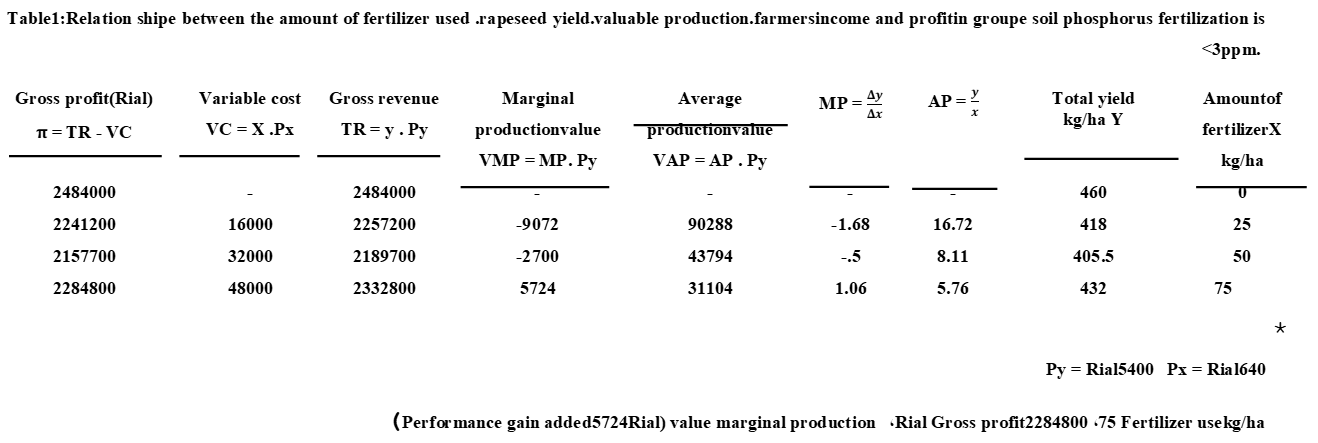
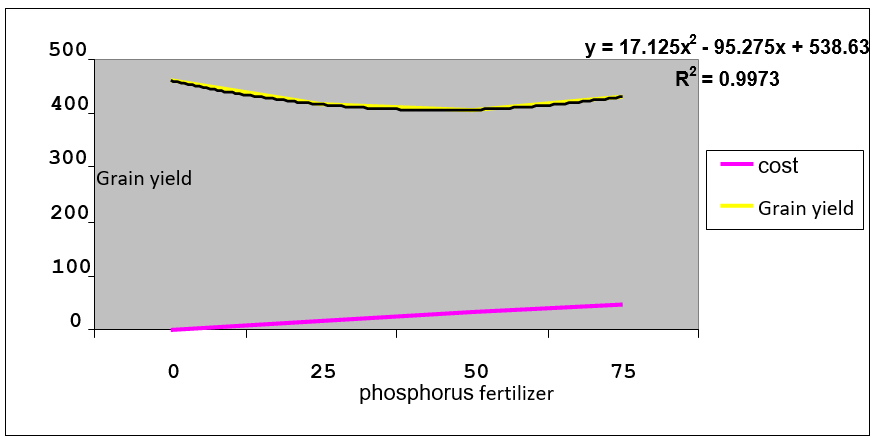
Figure1: Relationship between grain yield.cost and fertilization in the group soil phosphorus fertilization is <3ppm
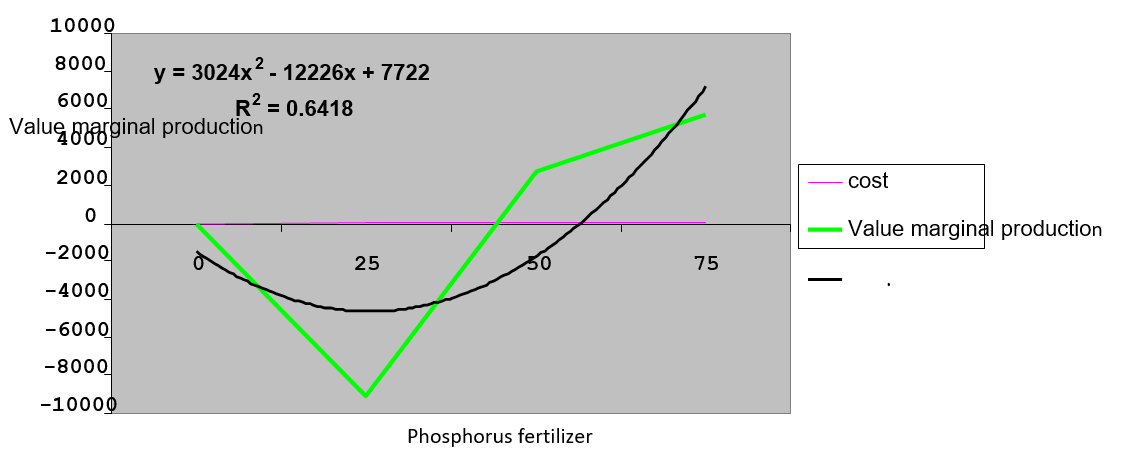
Figure5: the relationship between value marginal production,cost and fertilizer in the group soil phosphorus fertilization is <3ppm.
In phosphor fertilizing soil of 3-6 ppm, maximum performance is 482 k.g. in hectare useing 75 k.g. P2 O5 in hectare. The final value of the product is 30024 Rails and gross income is 2602800 Rails and overall profit is 2554800 Rails (table 2). Performance subordinate in this group is y= 57.83x2 -280.95x +674.14 and optimal use of phosphoric fertilizer in this group is 60.75 k.g. P2 O5 in hectare.(Fig. 2&6).
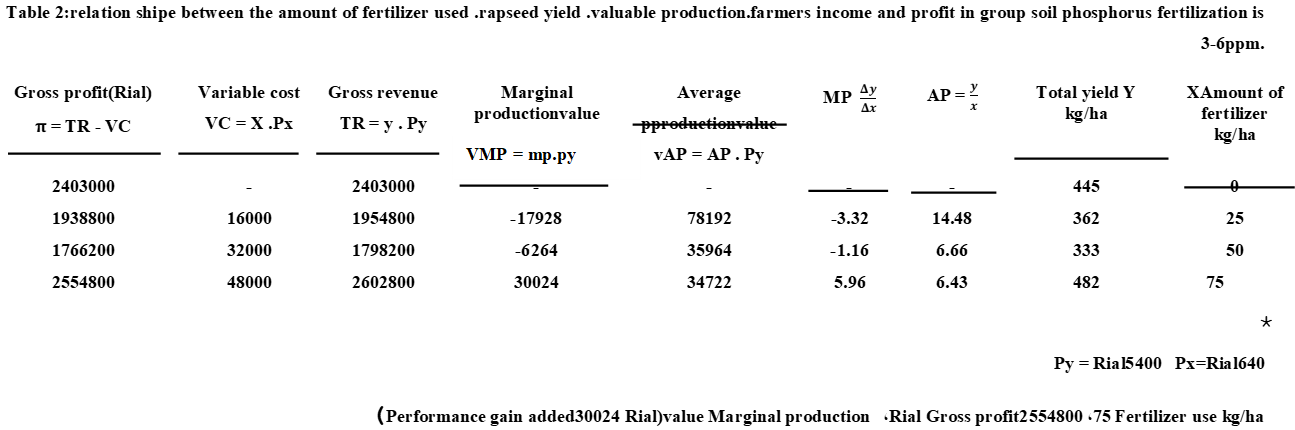
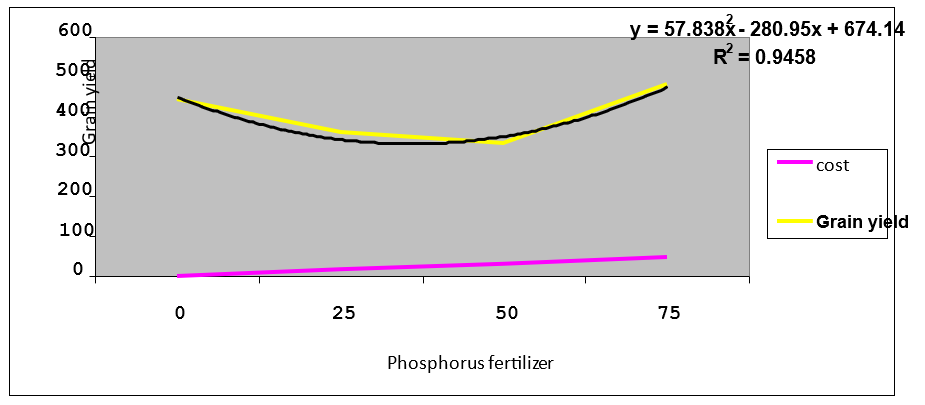
Figure2: Relationship between grain yield,cost and fertilization in the group soil phosphorus fertilization is 3-6 ppm.
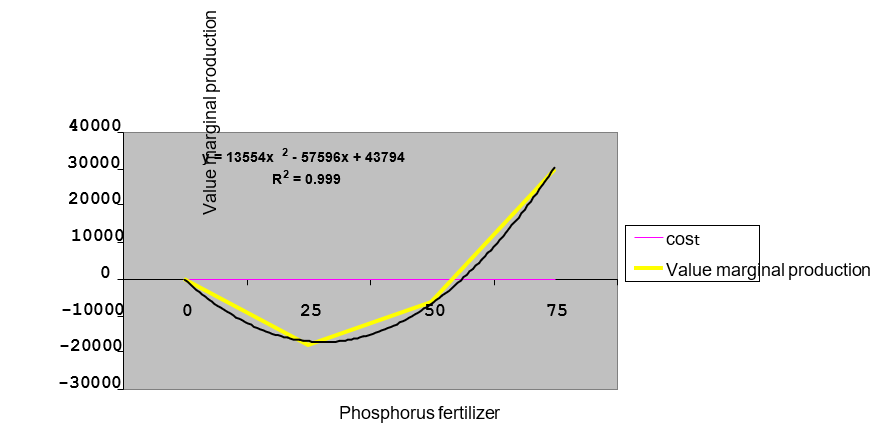
Figure6: the relationship between value marginal production,cost and fertilizaer in the group soil phosphorus fertilization is 3-6 ppm.
In the group with phosphoric soil fertilizer 6-10ppm, the maximum performance is 503 k.g.in hectare with the use of 75 k. g. P2 O5 in hectare. The final product value is 7776 Rails, gross income is 2716200 Rails and gross profit is 2668200 Rails (table 3). Performance subordinate is y=33.15 x2 -195.29x+753.95 and optimal use of phosphoric fertilizer in this group is 73.75 k.g. P2 O5 in hectare ( Fig. 3 &7).
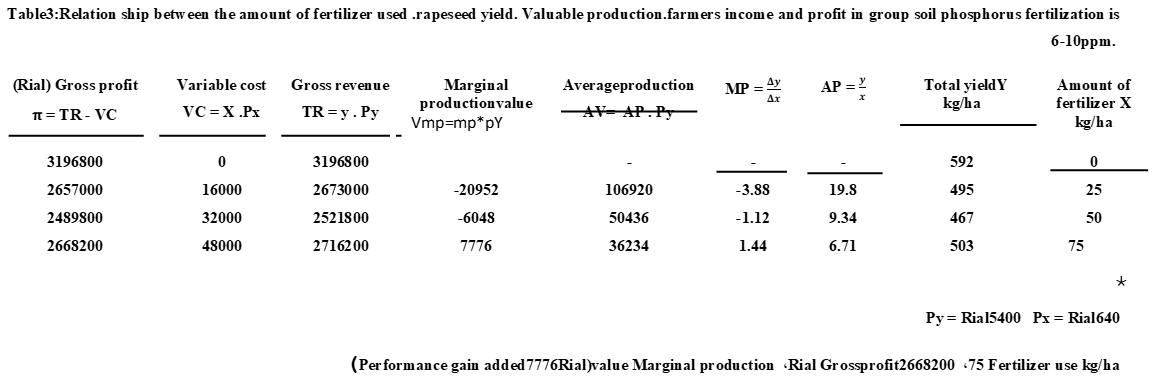
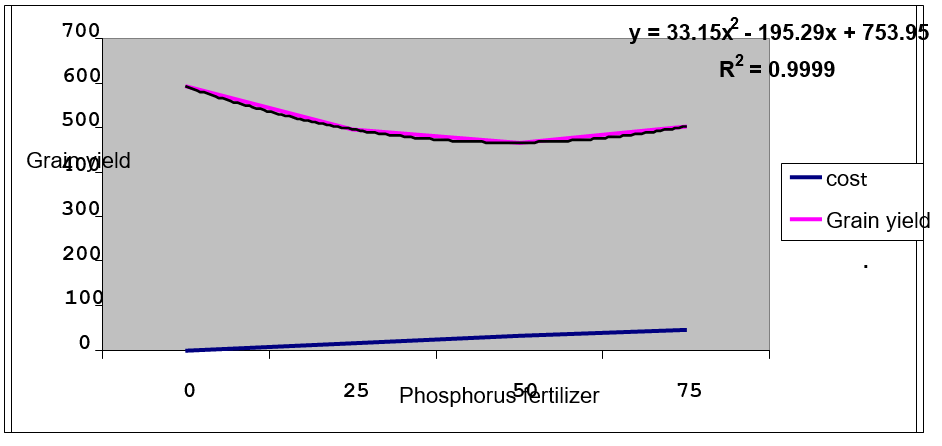
Figure3: relationship between grain yield,cost and fertilization in the group soil phosphorus fertilization 6-10 ppm.
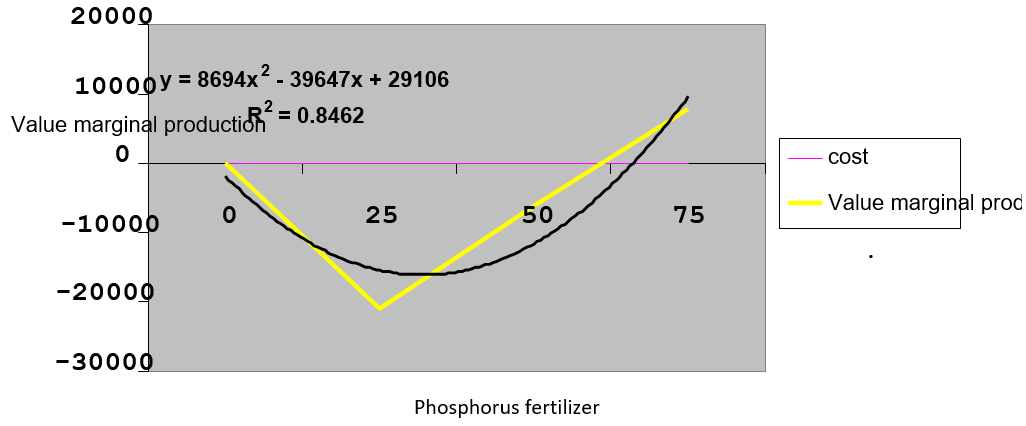
Figure7: the relationship between value marginal production,cost and fertilizer in the group soil phosphorus fertilization is 6-10 ppm.
In fertility group of more than 10 ppm maximum performance is 737 k.g.in hectare and maximum phosphoric fertilizer used is 50 kg, P2 O5 in hectare.
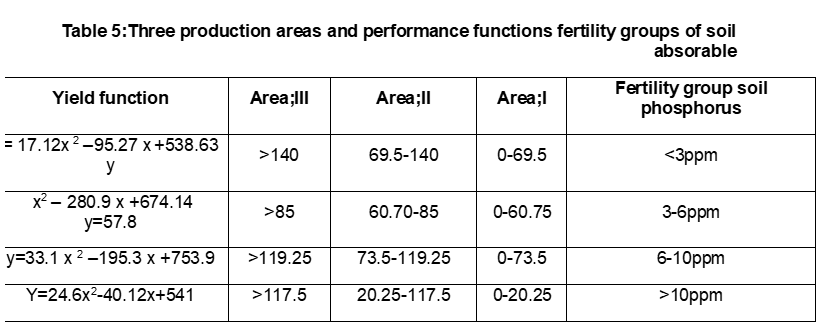
Final production value is 66528 Rails, gross income is 4077000 Rails and gross profit is 4045000 Rails (table 4). Performance subordinate in this group is as follows y = 24.6 X2 -40.12 X+541with an optimal use of phosphoric fertilizer for reaching profitability of 20.5 k. g. P2 O5 in hectare ( Fig. 4&8). Production area in the different groups of phosphoric soil fertility is less than 3ppm in I is equal to 60.75, area II is equal to 60.75, area III is more than 140 kgs P2 O5 in hectare. In group 3-6 ppm, area I is equal to 69.5, area II 69.5 to 140 and area III is more than 85 kg, in P2 O5 in hectare. And the phosphoric soil fertility 6-10 ppm in area I is 73.5, area II73.5 to 119.25 and area III is more than 119.25 kg, P2 O5 in hectare. In phosphoric fertilizing group of more than 10ppm, area I is equal to 20.25, area II is 20.25 to 117.5 and area III is more than 117.5 kg, P2 O5 in hectare (table 5).
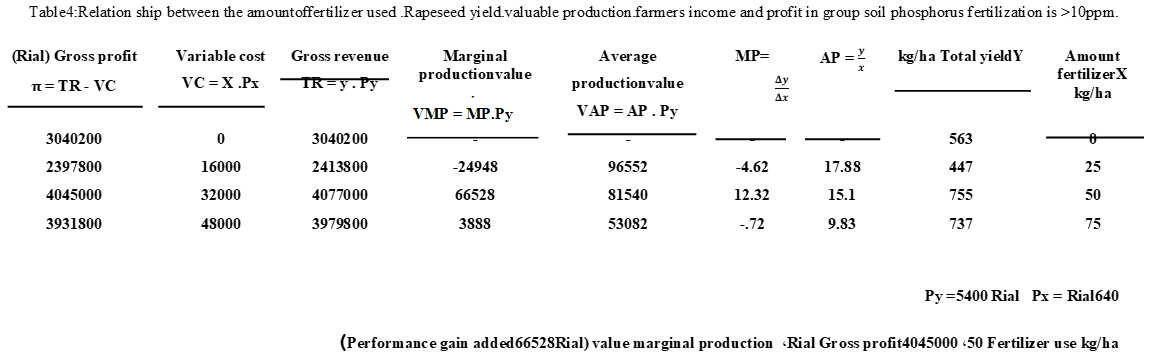
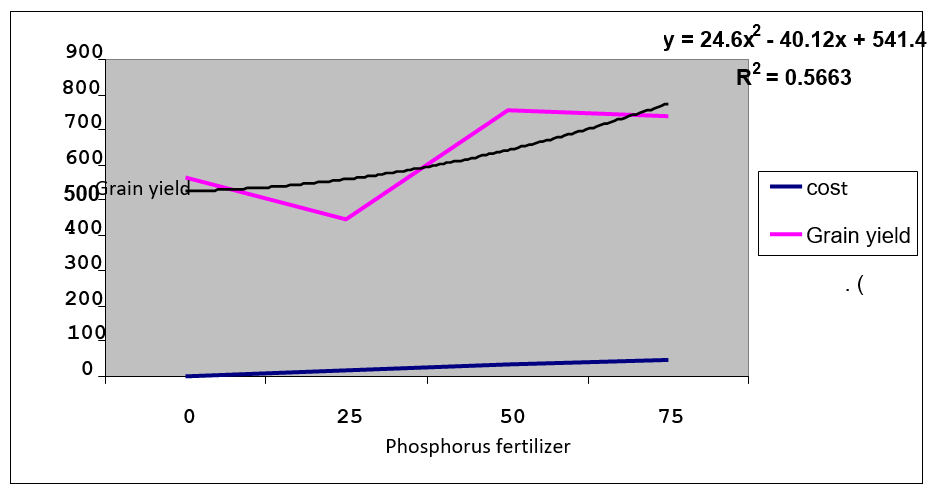
Figure4: Relationship between grain yield, cost and fertilization in the group soil phosphorus fertilization is >10
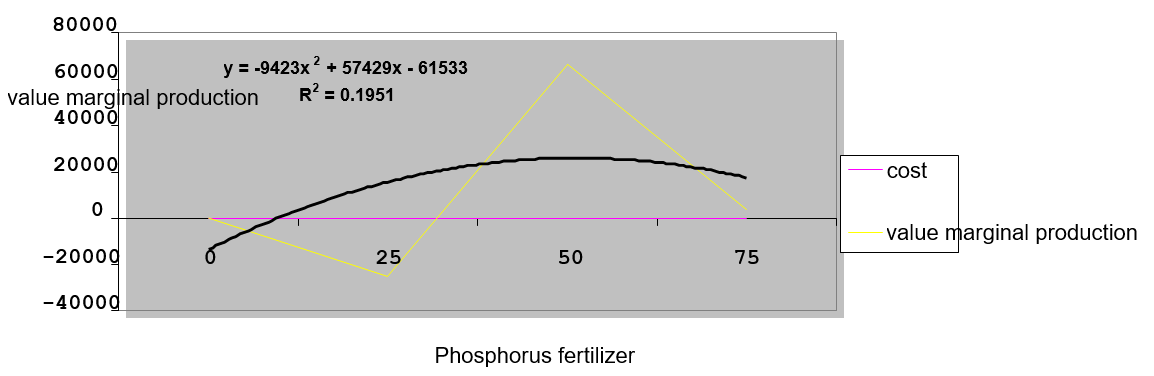
Figure8: the relationship between value marginal production ,cost and fertilizer in the groupsoil phosphorus fertilization is >10ppm.
(Abdol Rehmani 2013) and( Alizadeh,2016) mentioned that the amount of phosphor containing fertilizer recommended for canola agriculture in the …. Areas are 45 kg, P2 O5 in hectare. This method has been recommended for the groups with critical condition of phosphor in the soil that causes instability in nutrition between elements and environmental pollution. (Manhattan ,2020) has recommended phosphor fertilizers for production of 3 tons of canola seeds in the soils with the phosphor absorption in the soil be less than 10ppm, 130 k g, P2 O5 in hectare and the soil consisting 10-20 ppm phosphor, 10-30 kg, P2 O5 in hectare and the soil with more than 20ppm of phosphor does not need to absorb any fertilizer. Testing of soil for soil classification for different classes of fertilizer recommendation has been used. In fact the aim of soil testing to obtain the amount wherein the amount of fertilizer needed can be predicted. Testing of soil determines the condition of nutrition in the soil before cultivation of the plant. It also determines the poisonous elements available in the soil. Also, , the amount of fertilizer recommended is based on performance expectations. In groups with a phosphor absorption of soil is more than critical, no fertilizer recommendation has been recommended. Of course this method is more practical for protection of environmental standards and reduction in damages of the natural resources and also reduction in costs. Of course in all soil test methods for all kinds of soil fertility groups the performance subordinate is the same and the price of product has not been considered. Economical view does not determine optimal consumption of fertilizer precisely. And theoretically 90 to 95 percent of maximum performance is usually considered as suitable. Economical recommendation method analyzes the situation more precisely with regard to profitability of fertilizer consumption. On one hand, performance subordinate in different groups of soil phosphorus fertility, the final value of production is more than the consumer input costs. Therefore in all groups the maximum profitability has to be obtained. Of course price of the product being the most important factor (p7 = 5400 Rails).
Conclusions:
As the results obtained from the tests show, the fertilizer recommendations through economical views in order to reach the maximum profit in dry farming of canola in Behbahan area in phosphor fertility groups absorbable by the soil ( less than 3ppm, 3-6 ppm and more than 6 ppm) are 70,60.75,b 20.5 kg, P2 O5 in hectare respectably. Therefore it can be said that fertilizer recommendation through economical view together with fertilizing recommendations through soil test methods guide us better to reach stability in agriculture. Therefore it has been recommended to use consolidated management.
Acknowledgement:
We thank the Research and Technology Department of the Islamic Azad University of Behbahan Branch in Iran for its facilities and cooperation.
Conflict of interest:
All authors declare that there is no conflict of interest in this work.
Funding source:
There is no funding source.

Open Access By Aditum Open Access Journals id licensed under Creative Commons Attribution 4.0 International License. Based On a Work at aditum.org


